Showing posts with label The Late Lord. Show all posts

Wednesday, 14 November 2018

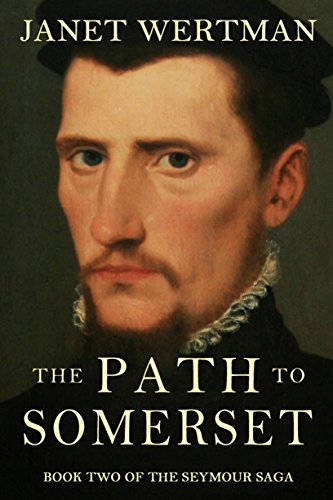
Today Jacqueline Reiter reviews The Path to Somerset by Janet Wertman. The author has very kindly offered a giveaway - US residents may choose between a paperback or an ebook while an ebook will be sent to a winner from anywhere else in the world.  To be in with a chance of winning this wonderful prize, simply leave a comment below or on our Facebook page.

Good luck!


After the tragic romance of Jane the Quene, the second book in The Seymour Saga trilogy, The Path to Somerset, takes a dark turn through an era in which King Henry VIII descends into cynicism, suspicion and fits of madness – and in which mistakes mean death.

Edward Seymour’s future is uncertain. Although his sister Jane bore Henry the son he’d sought for twenty years, when she died in childbirth, Henry’s good nature died with her. Now the fiercely ambitious Edward must carve a difficult path through Henry’s shifting principles and wives. Challenged at every turn by his nemesis, Bishop Stephen Gardiner, Edward must embrace ruthlessness in order to safeguard not only his own future but England’s as well.

This is the account of Henry’s tumultuous reign, as seen through the eyes of two opponents whose fierce disagreements over religion and common decency fuel epic struggles for the soul of the nation. And for power.


Death, and the fear of death, runs through The Path to Somerset like a black vein. The main character Edward Seymour, Earl of Hertford, is painfully conscious that he owes his prominence at Henry VIII’s court to his sister, Jane, who died giving the King an heir. The novel opens with Edward attending an execution at the Tower of London; he reflects how easily he could be next, for all he is currently in favour: “Edward felt a shattering rush of life as the axe rose, glinting in the light, then a sudden void when the weapon struck with a dull thud. He hid his flinch by scratching at an itch in his beard, trimmed to match the King’s.” Right from the start, Edward’s desire to hold onto the King’s goodwill governs every moment of his existence.

Edward knows his life depends on keeping in the King’s good books – and the spate of executions that follows the opening scene only drives in the point. There are four high-profile deaths in the first half of the book alone. In one particularly grim scene, a victim lays their head on a block still dripping with blood from an execution that took place only moments previously. Edward’s ambition, therefore – which grows steadily as the book follows him on his “path” to becoming the Duke of Somerset, Lord Protector under Edward VI – is strongly conditioned by his desire to keep his head firmly on his shoulders. His enemies, particularly the Duke of Norfolk and Stephen Gardiner, Bishop of Winchester, have the same aim. The novel depicts their deadly battle of wits to remain in favour, to gain power and (above all) to survive.

Every character is skilfully depicted, and a tremendous amount of research on the political and religious background of the last years of Henry VIII’s life must have gone into this book. Above it all stands the character of the King himself, the charm of his youth long gone and replaced by the terror and awe he inspires in all who surround him, which Henry seems to have grown to confuse with love and respect. Wertman ably depicts him as an aging tyrant who plays mind-games with his courtiers, and who is quite literally rotting on his throne (the stench from the ulcers on his leg is a running theme). In a more figurative sense, this rot has travelled to the core of Henry’s court, and qualities such as loyalty and trust are in very short supply: “It was an effective strategy at court, to place people in your debt. Proclaim your own friendship before asking for evidence of theirs.

What will happen when Henry dies, therefore, dominates the decisions Edward and his enemies make. Unsurprisingly, very few of the characters are in any way sympathetic, and Edward himself (particularly in his emotional reliance on his wife, Anne, who spurs him on in his ambition) reminded me a little bit of Shakespeare’s Macbeth. If you’re looking for an easy read with likeable characters and maybe even a love story, this is certainly not the book for you. But if you are after a tense, grisly and highly realistic depiction of the manoeuvrings heralding the power void after the death of Henry VIII, then this book is a must read. It certainly kept me turning the pages and I highly recommend it.

About the Author

By day, Janet Ambrosi Wertman is a freelance grantwriter for impactful nonprofits. By night she blogs and writes historical fiction, indulging a passion for the Tudor era she has harbored since she was eight years old and her parents let her stay up late to watch The Six Wives of Henry VIII and Elizabeth R. Janet lives in Los Angeles with her husband and dog, and is happy to be within driving distance of her three grown children. Find out more about Janet – and the Tudors – at her website, https://janetwertman.com.
Social shares:

Twitter - @JaneTheQuene (that’s where all the Tudor stuff goes - she also tweets herself under @JanetWertman)

Buy links!!


About the reviewer

Jacqueline Reiter has a PhD in late 18th century history from the University of Cambridge. She is the author of The Late Lord: the life of John Pitt, 2nd Earl of Chatham (Pen and Sword, 2017) and a novel, Earl of Shadows (Endeavour Press, 2017). She has written for History Today and the Journal of the Society for Army Historical Research, and is co-writing a chapter for the forthcoming Cambridge History of the Napoleonic Wars. She lives in Cambridge with her husband and two children. You can find out more about her research and writing through her blog, Facebook or Twitter.

Wednesday, 15 November 2017

Diana Reviews: "Earl of Shadows: A moving historical novel about two brothers in 18th century England", by Jacqueline Reiter


Two brothers are locked in a life-long struggle to fulfil their destinies.

John and William are the elder and younger sons of 18th century political giant William Pitt. The father is a man of great principle and a great orator. Twice Prime Minister, he accepts the title Earl of Chatham in recognition of his services to the British nation. But his death on the floor of the House of Lords deals a devastating blow to the family.

Forced to forego his military career, John inherits the title and a debt-ridden estate. William inherits the gilded tongue that will make him the brilliant rising star. John sees the problem looming, but the little brother cannot succeed without the big brother’s support. At the most critical moment John runs away from his responsibilities and his brother. It proves to be a fatal mistake.

Can John ever make amends and find forgiveness? Or will he continue to hold onto a pain that has almost become part of himself? Can he escape the long shadow of destiny?


This incredible novel charts the life of John Pitt, 2nd Earl of Chatham, from just before the death of his father, 'Pitt the Elder' in 1778, to 1806.

The author easily and confidently introduces the protagonist of the story; John Pitt, elder son and heir of William Pitt the Elder  and the other main players immediately seem to come alive in Dr Jacqueline Reiter'scapable hands, letting the reader know key details without ever feeling they are being taught or reading a lecture. Immediately the reader is made to understand that whilst he is the eldest, John Pitt is very much the underdog in his family.

He appears as a empathetic and warm man, not really geared for the life that birth has chosen for him. His empathy for his ailing father during Pitt the Elders last, disastrous political speech, is movingly  portrayed and then John's sudden shock, his realisation, that he is the one in charge sets the scene for his struggle to be Lord Chatham for the rest of his life. After his father's death, we feel John's despair, pain and bitterness as the life he has envisioned for himself turns to clay, causing a rift between him and his brother, Pitt the Younger. Throughout the book the love / hate relationship between the siblings in realistically and vividly described, the reader feeling in turn for John and William, often being able to see both sides and empathise with them both but realising just how deep their emotional bond is.

The narrative flows easily and conversation is realistic and it is not long before I became rather infatuated with John - (what was that Dr. Reiter? That I must join the queue??) This, to me, is a true test of a character, if I can actually develop real feelings for them. The easy flowing narrative, however, belies the depth of the story and the enormous amount of detail that it contains.

The first part of the book is set during the period of the American war, the machinations of which which were very well explained without tedium, allowing the reader to get a grasp of the necessary details without being bogged down with trivia. I never thought that I would find 18th century politics fascinating and easily understood, but being such a natural part of the plot, I 'soaked them up' and found them an enjoyable part of the book.

The wedding night of John and his bride Mary, is so beautifully described, without smuttiness or unnecessary detail, but with a tenderness and love that is movingly and touchingly described. To say that I felt I was there, makes me sound like some sort of voyeur! but I genuinely got the impression that I was witnessing their act of love.

Everything in the book is so meticulously researched that things as diverse as setting a broken leg,the political situation in Ireland, the inside of the Downing Street house, the ministrations for a serious fever ... all have their place in the narrative and the reader can be confident that the information that is being read is correct.

Such are the emotions the book raised in me, that when John is 'demoted, disgraced, destroyed', I cried so much that I was unable to read any more that day. (I also had a very strong desire to physically harm Dundas, but that is another matter!)

As I know from personal experience, the emotions brought about by John's alienation from his brother are truthfully, painfully and vividly told...

"William set his lips, but the anger in his face melted into fear as John took a step towards the door. ‘John, don’t go.’ 
‘You are no longer my Minister,’ John said. ‘You have no need for me.’ 
‘I am still your brother.’ The burst of fury John felt at those words took him by surprise. He spun round and William flinched. 
‘No, you are not my brother. You have never been my brother. I have always been yours, and you have no conception of how hard it has been to bear that knowledge all my life.’ William sat open-mouthed, his eyes strangely dilated. John braced himself for the attack that never came. Instead William’s face crumpled and he burst into convulsive tears. John was too stunned to move. He had expected anger, coldness, perhaps even indifference, but not this clear evidence that his words had wounded William more than he had ever been wounded before. What made it so much worse was that even now John had to fight the instinct to lower his weapons, to offer assistance, to surrender. Even now, after everything, he felt guilty. 
And then William made it a thousand times worse. He looked up at his brother and said, ‘I am sorry, John. I’m sorry.’ 
Nothing in the world would induce John to admit these were the very words he had awaited during the whole period of their estrangement. Once they might have been enough, but John had spent six years stewing in unfulfilled bitterness. He set his lips and told a lie. ‘I do not care.’ He tensed himself for William’s next attempt to keep him from leaving the room. Somewhat to his surprise nothing came. John felt a pulse of disappointment ..."

In his attempt to be his own man, John deals William a body blow, but which brother suffers the most from this?

Jacqueline Reiter's exquisite writing takes one not just to the heart of the matter, but to the emotion of the matter. She writes so much from the heart, they are not just characters in a book. They are not just distant historical people. They are warm and loving, living humans that we grow to know and love. I cannot praise the book highly enough.

Jacqueline Reiter has a PhD in late 18th century British history from Cambridge University. She has been researching the Pitt family for many years, focusing particularly on the life of the 2nd Earl of Chatham, whose nonfiction biography she has also written. She lives in Cambridge with her husband and their two young children, both of whom probably believe Lord Chatham lives in their house.

You may read more about Jacqueline in 'Diana talks to Jacqueline Reiter'

The author's nonfiction book about Lord Chatham is available from Amazon. The late LordDiana's review  of this excellent book may be viewed here:
http://thereview2014.blogspot.co.uk/2017/03/the-late-lord-by-jacqueline-reiter.html

© Diana Milne, October 2017


Saturday, 14 January 2017

Diana talks to... Jacqueline Reiter


Jacqueline Reiter has a PhD in late 18th century political history from the University of Cambridge. Born into a diplomatic family, she has long looked upon history as a fixed point of reference in a peripatetic life. A professional librarian, she lives in Oxford with her husband and two children.
Her exciting book about John Pitt has just been released by Pen and Sword books The Late Lord and is available from them now or is available to pre order from Amazon.
"John Pitt, 2nd Earl of Chatham is one of the most enigmatic and overlooked figures of early nineteenth century British history. The elder brother of Pitt the Younger, he has long been consigned to history as 'the late Lord Chatham', the lazy commander-in-chief of the 1809 Walcheren expedition, whose inactivity and incompetence turned what should have been an easy victory into a disaster. Chatham's poor reputation obscures a fascinating and complex man. During a twenty-year career at the heart of government, he served in several important cabinet posts such as First Lord of the Admiralty and Master-General of the Ordnance. Yet despite his closeness to the Prime Minister and friendship with the Royal Family, political rivalries and private tragedy hampered his ascendance. Paradoxically for a man of widely admired diplomatic skills, his downfall owed as much to his personal insecurities and penchant for making enemies as it did to military failure. Using a variety of manuscript sources to tease Chatham from the records, this biography peels away the myths and places him for the first time in proper familial, political, and military context. It breathes life into a much-maligned member of one of Britain's greatest political dynasties, revealing a deeply flawed man trapped in the shadow of his illustrious relatives."

Hi Jacqueline, I am so delighted you have agreed to talk to me! and I am equally sure that you are tired of being asked the usual interview questions, so hopefully this interview is an interview with a difference and I have come up with some unusual questions!

First things first I am sure there is a question that you have always longed to be asked. Now is the chance. Ask your own question and answer it! Gosh. Ask the hard ones first, why don’t you? All right. Could you ever see yourself writing something other than history? – Honestly? No. I’ve always written stuff, but was pretty aimless and random until history dropped on me like a ton of bricks at the age of 11. I spent three happy years reading about the English Civil Wars and Charles II until I discovered, in quick succession, the 18th century and political history. That was over twenty years ago (gah) and I frankly can’t see me moving on any time soon.

If your latest book, The Late Lord: the life of John Pitt, 2nd Earl of Chatham (Pen & Sword History, 2017) was adapted into a TV show or a film, who would you like to play the lead role? It would have to be a documentary, unless someone decided to make a biopic รก la “The Duchess” or “The Imitation Game”. Either way, Lord C would have to be played by someone tall, thin and dark. Matthew Goode would be a pretty good fit, if he is capable of playing “anti-hero” adequately. (Eddie Redmayne has been “cast” as Chatham’s brother William Pitt the Younger in my head for a long time now.)

What made you choose this genre? I’ve always written both fiction and non-fiction in tandem: I have written four dissertations over the past fifteen years (one 70k, two 30k and one 10k), all while attempting to hammer out a novel or two. When I finally finished my novel, I submitted it to a publisher at the recommendation of a friend. The publisher told me they liked it, but didn’t publish fiction: if I was willing to turn it into a non-fiction book, however, they would consider it. I wrote up a proposal, they liked that too, and the rest is – quite literally – history.

I often say I don’t think there’s much difference between good historical fiction and good historical non-fiction, apart from the referencing. Both should be built on the same sources, both should tell an interesting story, and both should be relevant and instructive. Both require leaps of faith and calculated guesses: the non-fiction may, however, use “perhaps” a little more often.

How do you get ideas for plots and characters? I read until something or someone grabs me by the lapels and shouts at me to write. I can’t really explain what it is that attracts me. I have to have that “zing” or it simply won’t work.

If, as a one off, (and you could guarantee publication!)  you could write anything you wanted, is there another genre you would love to work with and do you already have a budding plot line in mind? I’m quite happy to stick in the history non-fiction genre, and I have a list of subjects I’d like to work on as long as my arm. A return to historical fiction would be an obvious one here. Perhaps a timeslip novel: as someone with a foot in both present and past, I do feel an affinity with those.

Was becoming a writer a conscious decision or something that you drifted into (or even something so compelling that it could not be denied?) How old were you when you first started to write seriously? I already kind of answered this. Writing very definitely chose me. I can still remember covering reams of paper as a child and stapling them together into booklets. I wrote my first novel when I was 11. It was really, really, really bad. I tried to get a historical novel about Charles I published when I was 14, also pretty bad, although much better than the one I wrote when I was 11. My second attempt to get published was at the age of 18. I’ve finally got there at the age of 37.

Marmite? Love it or hate it? I’m indifferent. Wouldn’t choose it, but if offered a slice of bread with marmite on, I will happily eat it.

Do you have any rituals and routines when writing? Your favourite cup for example or ‘that’ piece of music...?? I have small children, so have learned to write wherever/whenever. I get up at 5, make myself a great deal of coffee, drink it, and write as much as I can till 7 or the kids get up (whichever comes first). On writing days I then return to writing at 9:30. I’ve learned not to listen when my muse tells me he’s not in the mood: I kick him in the shins and usually he then behaves. It can be a drag, but hey, I wrote a book like this, so it works. I have no rituals as such, but, when I’m editing, I mark up my MS in pink pen. That’s the only real ritual I have.

I promise I won’t tell them the answer to this, but when you are writing, who is more important, your family or your characters? I won’t lie – it’s always a wrench to tear myself away from the writing after I’ve spent so long immersed in another world. But if the house were burning down, I’d save the kids before my laptop. Probably.

Other than writing full time, what would be your dream job? Historical interpretation/living history. I’ve done it before and it’s so much fun.

Coffee or tea? Red or white? Both coffee and tea, although not simultaneously. By red or white, I presume you mean wine? I don’t drink, alas.

How much of your work is planned before you start? Do you have a full draft or let it find its way? With “The Late Lord”, I had to write up a synopsis and a set of chapter headings for my proposal. That was pretty much the only plan I had. I did sketch out each chapter before writing it though.

If you had free choice over the font your book is printed in, what font/fonts would you choose? Something with serifs.

Imagine that you could get hold of any original source document. What would it be? OH MY GOD. You can’t ask a historian this question. It’s cruel. If I must answer, then let it be Lord Chatham’s correspondence with his wife. I know it existed once.

Have any of your characters ever shocked you and gone off on their own adventure leaving you scratching your head??? If so how did you cope with that!? Not exactly, but I’ve often found Lord C saying and doing things he really shouldn’t be, according to the accepted historical record. Some of it I didn’t like much. Hey ho, the sources don’t lie (… or do they?).

How much research do you do and do you ever go on research trips? Research isn’t quantifiable, but as my biography is the first ever written of Lord Chatham, we’ll go with “I had to do quite a lot”. Research trips are the best thing about historical research. This particular project took me to archives all over the UK, including London, Belfast and Edinburgh. I spent a week in Gibraltar (take me back!), and cycled twice with my husband to Holland to visit relevant historical sites.

Have you ever totally hated or fallen in love with one of your characters? Anyone who knows me will tell you that I have totally succumbed to “biographer’s Stockholm syndrome”. (I hope I’ve been balanced in my writing though!) I refer to Lord Chatham as “John” or “my boy” and have stopped worrying about it now. When he was four, my son announced, quite seriously, “John lives in our house. He’s Mummy’s friend and he’s dead.” Am hoping he never told his teacher about this interesting domestic arrangement.

What do you enjoy reading for pleasure? Anything historical, really, either fiction or non-fiction.

What drink would you recommend drinking whilst reading your latest book? Lord Chatham would recommend claret or sweet sherry. I wrote it fuelled by coffee, so that might give you a better flavour.

Last but not least... favourite author? Sharon Penman, Lindsey Davis or Terry Pratchett.

 Jacqueline, I have really enjoyed this. Thank you !!
 

© Diana Milne January 2017 © (Jacqueline Reiter, 2017)