Saturday, 11 February 2017

Diana talks to ... Richard Abbott


Hi Richard, good to chat with you! Hopefully this interview is an interview with a difference and I have come up with some unusual questions!

First things first I am sure there is a question that you have always longed to be asked. Now is the chance. Ask your own question and answer it!

I thought the question should be something about the roles of men and women in my books. I like writing about both men and women, and the diverse interactions between them. I also write about situations which naturally lend themselves to active participation by both sexes – helped no little by working in an environment where this is completely normal. So it was with great pleasure that I read a recent review of Timing which talked about the “bevy… of intelligent and formidable women” found in its pages. Whether writing about past or future, I like to include as much diversity as I can.

If your latest book ' Timing ' was made into a TV show or a film, who would you like to play the lead role? Hmm, I’m not very good on the names of actors. Aamir Khan (who played the male lead in Lagaan) looks right for Mitnash, while Rene Auberjonois is just right temperamentally, though rather too old now. Alexander Siddig would be good too, I think. Out of women to play Slate, which is necessarily a voice part, I think Jennifer Spence or Alaina Huffman would do a good job. Both have played technically-skilled parts in science fiction before.

What made you choose this genre? Well, I like experimenting with different genres. I started with historical fiction – and one day hope to dive back into the remote past – but recently I have been exploring science fiction. My most nearly complete WIP, Half Sick of Shadows, is something of a historical fantasy. I don’t feel constrained to stick with one genre.

How do you get ideas for plots and characters? I am a great believer that many human traits are the same whether you look back or forward in time. So, I find inspiration in the human interactions and occupations I see around me. The scribe Makty-Rasut and his fellow tomb workers in Scenes from a Life were drawn heavily from situations I saw when I was an IT contractor. My current science fiction series is based around financial fraud and hacking, something I have to be aware of in my day job. But (to reassure those who know me) hardly anyone is copied directly from a real person… there are always changes and blends going on. I hope that readers will recognise the kind of characters they meet in my books, but not specific individuals. Plot-wise I start with broad ideas (say a particular kind of financial crime) and work towards details.

If, as a one off, (and you could guarantee publication!)  you could write anything you wanted, is there another genre you would love to work with and do you already have a budding plot line in mind? (Wry laugh) Well, I can guarantee publication because I do it myself! What I can’t guarantee is popularity… But seriously I like dabbling with multiple genres. I do want to go back to historical fiction sometime, partly to tie up the loose ends in my Late Bronze Age series, and then to go back even further to the Neolithic or such like. But I have rough plans for a couple more science fiction books, and I have really enjoyed the sidestep into fantasy – look out for Half Sick of Shadows, later this year sometime. That’ll keep me busy for a while for sure.

Was becoming a writer a conscious decision or something that you drifted into (or even something so compelling that it could not be denied?) How old were you when you first started to write seriously? I have always liked reading, and way back in university days started a long fantasy novel. That manuscript is long since lost – perhaps for the better – and many years passed before I started writing again. The way in for me was via historical study, and the jump to fiction was small. So, I guess it was progress in fits and starts.

Marmite? Love it or hate it? Kind of indifferent (sorry) – I wouldn’t select it if there was a choice, but I wouldn’t turn it down either.

Do you have any rituals and routines when writing? Your favourite cup for example or ‘that’ piece of music...?? I write a lot on the Northern Line, tucked in a corner as I travel between East Finchley and Embankment. That doesn’t really lend itself to favourite bits and pieces. If at home I almost always write without music on – but if I’m editing or working over some already-written piece, then I will probably put on some cool prog rock like Yes or Caravan. Recently I’ve been indulging in Manfred Mann. I almost always write first on my phone, into GMail, then transfer into a text editor and produce the Kindle version in the evening. That way I can always check how it looks on an actual reader. But often it’s a matter of grabbing whatever time I can in the midst of a busy life, so I can’t be too precious about rituals and such like.

I promise I won’t tell them the answer to this, but when you are writing, who is more important, your family or your characters? Family definitely.

Other than writing full time, what would be your dream job? I really like what I do (quality assurance in IT) and would be reluctant to give it up. I reckon there’s a lot of value in keeping on working with other colleagues and doubt my ability to manage well if I was just on my own – probably this way madness lies! Given the option I’d probably shift the balance a little between day job and writing, but I wouldn’t want to give up the day job altogether.

Coffee or tea? Red or white? Tea, almost every time. For alcohol, probably white though I’d prefer a nice ale to any sort of wine.

How much of your work is planned before you start? Do you have a full draft or let it find its way? For historical fiction, I have a clear plan not just for plot but for structure as well, since formal layout was important back then and I like to try to imitate the process of creation as well as the setting. For the rest, I have a sense of where I want to go, and some specific key scenes along the way, but I am not nearly so orderly about planning here. I don’t make a draft in the conventional sense of that word – just lots and lots of reappraisal as the thing develops.

If you had free choice over the font your book is printed in, what font/fonts would you choose? I’m a rebel here and an enthusiast of epublishing – so I’d want my readers to pick their own font at will rather than feel they had to put up with my choice. Just for fun, I tried seeing what my books look like with the fairly recent dyslexic font available in many Kindles – I couldn’t read it all the time but it was a useful exercise seeing what it was like.

Imagine that you could get hold of any original source document. What would it be? The founding statement of principles of the first colony on the asteroid Ceres, at the point it transitioned from being just a commercial mining settlement into a real human community.

Have any of your characters ever shocked you and gone off on their own adventure leaving you scratching your head??? If so how did you cope with that!? A minor character from Far from the Spaceports has developed something of an interesting life of her own – and will continue to do so in #3 (provisionally called The Authentication Key). I just went with the flow, presuming that my subconscious knew all about this.

How much research do you do and do you ever go on research trips? For historical fiction, yes, lots, and yes I have (some of the Greek islands, Egypt, Jordan, and Israel). For science fiction, I’d certainly be up for a trip to the asteroid belt – or even Mars – if anybody offered it. Sadly, the opportunity has not yet presented itself. For the emerging fantasy books, I guess the research is more into internal space rather than external.

Fiction authors have to contend with real characters invading our stories. Are there any ‘real’ characters you have been tempted to prematurely kill off or ignore because you just don’t like them or they spoil the plot? Well, when I write historical fiction I focus on people who were in normal terms rather unimportant. So, the problem doesn’t really arise. Besides, I am looking at periods of time where the amount of written evidence is small, and we know the names of so few individuals that I don’t feel constrained. Nobody has yet quibbled about my portrayal of Joshua in In a Milk and Honeyed Land, but then I didn’t kill him off or anything nasty. Unless you’ve acquired a time machine it’s not an issue when writing about the future! But even there, I prefer writing about ordinary people rather than Galactic Overlords or the like.

Are you prepared to go away from the known facts for the sake of the story and if so how do you get around this? Same answer really – in the historical periods I like, “known facts” are few and far between. I have a desire to write something set in ancient Doggerland (now under the waves of the North Sea) and I don’t reckon many facts will disturb me there. With futuristic stuff, I try to be careful to make the technology plausible, which I suppose is meeting the same goals as checking historical facts.

Do you find that the lines between fact and fiction sometimes become blurred? In the places and times I write about, they are always blurred! There are ongoing vigorous debates about whether whole decades and centuries need to be moved around, even for something as recent as Late Bronze. I don’t live in a fictional world where everyone is confident of the actual date and hour of this or that event. That’s part of the pleasure…

Have you ever totally hated or fallen in love with one of your characters? Never hated them – I wouldn’t bother to write about them if I hated them. But there are definitely people that I would get seriously fed up with if I had to work with them. But love some of them, oh yes.

What do you enjoy reading for pleasure? Mostly good science fiction or good fantasy. I have got a bit chary of some historical fiction as there is a trend for high body counts and the like. But when I find a book I like then it doesn’t really matter what genre it is. As a rule, I prefer novella or novel length books to short stories.

What drink would you recommend drinking whilst reading your latest book? Russian Caravan tea.** Or maybe a really nice Jasmine green tea. Or just possibly a local ale if something stronger takes your fancy.

Last but not least... favourite author? I think this has to be Ursula LeGuin. There are a few others close to her but on balance I’m sure she is at the top of the pile.
Thank you Richard! Very interesting!!
Richard Abbott writes fiction set in two very different places. First, there is historical fiction set in the Middle East at the end of the Bronze Age, around 1200BC. The second area is science fiction, set in a near-future solar system exploring issues of high-tech crime and human-machine relationships.

His first science fiction book, Far from the Spaceports, introduces Mitnash Thakur and his virtual partner Slate as they investigate financial crime in the asteroid belt. A follow-up novel, Timing, introduces a new investigation starting about a year later.

His first book, In a Milk and Honeyed Land, explores events in the Egyptian province of Canaan. It follows the life, loves, and struggles of a priest in the small hill town of Kephrath.

A follow-up novel entitled Scenes from a Life begins in Egypt. It follows the journey of a scribe as he travels to discover his origins. down the Nile from Luxor and finally out into Canaan.

A third book, The Flame Before Us, is set in the middle of calamity. New settlers are arriving from the north, sacking cities and disrupting the established ways of life as they come. This story follows several different groups each trying to adjust to the new situation.

Author readings from both In a Milk and Honeyed Land and Scenes from a Life are available online as YouTube videos.

The short story The Man in the Cistern is set in the same location as In a Milk and Honeyed Land, but around ten years later.

The short story The Lady of the Lions is set in the same location but around one hundred and fifty years earlier.

Triumphal Accounts in Hebrew and Egyptian is the ebook version of his PhD thesis which, for those who want the technical details, supplies academic underpinning for some of the ideas and plot themes followed up in fiction.

Richard lives in London, England and works professionally in IT quality assurance.

When not writing words or computer code, he enjoys spending time with family, walking, and wildlife, ideally combining all three pursuits in the English Lake District.
 

**Russian Caravan is a blend of oolong, keemun, and lapsang souchong teas, all produced from Camellia sinensis the Chinese tea plant

© Diana Milne January 2017 © Richard Abbott December 2016


Wednesday, 8 February 2017

The Delivery Girl: Tony McAndrew - A review by Diana

Tony McAndrew and Wild Wolf Publishing are generously giving a Kindle copy of this stunning book to one really lucky reader. Believe me, it is worth reading!
To win this book, comment on the blog itself or on the Review post. All the names will be assigned a number and go into the random number generator and on 16th February the winner will be chosen.


I have often read good books and fairly frequently read brilliant books, but it is rare that I read a book that I can genuinely say is great. It is no surprise that this incredible author comes from the same literary stable as R Glenn, Poppet and CW Lovatt. Wild Wolf Publishing seems currently to have more astounding talent among its published contributors than most publishing houses acquire in their publishing lifetime. What is even more astounding is that this little masterpiece is Tony McAndrew’s first novel.
 
The tough, uncompromising story is set in a run down burnt out city. If you need drugs, money, a gun, nine year old Anna Ramanova is The Delivery Girl. Foreign, precociously bright, abused by all around her she is the one all the other children hate. Hers is a world of casual brutality, gangsters and goons, drugs and booze, prostitutes and paedophiles, where the ugly sisters of self-harm and suicide wait to show her the only road out of a miserable existence. That is until a grotesque but strangely endearing old hunchback enters her life. As impeccably gracious as he is ruthlessly violent, deliverance, it seems, comes in many forms.
 
The story speaks of violence and sadistic bullies in a way that is so natural that it gives us a small glimpse into the ‘naturally accepted’ habitat in which Anna now exists, accepting pain and humiliation as the normal state of things, but longing for the outlet of death and the feel of her dead mother’s arms around her. Anna is both worldly wise and innocent. Without giving too many spoilers, Anna takes an opportunity to steal a nail varnish without guilt or thought, as would a much older and hardened criminal, but paints the nails of an angel statue with the stolen pink polish like any small girl would be tempted to do. Despite the vicious acts she has witnessed and experienced, she still retains an innocence and a heart of pure gold for people who are worse off than she is.
 
The language and the vivid pictures that this book conjures in the minds of the reader give an intimate immediacy to the whole beautiful, tragic, hopeful, hopeless scenario. The characters are so brilliantly presented and portrayed that we can see them, at times even smell them, hear them and feel Anna’s reaction to them; the whole thing gripped me from page one right until the finish, both the horrific and humdrum becoming truly beautiful by means of McAndrew’s exceptional story telling ability and the descriptions beyond the usual. I kept page after page turning to see this world he painted so well...
 
This book deserves to be read a hundred years from now as a vivid social history portrait of the underbelly of England in the 21st century. The story telling genius and vocabulary of the author will ensure that it is.

What other people said:

Kindle Customer: Sue Dawson on 16 July 2016
A dark journey into the life of Anna , who slipped through the network of support all children should be entitled to but sadly has holes as large as a string vest. The book keeps you drawn in as her life unfolds, hoping for a good result . One of many children who live a life unimagined by adults living in a comfortable world. Well done Mr Mcandrew. Can't wait for the next book.

Goodreads reader Ruty B
...The writer created a solid and believable world where cruelty is as normal as breathing. The writing is really good and the characters are well built. The action is non-stop and the rhythm is intense ...

About Tony McAndrew:

Having what little education thrashed into him by nuns caned out of him by grammar school, Tony kept a promise to himself to begin writing when he finished doing tedious stuff like working full time.

After a wander through psychiatric nursing, the Met Police and almost thirty years as a frontline paramedic the time seemed about right. He still works now and again in Primary Care somewhere in Wales and lives happily on the Gower indulging in writing, reading, talking, drinking beer and floating in the sea with his wife.

The Delivery Girl is his first novel; an unapologetically dark and brutal story, part wish fulfilment for, and part homage to, all the abused children he saw fall through the cracks.  And still fall.

He is currently working on a prequel after finishing a lighter second novel – Mad Cat, Franz and The Bomb.

The Delivery Girl is available from Amazon UK and Amazon US

© Diana Milne (aka d.arcadian) January 2017


Saturday, 4 February 2017

Diana talks to - Tony McAndrew


Hello Diana thanks for the invite.
I am really excited to be talking to you Tony. I am also reviewing your book, the Delivery Girl, here for the Review Blog page later in the week. The Delivery Girl is without doubt the best published book that I have read so far this year - and I am a prolific reader!
I am sure that you are tired of being asked the usual questions that would be interviewers ask authors, so hopefully this interview is an interview with a difference and I have come up with some unusual questions!

Well let’s hope I can come up with some unusual answers.
First things first I am sure there is a question that you have always longed to be asked. Now is the chance. Ask your own question and answer it!

A question from me to me? Ok.

Will you marry me?

Yes of course. I thought you’d never ask.
(Laughing loudly here!! Hmmmmm..... if you want to ask me the same question?????)

If your latest book The Delivery Girl was adapted into a TV show or a film, who would you like to play the lead role?

The Delivery Girl herself would be a difficult search but I daresay a public casting call would weasel the right young girl out. The other lead character Mikhail, um, perhaps Richard E. Grant - if he’s up to the more athletic scenes of course. I wouldn’t want him to bust a hip or something. Anyhow why not him? If Liam Neeson can be turned into an action hero then why not Richard? Fantastic actor. He has a million candle charisma and even when he smiles his eyes still retain a certain sinister quality which is just what’s called for in the role.  (What a perfect person for the role!!)

What made you choose this genre?

Do you know I didn’t choose a genre Diana. Never gave it a thought. If I’m honest I wrote Delivery Girl and then it was more a case of finding a genre fit for it. Personally I think it’s a contemporary urban fable but my agent says it’s literary fiction and my publisher says it’s fiction with teeth. Genre can be fluid and opinions differ which is how it should be. (I say it is a future classic!!)

How do you get ideas for plots and characters?

Ideas quite literally can trigger from anything. Something I see, hear, read, an event, a comment, a joke, an injustice particularly, a silly fact, a conversation overheard. I’m very fortunate and grateful the list is endless; for the time being at least.

Characters likewise. With one or two exceptions they invariably, and rather weirdly, turn up fully formed. The main character in the novel, Anna, is one exception being perhaps twenty percent based on a child I met during my career. Mikhail on the other hand merely stepped in through the back door of my mind and introduced himself, very politely.

If, as a one off, (and you could guarantee publication!) you could write anything you wanted, is there another genre you would love to work with and do you already have a budding plot line in mind?

I think a full on horror-thriller - and yes as it happens I do.

Was becoming a writer a conscious decision or something that you drifted into (or even something so compelling that it could not be denied?) How old were you when you first started to write seriously.

I’d always wanted to write but never found the time. A feeble and well-trodden excuse I know. On reflection I wonder if I would even have been capable when I was younger, yet yes, thinking about it, as you say, there was an element of compulsion involved. That, a re-location to South Wales, semi-retirement and the great inducement of suddenly having some spare time was the kick up the backside I needed. Now dammit I can’t stop!

Marmite? Love it or hate it?

I like it but could easily live without it, unlike a young guy I know of who eats it by the teaspoon. (Even I don't do that - now!)

Do you have any rituals and routines when writing? Your favourite cup for example or ‘that’ piece of music...??

A spot of Tai chi, you mean? Some deep breathing exercises, lunges and splits? That sort of thing? No, not really. I don’t have set times to write either and can even tolerate some background noise; if I did put on some music it would only become just that. Once I start writing I tend to block everything out. By the way how did you know I have a favourite cup?  (Um...Mikhail told me?????)

I promise I won’t tell them the answer to this, but when you are writing, who is more important, your family or your characters?

My characters tell me they are.

Other than writing full time, what would be your dream job?

Other than writing? Well I was lucky enough to have had a great career as a paramedic; very rewarding. Difficult question. Ok. I suppose something entirely altruistic, noble and worthy. Off the top of my head I can’t for the life of me, think what that would be, but just something that makes people downright happy. If that sounds nauseatingly twee I would, however, set aside one day a year and a bottle of claret to gloat over the misfortunes of others too.

Coffee or tea?

Both. Fresh black coffee at industrial strength anytime and tea via intravenous drip throughout the day, white no sugar. My wife says I’m far too bitter to sweeten anyhow.  ((Smile))

Red or white?

Again both. Oh, and everything in between. Breakfast of champions.

How much of your work is planned before you start? Do you have a full draft or let it find its way?

I think it’s perhaps a combination of the two with a lot of mulching thrown in. The theme or story springs from the original idea. I always know the end first, quite often the beginning too, and many of the milestones between. The arc of the story develops around them and quite often goes off in directions I hadn’t initially thought of.

If you had free choice over the font your book is printed in, what font/fonts would you choose?

I’ve always liked the quaint look of Old English but I imagine it could get tiresome. Best stick with Times New Roman. (Yep. Ditto!)

Imagine that you could get hold of any original source document. What would it be?

I’d love to spend time with the original handwritten manuscripts of past writers the calibre of Defoe, Swift, Stevenson, Dickens, Austen, Melville, Shelley, Wells and Twain to name but a few. To see the doodles, changes, the bubbles and arrows, the crossings out; all the side notes, smudges, marks and comments. Technically how they worked. How they did it. No spacing, automatic page numbering; no delete, cut, paste or copy for those boys and girls. True genius. 

Have any of your characters ever shocked you and gone off on their own adventure leaving you scratching your head??? If so how did you cope with that!?
They try all the time. As you write you begin to think, hey, this character or these characters could, as you say, have adventures of their own in another story and you end up tilting it a little in their favour. Sometimes it enriches the overall novel but it can be a dangerous distraction and unbalance things. Best to read the ungrateful swine the riot act, slap them around a little and always be prepared to “kill your darlings” if you have to. And let them know you will.

 
How much research do you do and do you ever go on research trips?

The research for Delivery Girl was minimal really, mostly extracted from my experience. A second novel I’ve finished but still editing, a Young Adult ghost story, required a fair bit of reference work but nothing requiring location trips. I’m also midway through writing a prequel to Delivery Girl set in sixties Alabama which is challenging but there is a great public archive of that era. (I really feel I cannot wait! Hurry, Tony, hurry!)


Historical fiction authors have to contend with real characters invading our stories. Are there any ‘real’ characters you have been tempted to prematurely kill off or ignore because you just don’t like them or they spoil the plot?
So far I’ve not had to deal with any “real” characters sticking their oars in. I’m sure if any do in the future I’ll gladly bump them off pronto. Come to think of it, there are one or two ghastly “real” characters around at the moment I might invite in just for the sheer pleasure of killing them off in as grizzly a way as possible. Any suggestions? (Ohhhhh yes!!!)

Are you prepared to go away from the known facts for the sake of the story and if so how do you get around this?

Sure, if it makes for a better read yes. Getting around it is easy. A novel is a two way trade, as a writer you put your trust in the reader. Writers of fiction are just longwinded liars with ISBNs, tellers of tall tales, spinners of yarns. Readers, and I’m one too, get this. Just trust them.

Do you find that the lines between fact and fiction sometimes become blurred?

Oh yeah. To the point I sometimes have difficulty telling which is which anymore. I mean who’d have thought that… no let’s not go there. (Aw....go on! )

Have you ever totally hated or fallen in love with one of your characters?

The majority of characters in Delivery Girl I have to say are pretty loathsome, and some I truly despise everything about them. Great fun to write though. Fallen in love with any? No. Felt protective of? Yes very. Odd when you consider they don’t exist in a physical sense. I think I need to get out more.

What do you enjoy reading for pleasure?

Anything and everything in novel form, with short stories, essays and polemics the vinegar in the salad. The only genre I don’t care for is wands and dragons. That’s not a criticism of the genre in any way. No it’s me. I’d love to join in the love-fest but however often and hard I try - I just don’t get it.

What drink would you recommend drinking whilst reading The Delivery Girl?

Whatever your favourite tipple is, cheers. And a large belt of scotch on standby for a few of the scenes might be a good idea.

Last but not least... favourite author?

That is tough! There are so many, all the usual suspects, from Dickens to Orwell, Philip Roth, Wodehouse is an absolute treat, Steinbeck, Scott Fitzgerald, Hemingway, Saul Bellow, I like Christopher Hitchens and Alan Bennett too, Stephen King, Ian McEwan – but personal choice? Top of the heap?

For me, Martin Amis.
Thanks Diana, it’s been a pleasure.

Reading your book was an amazing experience Tony, so I am delighted to have the opportunity to chat to you too.

Tony McAndrew

Having what little education thrashed into him by nuns caned out of him by grammar school, Tony kept a promise to himself to begin writing when he finished doing tedious stuff like working full time. After a wander through psychiatric nursing, the Met Police and almost thirty years as a frontline paramedic the time seemed about right. He still works now and again in Primary Care somewhere in Wales and lives happily on the Gower indulging in writing, reading, talking, drinking beer and floating in the sea with his wife.
The Delivery Girl is his first novel; anunapologetically dark and brutal story, part wish fulfilment for,and part homage to, all the abused children he saw fall through the cracks.  And still fall.
He is currently working on a prequel after finishing a lighter second novel – Mad Cat, Franz and The Bomb.

Tony is one of the exceptionally talented authors from the Wild Wolf Publishing literary stable.


Available at Amazon UK and Amazon dot com


© Diana Milne January 2017 © Tony McAndrew 2017


Where are they now... Ann Radcliffe - contributed by Richard Abbott

This is the first of an occasional series on authors who were once household names - and in some cases hugely wealthy - but who nowadays are largely unknown.

Ann Radcliffe (Wiki)
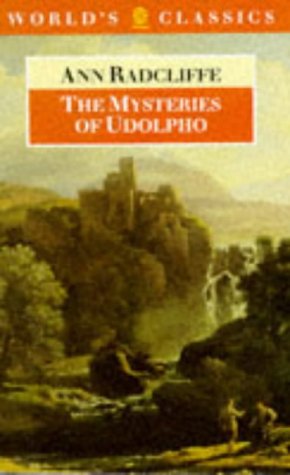
Today's focus is on Ann Radcliffe (1764-1823). Ann was born into a middle-class family, and seems to have been shy as a young person. She married William Radcliffe in 1787 - he was a journalist and editor of The English Chronicle, a paper of fairly radical opinions. It was he who initially supported and encouraged her writing. But before long the support - at least in a financial sense - was the other way around. At a time when the typical annual income of a writer was around £10, she sold the copyright to The Mysteries of Udopho for £500 in 1794, and three years later earned £800 for The Italian. These figures were considered unbelievable by leading publishers, and placed her as the highest paid writer of her time. It's hard to compare money values from a couple of hundred years ago, but  in terms of a wage bonus, that £500 would be roughly £600,000 today, and in terms of your economic power, more like £6 million (see the web site Measuring Worth). Not bad, by anybody's standards, and one could reasonably compare her to JK Rowling.

Cover - The Mysteries of Udolpho (Goodreads)
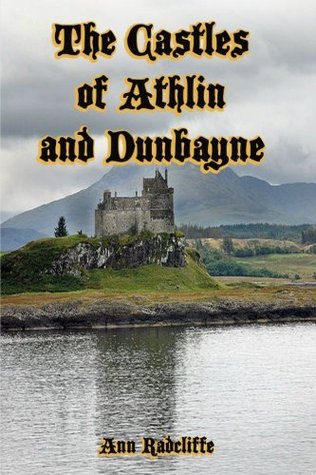
Ann began her writing, like many others of her time, with travel literature, and descriptions of place form key parts of her later novels. In an age where tourism was becoming a popular activity for the middle class, but in which most people had never actually visited many other countries, the travel writer was in high demand. Her first novel, in 1789, was The Castles of Athlin and Dunbayne, set in the highlands of Scotland. She then proceeded to publish four more novels, each in several volumes, over the next eight years. A final novel - a historical romance - was published posthumously, along with a philosophical essay. Perhaps the best known of the works of fiction is The Mysteries of Udolpho. Her chosen genre was the gothic novel, and she rapidly established herself as the leading exponent of that style, She took an existing form - first created by Horace Walpole in his 1764 Castle of Otranto - and transformed it into a serious literary form.


Cover - The Italian (Goodreads)
One of the great mysteries of her life is why, following the enormous successes of those five novels, she disappeared from the public eye and remained in seclusion  for the rest of her life - some twenty-five years. Sir Walter Scott wrote of her that "no author, whose works were so universally read and admired, was so little personally known." There were rumours - almost certainly untrue - that she had gone mad and been confined in an asylum. The truth seems to be more ordinary. She had financial security, lived a pleasant and satisfying life with her husband, and moreover strongly disliked the way that the gothic novel had developed. In Ann's hands, it was a lyrical art form exploring human relations, gender roles and stereotypes, and showed a growing interest in what we would now call psychological states. Others treated it in sensational and lurid ways, focusing on violence and horror. It seems that her abandonment of the genre was, at least partly, because she did not like what it had become. Her last novel in her early productive period, The Italian, was subtitled A Romance, and shows a movement away from gothic novels.

Cover, Lake District Observations (Books Cumbria)
Her observations as a travel writer are sensitive and acute. I first came across her writing in the form of a travel guide to the Lake District. Her descriptions of places and journeys are still easily recognisable now, especially the climb to the summit of Skiddaw. She did the trip on a pony, whereas I have walked it, but the route is the same. Here's a later section describing her journey south to Grasmere, along what we now call the A591:

Beyond Dunmail Rays, one of the grand passes from Cumberland into Westmoreland, Helm-crag rears its crest, a strange, fantastic summit, round, yet jagged and splintered, like the wheel of a water-mill, overlooking Grasmere, which, soon after, opened below. A green spreading circle of mountains embosoms this small lake, and, beyond, a wider range rises in amphitheatre, whose rocky tops are rounded and scalloped, yet are great, wild, irregular, and were then overspread with a tint of pale purple.

Like her fiction, her travel prose is flowing and engaging, leading you easily between outward appearance and inward reflection. Many of the famous travel writers of her day were creating books to help artists find the ideal location for a painting - a style known as picturesque: Ann wanted to experience the places in an emotional way, and for their own sake rather than as a source of pictures.

Cover, The Castles of Athlin and Dunbayne (Goodreads)
How can her writing be characterised? Firstly, everything has a rational explanation, however mysterious it seems at first. The characters in her books might well be persuaded by terror or guilt that supernatural things are afoot, but the truth eventually emerges. Rationality lives alongside emotion, authentic spirituality, and a deeply moral view on life. She established a feminine voice on what was then called the sublime - what we might now call the numinous - at a time when most opinions on the subject were written by men. The women in her books are at first trapped by the expectations of their society, and subject to all manner of fears and swoons - but they are able to change and adapt by finding a source of inner strength. The central characters are normally led to false conclusions by believing too easily in rumours and half-truths, but in the end the real truth is revealed. Mysteries abound, not least in the background histories of the central characters, and these slowly reveal all kinds of unexpected secrets.

Like many gothic novels, her books are set in a wild and romantic past, typically outside England.They would nowadays be classed as historical novels. For example, Udolpho is set in the late 16th century in southern France and northern Italy. At this stage she had not personally visited either country, but her descriptions are so vivid and compelling that this is very easy to forget.  In a day before Google Earth, photography, and widespread international travel, she relied heavily on the accounts of others... yet it is easy to believe as you read her that the accounts are based on personal observation. The wild terrain is a source of delight and inspiration rather than fear and darkness, especially for her women characters who retreat to such locations to find solace and peace. Some of her vocabulary may be old, but her preoccupations and interests still resonate well today.

In short, I feel that Ann Radcliffe deserves to be better known, although on balance I'm not sure that she would mind the rather concealed role she now fills. As early as 1862, Thackeray could lament that the younger generation did not know her works. In fact, most of the major 19th century British authors acknowledge their debt to her - Jane Austen, the Bronte sisters, Walter Scott, and Charles Dickens, for example - quite apart from those of other countries. like Dostoevsky, whose parents read her books to him in the evenings. However, these people have remained household names, while she has not.

It's appropriate to finish with part of her obituary in the Literary Gazette: "the finest writer in this kind of fiction that ever existed."

About the author:
Richard Abbott is one of the reviewers at The Review, and lives in London, England. He writes science fiction about our solar system in the fairly near future, and also historical fiction set in the ancient Middle East - Egypt, Syria, Canaan and Israel.

When not writing words or computer code, he enjoys spending time with family, walking, and wildlife, ideally combining all three pursuits in the English Lake District. He is the author of In a Milk and Honeyed LandScenes From a LifeThe Flame Before Us - and most recently Far from the Spaceports. and Timing. He can be found at his website or blog, on Google+GoodreadsFacebook and Twitter.

Saturday, 28 January 2017

Diana talks to ... Robert Southworth


Author’s interview – 2017. Diana talks to... Robert Southworth


Hi Rob, lovely to chat with you like this. We have lots to talk about so let's get going! Hopefully I have come up with some unusual questions!

If your latest book The Reaper’s Breath was adapted into a TV show or a film, who would you like to play the lead role?

 Luke Evans but he would have to do it with an English accent.


What made you choose this genre?

 I don’t consider  myself as a specialist in a certain genre. I am happy to move genres when I find an idea presents itself.

How do you get ideas for plots and characters?

 To be honest usually I look at history and ask myself the question “what if?” What if Spartacus didn’t die – what if the Ripper killings didn’t stop with Mary Kelly. Just one further point with regards to The Reaper’s Breath, I wanted to show the victims as  more than just a statistic. I attempted to give at least one a voice and show her to be human with the same dreams, hopes and fears that we all possess.

If, as a one off, (and you could guarantee publication!)  you could write anything you wanted, is there another genre you would love to work with and do you already have a budding plot line in mind?

I would love to write a fantasy book with the kind of genius humour that Terry Pratchett blessed the world. I have a plot for a fantasy novel but not the humour. Alas, I just don’t have that sort of talent. (Note from Diana: I think you have that sort of talent, Rob. Try it! I love your quick fire responses on social media)

Was becoming a writer a conscious decision or something that you drifted into (or even something so compelling that it could not be denied?) How old were you when you first started to write seriously.

I was actually made redundant. Feeling a little like I had been thrown on the scrap heap. My wife saw my torment and just placed her arm around me and asked what it was, that I really wanted to do. So, at the age of 38 I became a writer.

Marmite? Love it or hate it?

Hate it...

Do you have any rituals and routines when writing? Your favourite cup for example or ‘that’ piece of music...??

I can only write late at night when the entire household is asleep.

I promise I won’t tell them the answer to this, but when you are writing, who is more important, your family or your characters?

Family. probably because my kids are so young. As they get older they will be able to fend for themselves, and the writing can take over.

Other than writing full time, what would be your dream job?

James Bond

Coffee or tea? Red or white?

Coffee – don’t drink wine (but do like a drop of Irish whiskey now and then)

How much of your work is planned before you start? Do you have a full draft or let it find its way?

I believe a story should develop along with the characters, so I begin with a very basic plot. My style is to be as fluid as possible. (It really works. D )

If you had free choice over the font your book is printed in, what font/fonts would you choose?

Really have no preference as long as the font isn’t too severe.

Imagine that you could get hold of any original source document. What would it be?

Well I’m hoping to write a novel around the life of Athelstan – so anything relating to the man would be amazing.

Have any of your characters ever shocked you and gone off on their own adventure leaving you scratching your head??? If so how did you cope with that!?

Not their own adventure but one of my characters from my Spartacus series should have died in the part of the first novel and was still alive and kicking at the end of the last – despite me planning to kill him a number of times! (I am not published and most likely never will be but I write for my own pleasure. I have a character, Piet, who has needed to die for at least a year, but I cannot kill him. I just cannot!! D)


How much research do you do and do you ever go on research trips?

I tend to research as I go along. I would love to go on research trips alas with a young family that is not too likely at the minute.

Fiction authors have to contend with real characters invading our stories. Are there any ‘real’ characters you have been tempted to prematurely kill off or ignore because you just don’t like them or they spoil the plot?

Not really, I see real characters as a bond that anchors the story. Besides, as soon as we put words in their mouth they become part fiction.

Are you prepared to go away from the known facts for the sake of the story and if so how do you get around this?

I may bend the truth but try not to break it...

Do you find that the lines between fact and fiction sometimes become blurred?

I happen to believe that history provides us with very little fact. Most of what you read is educated guess work. I’m a fiction writer it’s my job to blur fact into fiction. If I do it well, the reader shouldn’t be able where one ends and the other begins.

Have you ever totally hated or fallen in love with one of your characters?

Many times – they are in essence part of me.

What do you enjoy reading for pleasure?

Pretty much anything except Romance and Erotica.

What drink would you recommend drinking whilst reading your latest book?

Well I have attempted to make it atmospheric with a couple of shocks – so maybe nothing too hot.

Last but not least... favourite author?

Two - Terry Pratchett and James McGee

This has been really interesting, Rob. Thank you.
Biography and other books by Rob


The man himself!
 

© Diana Milne January 2017 © Robert Southworth January 2017 


Saturday, 14 January 2017

Diana talks to... Jacqueline Reiter


Jacqueline Reiter has a PhD in late 18th century political history from the University of Cambridge. Born into a diplomatic family, she has long looked upon history as a fixed point of reference in a peripatetic life. A professional librarian, she lives in Oxford with her husband and two children.
Her exciting book about John Pitt has just been released by Pen and Sword books The Late Lord and is available from them now or is available to pre order from Amazon.
"John Pitt, 2nd Earl of Chatham is one of the most enigmatic and overlooked figures of early nineteenth century British history. The elder brother of Pitt the Younger, he has long been consigned to history as 'the late Lord Chatham', the lazy commander-in-chief of the 1809 Walcheren expedition, whose inactivity and incompetence turned what should have been an easy victory into a disaster. Chatham's poor reputation obscures a fascinating and complex man. During a twenty-year career at the heart of government, he served in several important cabinet posts such as First Lord of the Admiralty and Master-General of the Ordnance. Yet despite his closeness to the Prime Minister and friendship with the Royal Family, political rivalries and private tragedy hampered his ascendance. Paradoxically for a man of widely admired diplomatic skills, his downfall owed as much to his personal insecurities and penchant for making enemies as it did to military failure. Using a variety of manuscript sources to tease Chatham from the records, this biography peels away the myths and places him for the first time in proper familial, political, and military context. It breathes life into a much-maligned member of one of Britain's greatest political dynasties, revealing a deeply flawed man trapped in the shadow of his illustrious relatives."

Hi Jacqueline, I am so delighted you have agreed to talk to me! and I am equally sure that you are tired of being asked the usual interview questions, so hopefully this interview is an interview with a difference and I have come up with some unusual questions!

First things first I am sure there is a question that you have always longed to be asked. Now is the chance. Ask your own question and answer it! Gosh. Ask the hard ones first, why don’t you? All right. Could you ever see yourself writing something other than history? – Honestly? No. I’ve always written stuff, but was pretty aimless and random until history dropped on me like a ton of bricks at the age of 11. I spent three happy years reading about the English Civil Wars and Charles II until I discovered, in quick succession, the 18th century and political history. That was over twenty years ago (gah) and I frankly can’t see me moving on any time soon.

If your latest book, The Late Lord: the life of John Pitt, 2nd Earl of Chatham (Pen & Sword History, 2017) was adapted into a TV show or a film, who would you like to play the lead role? It would have to be a documentary, unless someone decided to make a biopic รก la “The Duchess” or “The Imitation Game”. Either way, Lord C would have to be played by someone tall, thin and dark. Matthew Goode would be a pretty good fit, if he is capable of playing “anti-hero” adequately. (Eddie Redmayne has been “cast” as Chatham’s brother William Pitt the Younger in my head for a long time now.)

What made you choose this genre? I’ve always written both fiction and non-fiction in tandem: I have written four dissertations over the past fifteen years (one 70k, two 30k and one 10k), all while attempting to hammer out a novel or two. When I finally finished my novel, I submitted it to a publisher at the recommendation of a friend. The publisher told me they liked it, but didn’t publish fiction: if I was willing to turn it into a non-fiction book, however, they would consider it. I wrote up a proposal, they liked that too, and the rest is – quite literally – history.

I often say I don’t think there’s much difference between good historical fiction and good historical non-fiction, apart from the referencing. Both should be built on the same sources, both should tell an interesting story, and both should be relevant and instructive. Both require leaps of faith and calculated guesses: the non-fiction may, however, use “perhaps” a little more often.

How do you get ideas for plots and characters? I read until something or someone grabs me by the lapels and shouts at me to write. I can’t really explain what it is that attracts me. I have to have that “zing” or it simply won’t work.

If, as a one off, (and you could guarantee publication!)  you could write anything you wanted, is there another genre you would love to work with and do you already have a budding plot line in mind? I’m quite happy to stick in the history non-fiction genre, and I have a list of subjects I’d like to work on as long as my arm. A return to historical fiction would be an obvious one here. Perhaps a timeslip novel: as someone with a foot in both present and past, I do feel an affinity with those.

Was becoming a writer a conscious decision or something that you drifted into (or even something so compelling that it could not be denied?) How old were you when you first started to write seriously? I already kind of answered this. Writing very definitely chose me. I can still remember covering reams of paper as a child and stapling them together into booklets. I wrote my first novel when I was 11. It was really, really, really bad. I tried to get a historical novel about Charles I published when I was 14, also pretty bad, although much better than the one I wrote when I was 11. My second attempt to get published was at the age of 18. I’ve finally got there at the age of 37.

Marmite? Love it or hate it? I’m indifferent. Wouldn’t choose it, but if offered a slice of bread with marmite on, I will happily eat it.

Do you have any rituals and routines when writing? Your favourite cup for example or ‘that’ piece of music...?? I have small children, so have learned to write wherever/whenever. I get up at 5, make myself a great deal of coffee, drink it, and write as much as I can till 7 or the kids get up (whichever comes first). On writing days I then return to writing at 9:30. I’ve learned not to listen when my muse tells me he’s not in the mood: I kick him in the shins and usually he then behaves. It can be a drag, but hey, I wrote a book like this, so it works. I have no rituals as such, but, when I’m editing, I mark up my MS in pink pen. That’s the only real ritual I have.

I promise I won’t tell them the answer to this, but when you are writing, who is more important, your family or your characters? I won’t lie – it’s always a wrench to tear myself away from the writing after I’ve spent so long immersed in another world. But if the house were burning down, I’d save the kids before my laptop. Probably.

Other than writing full time, what would be your dream job? Historical interpretation/living history. I’ve done it before and it’s so much fun.

Coffee or tea? Red or white? Both coffee and tea, although not simultaneously. By red or white, I presume you mean wine? I don’t drink, alas.

How much of your work is planned before you start? Do you have a full draft or let it find its way? With “The Late Lord”, I had to write up a synopsis and a set of chapter headings for my proposal. That was pretty much the only plan I had. I did sketch out each chapter before writing it though.

If you had free choice over the font your book is printed in, what font/fonts would you choose? Something with serifs.

Imagine that you could get hold of any original source document. What would it be? OH MY GOD. You can’t ask a historian this question. It’s cruel. If I must answer, then let it be Lord Chatham’s correspondence with his wife. I know it existed once.

Have any of your characters ever shocked you and gone off on their own adventure leaving you scratching your head??? If so how did you cope with that!? Not exactly, but I’ve often found Lord C saying and doing things he really shouldn’t be, according to the accepted historical record. Some of it I didn’t like much. Hey ho, the sources don’t lie (… or do they?).

How much research do you do and do you ever go on research trips? Research isn’t quantifiable, but as my biography is the first ever written of Lord Chatham, we’ll go with “I had to do quite a lot”. Research trips are the best thing about historical research. This particular project took me to archives all over the UK, including London, Belfast and Edinburgh. I spent a week in Gibraltar (take me back!), and cycled twice with my husband to Holland to visit relevant historical sites.

Have you ever totally hated or fallen in love with one of your characters? Anyone who knows me will tell you that I have totally succumbed to “biographer’s Stockholm syndrome”. (I hope I’ve been balanced in my writing though!) I refer to Lord Chatham as “John” or “my boy” and have stopped worrying about it now. When he was four, my son announced, quite seriously, “John lives in our house. He’s Mummy’s friend and he’s dead.” Am hoping he never told his teacher about this interesting domestic arrangement.

What do you enjoy reading for pleasure? Anything historical, really, either fiction or non-fiction.

What drink would you recommend drinking whilst reading your latest book? Lord Chatham would recommend claret or sweet sherry. I wrote it fuelled by coffee, so that might give you a better flavour.

Last but not least... favourite author? Sharon Penman, Lindsey Davis or Terry Pratchett.

 Jacqueline, I have really enjoyed this. Thank you !!
 

© Diana Milne January 2017 © (Jacqueline Reiter, 2017)