
There's no question that here at The Review we have some pretty fantastic books and reviews, to say the least. Periodically we also get to showcase a bit about ourselves, the admins, with series that focus on a common theme. This week we got a bit of both as well as a new weekly feature: the Sunday Wrap Up, a glimpse at the week just passed and opportunity for readers--whether coming back to familiar ground or those happening upon a great new blog--to review it all in one page that can be used as a base from which to visit or re-visit their favorite posts from the previous week.
So what happened this week?
 Well, Simon wrapped up our series of favorite books, in which
each of us approached that idea from different angles. In this case Simon chose to focus on one book and the influence it had within his reading experiences. He writes: "I came across [Alan Garner's] short novel, Red Shift, when I was about twelve and on holiday. I was already familiar with his previous books--The Weirdstone of Brisingamen, The Moon of Gomrath, Elidor, The Owl Service--and so I thought I knew what I was letting myself in for.
Red Shift takes on Garner's fascination with place to a new level. The novel (and it's a very short one) follows three stories which all happen in the same places, but at different times. So we start with Tom and Jan, teenage lovers in the second half of the 20th century; then we're suddenly plunged into second-century Britain, with a detachment of soldiers on the run from the Roman army through tribal territory; and then we find ourselves in the 17th century, with a frightened village awaiting the arrival of hostile troops."
--Intrigued? Of course you are! To keep reading, click here.
 "Th[is] story follows [author] Kelly's ancestor through the trials and tribulations of Belfast's poorer Protestant areas. William Henry Kelly, his wife Belle, and their small family are beset by tragedy and hardship--some of their own making--until one final tragedy changes William Henry's life forever." Michelle goes on to write about Kelly's ancestor and his prison experiences as well as history as it unfolded, opening towards the Great War and events on local, national and international levels.
A Wistful Eye: The Tragedy of a Titanic Shipwright takes readers behind the scenes: to get a glimpse of those who brought the ship to life as well as individual, personal events leading up to and following the 1912 tragedy. For the rest of Michelle's review of a poignant story you surely will want to read, continue...
 Steampunk? What's that!? On another book cover review visit to us, Lorri does a great job introducing those unfamiliar to the genre: "For the uninitiated, steampunk is a sub genre of sci fi, and one that has many explanations. My take on this quirky and slightly wonderful 'thing' is to imagine the console of The Tardis, add The League of Extraordinary Gentlemen and plonk it all into a late Industrial Revolution setting (London or the Wild West). I think the best summing up of it comes from The Ministry of Peculiar Occurrences, who state: 'If Jules Verne or H.G. Wells were writing their science fiction today, it would be considered steampunk'."
One steampunk cover appears at right, but what's fascinating about it all is that the various images are so different! Come see others Lorri chooses to review and what she has to say about them!
 Many of us have heard of the old belief that in order for a woman to carry twins she must have conceived with two different men--leading, of course, to accusations of adultery. Against the backdrop of 17th century England, a post-civil-war setting in which many were "edging towards the era of enlightenment, individualism and new scientific understanding," Twins follows the fortunes of Elizabeth Torbett and her twin babies, Emma and Edgar, as they all make their way in the world. Carol reviews the novel with a keen eye and writes:
"I particularly liked Pym’s characterisation. Her protagonists are very sympathetic and her rogues a nightmare. I would not like to run into any of them on a foggy night in a 1660s London alleyway. Pym’s technique is to be commended as she moves Emma’s story forward only to stop with a cliff-hanger. She gives Edgar’s story the same page-turning treatment. Pym also, sensibly, adheres to the point of view of the pair so that, considering the many events and characters within the novel’s pages, readers are never lost. Though there is a gallery of characters, they are all memorably and vividly portrayed, even the downtrodden mother who finds her voice as the story progresses." Follow on with Carol's review here.
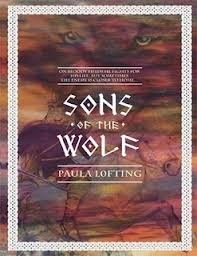 Linda wraps up the week this time with her review of our own Paula Lofting's Sons of the Wolf, which follows the life of protagonist "Wulfhere, a great bear of a man, who is a creature of principal, although he often wishes he were not. He is a loyal servant of the king and of Harold Godwinson, earl of Wessex, but he is also the guardian of Horstede and the protector of his family, and his loyalties and responsibilities often come in conflict. And that is a dilemma for a man who attempts to be all things to everyone." Linda continues:
"Lofting [ . . . ] builds her storyline from there. Then she adds her own considerable knowledge of the sociology and politics of eleventh century Saxon England. Next she adds to the mix all of the ingredients that make a novel of any genre readable--love, sex, hate, jealousy, remorse, guilt, infidelity, vengeance, death and profound tragedy. And to all of that, she adds her incredible talent for bringing blood and gore into her action scenes without overpowering the essence of her story, and writes her action scenes as if she were riding in the van." The incredible mix of history and individual experiences, woven together with Domesday book characters and then some, makes for a novel you not only will have to get your hands on, but will leave you yearning for more. If at all possible to be on the fence, reading the rest of Linda's review will take care of that. As for the longing once you finish the book: the sequel is nearly ready!
So what happened this week?
each of us approached that idea from different angles. In this case Simon chose to focus on one book and the influence it had within his reading experiences. He writes: "I came across [Alan Garner's] short novel, Red Shift, when I was about twelve and on holiday. I was already familiar with his previous books--The Weirdstone of Brisingamen, The Moon of Gomrath, Elidor, The Owl Service--and so I thought I knew what I was letting myself in for.
Red Shift takes on Garner's fascination with place to a new level. The novel (and it's a very short one) follows three stories which all happen in the same places, but at different times. So we start with Tom and Jan, teenage lovers in the second half of the 20th century; then we're suddenly plunged into second-century Britain, with a detachment of soldiers on the run from the Roman army through tribal territory; and then we find ourselves in the 17th century, with a frightened village awaiting the arrival of hostile troops."
--Intrigued? Of course you are! To keep reading, click here.
A Wistful Eye: The Tragedy of a Titanic Shipwright takes readers behind the scenes: to get a glimpse of those who brought the ship to life as well as individual, personal events leading up to and following the 1912 tragedy. For the rest of Michelle's review of a poignant story you surely will want to read, continue...
One steampunk cover appears at right, but what's fascinating about it all is that the various images are so different! Come see others Lorri chooses to review and what she has to say about them!
"I particularly liked Pym’s characterisation. Her protagonists are very sympathetic and her rogues a nightmare. I would not like to run into any of them on a foggy night in a 1660s London alleyway. Pym’s technique is to be commended as she moves Emma’s story forward only to stop with a cliff-hanger. She gives Edgar’s story the same page-turning treatment. Pym also, sensibly, adheres to the point of view of the pair so that, considering the many events and characters within the novel’s pages, readers are never lost. Though there is a gallery of characters, they are all memorably and vividly portrayed, even the downtrodden mother who finds her voice as the story progresses." Follow on with Carol's review here.
"Lofting [ . . . ] builds her storyline from there. Then she adds her own considerable knowledge of the sociology and politics of eleventh century Saxon England. Next she adds to the mix all of the ingredients that make a novel of any genre readable--love, sex, hate, jealousy, remorse, guilt, infidelity, vengeance, death and profound tragedy. And to all of that, she adds her incredible talent for bringing blood and gore into her action scenes without overpowering the essence of her story, and writes her action scenes as if she were riding in the van." The incredible mix of history and individual experiences, woven together with Domesday book characters and then some, makes for a novel you not only will have to get your hands on, but will leave you yearning for more. If at all possible to be on the fence, reading the rest of Linda's review will take care of that. As for the longing once you finish the book: the sequel is nearly ready!
****Currently there is a FREE autographed copy of Sons of the Wolf up for grabs. Comment at the blog or Facebook thread to get your name in the hat!****


