Showing posts with label Simon Stirling. Show all posts

Sunday, 4 May 2014

Sunday Wrap Up: Week ending May 4, 2014

Please note there are two giveaways this week, so be sure to follow the links to comment and get your name in the hat!

This week The Review wanted to travel all over the map and so we have some chat and some review; Elizabethan England and barely into a new millennium; scholarly study and young adult. In short, there's something for everyone! "Fresh and engaging," as one of the reviewers put it, perfectly matched to this time of the year when daylight has arrived and we shake the dust off ourselves and savor in the freshness and sweetness of the summer sun--indeed, the very air. 

*********

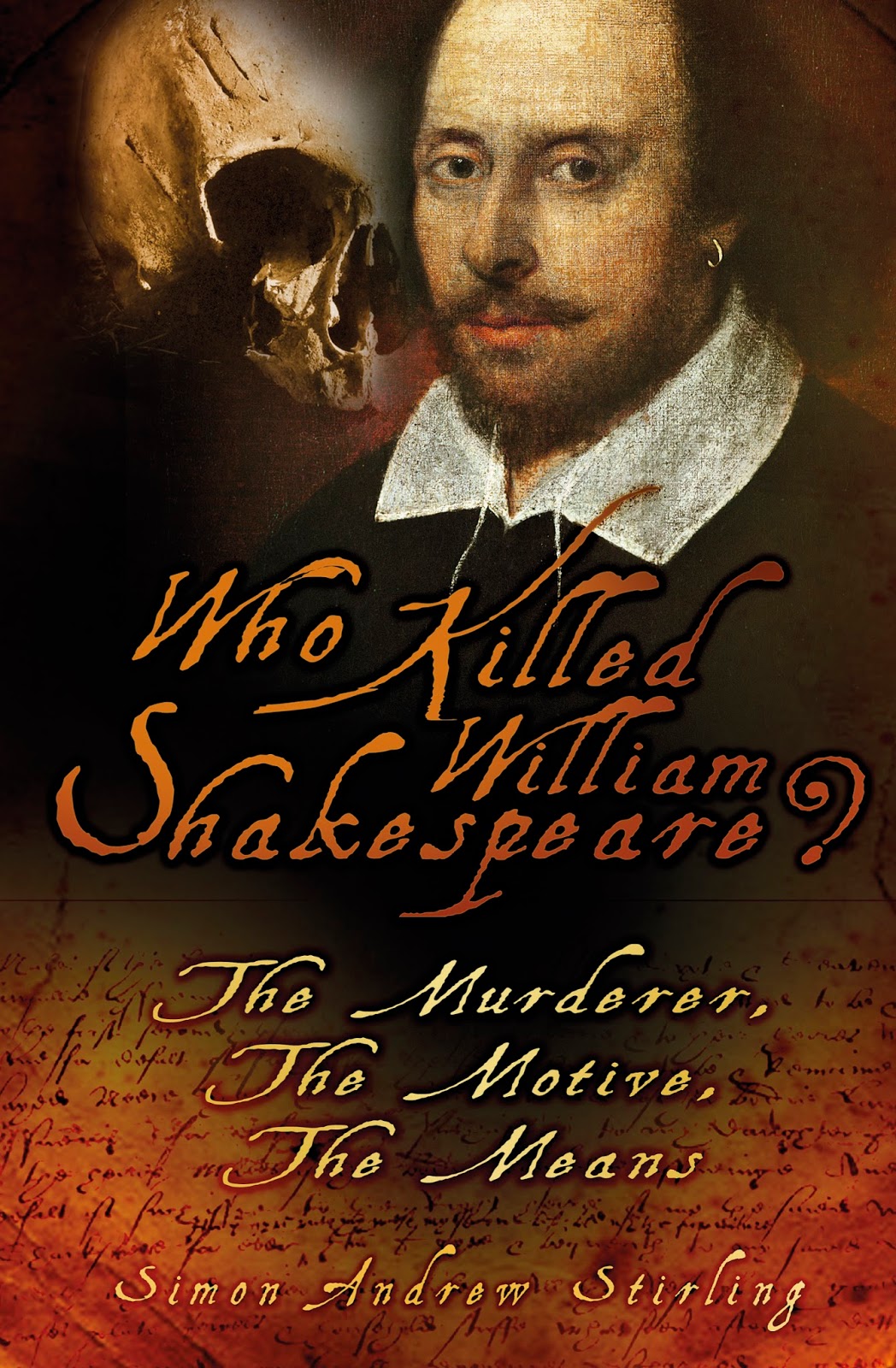
Lisl gets us started with her review of Simon Stirling's Who Killed William Shakespeare? The Murderer, The Means, The Motive. "Opening with reference to the disappearance of the real Shakespeare to be replaced by a mythical figure, Stirling shifts to the personal Shakespeare and various interpretations of his life and legacy. Specifically he challenges the notion that nothing is known about the playwright and commences the laying out of his research, which over the course of the book shows how history was in the process of being re-written when he still lived, in the 18th century and even today when Shakespeare continues to be celebrated as what the author refers to as a “trademark.”

But why would anyone need to re-invent who Shakespeare was? What needed to be covered up? Why would anyone murder him? And how could they get away with it? While part of the mystery rests within the who, readers shall not be let down when within the first section a suspect is revealed—in fact, the book’s blurb provides this information:

He was (indeed) honest, and of an open and free nature: had an excellent Phantsie; brave notions, and gentle expressions: wherein he flowed with that facility, that sometime it was necessary he should be stopped. . .

Like an investigator, Stirling turns to the method of collecting evidence to prove the means, motive and opportunity; without such, “knowing” is insufficient to support a successful criminal proceeding. Other elements are required, however: the presence of reasonable doubt as to the suspect’s guilt might wash away the strength of those three aspects. In three sections, titled after these elements, the author explores in great detail avenues of the crime, including what led to it and subsequent events."

To learn more about the Shakespeare you think you may know, and to comment for chance at a free, signed copy of this spectacular book, click on!


*********

Jayne waves us over to her corner again, this week to share with us a fab interview with author Amy Licence who  discusses, amongst other topics, stealth writing (borrowed that phrase from a FB commenter!), kitchen table research and what the future may bring. Take it away, Jayne!

"I have been lucky enough to interview one of my favorite non-fiction writers, Amy Licence. She very kindly agreed to answer some of my questions and I thought I would share them with you.

You have so far chosen to mostly write about women from the 15th century, so what made you choose them ?

There are two answers to this: one about women but also specifically about the 15th century. I can’t help but feel drawn to that period in time, although I started out being interested in the Tudors and gravitated to the Wars of the Roses. Something about that century fascinates me and I can’t really offer a satisfactory explanation of why. I can say that I find the people and events fascinating, but I expect enthusiasts of any era would make the same assertion. The closest I can come to it, is to say that I feel most at home there. Regarding the women aspect, I’ve always been interested in women’s lives, in their experiences within a patriarchal framework and just how far they were able to exercise any influence or control at all, from queenship to motherhood. The women of the 15th century particularly fascinate me because so many of them remain an enigma to us, although they must have been key players in the dynastic power struggles of the day. I don’t accept the theory that they were just there to reproduce. They may not have sat in council chambers or fought on battlefields, but as wives, mothers and daughters, I’ll bet they had a lot to say.

Do you have a favourite out the three women, Anne Neville, Elizabeth of York or Cecily Neville?

They’re all very interesting to me and as I researched each, I learned just how remarkable their lives really were. I think there is a lot we will never know about Elizabeth’s history and marriage and I am endlessly fascinated by the question of what exactly Anne Neville did or didn’t know. But I have to say that Cecily’s role probably interests me the most. As the wife of the Duke of York, and the mother of Edward, George and Richard, she was in a unique position at the heart of that family and occupied a place in their lives. There is also a degree of controversy about some of Cecily’s decisions, such as her support of George’s rebellion against Edward and her role in the allegations about her own fidelity. Perhaps more than the other two, she shaped contemporary events, which is all the more ironic, as she was the only one of the three who did not become queen."

Since we are quite certain you'll be intrigued by stealth writing and the other goodies mentioned above, click here to read the rest of this intriguing interview!

*********

"Shield Maiden is simply a terrific read. Written by Richard Denning for young readers, there is plenty to intrigue and draw in the older reader as well.

The opening premise of the story is as old as time: a daughter, Anna, yearns to be a warrior woman in an Anglo Saxon community, against all convention and expressly against the expectations of her father.  The time (around 600 AD) and location make this story fresh, engaging, and, as the story unfolds, unexpected.  Memorable characters are integral to this story: Anna’s circle of young friends; a tinker, Raedann who may be more than he seems; Gurthrunn the dweorg (dwarf) who holds the key to the core mystery and adventure of this book. 

While exploring a ruined Roman villa, Anna and her friends find a gold horn.  Passed from hand to hand, no one can blow sound out of the horn until it comes to Anna.  The horn responds to her and thus she is ‘chosen’ by the instrument whose trill opens the doors between worlds and unleashes the struggle between the gods in Anna’s village and its environs.  The horn recognizes Anna’s strength and potential for leadership, her gender notwithstanding."


Since there are three free copies of this book up for grabs, it's pretty sure you'll not want to miss clicking that link!

Missed last week's Wrap Up? Not to worry, gentle readers, here it is                   

Sunday, 27 April 2014

Sunday Wrap Up: Week ending April 27, 2014

Please note this is another week in which every review has a giveaway~so be sure to follow each link to their respective reviews and comment for your chance to win! 

Weeeeeeeeeee're back! The Review Group have been having a spot of relaxation before last week and here we are again to greet you with a wrap up of what you've missed or reviews you'd love to re-visit, and posts that are sure to take their rightful places amongst many other favorites. 


*********

To welcome you to kick back and enjoy the tales told, here's our own Louise Rule to give you a glimpse of life with the Grahams.

Anna Belfrage continues her on-going Graham Saga with Serpents in the Garden, after which we are promised at least three more books in this exciting series.


"In Serpents in the Garden, book five in The Graham Saga, we are back following Alex Lind from the 20th century and her husband, Matthew, from the 17th century, thrown together through a rift in time, carrying on their adventures in the New World. Maryland is where they have settled since fleeing their beloved Hillview in Scotland because of Matthew's religious convictions. Now they are settled in their new home which has been named Graham's Garden.

What a book this is! There is more mayhem, more fighting, and Anna certainly doesn't give her readers any respite from the drama of living in 17th century Maryland. There are the old adversaries, and there are also some new and disturbing ones."


Will the Grahams ever find any peace and quiet? Why not find out? It's not too late to add to your summer reading (especially you northerners out there who are still kicking away the last snow berms), and what better way to get started than to win a free copy!? Check out the rest of Louise's fab review for details as to getting in on the action!


*********


"Feud," Emma assures us, "is one of those books that makes reading (and reviewing) so worthwhile and downright enjoyable.  From the striking cover that hints at what lies within, to the last cliffhanger of a sentence, the reader is taken on an enthralling, action-packed and absolutely riveting adventure." That's the hook part; next she goes for reeling in the line: "A violent, emotional and long-standing argument between two land-owning families against the backdrop of the opening era of the Wars of the Roses, Feud gives us an insight to how life must have been. Survival of the fittest - both in mind and body - was the key.  The opening paragraph in this book is where the action starts: no build-up, no hint of what’s coming, just boom!  And the reader is in the thick of it. The author cleverly portrays the transition of the feud from fathers to sons within these opening paragraphs whilst maintaining the constant environment of the war. It is at this point so early on in the novel, that I must say this book is not for the squeamish. The reader is never allowed to forget the era, the trials and tribulations and the constant struggles faced by the characters." Now is that a whammy, or what? This spectacular-sounding book also has a giveaway, and your name just might be the one drawn from the helmet~you know there's only one way to find out!


*********


Lisl keeps the historical fiction pattern going with her review of a book set in Great War South Australia, scene of some unloveliness. "Opening with “Magpies and Mendelssohn,” we see Neddy approaching a music hall from which come voices singing God Save the King, accompanied by piano. Though initially shooed away, he makes his way inside to warn Elsie Fischer, whose family later Anglicise their names, the better to fit in, of danger to her father. Misunderstood by many, Neddy is referred to as the “dull-witted child.” Indeed, he cannot communicate in typical fashion and uses his singing voice to reach Elsie.

[H]is voice utter[ed] a wordless succession of shrill cries. She gaped at him. His voice was so clear, so sure. It uttered just two notes and she could see them as if written. First a crotchet, then an accentuated minim; together making an interval of a rising augmented fifth. A call of alarm!"

"As the individuals’ stories proceed and make connections, readers are given a greater understanding of the war mentality and how it drives otherwise peaceful citizens to harass some of their neighbors to such an extent that lives, careers and futures are destroyed. Using the language of music to convey some of his most lyrical passages, Crabbe guides readers through a story that matures, much like its characters, who themselves act almost as part of an opera, engaging us in the history of a young nation seeking its identity." Join Lisl in exploring this poignant set of novellas, and look for your chance at a freebie by commenting at the review. 


********


Last but not in any way the least, Simon rounds out the week with his ongoing celebration of the birth of William Shakespeare~~poet, playwright, actor, subject of great mystery! Get ready to re-examine everything you have ever been taught about this fascinating figure: "[M]uch of what we think we know (or what we think we don't know) about Shakespeare comes from a period many years after Shakespeare lived. Between 1769, when the actor-manager David Garrick hosted his farcical "Jubilee" for Shakespeare in Stratford-upon-Avon, and 1785, when Rev. James Wilmot, a clergyman who had retired to a village near Stratford, first suggested that Will Shakespeare could not have written his own plays, all our notions about Shakespeare changed.

It was during that very period that the Warwickshire lad became "the god of our Idolatry". At the same time as Will Shakespeare became a kind of national figurehead - the secular patron saint of England - we forgot who he actually was. A scholar named George Steevens whittled the known facts of Shakespeare's biography down to a few notes. We know that he was born, got married, had children, went to London, wrote some plays, and then he went home. And that's all we know."

When you think about it that way, pretty heady stuff!


Tuesday, 15 April 2014

The Best of The Review: Favorite Posts From the First Half Year (Volume VI)

Sworn Sword~~by James Aitcheson

Marsha writes, "I picked Paula's review of Sworn Sword because the review inspired me to purchase the book which I enjoyed immensely. I love the Conquest time frame and was happy to have a new author to explore. I am looking forward to purchasing the rest of the series."


Sworn Sword sweeps us into the 11thc just as the English are on the rise after their devastating defeat at Hastings just over two years before. From the outset we are thrust into a world of where life depends on who wins the battles.  Bloodshed and loss is now a way of life for most people since William of Normandy clawed the English crown from the head of the  usurper’, Harold Godwinson.  

With the opening focusing on an English uprising in the streets of Dunholm, strong hold of Robert de Commines, Lord of the North, we meet our protagonist, Tancred, a Breton, commanding his own conroi. Tancred and his comrades have been trying to fight off the attack when Tancred hears that his beloved Oswynn Is murdered by the marauders; but there is no time to grieve, for he must save his lord, Robert, set upon with his men in the mead hall. Tancred leads his conroi to the rescue but they are too late and Lord Robert is burned alive with his comrades inside the blazing  hall. The Normans are slaughtered almost to a man, but Tancred, who has been badly injured, is carried by his surviving friends Eudo and Wace to the relative safety of York. There the trio find refuge in the house of Robert’s vicomte, Guillaume (William) Malet.

Tancred spends some time under the care of Malet’s priest, Aelfwold who tends his patient’s wounds and saves him from developing a life threatening infection. When he is well, Malet gives the now lordless knight an ultimatum: owe him a debt for the succour and hospitality he had provided him with, or carry out a mission  that would set him free of any obligation owed. Reluctantly, he accepts, for he would rather stay behind in York to exact revenge upon the English who killed his lord and his woman Oswynn. But little did he realise when he gave his oath to Malet, that he would become embroiled in a secret that holds the fate of the kingdom in the balance...

I approached this novel with caution, a) because I am a die-hard Anglo-Saxon supporter and b) because the Normans did terrible things to the English during the invasion, so when I realised this was going to be a story told from the point of view of one of the invaders, I was unsure as to whether or not I was going to enjoy it.  It’s not that I am so narrow minded I can’t enjoy a book from any other viewpoint other than the English one, it is that I didn’t want to read something that promoted the Norman invasion as a good thing and that William was a good guy fighting for his rights, and by the shedding of much English blood, winds up on the English throne. Although Tancred fought on the Conqueror’s side at the Battle of Hastings, he views the English with suspicion and believes that the rightful King now sits on the throne, this is a book that tells the story of one man’s journey to find a new purpose to his life, now that his beloved lord is no longer in the world.

What I liked about James Aitcheson’s portrayal of an England in the aftermath of Hastings, is that it shows the reader how the scene would have looked to just such a man, especially as it is written in the first person, without making it heavily pro-Norman or pro- English. Although the latter are seen as pretty much the bad guys in a way, and the former as the righteous, it’s understandable, because we are seeing it from Tancred’s point of view and as far as he is concerned, he and his comrades are vindicated, for they represent loyal supporters of the rightful King, assisting him in keeping the peace in his new kingdom that was bequeathed to him, quite honourably by his cousin Edward, and stolen from him by the usurper Harold Godwinson. Presented as thus, I found it easy to glide into the story from the start.


Click to continue reading


Paula's People with Simon Stirling

"I picked Paula's piece with Simon about Shakespeare because it was so interesting and I am fascinated by Simon's ideas. I would really like to delve more into Shakespeare's life and plan on purchasing Simon's book."


*********                                                               

Thanks to Simon for coming along and being a guest on Paula's People. Simon discusses the ideas that spawned his latest novel Who Killed William Shakespeare?  


I was chatting to (chatting up?) a Canadian student at my drama school in London, one day.
“So – got anything planned for this weekend?”              
“Yeah, we’re all going up to Stratford-upon-Avon.  We’re seeing a show at the Royal Shakespeare Theatre, and we get the Shakespeare tour.”
It was part of the one-year course for overseas students: the Stratford Weekend.  And that’s when it struck me.  To lovers of theatre, and literature, all over the world, Stratford is a kind of Mecca.
And there was me thinking it was a place you went to on a Sunday afternoon.
I’ve spent a great deal of my life in and around Shakespeare’s hometown.  It’s given me a different perspective on the ‘Sweet swan of Avon’.  Time after time, reading biographies of William Shakespeare, I was struck by how little interest the biographer had in Shakespeare’s native region, his family connections, the knotty network of friends and co-religionists which made Warwickshire such a tribal county.
London has changed since Shakespeare’s day.  But much of his home county hasn’t altered that much.  You can get closer to Shakespeare in the lanes around Baddesley Clinton or Earls Common than you ever can on the banks of the Thames.
When I started studying Shakespeare in the late-1980s, hoping to understand how a lad from the Midlands became the world’s greatest poet-playwright, I found it all a frustrating experience.  “We know so little about him!” seemed to be the cry on every Shakespeare scholar’s lips.  Twenty-five years on, I’ve come to believe that this mantra is anything but true.  By refusing to concentrate on his London days, I was able to uncover several new facts about Shakespeare’s life.  A whole new picture emerged – more ‘real’, if you will, and certainly more intriguing.  Downright scary, at times.

But the mythology of Shakespeare forms most of what we know, or think we know, or are told to think we know, about this brilliant man.  To engage properly with Shakespeare is to enter the terrifying world of Tudor and Jacobean politics, something unnervingly close to a police state, and the sheer brutality of the repression of those who adhered to the Catholic faith, as their forefathers had done for a thousand years.  It is to enter a period of great upheaval, a massive redistribution of wealth, the remorseless rise of a new political class and a casual recourse to murderous violence.  It was a time of fear and favour, of propaganda and prejudice.

Click to continue reading...

Sunday, 2 March 2014

Sunday Wrap Up: Week ending March 2, 2014

There's no question that here at The Review we have some pretty fantastic books and reviews, to say the least. Periodically we also get to showcase a bit about ourselves, the admins, with series that focus on a common theme. This week we got a bit of both as well as a new weekly feature: the Sunday Wrap Up, a glimpse at the week just passed and opportunity for readers--whether coming back to familiar ground or those happening upon a great new blog--to review it all in one page that can be used as a base from which to visit or re-visit their favorite posts from the previous week.

So what happened this week?


Well, Simon wrapped up our series of favorite books, in which
each of us approached that idea from different angles. In this case Simon chose to focus on one book and the influence it had within his reading experiences. He writes: "I came across [Alan Garner's] short novel, Red Shift, when I was about twelve and on holiday. I was already familiar with his previous books--The Weirdstone of BrisingamenThe Moon of Gomrath, ElidorThe Owl Service--and so I thought I knew what I was letting myself in for.

Red Shift takes on Garner's fascination with place to a new level. The novel (and it's a very short one) follows three stories which all happen in the same places, but at different times. So we start with Tom and Jan, teenage lovers in the second half of the 20th century; then we're suddenly plunged into second-century Britain, with a detachment of soldiers on the run from the Roman army through tribal territory; and then we find ourselves in the 17th century, with a frightened village awaiting the arrival of hostile troops."

--Intrigued? Of course you are! To keep reading, click here.


"Th[is] story follows [author] Kelly's ancestor through the trials and tribulations of Belfast's poorer Protestant areas. William Henry Kelly, his wife Belle, and their small family are beset by tragedy and hardship--some of their own making--until one final tragedy changes William Henry's life forever." Michelle goes on to write about Kelly's ancestor and his prison experiences as well as history as it unfolded, opening towards the Great War and events on local, national and international levels.

A Wistful Eye: The Tragedy of a Titanic Shipwright takes readers behind the scenes: to get a glimpse of those who brought the ship to life as well as individual, personal events leading up to and following the 1912 tragedy. For the rest of Michelle's review of a poignant story you surely will want to read, continue...


Steampunk? What's that!? On another book cover review visit to us, Lorri does a great job introducing those unfamiliar to the genre: "For the uninitiated, steampunk is a sub genre of sci fi, and one that has many explanations. My take on this quirky and slightly wonderful 'thing' is to imagine the console of The Tardis, add The League of Extraordinary Gentlemen and plonk it all into a late Industrial Revolution setting (London or the Wild West). I think the best summing up of it comes from The Ministry of Peculiar Occurrences, who state: 'If Jules Verne or H.G. Wells were writing their science fiction today, it would be considered steampunk'."

One steampunk cover appears at right, but what's fascinating about it all is that the various images are so different! Come see others Lorri chooses to review and what she has to say about them!


Many of us have heard of the old belief that in order for a woman to carry twins she must have conceived with two different men--leading, of course, to accusations of adultery. Against the backdrop of 17th century England, a post-civil-war setting in which many were "edging towards the era of enlightenment, individualism and new scientific understanding," Twins follows the fortunes of Elizabeth Torbett and her twin babies, Emma and Edgar, as they all make their way in the world. Carol reviews the novel with a keen eye and writes:

"I particularly liked Pym’s characterisation. Her protagonists are very sympathetic and her rogues a nightmare. I would not like to run into any of them on a foggy night in a 1660s London alleyway. Pym’s technique is to be commended as she moves Emma’s story forward only to stop with a cliff-hanger. She gives Edgar’s story the same page-turning treatment. Pym also, sensibly, adheres to the point of view of the pair so that, considering the many events and characters within the novel’s pages, readers are never lost. Though there is a gallery of characters, they are all memorably and vividly portrayed, even the downtrodden mother who finds her voice as the story progresses." Follow on with Carol's review here.


Linda wraps up the week this time with her review of our own Paula Lofting's Sons of the Wolf, which follows the life of protagonist "Wulfhere, a great bear of a man, who is a creature of principal, although he often wishes he were  not. He is a loyal servant of the king and of Harold Godwinson, earl of Wessex,  but he is also the guardian of  Horstede and the protector of his family, and his loyalties and responsibilities often come in conflict. And that is a dilemma for a man who attempts to be all things to everyone." Linda continues:

"Lofting [ . . . ] builds her storyline from there.  Then she  adds her own considerable knowledge of the sociology and politics of eleventh century Saxon England. Next  she adds to the mix all of the ingredients that  make a novel of any genre readable--love, sex, hate, jealousy, remorse, guilt, infidelity, vengeance,  death and profound tragedy. And to all of that, she  adds her  incredible talent for bringing blood and gore into her action scenes without overpowering the essence of her story, and writes her action scenes as if she were riding in the van." The incredible mix of history and individual experiences, woven together with Domesday book characters and then some, makes for a novel you not only will have to get your hands on, but will leave you yearning for more. If at all possible to be on the fence, reading the rest of Linda's review will take care of that. As for the longing once you finish the book: the sequel is nearly ready!

****Currently there is a FREE autographed copy of Sons of the Wolf up for grabs. Comment at the blog or Facebook thread to get your name in the hat!****

Thursday, 12 September 2013

SIMON STIRLING - Special Feature - FACT OR FICTION ?

Simon Stirling author of Who Killed William Shakespeare and The King Arthur Conspiracy talks about one of the mysteries of William Shakespeare's life.


Before the magnificent Hive was erected in Worcester, the county records were stored in a fairly nondescript building near the County Council offices.  We went there several years ago to hunt down a 450-year-old will.
The eight-and-a-half page ‘Last Testament of John Whateley of Henley in Arden’ was brought out to us.  No white gloves, no rules – just don’t doodle or blow your nose on the document.  We settled down to decipher the cramped script, and there it was: a reference to ‘Agnes my daughter’!
Back in those days, the names Anne and Agnes were used interchangeably (the ‘g’ of Agnes was not pronounced).  So Agnes, the daughter of John Whateley, would also have been known as Anne Whateley.
William Shakespeare married Anne Hathaway in 1582 (in her father’s will, she was named ‘Agnes’).  But only the day before two Stratford farmers rode to Worcester and laid down a substantial bond to ensure that young Will did marry ‘Anne Hathwey, maiden’, the bishop’s court at Worcester had issued a special licence allowing him to marry ‘Annam Whateley de Temple Grafton’.
Will of John Whateley

We eventually returned the document to the desk, where my wife couldn’t resist asking if anyone else had wanted to see John Whateley’s will.  When the staff looked nonplussed by this question, Kim – my wife – excitedly announced that the will identifies an Anne Whateley, the name of William Shakespeare’s original choice of bride.
Quick as a flash, a man zoomed across the room to assure us that the ‘official line’ had been established by Samuel Schoenbaum, who wrote that ‘Anne Whateley’ had been a historical accident, a mere slip of the clerical pen.  I ushered Kim out of there, highly amused at the thought that an ‘expert’ on the subject was referring us to the words of a scholar while ignoring the evidence in front of his own eyes.
For the record, Agnes Whateley’s brother – George Whateley – lived in Stratford-upon-Avon, a few doors away from the Shakespeare household.  He served on the Stratford Corporation with Shakespeare’s father.  So there is a strong chance that Will Shakespeare would have known of Agnes Whateley of nearby Temple Grafton.
The point, though, is this: there is an ‘official line’ on the subject of Anne Whateley.  Which is, she didn’t exist.  Even when you point out that an Anne Whateley with Shakespearean connections was named in her father’s will, she continues not to exist.  Because somebody once said so.
Since my book Who Killed William Shakespeare? The Murderer, the Motive, the Means was published a few weeks ago, one question has been put to me by several journalists – ‘Historians and Shakespeare experts have scoffed at the idea that he was murdered.  What do you say to that?’
To which I have responded – ‘Okay, so let them tell us what really happened, then.’
Only one written account of Shakespeare’s death survives.  It was noted down by the newly-installed vicar of Stratford in 1662, and it relates that Shakespeare, Ben Jonson and Michael Drayton had a ‘merry meeting’, at which they ‘drank so hard’, it seems, that Shakespeare caught a ‘fever’, from which he died shortly afterwards.
It took forty-six years for the story of Shakespeare’s ‘merry meeting’ and his fatal ‘fever’ to come out.  Shakespeare’s son-in-law, John Hall, was a respected doctor of Stratford-upon-Avon who kept detailed notes on his clients and the treatments he had administered to them.  He left no record of Shakespeare’s death.
Neither did Shakespeare’s ‘cousin’, Thomas Greene, a trained lawyer and minor poet who knew Michael Drayton.  Greene was the town clerk of Stratford-upon-Avon.  He and his family had lived for several years at Shakespeare’s home of New Place.  But Thomas Greene made no mention of Shakespeare’s death.  Rather, he quickly resigned his post, sold his house, and moved to Bristol.
Shakespeare’s fellow poets, Drayton and Jonson, had nothing to say at the time about Will’s death.  Neither did that other Warwickshire poet, Fulke Greville, who – as Recorder of Stratford – was the town’s registrar and coroner.
This blanket of contemporary silence regarding Shakespeare’s death is not, of course, proof that he was murdered (that evidence exists elsewhere).  At the same time, though, it offers no evidence that he was not murdered.  Many people died of mysterious fevers in those days, and more than a few of them were victims of assassination.
So how can ‘historians and Shakespeare experts’ state so categorically that Shakespeare wasn’t murdered?  Realistically, they can’t.  They have no proof.  But they’re happy to scoff at the suggestion, because the theory flies on the face of everything they’d like to believe about William Shakespeare.
History is not written in stone: it’s more fluid than that.  New discoveries are made, new accounts written.  It behoves each generation to rediscover the past, not least of all because our understanding of the past can only be based on our view of the present, and as that evolves so must our attitude towards history.
More to the point, every historical account is, to a greater or lesser extent, a work of fiction – like a map, which illustrates the terrain and certain landmarks but is still only a selective, symbolic representation.  The assumption that Shakespeare’s first choice of wife, Anne Whateley, never existed is a convenient fiction (that is, as an explanation it might or might not be true).  It is not a ‘fact’, in the strictest sense of the word.  It is an opinion, an educated guess, which just happens to have been accepted as historical fact.  When new evidence emerges – like her father’s will – then we need to consider it carefully.  Most of all, we must be prepared to adjust our ideas to accommodate this new information.
Similarly, it might be appropriate to say ‘I don’t think Shakespeare was murdered’, but it is wholly inappropriate to insist point-blank that he wasn’t.  By doing so, scholars are really only defending their own comfortable fictions while refusing to examine the facts.
The bottom line, then, should be clear enough.  Much of what we think of as historical ‘fact’ (e.g. the remains of King Richard III were lost in a river) often turns out to be historical fiction.  At which point, everybody has a decision to make: do we stick with the fiction, to which we’ve grown so attached, or do we create an updated and – hopefully – more accurate narrative incorporating the latest evidence?
Ultimately, the choice is a political one.  Because the past and the present are intimately connected (or, at least, our views of them are), and if you are resistant to any form of change in the present, you’ll struggle to accept any alteration to your picture of the past. 

You can read more about Simon's investigation into William Shakespeare's death in his book here on Amazon in the UK and world wide. Simon is also giving away a hard-back of his book so join us on Facebook for a chance to win a copy!


Monday, 2 September 2013

Welcome To The Review Group Blog


Welcome to our Spectacular fortnight long Blog Launch! This is going to be an exciting event with lots of prizes, wonderful book reviews, guest posts, feature posts and interviews.

About our Blog: we aim to feature reviews of books submitted to us by a range of authors with a diversity of genres and publishing systems. We want to support authors of all types, whether they are independently published, self-published or mainstream. But we will not be entirely focusing on book reviews; we are also looking at creative ways to feature authors, film reviews, guest authors and other interestingly creative people and arts. We have a great team of reviewers and a crop of contributors and admins who will keep you all supplied with fascinating and original articles with an eclectic feel to it. This blog will never be boring!


Below are the bios of our blog admins and authors and finally a list of our great reviewers. We are about to embark on the most exciting journey of our lives and are so pleased to have you all on board for the ride to experience it with us! Please stick around and join in the fun! Interaction is our game and we hope you’ll play!


As it is Day One of our launch, we are also holding a Giveaway of Castles, Customs, and Kings: True Tales by English Historical Fiction Authors which releases September 23, 2013.


A compilation of essays from the English Historical Fiction Authors blog, this book provides a wealth of historical information from Roman Britain to early twentieth century England. Over fifty different authors share hundreds of real life stories and tantalizing tidbits discovered while doing research for their own historical novels.

From Queen Boadicea’s revolt to Tudor ladies-in-waiting, from Regency dining and dress to Victorian crime and technology, immerse yourself in the lore of Great Britain. Read the history behind the fiction and discover the true tales surrounding England’s castles, customs, and kings.


We will posting on our events page https://www.facebook.com/events/368011109968529/?fref=ts on Facebook how to enter for an e-copy of the book later in the day. 

Also, for a second chance to win the book, enter Debbie's giveaway on Goodreads, click here:
http://www.goodreads.com/book/show/18232693-castles-customs-and-kings


Review Team Admins:


Paula Lofting was born in Middlesex in England and grew up in South Australia, returning to the country of her birth when she was sixteen. She currently works as a psychiatric nurse as well as writing in her spare time. She now lives in Sussex with two of her three children and is an active member of Regia Anglorum re-enactment society. It was always her ambition to write a novel but found that life lead her on other paths until, in her forties, she began on the journey that has led her to her first book.
Sons of the Wolf is Paula's debut novel and the first in a series of books about the Norman conquest of England.

Paula's website: www.paulalofting.com

www.threadstothepast.blogspot.co.uk

www.sonsofthewolf-paulalofting.blogspot.co.uk


Jayne Smith lives in Bracknell, Berkshire in England. She is married to Adrian and has two children, Louise of 15 and Craig of 11 years old. She is Part Time Trained Surgical Nurse and a Nurse Interviewer. She adores reading Historical Fiction, Georgian, Regency and Victorian Romances. At the present time she is trying to write her first book which hopefully will be a Regency Romance, but is not getting very far with this. She is Welsh by Birth and adores Cats of all sorts. She also adores History, of all eras and belong to a lot of Facebook groups.


Marsha Harrington Lambert, a student studying for a History degree, is an avid reader of historical fiction and non-fiction, especially the Medieval era, an Anglophile, travel lover, and a passionate New York Yankee fan. Married to Jerry and mother of two children, Nicholas aged 24 and Ashley aged 19 and four cats. Originally from Seneca Falls, New York, she now lives in Georgia after having lived in many states, and also Germany and England.


Lorri Lynn is actually the author, Lorraine Hunt Lynn, but is known as Lorri to her friends and anybody who buys one of her books. She is the author of The Bartlemas Anthology, a five novel, Historical Fiction / Adventure / Romance series, and of the Fry Family Series, an eight novel Australian Historical Fiction series beginning with Josiah’s Plan and the forthcoming Josiah’s Township (release date October 2013).


Lorraine Hunt Lynn was born in Dorset, England and was raised in Australia from the age of two.  Her father’s profession meant that the family lived in many parts of the country, including the Snowy Mountains, the Darling Downs, Brisbane, the Murray Riverina and eventually in Adelaide. 


In her teens, the family relocated briefly back to Dorset, and she was educated for that time at Queen Elizabeth’s School, founded in 1497 by Henry VIII’s mother in the centre of Wimborne. Her passion for history began the day her grandmother took her to Wimborne Minster’s famous Chained Library, and it has been growing since.
She has studied Local History at the University of New England in NSW and holds an Advanced Diploma of Local History from the University of Oxford. Her career has been diverse, working as one of the country’s first female funeral directors, a technical writer and children’s entertainer, as well as having once ‘pumped gas’ and made hamburgers for surfers in a Victorian country town. For the past ten years, she and her husband have operated their own manufacturing business, making sure there is always time for writing.
The mother of one son, the author currently resides at a ‘bend in the road’, a few kilometres from the Currency Creek wine region on South Australia’s Fleurieu Peninsula.  With her husband, three rescued greyhounds, several chickens and the surrounding historic landscape, she continues to be inspired by the early settlers of this luckiest of countries.

Stephanie Hopkins is a respected book reviewer at Layered Pages. She conducts author interviews and helps promote the B.R.A.G. Medallion. She has reviewed books for the Historical Novel Society, is an avid reader of Historical Fiction, Non-Fiction and History. She currently has several writing projects under way. When she is not pursuing her love of books, chatting with authors and fellow readers (which is pretty much 24/7). Stephanie enjoys working in her art studio creating mix media art on canvas. She is into health and fitness, loves the outdoors and hiking....These days she has no idea what rest is!

Stuart S. Laing is the author of the historical mystery series The Robert Young of Newbiggin Mysteries set in 18th Century Scotland. Stuart was born in the ancient Pictish Kingdom of Fife on the East coast of Scotland when the world was still monochrome. Married to an understanding, although long suffering wife with one daughter and a slightly mad cat. An avid reader of any and all genres who in his spare time enjoys cycling, photography, music, delving into the dark history of Edinburgh and enjoying the occasional pint of real ale.


Lisl is a lifelong fan of Merlin and Arthurian legend, but also enjoys reading historical fiction & medieval history, memoir, YA, ghost stories, travel and works related to history of mathematics and astronomical discovery. She is also interested in the topic of boys in education. In her spare time she writes, practices calligraphy and peruses antique shops. She currently has several writing and other projects underway, such as a ghost story and a group of short stories, gathering anecdotes for a collection of humorous bits and is crafting her own board for a game of Nine Man Morris. Lisl often reads and writes in the middle of the night, with some material making its way to her aptly-named blog, before the second sleep.

Simon Stirling hails from Birmingham, England.  He went to Glasgow University, but left early to take part in a new play on the London fringe (written by John A. Bird, who went on to found The Big Issue).  Simon then spent three years training as an actor at LAMDA, during which time he got his first literary agent.  For the next decade or so he wrote scripts for theatre and various television drama series, picking up a Writer's Guild Award for his work on "Between the Lines" and writing what is probably the rudest episode ever of "Casualty"!  In more recent years he has worked as a script consultant and scriptwriting tutor, and for two years he was Youth and Community Director at the Roses Theatre, Tewkesbury.  Many years of research went into his first two historical nonfiction books, The King Arthur Conspiracy (2012) and Who Killed William Shakespeare? (2013) - both published by The History Press - and his current project, "The Grail; Relic of an Ancient Religion" for Moon Books.  He now lives in Worcestershire, in the heart of Shakespeare country, with his wife Kim, who was born in Stratford-upon-Avon; they were married on the Isle of Iona in 2002.

Simon keeps a blog with regularly updates on his research and adventures in publishing:


Carol McGrath Author is published by Accent Press. Debut novel, The Handfasted Wife is first in a trilogy Daughters of Hastings. M.Phil. in Creative Writing from University of London and her MA in Creative Writing is from Queens University Belfast. Her first degree is in History and English from Queens University Belfast. She is a passionate reader and experienced reviewer for the HNS. She also was moderator the 2012 conference short story award and helped produce a collection of these stories The Beggar at the Gate and Other Stories. She contributed to the book Castles, Customs.... Find her on Twitter and on her own blog scribbling-inthemargins.blogspot.com


Rob Bayliss grew up in the Somerset countryside and still resides in his beloved Somer Saete with his wife, two children and dog. He has always loved history of all periods, but especially the Classical and Dark Age ages. He's worked in forestry and cheese making but now works in office sales. An avid reader and user of social media; a love of words led him to dabble in poetry and lyric writing. He is now working on a fantasy series of books - Flint and Steel, Fire and Shadow - set in a 17th Century era world with a twist. As well as reading and writing in his spare time (and enjoying the occasional pint or two of farmhouse cider) he enjoys running and playing guitar and mandolin.
The Review Group Team

Steven A. McKay
Paul Waddington
Carl Wilcox
Carol McGrath 
Louise Rule
Emma 'Kwik' Powell
Philippa Vincent-Conolly
Anna Belfrage
Amy Oliver
Linda Root
Kristina Swartz Hooper
Karen Andreas
Kristie Davis Dean 
Deborah Tovey