Showing posts with label Roman Britain. Show all posts

Wednesday, 24 April 2019

Lisl Reviews: The Retreat to Avalon: The Arthurian Age, Book I by Sean Poage


Today Lisl reviews Sean Poage's The Retreat to Avalon: The Arthurian Age, Book I. Very generously, the author has donated a copy for one lucky reader, who will get to choose ebook or hardcopy. Simply comment at bottom or on the thread for our Facebook page, here

Good luck!

Having grown up with a large portion of my attention almost continuously tuned to the era within which The Retreat to Avalon is set, the title naturally piqued my interest. I adored all the same figures millions of others did, and could never get enough. It also happens that I am a great lover of “regular people,” often craving glimpses into the lives of those who lived in an amazing time but who were, perhaps, not unlike many of us. Author Sean Poage opens his projected trilogy, The Arthurian Age, with a chronicle giving us the best of both, bestowing upon us, especially those of us with a thirst for the ordinary, a glimpse of the Gawain we’d always longed for but never quite attained.

This author guides us away from lofty tales of virtue and beheadings, steering readers toward the more gritty world of crumbling Roman holdings and those willing to fight for its survival. Rome sees Poage’s Arthur as their last, best hope, and as the High King makes his way to war in Gaul, so too does Gawain, who until then had been living in the shadow of warriors, seeking a path for himself in a time of peace. A fairly sizable chunk of the novel’s first portion sketches out Gawain and his existence at home, depicting his struggles, small victories, relationships and dreams as we learn the who’s who of Gawain’s world and how it operates. Readers really get to know the ways of this era, not because Poage tells us, but through a narrative that truly sets us within, amongst the characters. 

The Retreat to Avalon’s prologue sets up the story—and brilliantly so. Rather than a small bit of informative detail, the author allows characters to draw the curtain, but not merely with expository dialogue, though this is not a bad technique when done well, which Poage does. We recognize decades of history in the exchange between a pair of officials, who do sneak some backstory into their conversation, though they also reveal fears, dreams, and that which devastates one but is a symbol of future prosperity to the other. I did wonder about the extensive knowledge and economic projections Sidonius passes to Anthemius, specifically why the latter lacks such understanding. As a poet and diplomat, the Gallic Sidonius may have been better placed to draw such conclusions, than the at-times mistrusted Greek, whose military career tended toward the administrative. This speaks well of Poage’s research and which historical figures he chooses to fill certain roles. 

This dexterity is brought to bear on the novel as a whole, and as the story progresses, we see a Gawain influenced both by the pre-Galfridian and Vulgate cycle of Arthurian legends. While there could be said to flow an element of the spiritual through the novel, Poage does not use it to paint Gawain as unworthy of any given “quest” he undertakes. He is human; he experiences errors in judgement and could have done differently at times. Still, he is brave, courteous, loyal to his oaths—just as we remember him—and devoted to his wife, Rhian. His parentage gives a nod to the Welsh tradition, as does the name of his brother, though his sibling is reminiscent of the character from either telling. 

So too do we find elements that match our memories of these characters as the author moves us away from the realm of the magical to tell a story as it might have historically occurred. Even Merlin—who appears rarely—hints at the ordinary nature of his gifts. Jokes play the role one might expect them to in wartime, and when coming across them, I found myself actually chuckling aloud in the appreciation of a break from the hostilities. Some comedy is more sophisticated than at other points, but they all fit right into their passages, contextually as well as materially. Plus, they do their job.

            “A letter!” Gareth, looking obnoxiously awestruck, took back the jug and had a long pull. “You need to stop spending so much time with your letters, and your books and your lords and your…” He trailed off for a moment, struggling to continue the thought. “And whatever, and spend time with the lads. The goodwill you earned for the wine back at Cadubrega won’t last forever. In fact,” Gareth’s voice lowered conspiratorially, “I’ve been hearing many people call you the southern end of a northbound horse.” He nodded seriously, wobbling slightly. 
            “Who said that?” Gawain was more puzzled than angry.
            “Well, just me,” Gareth shrugged. “But I say it a lot, so it seems like many people.”


It is in moments such as this that one feels closer to the characters, and in the laughter comes a feeling of pleasure that we got to know them. Gawain’s story has been laid out and now we follow its trail, with rich passages of detail unburdened by excessive description. It is more as if we are within the scene, taking it all in ourselves; it is not merely a case of the narrator feeding us individual or stilted descriptions of what surrounds us—and there is a lot. This may account for the rather lengthy chapters, which ordinarily can wear me down a bit, though in this case I felt almost buoyed as I experienced each chapter, the scenes of which transition from one to the next so smoothly it can be difficult to stop reading. This includes the battle scenes, which, like the others, are written in a reader-friendly style that treats its audience as intelligent participants without overburdening them with less-than-commonly-known period or linguistic detail. The battle scenes, it should be stated, are some of the best in the book. 

The only quibble I have with this author’s writing style is his wont to use action beats and speech tags interchangeably (e.g. “No, stay mounted,” Gawain waved), which can be slightly jarring for the expectation of words that aren’t there. However, he just about makes up for that with his pleasantly even use of “said” and other tags, such as “quipped,” “interrupted” or “groaned.” I’ve seen a lot of advice in recent years about sticking to mostly “he said/she said,” therefore many authors do. Poage, however, takes the matter into his own hands and succeeds by sprinkling all types around. 

I would definitely be remiss if I left out one of the best parts of reading anticipation, something many people frown upon, but almost all people do: judge the cover. At a little over 400 pages, the heft is just the right amount to cheer one at the thought of sitting down with it, and its attractive images, inside and out, lend themselves to a perusal, a flipping through and contemplation of what we are soon to encounter as we take up the book. Each chapter head is illustrated with a simple, though not simplistic, drawing, the style of which reaches out to the ends of the page in actual scale but also breadth of imagination. I found myself, with each, wanting to continue scanning with my eyes, for the image to continue along far after it actually does. 

This is not so different to how I feel about the book as a whole—it ends when it should, but I’m very pleased to know The Retreat to Avalon is just the first in a trilogy, and there is more to come. Anyone who knows even the basic layout of the Arthurian legends will find this version gripping for a number of reasons, amongst them the ordinary and extraordinary people whose lives contributed to this age as they filled and fought within it on their terms. Sean Poage brings to life for us the stories of people we so often want to read about, but whose voices, for various reasons, are in the margins, like the rest of the pictures we so long to see. 

About the Author

Historical fiction author Sean Poage has had an exciting and varied life as a laborer, soldier, police officer, investigator, computer geek and author. Travelling the world to see history up close is his passion. These days he works in the tech world, writes when he can and spends the rest of the time with his family, which usually means chores and home improvement projects, with occasional time for a motorcycle ride, scuba dive, or a hike in the beautiful Maine outdoors.

About the illustrations, the author adds: "The chapter illustrations were done by Luka Cakic, a very talented artist in Montenegro. When most people imagine King Arthur, they picture the later medieval romance versions, with plate armor and stone castles. It can be difficult to visualize an era we know little about, so I wanted to provide some pictures that might help anchor the reader in the time, and give a mental image to moments from the chapters. Luka worked with me through the process and did a fantastic job merging his style with my goals." Check out our author's interview with his illustrator here.

Have a gander through the rest of Sean Poage's website, seanpoage.com. This June will be the one-year anniversary of The Retreat to Avalon's release, so there will be a giveaway contest! Visitors who comment on any of his blog posts will be in on the chance to win a signed copy of the book.

While you're waiting for June, don't forget to comment here as well, for your chance to win a free copy of The Retreat to Avalon - winner's choice of ebook or hardcopy! Alternatively, readers could comment on our FB page, here

Look for The Strife of Camlann, Book II in The Arthurian Age series - coming soon! The Retreat to Avalon is available at Amazon and Amazon UK. You can also find the author at Facebook, Twitter, Goodreads and BookBub.

About the Reviewer

Lisl has loved Mary Stewart's Merlin Trilogy since childhood and has lost count of how many times she's read the books. She also adores poetry and, once she overcomes the fear of baring her soul, will be ready to publish her own first collection. She is currently working on a book of short stories, a tale set in 1066 and several essays, and it is her dream to write a ghost story on par with M.R. James. She can be also be found at her blog, Before the Second Sleep

Friday, 27 June 2014

Rob Reviews: Caratacus: Blood of Rome by John Salter


“Legionaries! Form Testudo! Don’t question me soldier, or you’ll be on latrine duties for a month. Why are we here you ask? For the glory of the Emperor of course, do I have to remind you?”


In 43 AD the Roman Legions land on the coast of Britannia. For the Romans Britannia is a dour, forbidding land, cold and rain sodden; its warlike tribes had proved too much for even the legendary Julius Caesar a century before. Only the promise of lands and booty convinces the near mutinous legions to follow their commanders over the treacherous channel between Gaul and Britannia. During late summer the ships of the Claudian invasion set sail.


We first see the invasion through the eyes of Centurion Varro. Varro commands an elite unit of horsemen, who act as scouts for the 2nd Augusta Legion under the overall command of Legate Vespasian. As soon as possible Varro’s cavalry unit fan out to gauge the lay of the land. It becomes clear that the warriors who had weeks before watched the coast had been dispersed due to reports of the mutiny. The Legion lands unopposed but the landing has been observed by one who will become an implacable enemy: Caratacus of the Catuvellauni tribe.
The Catuvellauni had their seat of power in an area of modern Herefordshire, Buckinghamshire, Cambridgeshire and Bedfordshire. They were warlike and fierce and were one of the dominant tribes in Britannia. It was the Catuvellauni who had formed the nucleus of resistance against Caesar. The tribe was ruled by Caratacus and his brother Togodumnus. A third brother, Adminius, had been previously exiled. It was Adminius who had appealed to Emperor Claudius for help in his restoration as king, helping supplying Rome with intelligence and a “justification” for the invasion.
Avoiding warbands Varro and his squadron rescue a child sacrifice, destined to be burnt alive in a wickerman. They return the boy to his grateful tribe where Varro meets the tribal healer called Brenna and begins a relationship with her. Brenna can see the benefits of Roman civilisation and wants to find a way of avoiding the bloodletting that is sure to come from resisting the invading legions. Her wishes come to nothing, however, with the brutal ambush of a supply train between the landing site and the Legion’s forward fort.
Returning to the Legion, Varro and his comrades bring news of a large force gathering, commanding a crossing of the Medway. Eager for a decisive victory, Vespasian launches an attack. The Britons aren’t lacking in courage, but they are lacking in armour, tactics and discipline. Despite their strong position they are hurled into retreat.


Trailing the defeated column Varro and his comrades are captured. Thirsting for revenge, a bloody retribution is enacted upon some of the captives. Only the timely intervention of Brenna saves Varro from mutilation and death. Brenna and her brother join Varro as members of their scouting unit.
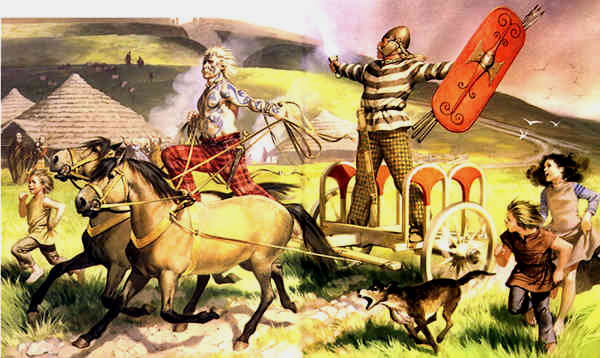
As the story unfolds we begin to see the invasion through the eyes of Caratacus. Caratacus is driven by his hatred of Rome but despairs of the losses he sees his people suffering in set piece battles. The Catuvellauni make good their losses with reinforcements from the neighbouring Dubonni. Learning from their last encounter Caratacus and Togomundus make a stand guarding the fords of the Thames. Despite initial success the superior tactics of the Romans begins to tell. Togomundus makes a desperate chariot charge but his attack is repelled and he is mortally wounded. With their last natural defence lost, the lands and capitol of the Catuvellauni now lie open to the Romans.


Mourning the death of his brother Caratacus, his family and followers flee westward to the lands of his cousin, the king of the warlike Silures, occupying the mountains of present day south Wales. Caratacus realises that courage alone will not prevail and he must force the Romans to fight him on his terms; the Romans will pay dearly when they next meet him on the field of battle.

Caratacus: Blood of Rome is action packed book, chronicling the Claudian invasion of Britain. We get to see the events unfold from the perspective of a matter of fact professional Roman soldier and that of the passionate and driven Caratacus. The two characters mirror each other: both honourable men but with differing incentives.


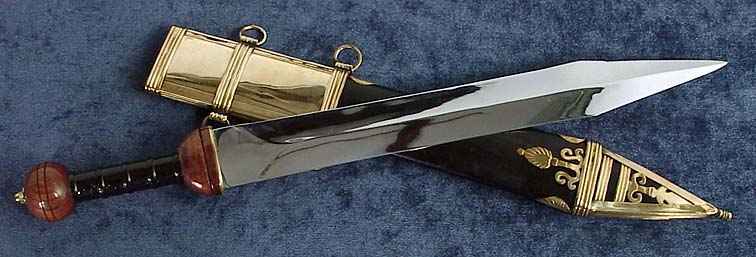
The author, John Salter, certainly knows his subject, and is himself a keen Roman soldier re-enactor. The structure of the Legions, their equipment, and sheer logistics involved in the amphibious landing are conveyed to the reader without coming across as a historical lecture. This is a self-published book and it has to be said that there are some minor editing issues. A professional edit would sharpen the edge of this Gladius to cut more cleanly but saying that, the issues didn’t impinge on my enjoyment of this novel.
Both sides represented in this novel are brutal and cruel reflecting the harsh realities of war. Without giving too much away, bloody events at the end of this book cause perceived loyalties to be questioned. I’m hopeful that the author intends on a series of books chronicling the conquest of Britannia and I look forward to the next instalment.
Now, where was I? Oh yes. “Testudo will advance!”

Caratacus: Blood of Rome is available from Amazon.


This review was written by Rob Bayliss. Rob is currently working on his Flint and Steel, Fire and Shadow fantasy series. Part one, The Sun Shard is available at Amazon.

Monday, 24 February 2014

Red Shift by Alan Garner: Simon Stirling pays tribute to a long-time favorite

You'll often hear me say that I don't read very much fiction.  And, even when I do, I tend to avoid fantasy fiction.  To which I might add that I hardly ever read fiction aimed at a younger audience.

So here's where I demonstrate my inconsistency by recommending the works of an English author who rose to fame writing fantasy fiction for children and young adults.  But we're talking favourites, here, and Alan Garner is the author I've learnt more from - as a writer myself - than any other.

I came across his short novel, Red Shift, when I was about twelve and on holiday.  I was already familiar with his previous books - The Weirdstone of Brisingamen, The Moon of Gomrath, Elidor, The Owl Service - and so I thought I knew what I was letting myself in for.

I was only few pages into Red Shift when I gave up; I had no idea what was going on.  The book was like shifting sands and I couldn't make head or tail of it.

A few years later, in my mid-teens, I gave it another go.  And since then, it has unquestionably been my favourite book, my favourite piece of writing and - in many ways - the standard to which I aspire.  I even had an exchange of letters with Mr Garner, when I was something like seventeen, in which I begged the right to adapt his book into a screenplay.

Alan Garner tends to write about the landscape he knows best - his local part of the world in Cheshire, England.  His first two novels (Weirdstone and Gomrath) are set in those parts, and his genius is to turn familiar places into places of marvel and mystery and adventure.  So one of the first lessons I learnt from him is the importance of location: where something happens dictates, to a large extent, what happens.

Red Shift takes Garner's fascination with place to a new level.  The novel (and it's a very short one) follows three stories which all happen in the same places, but at different times.  So we start with Tom and Jan, teenage lovers in the second half of the 20th century; then we're suddenly plunged into 2nd-century Britain, with a detachment of soldiers on the run from the Roman army through tribal territory; and then we find ourselves in the 17th century, with a frightened village awaiting the arrival of hostile troops.  There are no chapters, just short breaks in the text which signal a shift from one time to another.  The stories play themselves out in counterpoint to each other, all occupying the same space but a different time.  The effect is like superimposition, or the strange feeling that a particular location would yield different accounts of its past if you could only 'tune in' to that period.


After the weird and wonderful creatures, the magic, witchcraft and high adventure of his earlier novels, Red Shift came as a profound shock to me; it was as if Garner had grown up with his audience and was now writing, not for kids, but for young adults.  Very intelligent young adults.  Young adults who were crashing into all the problems of their age-group.  In fairness, Garner had anticipated some of this in The Owl Service, a wonderfully spooky novel in which a Welsh myth plays on in a Welsh valley, affecting generation after generation and inducing sexual jealousies and class tensions.  It is a tribute to Garner's skill (I feel) that the older you are, the more aware you become of these undercurrents in novels which are, ostensibly, aimed at a younger readership.

With Red Shift, the undercurrents of The Owl Service burst out in an explosive mix of physical and emotional violence. Again, this is something I might not have been fully aware of when I first read through the book.  I've read it many times, and on each occasion some aspect of the novel stands out - the pain of teenage courtship, the true nature of violence, the way the past occupies the same spaces as we do, the lyricism of brilliant dialogue - but the simple fact is that Garner perfected his technique with his short, strange, disturbing novel.

It is almost entirely written in dialogue - snappy, crackly, dialogue from three different periods - with the barest minimum of description (Lesson Two: sketch, don't paint, the scenery).  There is violence a-plenty in the book - which I hadn't really expected when I first picked it up - but each act of violence just happens; there is no lingering over the deed, so that there is nothing pornographic about the brutality.  Indeed, I learnt from this book that a far more intriguing effect can be achieved if you establish an atmosphere of violence than if you obsessively describe each horrific act.  The same applies to sex.  Let the reader's imagination do the work for you.  Lesson Three: don't be indulgent.


Already, I feel as though I'm misrepresenting the book.  Yes, each of its three overlapping, interlocking stories is violent, with the sexual frustration and jealousy of the 'contemporary' story finding its echoes in the past, but Garner is far too clever to fob us off with anything so simple.  The book is also something of a puzzle, and at times the intelligence of the author challenges the reader to keep up.  Puzzles and mysteries form a major part of the narrative (there is even a word puzzle at the end which I have never yet managed to solve - but then, Garner enjoyed putting magical incantations into his earlier books, and the puzzles of Red Shift are a natural progression).  Even the title is a bit of a puzzle: it takes in the Doppler Effect in astronomy, the habit worn by a clergyman, a petticoat dyed with alder, the lights of the cars which whizz past on the M6 motorway ...

But what Red Shift taught me, more than anything, is the power of words.  Words used with laser precision, nothing spare or redundant or unnecessary.  Words mean a lot to Alan Garner.  They do to me, too.  And Red Shift indicates to me what can be achieved when an author masters those tricky little blighters, words.  The effect is magical, emotional, exciting, painful.  Pictures play in our heads, and we feel the pain and despair and confusion of the characters.  Life acquires a poetry, even in its darkest, basest moments, and that poetry sings out across time.  If we can learn how to listen to it, we can hear the voices of the past - the past which we ourselves are part of, for we tread the same turf and are made of the same atoms - and the place where we stand will come alive.


Simon Stirling is the author of Who Killed William Shakespeare? The Murder, the Motive, the Means and The King Arthur Conspiracy: How a Scottish Prince Became a Mythical Hero, both also available at Amazon UK. He can be found at his blog Art and Will.

If you would like Simon to review your book, please see our submissions tab above. 

If you are a Facebook user and would like to leave a comment here is the Link