From the week that was, which special remembrance for those without whom we would not be here today. We shall never forget. D-Day, June 6, 1944.
The Emperor's American
by Art McGrath
The adventures of Baltimorean Pierre Burns, in his telling of them in The Emperor’s American, start out with a bang—literally. The first words of the opening chapter are, “The ship was ablaze” and author Art McGrath keeps us on the edge of our seats until the very end. The book is divided into chapters, not all necessarily ending with cliffhangers, but infused nonetheless with a tincture of sorts, leaving readers reluctant to let go at natural stopping points. Perhaps Burns’s circumstances—unusual to say the least—play into that, or it could be where they lead him.
Written as a letter from Burns to Napoleon’s surviving brother, Joseph Bonaparte, who has beseeched Burns to set to paper his experiences as an American in the emperor’s army, the novel takes readers through a bit over one year of life as a French soldier.
Pierre Burns, whose French mother raised him modeling a hatred for the English, never knew his French-born Scottish father, whose brutal murder during the American Revolution also informs Pierre’s perceptions. So it is that when his merchant ship is attacked by the British and sinks off the coast of northwestern France, he is recruited into what history later knows as the Grande Armée, a force preparing to invade England.
At the start, I didn’t know what to expect of Burns, whose strong personality in the hands of a lesser author might have endangered his likeability. However, he is equipped with a balanced self awareness that enables him often to recognize the effect his words may have on others, and an ability to evaluate himself with a fair amount of honesty.
In retrospect, I can’t really blame Monge for his attitude. The open officer’s slot should have allowed him to move up to the number two slot in the company. Instead, a foreigner who became an officer that very morning was to usurp his place, at least until I permanently assumed my duties as Ney’s aide-de-camp, which might not be for some time, unless the invasion commenced sooner than everyone thought.
Please go to Lisl's full review of
The Emperor's American to enter the giveaway for a free copy. (Drawing will be Monday.)
*********
Lisl's Bits and Bobs: Lisl interviews Art McGrath, author of
The Emperor's American
Good day, Art McGrath, and thanks for joining us for a little chat.
Thank you for having me, Lisl. I appreciate the chance to speak to you and your readers about my book and the Napoleonic era.
You “grew up fascinated with all things Napoleonic.” What first drew you to Napoleon?
I think in large part it was my French heritage. While my surname is Irish, I am French in all but name, with French-Canadian ancestry on both sides of the family. Though I realize now that French-Canadians were somewhat removed from the Revolutionary and Napoleonic conflicts, it still played a role in my interest. Besides, there was a fair amount of sympathy in Quebec for the Emperor of the French who was such a bitter enemy of the English. I even have a relative, a great-great-uncle, who was named Napoleon.
Were there a lot of others who shared your passion?
No, as I recall I was the only person I knew with that passion for Napoleon. It was a rather lonely interest and waxed and waned over the years.
In your reading you ran across references to Americans having served in the Grande Armée, paving the way for The Emperor’s American. What about Pierre Burns? Did you have to flesh him out over time or did you already seem to know him when his character made himself known to you?
For a time I saw the world through Pierre’s eyes, no matter what I did. I definitely already seemed to know him, or he knew me but I also had to flesh him out as I went. At first he was a little too perfect, but I hope I made him a little more vulnerable and gave him room to grow. He has quite the career ahead of him.
With Pierre wanting to tell his story, over your shoulder, so to speak, what would be the most important thing he wants our readers to know about himself? About Napoleon?
I think Pierre would want people to know he fought not for the sake of fighting but because he was doing what he thought was right. There is more than a streak of the adventurer in him, it is true, but he wouldn’t fight on what he thought was the wrong side.
As for Napoleon, Pierre would want readers to know that Napoleon would have been content with rebuilding France after the Revolution but the courts of Europe, especially England, would not allow it. Yes, Napoleon conquered most of Europe and perhaps after 1808 or 1809 became caught in his own aura of invincibility but he did not start out intending to crush Europe under his heel. He was pushed into it, largely by England. The victories of 1805-1807 were a defensive reaction by Napoleon.
What were some of the challenges of bringing Pierre’s story to life for him? Do you sometimes feel you must be cautious because you are also speaking for a number of others? That is, other Americans who served in Napoleon’s army?
I started writing the book as a way to discover how an American might end up in Napoleon’s army. I don’t feel too constrained or cautious about those men because so little is known about them that they were a blank slate for me.
Catch the rest of Lisl chatting with Art McGrath right here.
*********
Paula's People: Guest spot, book blogger Sruti tells us her story
Books, Blogs, and Myself
Sruti Nayani
Wow! I get to write about Books, Blogs, and Myself in this guest blog. This guest blog was commissioned by a friend and fellow reviewer for her blog. Well, this was how it began.
It started with me being introduced to books by my father, at age six. I mention the date now, though it is not because I have an excellent memory but because I have written it down on the book. It was the 23rd of May 1988. I remember exactly where it was, and how it was built and the wonderful stuff it contained.
So, there I was, browsing at the store picking up a book or two. And what did I find? My first Enid Blyton!
The Mystery of the Disappearing Cat, it was called. I bought it because I loved the cover. It had two girls and three boys, plus a dog and a cat, all in a garden and a wooden room and green hills in the distance. I loved the first girl’s haircut, (noticed it was a little like mine) short hair and playing with boys. Since I was a tomboy at that age, it fitted right into my bookshelf.
By the time I was nine I had read my first Shakespeare,
As You Like It. And my love for books continued. I kept reading on and off through my career in journalism, but then it was time to start off on my blog. What you can see today at
Sruti's BookBlog actually started with a publisher who mailed me about how he could send me a few books and if I reviewed them, I could not only keep them, but that they would be free too.
 |
| My first books |
You cannot imagine my delight! You can call me a silly girl, but there I was, never realising the power of the internet until then. And today, almost six months later, I am getting books from publishers and authors to review. I had reviewed a few books earlier, but I had no idea of how much bigger a book blog could be.
I also like to interview the authors and the editors of these books, because not only is it a fun thing to do, but because it lets me grow intellectually. And plus, I get a chance to put in a few of my own views, on writing, reading and editing and hopefully more.
I have written about four short stories, which are up online. But it took me a few years to discover blogging. The best thing about my blog is that it gives me a lot of space to write about books. I am now trying to expand my blog further and am reading up a lot of articles, with regard to writing, blogs and more. A fairly big boost is that my book is being read by Jacaranda Literary Agency. It is a book of short stories for children and tentatively called
The Nap Time Adventures.
More from Sruti at
this click.
*********
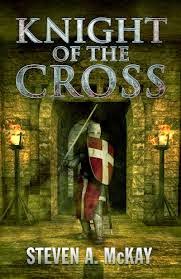
Scottish author Steven A. McKay first came to my attention with his version of the Robin Hood legend in his excellent and hugely entertaining book Wolf's Head: The Forest Lord, which put a wonderfully refreshing spin on the classic tale by relocating the outlaw from Sherwood Forest in Nottinghamshire to Barnsdale Forest in Yorkshire and has breathed new life into an old story.
The first book ended with Robin and his band of outlaws being offered the chance to earn a pardon for their crimes which would allow them to reclaim their former lives, a prospect they are all keen to grasp with both hands. The attractions of sleeping rough week after week far from home and loved ones had paled, and with Robin's young wife Matilda (not Maid Marion) heavily pregnant with their first child he is desperate to cast off his mantle of outlaw and return home to create the family life he craves. This book, The Wolf and The Raven, continues that story.
 From the very first line the reader is plunged headlong into the carnage and chaos of medieval warfare as Robert and his men (lovers of the legend can rest assured that they will find all the regular characters here: Little John, Will Scarlet, Friar Tuck, Much the Millar's son et al.) find themselves fighting for their lives in the service of Thomas Plantagenet, Earl of Lancaster at the battle of Boroughbridge on the 16th of March 1322. The battle, part of a rebellion of various Marcher Lords led by Lancaster against King Edward II, ends in disaster for the rebels and Robin and his band are forced to flee for their lives once more. Back in the forests they are forced to face the realisation that their hoped for pardons are gone like chaff on the wind while Edward II takes his bloody revenge on those who dared challenge him.
That revenge is not only focused on those who were in command but extends to take in the poor serfs and tenants who were forced to take part in war through circumstance and fealty to various landowners. To find and crush these broken men Edward calls on the services of a man who will become Robin's nemesis. His name: Sir Guy of Gisbourne.
The Gisbourne of this book quickly becomes one of the great villains of fiction: a man of twisted desires and dreams who has suffered heartbreak and betrayal himself through the actions of his adulterous wife. Her betrayal coupled with his childhood fascination with the tales of King Arthur have convinced him he is almost the reincarnation of Lancelot and while he is a brutal, ruthless killer you can't help but feel that there is a weird sort of chivalry at the dark heart of everything Gisbourne does. Women are to be protected (despite his wife's adultery) while the enemies of the king can be killed without thought or mercy!
For the rest of Stuart's review, click here.
**********
Hayling Island plays big role in the D-day landings
 |
| Hayling Island |
I live on a small island in the Solent just a few hundred yards off the mainland called Hayling Island. It is approximately 12 square miles in area, shaped like an inverted 'T' and measures 4.04 miles by 4.04 miles, and is a most beautiful place to live. Hayling Island also gets a mention in the Domesday Book, regarding Hayling's production of salt from the 11th century.
Hayling Island is a peaceful place to live, and famous for the First Windsurfing Board, A Roman Palace, Real Tennis Courts, and the graves of Princess Catherine Yurievskaya, the youngest daughter of Alexander II of Russia, who lived on Hayling Island for quite some years, and George Glas Sandeman, nephew of the founder of Sandeman Port.
 |
| A Phoenix Section of Mulberry Harbour |
Hayling Island also played a large role in the war efforts of World War II. For those of us who live here it is very evident that Hayling played a large part in the construction of the components for the Mulberry Harbours, as we have one still in Langstone Harbour, now broken in two. Langstone Harbour, to the west side of Hayling, was also used as the base for landing craft before D-Day. This part of the island also has a the odd concrete pill-box along the roadside.
Hayling Island was the location for a mock invasion during the military exercise called Fabius during May 1944. these were the rehearsals and preparations for the D-Day landings.
Please click here to see the rest of Louise's tribute to hailing Island and its very special place in the D-Day invasions.
They shall grow not old, as we that are left grow old;
Age shall not weary them, nor the years condemn.
At the going down of the sun and in the morning
We will remember them.