Tuesday, 9 June 2015

Sharon Reviews: Men of the Cross

Men of the Cross by Charlene Newcomb
Review by Sharon Bennett Connolly

See below for details on how you can win a FREE EPUB OR KINDLE COPY of 
B.R.A.G. Medallion winner, Men of the Cross
Drawing June 16, 2015
The drawing has been held and a winner announced at Facebook.
Please see new reviews for more chances!

“War, political intrigue and passion … heroes … friends and lovers … and the seeds for a new Robin Hood legend await you.”

After that kind of introduction Men of the Cross had a lot to live up to. And it didn’t disappoint. Having read several Crusader novels and a few re-telling the Robin Hood legend, the idea behind the book intrigued me.

But this book has a unique perspective and stands out from the crowd.

With Richard the Lionheart and Robin Hood as supporting characters the story follows idealistic young crusader Sir Henry de Grey and his best friend, the cynical and war-jaded Sir Stephan l’Aigle, on their journey through the Third Crusade.

The two knights accompany Richard’s army from Southampton to the walls of Jerusalem – and on through the countries of Eastern Europe and Richard’s capture in Germany.

I thoroughly enjoyed Men of the Cross and found it hard to put down. The storyline is fast paced and entertaining, with all the emotions thrown into the mix: excitement, fear, love, despair, pain and happiness.


I love the way the story is interwoven with that of Robin Hood, Little John and Alan a Dale; every now and then you get a glimpse of the Merry Men they are to become, their own special camaraderie amidst the wider story.


It is a journey of discovery for Henry and Stephan – of themselves as soldiers, friends and lovers; the realities of war; fighting the Saracens; relationships; their preconceived conventions and their own hearts. Along the way they entertain queens, lose friends and risk death itself, experiencing the highs and lows of the crusading life.

After reading only the first four chapters of Men of the Cross, I found myself hoping that the rest of the book could live up to such a promising start. The main characters are well-thought out and it’s a pleasure to see them grow and mature as the story progresses, and to see how their individual experiences and feelings react to the events enfolding them.

Even the supporting characters are wonderfully vivid: the king’s sister, Joanna, and wife, Berengaria, act as spectators to the Crusade, bringing lively exchanges and the feminine touches into an all-male world.

Man against man. Man against the elements. Man against his own heart.

As I got deeper into the book, I found myself wondering how the author would handle the grisly realities of the Third Crusade. When following the Lionheart through the Holy Land, it is impossible to ignore the mass execution of 3,000 Muslim prisoners. So how would Ms. Newcomb handle it?

This turned out to be one of my favourite scenes in the book. Instead of concentrating on one beheading after another, you saw it through the eyes of Sir Henry, as a pivotal moment in his initiation into the realities and horrors of war:

Henry’s stomach knotted, his thoughts filled with despair. "This is war?"

His doubts demonstrated through his own internal dialogue and response to his distaste:

You know nothing of war.” 

Charlene Newcomb has a knack of setting scenes so vividly you can almost hear the swing of sword through air, the yells and screams of victims and combatants alike and the anguish of a knight discovering that chivalry has little place in war. The battles are urgent and hectic – their descriptions give the combined sense of the confusion, fear and exhilaration of the participants.

The background scenes are described in fantastic detail. Whether it is the noises and odours of the busy port, the bustling streets of Messina or Acre, or the calm and splendour of a royal palace, it is easy to imagine yourself transported.

The love scenes are artfully and sensitively portrayed – with the anguish and uncertainty of a blossoming relationship cleverly interweaved into the storyline.

Henry and Stephan’s friendship, love and loyalty are tested to their very limits in this wonderful novel.

The long and winding journey of the Lionheart’s crusade, from its launch to his imprisonment in Germany, is skilfully re-told in such a way that you will feel the highs and lows – the joys and desperations – and the excitement of two young men learning the art of war, love and friendship through their experiences.

I look forward to reading how the characters develop in the next instalment, to hearing how they rescue the king from his German prison, and of the further adventures of Henry and Stephan and - of course - Robin Hood and his men.


*********

Charlene Newcomb has kindly offered a FREE COPY of Men of the Cross for one lucky winner. To enter the drawing, simply comment below OR at this review's Facebook thread, located here

About the Author:


Born and raised in South Carolina, Charlene Newcomb dreamed of adventure, space travel and the big time with an all-girl rock band. So she joined the Navy! Seeing the world for six years, Newcomb worked as a communications technician/voice language analyst. She later took a BA degree in history and MA in library science, then worked space into her life by writing science fiction: she published 10 short stories in the Star Wars Expanded Universe. She is also the author of Keeping the Family Peace, and book two of the Battle Scars series is set to be published in 2015.

You can learn more about Charlene Newcomb and her books at her Amazon author page and blog, and she can be found at Twitter and Facebook

*********

Sharon Bennett Connolly has a lifelong fascination with history, and has recently discovered a love of writing. She has combined these two in her blog, History…the interesting bits!


Saturday, 6 June 2015

Lisl Reviews: To Catch a Falling Star

To Catch a Falling Star by Anna Belfrage
Lisl reviews and reminisces about The Graham Saga

See below for your chance to win a FREE COPY of 
To Catch a Falling Star
Drawing June 13
The drawing has been held and a winner announced at Facebook.
Please see new reviews for more chances!

The Prodigal Son is a recipient
of the B.R.A.G. Medallion 
As the eighth and final installment in Anna Belfrage’s The Graham Saga series, To Catch a Falling Star found me reluctant to read as well as hungry to devour it. I’d accidentally fallen in with Alex Lind, who beckoned me into her world—both of them, time traveler that she is—when I reviewed number three, The Prodigal Son. It transported me and, knowing I simply had to read all from the start, I set out, smugly comfortable with my fat stack of books, assured of a brilliant journey that would last for some time to come. Reading Falling Star’s opening lines began the end of this long journey.

Isaac Lind should not have drunk quite as much as he did that evening, but flushed by the success of his latest exhibition, he allowed himself to be dragged along, to be toasted in pint after pint of lager.

He caressed the wooden frame of the picture, a depiction of a somnolent courtyard[…] In the middle a fountain, a constant welling of water[…] In olive greens and muted browns, with the odd dash of whites and startling blues, the water spilled over the fountain’s edge to fall in transparent drops towards the ground[…] He tried to break eye contact with the falling water, but now he heard it as well, the pitter-patter of drops on wet stone, the trickling sound of water running through a narrow channel, and there, just where he had painted it, a minute point of white beckoned and promised, entrapping his eyes in a shaft of dazzling light.

A Rip in the Veil is a B.R.A.G.
Medallion honoree and Book
of the Month Award winner
Isaac’s mother, Alex, had fallen through a rip in the veil of time when he was just a toddler, and apart from one short encounter, has not seen her since. His grandmother’s paintings having played a role in these events, this opening then serves as foreboding. Now 32, a veteran time traveler at it again, certainly he may be able to see his mother once more. Apart from the vagaries of shifting through eras, the relationship is complicated by mother and son’s personal history, pertaining both to Isaac’s birth as well as his perception of Alex’s “abandonment” of him. Indeed, she chose to remain in the seventeenth century where she landed, and by the time Isaac falls through once more, she has raised a family, homesteaded in the colonies and seen too much in the passage of her “adopted” time.

Initially, Isaac’s appearance is welcome to those familiar with the saga, for he has not played much of a role in the previous installments, apart from his one “visit,” although Alex does guiltily think of him from time to time. But even new readers fall in quickly, given Belfrage’s masterful shaping of dialogue and events that fill in pertinent bits of information. Isaac is a sympathetic character and from the get-go, readers follow him hopefully.

As these events play out, Alex is experiencing a separation of her own. After years of feuding between her husband, Matthew, and his younger brother, Luke—often with terrible consequences—a truce of sorts has been called and the couple prepare to leave their colonial home, taking only a portion of their family back to Scotland. Having been forced out of their country in the wake of religious persecution, she now had grown roots in her new land and leaving it, and her children, is devastating.

Meeting up with Isaac once more, as well as returning to Scotland, produces mixed feelings within Alex. She must face her guilt and work through the confrontations with her confused and unhappy son, as well as the long-ago losses and compounded homesickness when she sees how far they have grown from Hillview, Matthew’s ancestral home. Her husband begins to bond more closely with Luke, who appears to be trying to sort out their past, and Belfrage give us greater glimpses into Luke’s life as well as his changing perceptions of his world and the individuals who populate it. Her treatment of the younger Graham brother is especially skillfully woven because we are kept in a questioning state: “Exactly how hard do old habits die?” Just when we think things have changed, something else occurs, bringing our assumptions into question, though knowing answers could come from any direction.

The author deals with historical reality with the skillful dexterity she utilizes in the preceding seven books. Religious persecution—in the colonies as well as Scotland—battles and factual historical figures all play a role she does not whitewash, even to the detriment of Alex’s relationship with Matthew. Belfrage moves us between eras and places with a hand so adroit we not only fall into the story, but also follow along with baited breath, around every obstacle and with an eye out for anything that might come between our players and their goals.

Life being what it is in seventeenth-century Scotland, adversity and heartbreak are constant companions. Even here, what characters see and how they see it, wraps us into their destinies, makes us care about them all the more. At times they make the best of it, while on other occasions, not so much: “The night was bitterly cold, the stars strewn like shards of crushed glass on a velvet background.” But so often even the bitter language of their love rises within a bouquet of poetry, reminding us, and perhaps them, that life is too precious not to move forward.


While the story opens with Isaac and moves at one point for a long spell back to Maryland, it really is Alex and Matthew’s tale, with the degrees of separation surrounding them: they are the nucleus, and they move forward with heartbreak and laughter, sharing the story of their loves and their losses, accepting some realities, while left wondering about others. At their now-advanced ages, Matthew and Alex begin to wonder about future Grahams. “Was there anything left of them in the twenty-first century? Would there be someone living here, in their place, and would that person’s name be Graham?” Given the strange way they came together, how exactly would this work? Even this element of the story unites characters with readers, as Belfrage weaves time together in such a fashion that we recognize ourselves in those who came before, and how their choices affect the lives we live today.

Having completed this last of the eight novels of The Graham Saga, it is perhaps easy to overlook—this is how seamlessly Belfrage writes us all together—that the re-reading of the series sets us all upon a circular sort of journey, much like the one Alex possibly faces, when her seventeenth-century self passes on and time marches forward until her original era dawns, and she is born again. Will she re-live it all in the same way we will when we go back to the beginning?

To Catch a Falling Star ties together some loose ends, answers some questions as its creator draws the Grahams’ story to a close. Alex recalls her first night with Matthew on a Scottish moor, and Jacob, her young son, gone too soon. She caresses a carved wooden infant, much as she did the one Matthew had made for her on that moor, as she agonized over her feelings for the baby Isaac. As we—reader and Alex alike—recall the start of her journey, she and Matthew are passing into a new phase of life. “Colour was returning to their world, greys morphing back to greens and browns, reds and blues.” One can’t help but recall the colors Isaac sees just before his second passage, as one world spills into another, both then and now.

It is a difficult moment, for all the remembering, and new questions, about future as well as past, and knowing this is the end of the long journey once embarked upon with such pleasure, aware there was so much more ahead. Alex herself used to say she would make the same choice—to stay—if she were to do it all over again. For all the heartbreak, grief and terror, there is also immense joy, love and bonding of souls in these tales, these “desert island books,” as another author refers to them, and like Alex, we would do it all over again as well. And we will.  

Anna Belfrage has so generously offered a Kindle copy of To Catch a Falling Star for one lucky winner. For your chance to win, simply comment below OR at this review's Facebook thread, located here.  

*********

See Louise Rule's sister review for 
To Catch a Falling Star 


Anna Belfrage can be found on AmazonTwitterFacebook, on her website and at her fantabulous blogwhere you can learn much more about the author, her projects, the Grahams and her own world.


Thursday, 4 June 2015

Louise Reviews To Catch a Falling Star by Anna Belfrage


Would you like to win a FREE COPY of To Catch a Falling Star? See how below!
Drawing June 10
The drawing has been held and a winner announced at Facebook.
Please see new reviews for more chances!


To Catch a Falling Star - Book eight in The Graham Saga by Anna Belfrage


Have you ever read a series, and at the end of it, wondered just what did happen to so-and-so? Have you been frustrated about not knowing? Have the loose ends been left wafting carelessly?

Anna Belfrage's Graham Saga won't leave you feeling this way. I have read many series: more often than not they have been between four and eight books long, some longer, some less; The Graham Saga consists of eight books. Each book can be read in isolation from the others; however, Belfrage joins them all together in such a way that the reader is not left wondering about the reason why that character, for example, is behaving in such-and-such a way. There are no loose ends. Each end gradually gets tied to its fellow as the story progresses through all the books. There is no hurried joining of long forgotten threads at the end, and there is no wondering about the why, what or who.

Belfrage's first book in the series, A Rip in the Veil, is the first step into the journey of Alexandra Ruth Lind. It's a journey that will take the reader through many highs and lows, twisting the readers' nerves to their nth degree, and then releasing the reader to breathe again. 

Belfrage's first book begins:

The radio died first. Halfway through Enrique Iglesias' 'Hero' there was a burst of static and the display went black. The dashboard lights gave up one by one, the steering wheel locked, the engine coughed, and the BMW glided to a stop by a crossroads.

So begins our journey alongside Alex Lind. The jeopardy hook has been cast and the reader, from the very beginning, is holding their breath.

As the reader journeys through each book, and it is a journey, they become deeply acquainted with the ever growing family Graham. These characters are written in such detail, such dimension, that the reader cannot help but become involved, albeit from the side-lines. There is a deftness of language that Belfrage invests in her characters. The modern language of Alex Lind, for example, combines with the seventeenth century language of her husband, Matthew Graham. It is interesting when the juxtaposition of the twentieth/twenty-first century language abuts the language of the seventeenth century. One prime example, which is first evident in book one, is the constant use of the word okay, by Alex. This is a complete unknown word in the seventeenth century.

The Online Etymology Dictionary states:

1839, only survivor of a slang fad in Boston and New York c. 1838-9 for abbreviations of common phrases with deliberate, jocular misspellings (such as K.G. for "no go," as if spelled "know go;" N.C. for "'nuff ced;" K.Y. for "know yuse"). In the case of O.K., the abbreviation is of "Oll Korrect."

There is a perpetual use of this word throughout the entire series, seeping into the family's own language, and becomes a part of them. The same applies with another twentieth century word that Belfrage uses: teenager in book four, A Newfound Land. As with okay, not at first seeming anachronistic, until Belfrage has Matthew Graham questioning the word which has been used.

The Online Etymology Dictionary states:

Teenager (n), also teen ager, teen-ager; 1922, derived noun from teenage (q.v.). The earlier word for this was teener, attested in American English from 1894, and teen had been used as a noun to mean "teen-aged person" 1818, though this was not common before twentierh century.

When I came to read the final book in Belfrage's Graham Saga, I could not imagine not having another book to look forward to. After drawing in a steadying breath, I started reading. I knew, from the previous books, that this would also be a white knuckle ride for the Grahams.

Titles for books are so important, as I am sure you will agree. To Catch a Falling Star had me wondering what this title could possibly mean. The previous seven book titles became evident in the reading. The title for the final book, however, had me wondering. Was I going to read that one of my favourite characters had come to the end of their life? Maybe. Was there going to be dire circumstances through which the characters would have to travel? Well, yes, as always, the Graham's lives were fraught with highs and lows, peace, and trouble, also the continuing conflicts with religious beliefs. To Catch a Falling Star is the perfect title for the final book, and I only truly felt this once I had read the final chapter. Throughout the book there is a subtle tying of lives to their roots, a bringing together of each strand so that it can be joined to its fellow. The seamless nature in which Belfrage accomplishes this task, for surely it must be a task, is breath-taking.

Belfrage confronts many ideals within her books, such as, religion, race, and slavery, to mention but a few. These subjects are not handled tentatively, but with great force and assurance, bringing to the forefront all that each subject entails. These have been woven into the books, not as a demonstration that Belfrage knows much about these subjects, for surely she does, it's more that she has highlighted, in an erudite fashion, how these subjects affect each and every one of us, not just then, back in the seventeenth century, but even now. The past does inform and influence the future. Belfrage tackles issues that we are aware of, but in the reading, with that issue placed upon a character, it becomes more personal. The issue becomes implanted, and for me at least, lead to my reading more about those issues when I had finished each book. To say that Belfrage tugs at our psyche is an understatement. The issues become the force which drives the story forward, from the first through to the last book.

To Catch a Falling Star has the most profound moments between father and daughter, between sister and sister, and between sister and husband, and not least, between mother and child. The profundity of Belfrage's writing has laid before me, as a writer, that there is most assuredly an accountability to the reader. That accountability is to write the best book that is possible to write, and to give the reader a worthwhile experience.

With The Graham Saga, there can be no definitive ending, after all, the family live on. So, their future becomes speculative, and with the knowledge of the books which have gone before, the reader can, with some educated guessing, imagine what befalls each one; or can they? Even then, however, I am sure you will agree, if you have travelled through all eight books, there is a bright hope that Belfrage will concede to entertain us with more stories of The Graham Saga. There is a saying that it is always better to leave the party early. I would hope, most sincerely, however, that Anna Belfrage will honour us with an encore.

The Graham Saga:
A Rip in the Veil; Like Chaff in the Wind; The Prodigal Son; Newfound Land; Serpents in the Garden; Wither Thou Goest; and concluding with To Catch a Falling Star.


Anna Belfrage has so generously offered a FREE COPY of To Catch a Falling Star in Kindle format for one lucky winner. To get your name in the hat, simply comment below or at this review's Facebook thread, located here
We will draw a name from commenters 
on June 10. Good luck!


You can read more about Anna Belfrage on her website on Facebook, on Twitter and on her blog.

Louise E. Rule is the author of Future Confronted and can be found on Facebook, Twitter, and on her blog.


Sunday, 31 May 2015

Anna Reviews: M is for Memories

M is for Memories by Joan Fallon
Review by Anna Belfrage

See below to learn how you can win a FREE COPY of 
M is for Memories
Drawing June 6

When Nancy Miller is talked into writing her memoirs, she doesn’t quite realise what she has taken on. What she had hoped would be a controlled process, ensuring certain doors remained firmly closed, quickly spirals into a revisiting of a past she would prefer to forget. That’s the thing with memories – they spring unbid into your head at the most inopportune times…

For most of her life, Nancy has been a successful artist, her water colours selling for impressive amounts. Since the 1960s she’s been living in Marbella, and when the story opens she is pushing eighty, a somewhat forgetful old biddy who suspects her son is planning to lock her away in a home for the elderly.

Nancy is not an easy person to like – nor does she go very much out of her way to be liked, downright rude as she is to the hired help, to her son – even to Ana, the young woman hired to help her with her memoirs. As the novel progresses, however, Nancy grows on you. That tough exterior hides a vulnerable interior, a woman forever shaped by her experiences in her twenties.

It is difficult to become old, to become invisible. Where once Nancy drew the eye whenever she ventured outside, now she considers whether she should buy a beautiful dog to attract interest and comments – but due to age and infirmity, a dog is not an option. With each day, Nancy retires further and further into a self-imposed exile, her contacts with the outer world reduced to her son’s visits and the hours spent with Ana.

Nancy views Ana with a combination of affection and distrust. The young woman is bright and courteous, she never talks down to Nancy, never seems to notice when Nancy’s lipstick is awry or her clothes stained with spilled wine. Ana, it seems, accepts Nancy as she is. Except, of course, for her enervating tendency to return, over and over, to the subject of Nancy’s husband, Nick.

Nick, according to Nancy, is dead. Very, very dead. Nick, according to Ana, is not necessarily dead, as there is no death certificate. As far as Ana can make out, Nick and Nancy were living together in England until 1964, when suddenly Nancy showed up in Marbella with her three-year-old son in tow. All very mysterious – and the more evasive Nancy becomes, the more determined Ana becomes to find out the truth.

Ms. Fallon does an excellent job of weaving the present day narrative with retrospective passages from Nancy’s past. As a young, gifted female artist she falls in love with Nick, a young handsome man with aspirations to be an artist but without the talent required. What begins as a love affair, a mutual attraction, morphs into a controlling relationship in which Nick isolates Nancy from her family and friends, restricting her social interaction to him. Her success just serves to underline his artistic failures, and with each passing day Nancy’s life shrinks further and further, her every waking moment dedicated to ensuring Nick doesn’t get angry. Because if he does, well, then there’s hell to pay – and the one who pays is Nancy.

As a woman, it is impossible to not be affected by Nancy’s story. In a language devoid of hyperbole or sentimentalism, Ms. Fallon describes Nancy’s transformation from an independent woman with dreams to a battered victim. Even worse, Nancy is fully aware of her transformation, hates what Nick has reduced her to, but she has nowhere to go; her single attempt to flee her abuser backfiring badly.

In the present, Nancy’s relationship with her son Martin is a complicated thing, with him trying to protect and care for a woman who views every kindness as an attempt to steal away her independence. But she loves her son – adores him, even – and the sentiment is reciprocated, despite constant squabbles and misunderstandings. Yet again, I must congratulate Ms. Fallon on her descriptive writing – by using both Nancy’s and Martin’s points of view, she allows the reader some insight into how they think and feel.

The tour de force, however, lies in how Ms. Fallon presents Nancy. Intelligent and observant, this old woman has moments of absolute clarity – but just as many of deranged ramblings. Nancy forgets things, falls asleep at all moments, refuses the food the hired help prepares, vacillates between genuine concern for her pregnant daughter-in-law and huge irritation with the woman for monopolising Martin’s time. She is irritable and mean, suspicious of everyone, dryly amusing and more than aware that her life is fast approaching its end. Thing is, Nancy considers it her right to live her life as she pleases right up to the bitter end – she has had to fight hard for her independence, and has no intention of relinquishing it to anyone, not again, not after Nick.

As Ana progresses with her work, she realises a key to the events of the past lies in Nancy’s painting. From bright depictions in the early stages of her career, they become dark and brooding around the time of Martin’s birth, but some years later on they become lighter in tone, an endless sequence of paintings that has one thing in common – water. Herein, Ana suspects, lies Nancy’s secret. But Nancy won’t tell, and Martin doesn’t want to know, so Ana concludes that some secrets should be left undisturbed.

Ms. Fallon is an excellent writer. Her dialogue rings true throughout, her characters grow into tangible beings, and her descriptions bring the various setting to life, from the utterly depressing flat Nancy and Nick share in their youth, to the view outside Nancy’s window. Ana’s efforts to unravel Nancy’s secrets create a building tension throughout the book, a bit like a musical symphony with a final crescendo. Most of all, Ms. Fallon gives us a thought-provoking and unsentimental description of a woman struggling with the onset of old age while still fully convinced she is still the same person she was when she took that momentous decision back in 1964.

There were some minor irritants in the book, such as Nancy’s grandsons having brown eyes and then suddenly they were blue, or that the eldest boy became the younger. Beauty spots, no more, but unnecessary blemishes in a book as excellent as this. Ms. Fallon has written a little gem, combining multiple narrative threads into a book it was quite impossible to put down. Impresionante, Señora Fallon – más que impresionante!


The author has so generously offered a FREE COPY of M is for Memories to gift one lucky reader. 

To claim your chance to win, simply comment below or at this review's Facebook thread, located right here!


About the author

Joan Fallon began her career as a writer after moving to Spain at the start of the new millennium. Her first book was a social history inspired by the women in her new home, but since then Ms. Fallon has gone on to write various novels, many of them with a connection to Spain. 

You can find out more about Joan and her books by going to her website. M is for Memories is available at Amazon and Amazon UK


*********

Anna Belfrage is the author of eight published books, all part of The Graham Saga. Set in the 17th century, the books tell the story of Matthew Graham and his time-travelling wife, Alex Lind. Anna can be found on AmazonTwitterFacebook and at her website

Note: This post has been updated to include the date of the drawing.

Thursday, 28 May 2015

Guest Post: Winner of Book of the Month Award, C.R. May

Winner of The Review's May 2015 Book of the Month Award
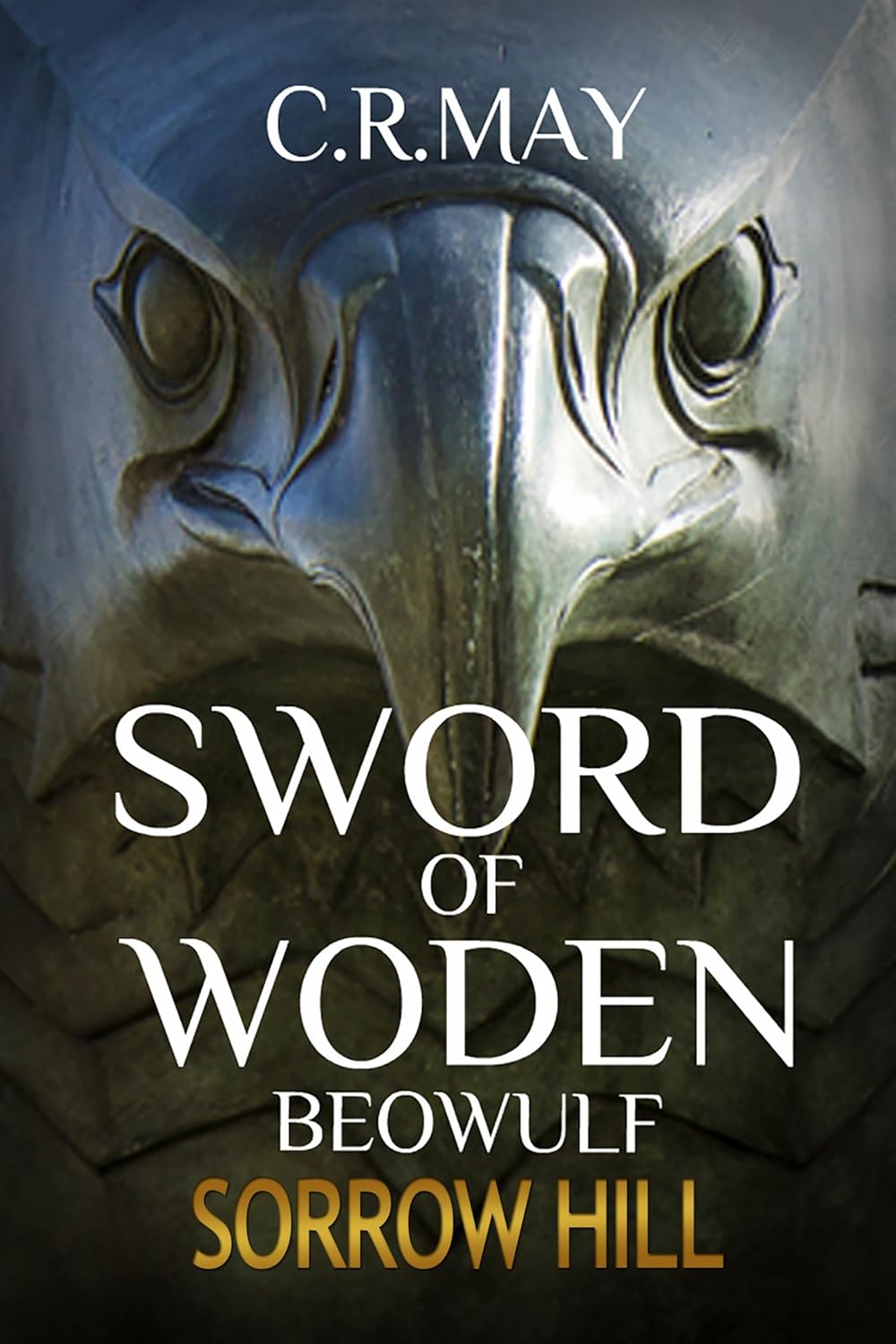
Sorrow Hill by C. R. May


You have a chance to win a FREE COPY of Sorrow Hill. Simply comment below OR at Rob's review, located here OR at the Facebook thread for the contest, located here

Drawing May 30, 2015


C.R. May discusses his current project...


One of the things which Rob touched on during our discussion concerned the amount of information which is woven into the narrative of the Beowulf poem itself. As you know, Sorrow Hill was my first attempt at writing, so in a way I was as surprised as most people seem to be when I realised that it was going to take me far more than a traditional trilogy to tell the tale in its entirety. I remember thinking to myself about midway through book two that my tale could easily fill at least half a dozen volumes as the twisted tale of inter tribal and familial warfare unfolded across the Scandinavian lands and beyond. 

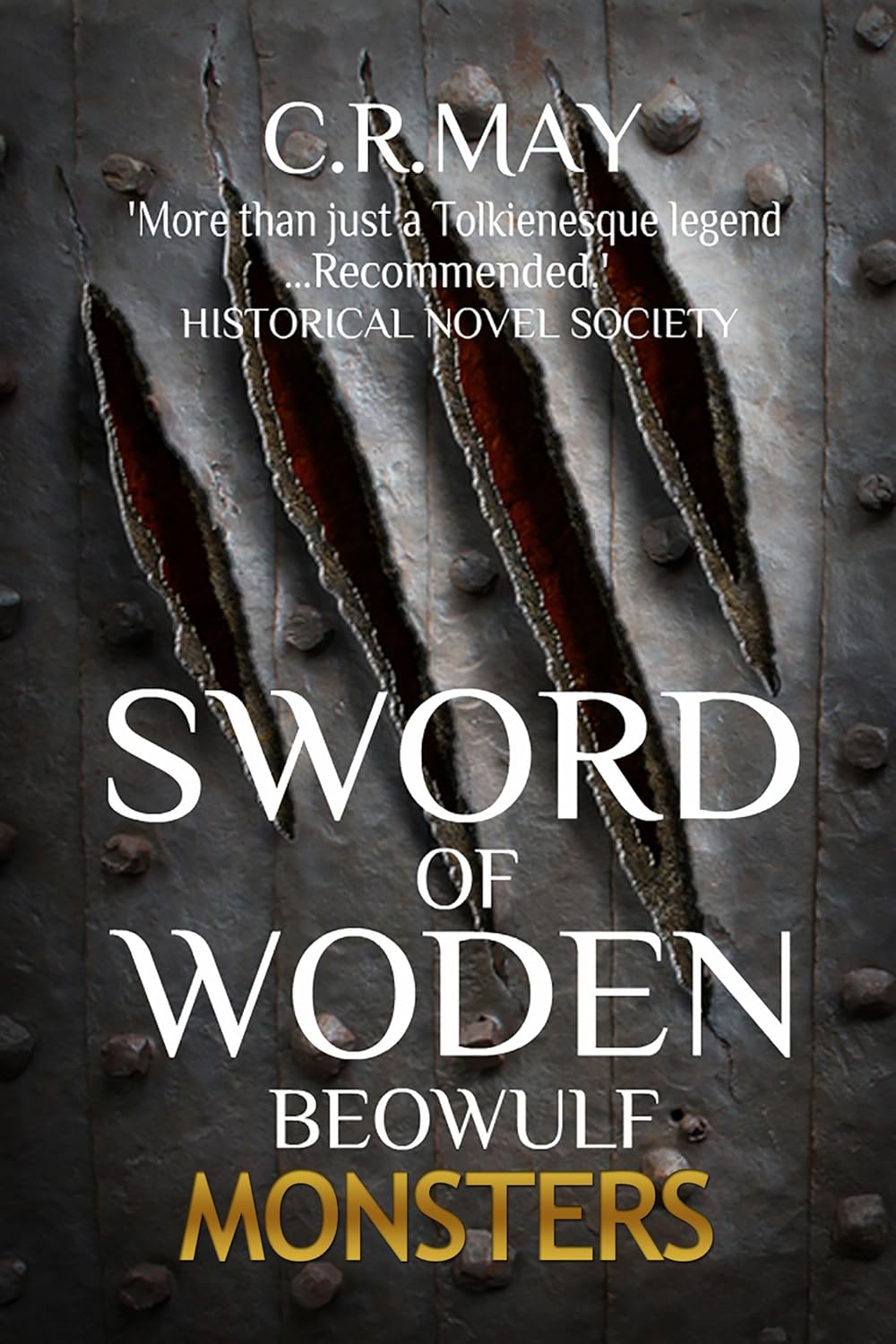
In Wræcca I was introducing primarily Swedish characters who would come to play an important part in the future of Beowulf and the Geat nation as the decades rolled by. However, as I realised the enormity of the task ahead of me and gained confidence in my writing ability, I began to hanker after creating new tales with new characters to fill them. I decided to end the Beowulf story where most people would expect, with the death of Grendel's mother. But my writing heart remained in the northern lands, and as the Brennus story was nearing its conclusion I began to think about a subject for my next series. My novella, Dayraven, tells the story of a historically attested raid made by the Geats under King Hygelac around the year AD523, three years after the death of Grendel in Monsters. It incorporates many of the characters which were in the Sword of Woden books and I decided to continue the story from that point but change the lead character from Beowulf to another. This would enable me to 'cherry pick' the highlights from events in the Scandinavian lands, but move the main focus of the story across to Britannia. The Angle, Eofer was the perfect choice for this. 

Married to Hygelac's daughter, Astrid, he crops up regularly in the Sword of Woden books. Kin to the following two kings of the Geats, Heardred and Beowulf himself, he would be honour bound to lend his support in times of trouble, despite the fact that he would now be helping the Angles carve out their new kingdom on the other side of the North Sea. His king, Eomær, is widely regarded as the leader who led the English people from their first home in modern day Jutland to East Anglia in the mid 520's, so the stories would dovetail perfectly. It's a vast canvas which I hope will keep me busily writing for years. In the first book the seat of Anglian power still resides in Old Angeln, although they are coming under increasing pressure from their neighbours the Danes, now freed from the depredations of Grendel and the fell hag. The following extract is the opening scene of chapter one, following on from a prologue which sets the scene for a major thread in the storyline. 

Eofer is returning home from a summer spent raiding and fighting in Britannia and, immediately after the squall you will read about below, the tale picks up where the Dayraven novella left off. The series is called Eofer King's Bane and the first book will be titled Vikings after the following passage from another Anglo Saxon poem, "Widsith." Considered older than Beowulf, "Widsith" contains the first recorded use of the word Viking, and yes, King Ingeld of the Heaðobeardna and Heorot itself will all be present!


Hroþwulf ond Hroðgar heoldon lengest


sibbe ætsomne suhtorfædran,


siþþan hy forwræcon wicinga cynn


ond Ingeldes ord forbigdan,


forheowan æt Heorote Heaðobeardna þrym.


Hrothwulf and Hrothgar held the longest


peace together, uncle and nephew,

since they repulsed the viking kin

hewn at Heorot Heathobards army and Ingeld

to the spear-point made bow.

Widsith

 
ONE


The eorle scanned the horizon and chewed his lip. It didn't look good. It didn't look good at all.

Sæward wiped his hands on the seat of his trews and took a firmer grip on the steer board.

“Look at it move!”

Glancing across he shared his lord's misgivings.

“This is going to hurt.”

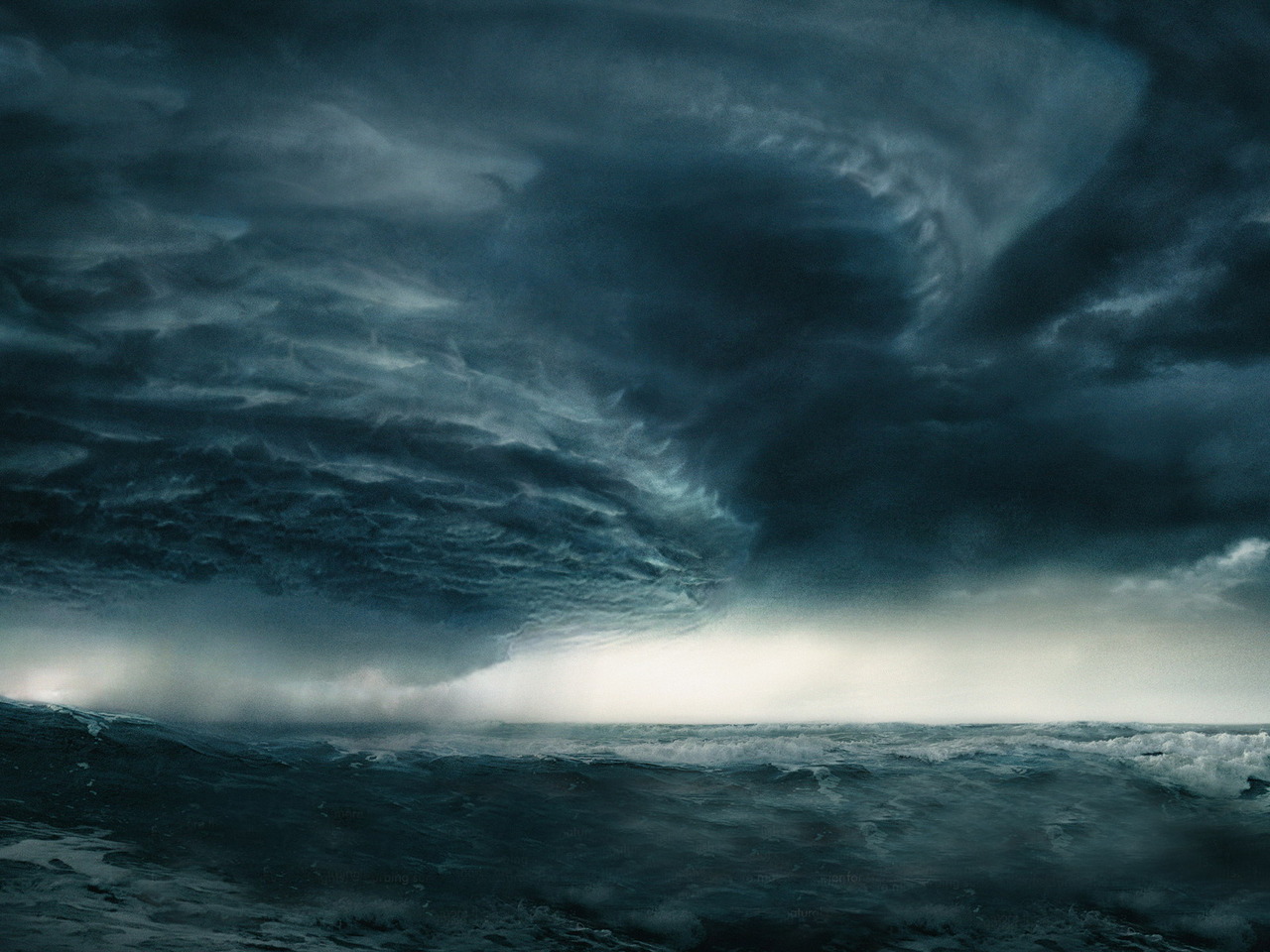
Away to the south, a boiling rampart of darkness was bearing down on the ships of the Englisc fleet, and the pair watched as the helmsmen instinctively hauled at their own big blades and fanned out. They would need all the sea room they could get, and soon. The squall was little more than a mile or so distant now, moving quickly, its leading edge pulsing as lightning bolts flickered at its heart.


The sea was already responding and the Fælcen began to saw as white caps showed alongside, creamy waves slapping against the strakes of the sleek longship as they shot by.

The men exchanged a look.

“Half way?”

Eofer risked a glance to the south and was horrified to discover that the storm front had already gobbled up half the distance to them. He shook his head, crying out against the force of the freshening wind as he began to make his way down the ship.

“A third. Any more and we will be lucky if we only lose the sail. If the mast goes...”

The crew had gathered amidships, and they wrenched their faces away from the wall of death as their eorle approached.

He would need the strongest, most experienced men at the oars if they were to ride this one out, and Eofer snapped out his orders. “Duguð, row. Lash your oars to the thole pin and keep us from broaching.”

He turned to the expectant faces of the younger warriors. “Youth, you bail.”

Rounding on two dark haired lads, he stabbed out a finger. “Crawa, Hræfen. Lower the spar half way down the mast and square it off. Reef the sail by two thirds, then I want you to stand by the sheets. Keep your eyes on the sail. If it looks like it is about to blow out forget pulling the pins, just use your knife to cut them.” He flashed them a smile of encouragement. “Better to go two sheets to the wind than swim home.”

The twins gave a nervous laugh and scampered off to their task as Eofer cast a look of longing at the twin wash strakes lying snugly on the cross trees amidships. Fixed along the gunwale, they were used to raise the freeboard in heavy seas but, casting a look beyond the sweep of the stern, Eofer could see that it was already too late to peg them into place. The storm was upon them.

The crew looked up as one as an outlier moved in to extinguish the light and warmth of the sun and a spray of raindrops, as large and heavy as peas, swept across to mottle the deck.

Eofer hurried back to the steering platform, ready to throw his weight alongside the helmsman. A last glance outboard and he gasped at the terrible beauty as the Englisc ships, islands of colour and life in a vista of purple and black, were swallowed by the monster. 


In the blink of an eye the Fælcen was engulfed in a maelstrom of water, noise and gloom. Wind and wave searched out the smallest chink in their defences and found one as the power of the first roller nudged the stern aside. It was only a fraction but it was enough, and the following wave smashed into the tall stern post like a shield strike, the ship recoiling from the blow and offering up a glimpse of her flank to the onrushing madness. As the Fælcen began to broach, Eofer threw himself bodily into Sæward and desperately added his weight to the push. Both men grimaced with effort and fear as they stared down at the shredded waves which threatened to engulf them. The steerboard gunwale was kissing the sea, they were a heartbeat from the end as she began to respond and drag herself back to an even keel.

Before the ship could right herself the next wave hit. Driving beneath the hull, the stern was thrust skyward as the bows were forced deep, but she was a well found ship and she lived up to her name, lithe, fearless; a hunter. Rising again from the swell, she shook the water from her timbers and forged ahead. As the great hooked beak of the prow crept around, Eofer scanned the deck and the breath caught in his throat as he saw that the boy, Hræfen, was missing from his place at the steer board side. As his eyes moved out to search the torn surface of the sea for any sign of the lad, the big arm of Imma Gold reached out from its place at the benches and casually plucked a dark mass from the waters, depositing it in the scuppers like a bundle of sodden rags. As the big warrior bent to his oar their eorle watched with pride as the bundle came back to life and the boy dragged himself back across to his station by the steer board sheet. Kissing the lashing which had saved his life, Hræfen resumed his watch on the tortured sail.


Up for'ard, Eofer saw that Spearhafoc had taken up a position in the bows. Balanced perfectly she was a woman of many talents, and he was proud of the qualities she had developed since she had joined his war band. Fearless, lithe and deadly with spear and sæx alike, the shield maiden, although no volur, regularly conversed with the gods. The tawny feathers of the hen Sparrowhawk corkscrewed from her hair as the gale snatched away her invocation to Ran. Bracing herself in the very upturn of the prow as the waves hurtled past only feet away, the young woman was holding aloft a sacrifice as she offered to fill the goddess' drowning net with something other than the crew of the Fælcen.

The gale set up an unearthly howl in the rigging, fire bolts danced at the masthead but, with the ship running steadily before the gale, Eofer knew that the worst moments were already past. Clinker built in good Englisc oak from the Wolds near his hall, the hull flexed and creaked as she was driven before the white caps like the pure-blood she was. Smaller than the dragon ships with barely a draft to speak of, the Fælcen, at twenty oars, was the type of warship which the Englisc called scegð, perfect for carrying a small, hard-hitting force of warriors deep inside the lands of their foemen.

He relaxed his grip on the steer board and let Sæward run her on. They shared a look, and each man knew just how close they had come to joining the legions of those lost at sea, spending an eternity in the hall of the sea god, Wade. Sæward leaned across and they shared a laugh as the helmsman cried above the noise.

“That was fun. Shall we do it again?"


About the Author:

C.R. May was born in Bow, East London before his family moved to South Ockendon, Essex. After hearing that Ockendon translated as Wocca's Hill in Saxon, a lifelong passion in history was kindled, which has taken him from Berlin to the site of the battle of Little Big Horn (via Erik the Red's Icelandic hall!). The influx of Germanic adventurers was recorded in the place names around him and, inspired one day, he decided to weave his own stories into this history. You can read and discover more information at his blog and the author may be found at Facebook.


Rob Bayliss is a reviewer at The Review and is currently writing his own fantasy series. Information on his writing projects can be found at Flint & Steel, Fire & Shadow.


Tuesday, 26 May 2015

Rob Interviews Book of the Month Award Winner C.R. May

Winner of The Review's May 2015 Book of the Month Award

You have a chance to win a FREE COPY of Sorrow Hill. Simply comment at Rob's review, located here OR at the Facebook thread for the contest, located here
Drawing May 30, 2015


Being a West Countryman, my drink of choice is usually cider. However, today I’m having a chat with Cliff May, the talented author of Sorrow Hill, the first in his trilogy of Beowulf: Sword of Woden series. Therefore it only seems right and proper to tap a cask of mead and imbibe a horn or three. Is a horn the equivalent of a pint? Will mead really colour my teeth green, as happened to one of Beowulf‘s companions? Oh well, I don’t know the answers but it will be fun finding out, ah, here’s the man himself!


Waes Hael, Cliff, you’ll need this to wet your whistle (hands over a full horn of mead). Firstly congratulations on receiving The Review's Book of the Month award for Sorrow Hill. Could you tell me a little about yourself and how you became a writer?

Thanks, Rob, I was very pleased to be chosen, it was completely unexpected. I have been writing now since the end of 2012 and, as you know Sorrow Hill was my first-ever novel. In fact it was about the first thing longer than a shopping list that I had written for about forty years! The bomb sites of the blitz in east London were my playground as a child and later the family moved to south Essex. Nearby was the Battle of Britain Spitfire airfield at Hornchurch where I could explore the hangars and old revetments known as E pens where the aircraft sheltered from attack. I stumbled across an old paperback called Nine Lives by a New Zealander called Alan Deere who was based there during the battle, and I read and re-read the book until it fell apart. It was a thrill to be able to visit the scene of the action, and I think that a lifelong love of reading and history probably started there. Following 15 grim years working in the City, my then-wife was unhappy at home and wanted to return to work so I became the prototype house husband, taking over the care of our children who were then three and one years old. I combined the role with renovating two tatty old wrecks which we moved to during that time, a Victorian town house followed by a 14th century hall house. I taught myself some of the old medieval skills like timber frame carpentry and lime plastering. It was hard physical work repairing centuries of wear and neglect, removing and taking literally tons of concrete and rubble to the local tip in the family car, but the end results were immensely satisfying. I used to treat myself to a short break every year during this time, always with an eye on history. One year I visited Iceland and searched out the locations mentioned in the sagas, another I crewed on the full size replica of Captain Cook's ship, Endeavour, sleeping in hammocks and watching the sun rise over the North Sea while sweating in a sail aloft. Two further children followed a decade later, one of which we were assured was autistic. Caring for him and looking after a baby (and two teens) in the middle of extensive building work taught me the patience and self-discipline a writer needs. My son is fine now, but I still have a daughter at primary school and writing offered me a kind of 'virtual existence' outside the home, plus a welcome source of income, which would still enable me to care for the family full time. One evening I sat at the laptop and wrote 'The boy stood at the base of the tree...' and I haven't stopped since!

 
Ha! I understand that ‘virtual existence’ bit. Hmm, this mead is nice, I could get used to this. If I recall a previous conversation we had, you told me you galloped through the writing of Sorrow Hill and the sequel Wraecca. Are you a regimented author, do you set aside writing time in your day?


I am very fussy I am afraid. I need peace and solitude to write because I never really plan very much at all. I have a vague idea of the start and end of the book plus a few highlights, but even those few supposedly fixed points rarely survive the actual writing process. The story comes into my head as I write it, almost like the pictures which flash into your mind when you read a good description in a book, and I write what I see. If someone comes into the room and speaks to me I have no idea what they are saying for a while as I return to the world! I write mostly during the day alongside running the home and luckily, now that the youngest children are older, 13 and 11, I can write at the weekends and during the school holidays. Basically, now that I am a single parent, I write when I can.

I’m with you on that one. The more I write, the more the ideas flow… Talking of which, our horns are both empty; here, have a top up. Your love of the period and of Beowulf is obvious; but to wrest three novels from one poem is no mean feat. Have you always known you would write this series?

Originally I had the idea that I would write either a stand alone novel (sensible for a first timer) or a series (stupidly, I took this option) set in the drowned land beneath the present North Sea. Oil and gas companies have mapped the seabed and produced detailed maps of the area known to scientists as Doggerland after the Dogger Bank, then a hilly region on a grassy plain. The rivers Thames, Rhine, Seine etc. all flowed into one huge watercourse which flowed to the Atlantic via a great waterfall at a time when the chalk cliffs near Dover and Calais were still one continuous ridge; it's a fantastic setting. Our ancestors hunted great herds and fought off prides of lions there; it has great potential for a story, but I went with Beowulf in the end because most people think they know it. For quite a short tale there is an incredible amount hidden within the narrative: wars between the Geats, Swedes and Danes, family feuds, even a battle on the frozen surface of Lake Vanern. Add Hygelac's raid which I wrote about in my novella, Dayraven, and there is actually a mind-boggling amount that an author can wring from the bare bones which has come down to us.


Well I hope you write of Doggerland sometime soon, I’d like to see that waterfall in my mind’s eye.  But further to the last question: your descriptions of equipment, landscapes and even fighting style is very detailed; how much research did you do before beginning your story?

I have always loved the period which we used to call the Dark Ages. Western Europe became a sort of 'wild west' where anyone with the will to rise above the restrictions of their birth could, with luck, rise as high as the norns would allow them. Wealth in the form of land, gold and silver was there for the taking in the period between the fall of Rome and the emergence of the new centralised kingdoms and the Christian church in the 6th and 7th centuries, which combined together to hoover up all that wealth again. I have always read everything I could find about the period so I had a pretty deep background knowledge to begin with, but Paul Mortimer's book, Woden's Warriors is a cracker for equipment, weapons and tactics, plus he was kind enough to send me a file from a yet to be published book, so a special thanks to him. There are several sagas which complement the Beowulf poem, Ynglinga Saga and especially The Saga of King Hrolf Kraki are the best; the Penguin classics of the latter is a great read, in many ways almost a parallel of the Beowulf tale. Sam Newton's book on the origins of Beowulf helped to disentangle the many threads in the poem as did the verse translation edition of Seamus Heaney's recent book. For the descriptions of the locations I used Google Earth a lot. It's a fantastic resource for historical novelists; you can travel the same roads as your characters (sadly now lined by different coloured wheelie bins, even in rural Sweden) and describe a place as it actually is on the ground. 

This is thirsty work; I'll just have a drop more. How would you describe your character Beowulf?

The starting point for all my characters is my belief that people have always been essentially the same, with the same strengths and faults as today but surrounded by less technology. I wanted Beowulf to be a far more complex character than he was portrayed in the computer-generated (CGI) film, for example. Sorrow Hill covers the years of his childhood to late teens so I introduced some of the insecurities which we all feel during that time. He is desperate to please his father but Ecgtheow seems aloof. His infatuation with Kaija and his bumbling attempts at speaking to her. Later, in Wraecca, he suffers from what we would all recognise now as head trauma but he thinks that he is losing his mind, and of course he rescues one young girl from abuse and avenges the murder of another. I wanted him to have what we would call now a social conscience, rather than be the muscle-bound bore portrayed in the film. I think that it makes him a more rounded character, someone people would like and respect as a man as well as a hero.


Yes I agree, and in my opinion you have more than succeeded. I found the CGI film a grand spectacle but I didn’t find its portrayal of Beowulf inspiring. You have rooted the story of Sorrow Hill with an actual recorded battle. When you embarked on the series did you have a mind to write historical fiction or fantasy?

That's a great question, Rob. My original intention was to write as little fantasy as possible but as the writing progressed, I found that it took so much away from the tale that the essence of the story was lost. It was a bit like Lord of the Rings without Gandalf or Orcs. So Beowulf was attacked by conger eels during the swimming race with Breca instead of a sea monster and the nest of trolls which he boasts about killing before the fight with Grendel became remnants of the Neanderthal population surviving in the backwoods of Sweden, etc. Luckily I quickly realised my error. How could you explain the fact that Beowulf swam down through the mere to attack Grendel's mother for 'the best part of a day'? Although I kept most of the rationalizations like those mentioned above, I decided to increase Woden's involvement to help account for some of the more supernatural/superhuman episodes in the books. I think that the mix helped to isolate the fight with Grendel, in Monsters, and made the passage all the more powerful by being more than just another fantastic episode among a string of others.


What struck me was how you brought the religious belief system of your characters' culture alive. I found it believable. The figure of Woden - the All Father- and the echoes of him in our folk memory and culture has always fascinated me; has he you?


The more that you study the figure of Woden the more you realise what a complex character he has. Public perception is based on the later Norse figure of Odin, by which time he had become more of a god of war and the nobility. Before that, the more warlike qualities were largely the domain of Tiw/Tyr and Woden was far more shamanistic. His connection to poetry, healing, magic, runelore, and even ecstasy indicate that he was a far more fascinating character in earlier times. Of all the old gods, Woden represented the qualities of the human mind and emotions, good and not so good, as opposed to, say, the more practical concerns of crop fertility and weather of Yngvi-Frey and Thunor. Cunning, shifty and vindictive at times, but also willing to sacrifice himself for the good of others, it is this multi-faceted character which I think makes him so appealing to us still.

Well I’ll drink to that. Thank you for your time, Cliff; it’s been fascinating and an absolute pleasure. Just one last question… do my teeth look green to you?


*****


About the Author:


C.R. May was born in Bow, East London before his family moved to South Ockendon, Essex. After hearing that Ockendon translated as Wocca's Hill in Saxon, a lifelong passion in history was kindled, which has taken him from Berlin to the site of the battle of Little Big Horn (via Erik the Red's Icelandic hall!). The influx of Germanic adventurers was recorded in the place names around him and, inspired one day, he decided to weave his own stories into this history. You can read and discover more information at his blog and the author may be found at Facebook.


*****


Rob Bayliss is a reviewer at The Review and is currently writing his own fantasy series. Information on his writing projects can be found at Flint & Steel, Fire & Shadow.