Saturday, 8 February 2014

GRIMALDI, King of Clowns

My copy of Richard Findlater's Grimaldi King of Clowns is almost sixty years old, and was a gift from my wife.

I first found the book in my local library.  Having an interest in theatre history, and especially such folk theatre traditions as the Italian Commedia dell' Arte, which helped to inspire the English pantomime, I was intrigued to discover a biography of the most famous and influential English Clown.  What I wasn't expecting was a story that would move and inspire me.  Joseph Grimaldi instantly became one of my heroes.

Richard Findlater had little to go on when he decided to research the life of the great Clown of the Sadler's Wells theatre who became the leading light of the Regency pantomime.  Grimaldi himself had written his Memoirs, later in life, and these were edited by none other than Charles Dickens, but the Memoirs are a curious blend of make-believe and misremembered anecdotes.  They don't really tell us who Joe Grimaldi was.

Joseph Grimaldi, without the distinctive grease paint
 
Findlater had another problem: the theatre is an ephemeral art, and perhaps nowhere more so than in the performance of comedy.  A few scripts might remain; prints and portraits might survive (some prints of Grimaldi in action were hugely popular in the London of the early 19th century), and the occasional recollections of someone who saw the Clown at the height of his uproarious powers might give a hint of his genius.  But how to capture that lightning in a bottle - the particular improvisational skills that, along with his ferocious energy, made Joe Grimaldi such a star?
 
Somehow or other, Richard Findlater achieved the impossible.  Although we can still struggle to imagine precisely what it was that Grimaldi did so well, the atmosphere of the theatre at the time is conjured up so expertly that the reader can almost see Joey the Clown in his element.  He is muscular and elastic, as if he had no bones in his body.  His whitened face, daubed with reddened cheeks and wearing a coxcomb or bobbing antennae, is a lugubrious combination of twinkling, mischievous eyes and a great, wide oven mouth.  He "mugs" - grimacing and winking - and he bounds across the stage in enormous strides.  He transforms himself, and anything else around him, challenging every rule in the book.  He fights, he dances, he tumbles.  He makes you laugh - King George IV once burst his stays laughing at Grimaldi's antics - and he can make you cry.  And in that, Findlater's charming biography matches the stage genius: his life of Grimaldi inspires admiration, sympathy, excitement and heartache.


Born into a theatrical family, just a week before Christmas in 1778, young Joe first appeared on stage when he was barely two and a half years old.  His father - a tyrannical, melancholic character, obsessed with a phobia of premature burial - introduced him to "skin work", which required the child to perform as a monkey, cat or dog.  During one performance, "Old Grim" was swinging his young son around the stage by a chain attached to his waist.  The chain snapped, and the boy was flung out into the stalls, landing on a very fat gentleman in the audience.  Young Grimaldi was, fortunately, unhurt - but it was the first of many theatrical accidents which, combined with the unimaginable exertions that made Grimaldi's act so extraordinary, eventually conspired to ruin him physically.


For all his tremendous success, and the fondness of the theatre-going public in that volatile age, tragedy and misfortune dogged Grimaldi's life and career.  Fastidious in refusing to fall into any "tears of the clown" traps, Richard Findlater covered the emotional blows which struck Grimaldi so often with a neat combination of directness and delicacy.  Moreover, his portrait of Joe the actor, and Joey the Clown, assembled from a thousand minor details, is such a winning picture of a gentle, kind and unassuming man that the reader's sympathies are surely aroused.  We celebrate his triumphs, and we feel his agonies.

Among the high-points is the story of a seaman who, after suffering a bout of sunstroke, had been deaf and dumb for several years.  His friends took him to see Grimaldi on stage.  Partway through the hilarity the seaman turned to his nearest companion and remarked on what a "damned funny fellow" the Clown was.  His companion gawped - "What?  You can talk?"  "Aye," said the seaman; "and I can hear, too!"  A great cheer went up from the sailors.  Grimaldi's fooling had cured a deaf and dumb man.


There are so many gems in Findlater's loving biography that one is spoilt for choice.  The juxtaposition of the farcical and the dramatic, the uplifting and the downright tragic, makes for a very special read.  Whenever I have immersed myself in Grimaldi King of Clowns I have warmed to Joe Grimaldi, often without realising it, and before I know it I am suffering along with him the loss of his loved ones and the physical incapacity which cut short his astonishing career.  So I will sign off with something that is only touched upon at the end of the book.

Every year, in January, clowns gather at a London church to celebrate the life of the King of Clowns, who died 180 years ago.  The rest of the world might have forgotten him, but the professional fools of the circus still honour Joe Grimaldi, the greatest clown that England has ever known.  And thanks to Richard Findlater, who combined detailed research with an easy narrative touch, the life of this wonderful, fascinating man is available to anyone who fancies a trip back to that ludicrous, gluttonous, chaotic period in our country's past and a few evenings spent in the company of a man who gave everything to make people laugh.

The grave of Joseph Grimaldi,
Joseph Grimaldi Park,
St James Churchyard,
Pentonville, London
(photo by Cassiato)
 
 
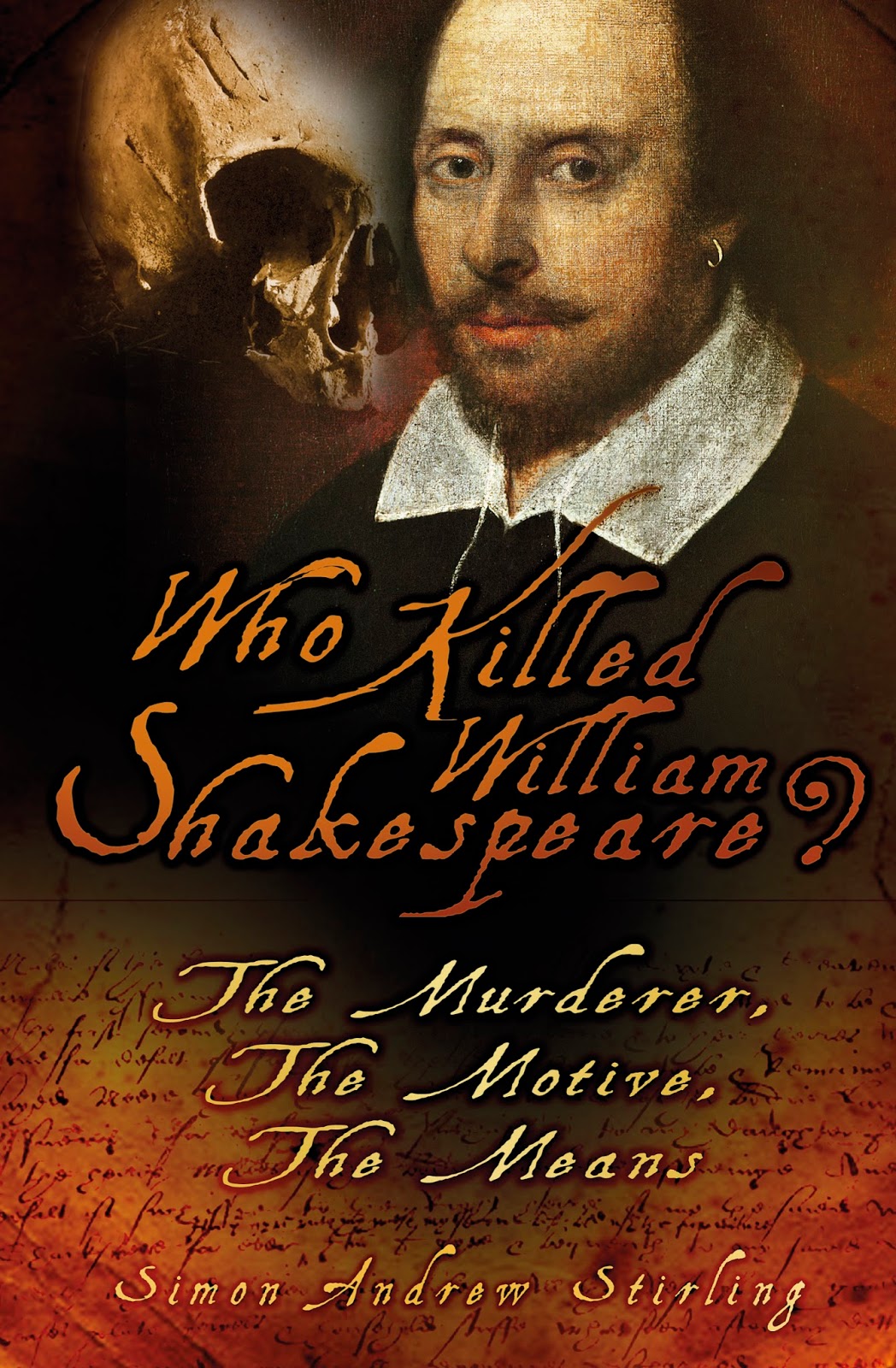
This is the first of an occasional series in which Simon Andrew Stirling discusses historical nonfiction and those biographies that have most impressed and inspired him.  Simon is the author of The King Arthur Conspiracy and Who Killed William Shakespeare?, both of which are available from Amazon.  He is an experienced public speaker and lecturer, a trained actor and professional dramatist who also works as a script consultant.
 
If you would like Simon to review your book, please click on the Submissions tab at the top of this page.

Friday, 7 February 2014

Rob Bayliss reviews Plague Seed


Plague Seed - Book One of The Plague Fall Trilogy by Wade Alan Steele
Reviewed by Rob Bayliss


See below for details on the prize draw

The Plague Seed is a high fantasy novel for both young adults and the not so young. Put it this way: if you spent your formative years immersed in fantasy role playing games, killing orcs and trolls, (hands up, I admit that I’m guilty!) then you will thoroughly enjoy this rollercoaster of pure escapism.

Welcome to Western Talandria: a world shared by men, some civilised and some savage cannibals, drunken dwarves and aloof elves. The book is written as a letter written by an elf to his infant son. The epistle chronicles the history of he Plague War from the perspective of one of its heroes, an exiled elf of many names. We are introduced to him as Seligre, the Firebrand, posing as a merchant, attempting to mingle with the patrons in a high-end den of ill repute, in the mountain town of Colton’s End. It becomes clear in a brawl that Seligre is no mere merchant; he is a member of the Sword of Silence, a criminal guild centred in the nearby town of Dentim. In a local establishment he becomes enamoured by a beautiful human dancer called Katelyn. Katelyn is no mere dancer however; she is the wife of Raymuz, the headman of Colton’s End.

Raymuz mistakes Seligre for Dockra, Katelyn’s one-time elf lover, and orders his arrest. Katelyn and Seligre escape Raymuz's men and team up with Tahlkin the dwarf, an ale-brewing priest of the drunken deity, Rold.

As the companions desperately evade capture, or worse, all hell is breaking loose at Colton’s End. Gathering in the Faylin Mountains, a great northern army is composed of disaffected humans, goblins and lumbering troll like creatures, the Grumach. Raymuz is in league with the army bent on conquering Talandria. Carrying a message from Dokra to the High Council of Elves, Katelyn hires Seligre to take her to the Blessed Forest of Oldenhome to the south. Oldenhome is the impregnable homeland of the elves, where they live in splendid isolation from the troubles of those they view as lesser folk. Tahlkin joins them in their journey south, as Colton’s End is no longer the place to open a temple of Rold and sell beer, and the roads are now dangerous to travel alone.

They journey south but there are enemies everywhere, not only Raymuz’s men but also the one time friends of Seligre’s old guild. Treachery abounds across Talandria as the lands yield to the great northern army. Only Oldenhome stands untouched, as aloof as ever. Facing many dangers Seligre and Katelyn eventually become lovers. As the companions draw closer to Seligre’s homeland we learn of the reasons for his banishment from Oldenhome, and his true name, Drayvus Varden, a one-time Knight of the Blessed Forest.

With more of the tale to be told there will be no happy ever after for Seligre and Katelyn, as Oldenhome is forced to interact with the outside world. In an interesting twist we see that all is not as it appeared to be. Seligre has unwittingly become a conduit to bring about the downfall of the Blessed Forest.

A consummate Dungeon Master, the author has done a fine job in creating a world with different races, deities and mythologies. The dialogue is refreshingly modern, at times humorous but not overly vulgar, and I really enjoyed the descriptive prose and turn of phrase that Mr Steele has written. I look forward to reacquainting myself with Seligre/Drayvus in the continuing history of the Plague War.


Now then, what to do until Book Two is released; I wonder if I still have those old twenty-sided dice?


Plague Seed is available as an ebook on Amazon.

This review was written by Rob Bayliss. Rob is currently working on his Flint and Steel, Fire and Shadow fantasy series. Part One, The Sun Shard is out on Kindle.

 If you would like Rob or any of the Review Group team to review your book, please check out the submissions tab above.


Wade Alan Steele is also offering an ebook copy of Plague Seed to one lucky draw winner! To get your name in the hat for a FREE ebook, simply comment on the blog below. 

Facebook readers may also comment here.


Thursday, 6 February 2014

PAULA WRITES: THE WOLF BANNER RISES


Picture by Tony Wait


For those who aren't familiar with my novel Sons of the Wolf, it is a historical novel set in 11thc England; you can read a brief synopsis  here and an excerpt here. It follows the fortunes of an English warrior, Wulfhere and his Lord, Harold Godwinson. The theme which runs through the book is centred around a blood feud between Wulfhere and his neighbour Helghi. Both characters have been brought to life from the Domesday Book, William the Conqueror's survey of England in 1086. They are the names of the men who owned the land around Little Horsted, near Uckfield in Sussex. In the Domesday Book you can find information about their landholding and their property, but the book does not contain any more information about them other than what they owned. There is nothing that tells us what sort of characters they were, who their wives were or whether or not they had children,  so I have used an author's creative licence and invented a story based on them and the area in which they lived.


The Wolf Banner continues on from where Sons of the Wolf left off. For those who have read the first novel, you will know how it ends but for those who haven't I shall not spoil it by saying anymore; however, The Wolf Banner covers more of both Wulfhere's and Harold's lives, and the feud between Wulfhere and his nemesis Helghi deepens. Helghi's desire to destroy Wulfhere takes on a more ominous dimension and threatens to spill further into the lives of the two communities in which they live, Horstede and Gorde.
The storyline also broadens and will take the reader back into Wales where we meet again the characters only touched upon in the first book: Gruffydd, the Welsh King, Alfgar, his daughter Aldtih and Burghred, his son. Burghred is desperately caught between his loyalty to his father and his King. They flesh out the plot and will, I hope, enhance the plot with more exciting threads to follow.


Throughout the series, the wolf,  an emblem of Wulfhere's ancestry, is evident in its subtlety, like wallpaper hidden behind curtains and other wall decorations. It is present in their names, Wulfhere, Wulfric and Wulfwin. It is like a theme that runs through a symphony, ever present but only around the periphery, coming into its own when it is time to play its part. So what is the importance of the Wolf?   The wolf was a feared animal, a representative of battle--the corpse eaters, who came at the end of the fight to feed off the carcasses of the fallen along with those other eaters of the dead, the ravens.  To possess the spirit of a wolf was to harness its strength  to give protection; thus the wolf, to Wulfhere and his people, was not only to be feared, but also revered. Wulfhere's ancestors once wore the skins of wolves in battle, to imbue them with the spirit and power of the animal and also to make them appear more fearsome to their enemy. To the enemy the wolf was a harbinger of  death.

Wulfhere's daughter, Winflaed, finds and repairs an old banner that belonged to her grandfather and his fathers before him, and just as Wulfhere is readying to ride off to fight the invading Vikings again, she presents it to him. He takes it with him, proudly displaying for all to see as he goes to into battle to defend the homeland that his forefathers, the Sea Wolves, created for him.


picture by Gayle Copper

The Wolf Banner will be published this spring by Gingernut Books LTD.

For updates and news follow me @paulalofting on Twitter and my Facebook page
Other places to find me: Sons of the Wolf
                                         The Wolf Banner
                                         www.paulalofting.com

Sons of the Wolf is a winner of the Indie BRAG medallion 2012

Wednesday, 5 February 2014

PAULA'S PEOPLE: SIMON STIRLING DISCUSSES THE MYSTERIES OF SHAKESPEARE

Thanks to Simon for coming along and being a guest on Paula's People. Simon discusses the ideas that spawned his latest novel Who Killed William Shakespeare?  


I was chatting to (chatting up?) a Canadian student at my drama school in London, one day.
“So – got anything planned for this weekend?”                
“Yeah, we’re all going up to Stratford-upon-Avon.  We’re seeing a show at the Royal Shakespeare Theatre, and we get the Shakespeare tour.”
It was part of the one-year course for overseas students: the Stratford Weekend.  And that’s when it struck me.  To lovers of theatre, and literature, all over the world, Stratford is a kind of Mecca.
And there was me thinking it was a place you went to on a Sunday afternoon.
I’ve spent a great deal of my life in and around Shakespeare’s hometown.  It’s given me a different perspective on the ‘Sweet swan of Avon’.  Time after time, reading biographies of William Shakespeare, I was struck by how little interest the biographer had in Shakespeare’s native region, his family connections, the knotty network of friends and co-religionists which made Warwickshire such a tribal county.
London has changed since Shakespeare’s day.  But much of his home county hasn’t altered that much.  You can get closer to Shakespeare in the lanes around Baddesley Clinton or Earls Common than you ever can on the banks of the Thames.
When I started studying Shakespeare in the late-1980s, hoping to understand how a lad from the Midlands became the world’s greatest poet-playwright, I found it all a frustrating experience.  “We know so little about him!” seemed to be the cry on every Shakespeare scholar’s lips.  Twenty-five years on, I’ve come to believe that this mantra is anything but true.  By refusing to concentrate on his London days, I was able to uncover several new facts about Shakespeare’s life.  A whole new picture emerged – more ‘real’, if you will, and certainly more intriguing.  Downright scary, at times.

But the mythology of Shakespeare forms most of what we know, or think we know, or are told to think we know, about this brilliant man.  To engage properly with Shakespeare is to enter the terrifying world of Tudor and Jacobean politics, something unnervingly close to a police state, and the sheer brutality of the repression of those who adhered to the Catholic faith, as their forefathers had done for a thousand years.  It is to enter a period of great upheaval, a massive redistribution of wealth, the remorseless rise of a new political class and a casual recourse to murderous violence.  It was a time of fear and favour, of propaganda and prejudice.

16thc priest
At least, it is if you study it.  If you just read up on Shakespeare, though, you’ll come across very little of this.  Rather, you’ll be treated to a picture-postcard image of Merrie England, with Good Queen Bess on the throne and men prancing about in tights.  What was happening in the background, and often on a public scaffold, is seldom mentioned.
I lost track of the number of Shakespeare’s associates – his friends and relatives and contacts – who died in the most horrific ways possible (this presented me with a writer’s problem: how do you convey the reality of hanging, drawing and quartering – the state’s standard punishment for treason – and how do you keep that reality fresh and meaningful after the twentieth execution?).  For years, Shakespeare scholars have insisted on approaching his plays and poems as if they just popped out of his head, appearing from nowhere, each little nugget a witness to his rare genius but nothing whatever to do with his thoughts about what was going on at the time.

Romeo and Juliet
Would Shakespeare have been Shakespeare if he had turned a blind eye to the crimes that were being committed, all around him, by paranoid, vengeful, greedy and self-serving ministers?  Could he have been a poet and yet somehow avoided a little spying on the side?  Few of his contemporaries did, and yet Shakespeare is usually treated differently from his colleagues.  It’s as if we don’t want to admit that he was a real person … or we don’t want to have to deal with the realities of his life.

And so, many a promising lead is ignored, many an intriguing rumour stifled, so as not to tarnish our falsified ideas of the Bard.  Evidence has indeed vanished, and many a line of inquiry has gone cold through lack of academic curiosity.  One such line was the story published by a Warwickshire clergyman in the 1880s.
The vicar first claimed – in a remarkably detailed account – that Shakespeare’s skull had been stolen from Stratford.  He added to that account five years later, when he described his discovery of Shakespeare’s skull in another church altogether.  The tale of ‘How Shakespeare’s Skull Was Stolen and Found’ has received little or no attention from the Shakespeare experts.  Which is a pity, because much of it turns out to be true.  Most remarkable of all, there is a spare skull in the very crypt described by the Warwickshire vicar, and it bears comparison with the portraits of William Shakespeare.
St Leonard's church in Beoley where Shakespeare's skull was found
Maybe the story was ignored because the skull was found in what can only be described as the most Catholic resting place in the whole of the English Midlands.  Or maybe – just maybe – too many Shakespeare scholars aren’t really interested in him at all.  They are simply promoting a rose-tinted view of England’s past.
The real William Shakespeare has no place in that quaint and cosy misrepresentation of history.  So they continue to sell a Shakespeare who never was.
But if we want to understand him, and to hear his words clearly, and to know what atrocities were committed in the names of Queen Elizabeth and King James, we have to look at all the evidence.  Skulls and all.  It makes for a richer tapestry, if a bloodier one, and his plays seem all the fresher for it.
The Skull believed to be Shakespeare's
Just as long as we don’t fall into the trap of thinking of Stratford-upon-Avon as a kind of Mecca.  Shakespeare and his kind don’t demand our worship.
They demand justice.  And it’s long overdue.


 Andrew Stirling is the author of The King Arthur Conspiracy: How a Scottish Prince Became a Mythical Hero (2012) and Who Killed William Shakespeare? The Murderer, the Motive, the Means (2013) – both published by The History Press and available in Kindle editions from Amazon and in hardback from a variety of outlets.  His latest project, The Grail; Relic of an Ancient Religion, will be published by Moon Books later this year.
Simon lives in Worcestershire, UK, and lectures in Film Studies and Screenwriting at the University of Worcester.  He is also a respected member of The Review. Follow his blog at www.artandwill.blogspot.co.uk.


Facebook readers may also comment here.

Tuesday, 4 February 2014

Lisl's Bits and Bobs: Modern Day Trials of the Last Plantagenet King

Lisl reviews Loyalty Binds Me by Joan Szechtman

***See below for giveaway details!!***

Loyalty Binds Me, second in a projected trilogy concerning Richard III, the medieval monarch of the slanderous “Princes in the Tower” tradition, takes on a huge task. Many readers will be familiar with the last Plantagenet king’s travel to present-day in the first installment, This Time, and speculative fiction fans (and others) will revel in such a journey. However, when Richard finds himself now under arrest for the murders of his nephews–which, mind you, happened some 500 years ago, and there exist contradictions to this charge–he experiences firsthand effects of the success the Tudors, Shakespeare and others have had in blackening his reputation. But how, readers may ask, does the author manage to overcome the label of absurdity; will enough modern lawmen actually believe this is Richard III come to this era, and are willing to risk their careers on such a prosecution? How can this be portrayed?

Worry not, readers, for Joan Szechtman not only manages all this heavy lifting, but also does it with the mark of a brilliant writer: by making it look easy. The flow of the book is so smooth, that when I read certain parts I actually gasped at the ups and downs Szechtman took me through with Richard. So thrilling are those danger moments, I found myself mentally shaking my fist at the need to sleep; I simply had to keep reading and find out what happens next.


One of the ways the author achieves this is via her understanding of today’s society. Unlike most people in Richard’s time, our society has been through so much with technology that even those who scoff at the idea of time travel still often contemplate it with a fair degree of seriousness. Coupled with the viable descriptions and scientific explanations through the book, many doubters will do a double take at the possibilities. Then there’s the government. Oh yes, they want a piece of the pie, and that, paired with the widespread belief that governments already know more than they are telling, clicks it all into place.

Szechtman also brings to bear the unfortunate understanding we all have of post-9/11 policing. When Richard’s tormentors are unable to move in the direction they wish, they play the terrorism card, using that to threaten him with indefinite detention. If that doesn’t strike fear into the hearts of readers today, it at least erases the sometimes smug sureness that we have progressed as much as we think, in terms of governance and liberty, from the days when Richard sought to bestow greater rights on those accused of crimes. It is sadly ironic that this king now falls victim to abuse of power that can cause someone simply to disappear. What grows from this is that where once there was care for a character, now there also is great concern for the peril he is in.

Through all of this, the author allows us to peek into the lives of Richard’s modern-day family: his new wife and the two daughters he has adopted, as well as his beloved son Edward, whose resilience for the new world he is in is fairly strong–witness his grasp of technology, for example. But Edward, who woke from death to find his mother taken from him, speaks to us of how childhood, despite how overhauls, trends and social structures have changed it over the centuries, remains the same. Children are strong but vulnerable, astoundingly bright though need help navigating through even some of the briefest of situations and, perhaps most heartbreaking, love so strongly and want to please, yet withhold as a form of protection. They show us that we adults are given responsibility that is almost frightening in its ability to impact. Yet with brilliant economy Szechtman portrays all this in those peeks we are allowed, and we witness a family coming to terms with the usual trials all families must go through, as well as those of a father who has been arrested, and the merging of medieval and modern times–a blended family like no other.

This is by no means an exhaustive review of everything wonderful in Joan Szechtman’s latest book, but it does point the way to the other two, one as yet unpublished, for this book is not easily put down and forgotten. For those who already care about Richard, it will be a reader’s delight. Others who are new to the king, or willing to re-consider what exactly constitutes “common knowledge,” will find a wealth of historically accurate information as well as recognizable background details in order to do. Moreover, because the second book is written to be enjoyed independently, reading it first will not involve any guessing at the start. Nevertheless, Joan Szechtman’s Loyalty Binds Me will make you want to go back for more.

The author is graciously offering a free e-copy of Loyalty Binds Me for one lucky winner. Simply comment on the blog to get your name in the hat! Facebook users may also comment here

Joan Szechtman is also the author of This Time, book one in her Richard III series. Her web page can be viewed here and readers may find This Time and Loyalty Binds Me at Amazon on Kindle and in paperback.

Lisl can also be found at before the second sleep. If you would like Lisl to review your book or conduct an interview, please see our submissions tab.

Monday, 3 February 2014

The Beltane Choice reviewed by Simon Stirling

Nancy Jardine's historical novel gets off to a cracking start.

Nara, a beautiful Celtic woman, scrambles up a tree to escape a wounded and enraged boar.  The beast is then slain and Nara rescued by Lorcan, a handsome warrior of a rival tribe. 

Lorcan is only there because he's on a revenge mission, and his natural instinct is to take Nara, there and then.  Nara, too, feels her passions rising, despite herself.  But the moment Lorcan discovers that Nara is still a virgin, he desists.  There is something here he doesn't understand.  And so he takes the headstrong Nara captive. 

Nara struggles with her humiliating status as a prisoner and her conflicting emotions while Lorcan forces her to return with him to his father's settlement.  Lorcan, meanwhile, is desperate to know Nara's secret - she is evidently a princess, but why is she seemingly an outcast, unwanted by her own father, and why is she still a virgin?  His fascination with this mysterious woman grows, as does his desire for her, as he realises that she might play a key role in his plan to unite the British tribes against the looming menace of the Roman army.

The Beltane Choice is set in North Britain in the first century AD - the world of the Brigantes people of the Pennines and the neighbouring Selgovae of what are now the Scottish Borders.  Nancy Jardine does a fine job of immersing us in that strange and distant world.  It is no easy task to render this period convincingly, but the author pulls it off with notable success.  She achieves this partly by restricting the focus of the narrative - or, at least, the first half of it - to the emotional turmoil which characterises the growing relationship of Nara and Lorcan, and by keeping the enemy (the advancing Roman army) out of sight.  We see everything through the eyes of the Britons, the rival tribes and their leaders, who must somehow join forces if they are to combat the empire's military machine, and the two noble lovers themselves.

The first half of the novel is preoccupied with the mystery that is Nara, and Lorcan's struggle to understand her peculiar standing in her father's tribe.  For Nara, the problem is slightly different: it has been prophesied that she will choose a partner to join with at Beltane, the great Celtic festival at the start of May, and that from their coupling will come a youthful hero.  From their first encounter, it is clear that Nara and Lorcan are drawn to each other by a powerful sexual attraction, but inter-tribal politics threatens to tear them apart.  The "Beltane choice" turns out to be more problematic than Nara ever imagined.

The narrative begins to open out when Nara is ensconced in the hut of Lorcan's father, the ailing chieftain of Garragill.  We know by now that Nara and Lorcan are made for each other, but the outcome is thrown into doubt when Nara becomes a pawn in the negotiations between tribal leaders.  Her own father throws a pretty big spanner into the works, while Lorcan's diplomatic gifts see him repeatedly removed from his settlement, seeking to meld the various tribes into a unified front.

Of course, Nara's "choice" has already been made, but the author skilfully transforms the suspense from the mysterious nature of Nara's secret, which occupies the first half of the novel, into the tension surrounding the politicking, the rival claimants for Nara's hand, and the question of whether or not she and her beloved Lorcan will ever be able to consummate their burning passion.

My only criticism would concern pacing.  To begin with, Nancy Jardine takes her time, allowing us to become familiar and, indeed, intimate with Nara and Lorcan, detailing their mixed emotions and withholding Nara's backstory, until the reader is thoroughly engrossed in their predicament.  The same lack of narrative urgency succeeds in painting a convincing picture of life in Celtic Britain and weaving the political strands which threaten to sacrifice Nara and Lorcan's mutual attraction to the needs and jealousies of the tribal leaders.

The narrative is shocked into a new direction, however, in the final chapters, when the Roman army launches its assault, and suddenly events are flying past.  Only two or three Roman soldiers are directly featured in the action - and that is a desultory affair - apart from which a great deal happens in the last chapter or two.  After the sedate accumulation of detail of the earlier chapters, and the intensity of the "will-they-won't-they" question which dominates so much of the novel, the hectic nature of the final pages feels like a race to get to the end.

But even so, there is much to enjoy and admire in The Beltane Choice - in particular, the compelling love story set against the backdrop of a tribal past, the conflicts of emotion, sexual tension and crude politics, and the rich atmosphere of time and place.  Readers can easily lose themselves in this novel, not least of all because Jardine does such a good job of embedding Nara and Lorcan, and their mutual desire, in the mind that the reader really feels the suspense of their every enforced separation, and that suspense keeps us reading.

Most of all, I would say that The Beltane Choice is one of the most convincing evocations of Celtic Britain that I have ever come across, and the central romance stands out against that background with great passion and immediacy.


Nancy Jardine is an ex-teacher, part-time author, part-time official grandchildminder, who lives in Aberdeenshire, Scotland, UK. She loves the thrill of seeing words appear on a page which turn into a published book. Her writing encompasses some historically-based non-fiction projects, as well as fiction.
She writes ancestral mysteries; contemporary romance mysteries; and historical romantic adventures. She has been published by The Wild Rose Press and Crooked Cat Publishing.
THE BELTANE CHOICE is available in paperback or Kindle edition.

*
 
Simon Andrew Stirling is a trained actor turned professional dramatist who now writes historical nonfiction and lectures in Film Studies and Screenwriting.  He occasionally updates his blog at www.artandwill.blogspot.co.uk.
 
If you would like Simon to review your novel, please click on the Submissions tab above.


Saturday, 1 February 2014

Major Weir - The Wizard of the West Bow

Edinburgh has had many notorious criminals through the centuries; some achieve a sort of immortality by having pubs named after them such as Maggie Dickson or Deacon Brodie. Other become the focus for the silver screen such as the serial killers Burke and Hare where their deeds are retold in a dozen different ways. Others however seem to have largely slipped from the public mind despite being almost too notorious for words in their own day. One such figure who seems to fit that category is Major Thomas Weir – The Wizard of the West Bow.

Born in Lanarkshire at the end of the sixteenth century little is known of his early life other than he served as a lieutenant in the regular army suppressing rebellions in Ireland before returning to Scotland in the 1630's. He was one of the signatories to the Solemn League and Covenant which called for the protection, by any means, of Scottish Presbyterianism from any outside influence, chiefly Charles I and his attempt to introduce an Anglican style of worship in the Church of Scotland. 

The signing of the National Covenant in Greyfriars Kirkyard
To protect their vision of the true faith the Scots formed the Covenanting Army which Thomas Weir enlisted in and rose to the rank of major earning a reputation as a reliable and able commander of men on the field of battle.

At the age of 50 he retired from active service in the field and took up position as commander of Edinburgh's fledgling Town Guard. However it was his time in the Army of the Covenant which seems to have shaped the remainder of his life. He was imbued with the fiery zeal of the evangelist and would preach long and loud to anyone who would listen about the snares set by Rome and Satan for the unwary Protestant to fall into. From his home on the West Bow which ran from the Lawnmarket down a steep doglegged slope to the Grassmarket and where he lived with his sister Grizel, he would hold powerful prayer meeting with like minded Calvinists earning the group the sobriquet The Bowhead Saints. Such was Weir’s prominence in the Presbyterian community that it was said “if four met together, be sure Major Weir was one.” 

Physically he was an imposing figure standing six foot tall with a long lean body always dressed in dark clothes with a long black cloak sweeping around him and his face was turned to the ground below a wide brimmed black hat. Along with his ever present cloak and downcast eyes was a long staff of black wood carved into fantastical designs surmounted by the image of a satyr's head which he held tightly whenever he led a divine service. This staff would return to haunt him in more ways than one.

The first indication that perhaps not all was quite right with Major Weir came one evening as the clocks rung out midnight across the rooftops of Edinburgh in 1670. A young woman and her maid returning home from assisting her sister deliver her baby in the Lawnmarket had to pass Weir's house. As they approached they heard the sound of wild revelry from within where three strange women were seen laughing, shouting and applauding. More alarming was the Amazonian figure of a woman said to be twice the height of any other who stood at the foot of the stairs leading to Weir's door. This giantess began to walk before them cackling unnaturally and jerking her body wildly until the unwilling followers reached a narrow close which the strange figure ducked into. Somewhat alarmed by the presence of the cackling figure the woman and her maid cautiously peered within to see the stinking alley illuminated by burning torches and ringing with the sound of several people cackling madly. More alarming was the fact that no one could be seen. Needless to say both women rushed home where they reported the frightening experience to the husband.

Major Weir's on the West Bow
The next day he and friends retraced their steps but finding no evidence of trace of the weird figure or torches they turned their attention towards the house of Major Weir. None was prepared to approach him openly but a whispering campaign that something wasn't normal about the house or its occupants began to spread.

Perhaps a week after the encounter the women had suffered Major Weir fell ill and was confined to bed for several weeks. Seeming to recover he announced he would lead a prayer meeting and his fellow Bowhead Saints and a crowd soon gathered for the expected sermon issuing fire and brimstone onto the sinners. What they got though left them open-mouthed in horror and disgust as Major Weir launched into a foul tirade where he described decades of sexual abuse and depravity before their astonished eyes. Worse than that, to them at least, was the revelation he had conjured demons and held Black Masses in order to be granted power by Satan himself.

Thinking that the poor man had taken leave of his senses the crowd attempted to cover up what had been said but this was Edinburgh where gossip could travel from Castle Hill to the foot of the Royal Mile faster than a man could run. Weir's confession was overnight the sole topic of every conversation and while certain prominent figures wanted the whole thing hushed up lest it reflect badly on the Presbyterian faith it was too late to stop the wagging tongues.

Sir Andrew Ramsay, the Lord Provost of Edinburgh, soon learned of Weir's words and while he personally held no stock in the claims believing them too monstrous to be true did order that doctors examine the major for evidence of a 'distempered brain'. Much to the Provost's surprise, and to many others, the doctors could find no proof of illness and now left with no choice due to public clamour Sir Andrew had Weir arrested.

As if things were not bad enough for Thomas Weir already his sister Grizel now decided that she too must confess her sins. She claimed that from the age of 16 she and Thomas had been lovers and she had always assisted him in his spell-making and wizardry. She further claimed that Satan had once sent a coach drawn by six steeds made of fire and smoke to their door which carried them to the town of Dalkeith where they met Satan in person who told them that a Scots army alongside their Royalist allies had been defeated by Cromwell's forces at the Battle of Worcester. They had returned to Edinburgh where Major Weir spread the news of the defeat several days before any other word had reached the city. What had been then as proof of his religious zeal where he received divine news it was now seen as evidence of the supernatural. It was also now claimed that the ever present staff had been a gift from their dark master and had been the source of his skill as an orator.

Both brother and sister were sent for trial and found guilty of witchcraft, incest and various other crimes against Man, Nature and God and were sentenced to death.

Thomas was the first to be executed. He was taken from the Tolbooth by St Giles to Gallowlee, a spot between Edinburgh and Leith where he was told to pray for forgiveness. He refused to do so and said, “let me alone, I have lived as a beast and I shall die as a beast!”. He was strangled to death and his body and staff thrown onto a bonfire where both were claimed to have roared and writhed in the flames as further proof of the evil being consumed by fire. No one seems to have considered the possibility that Major Weir had not been fully finished off by the executioner and had still lived when cast into the flames.

Grizel was to be spared the flames and for her the end would come on the gallows on the Grassmarket not far from her home. The day after Thomas' death she was led down the West Bow to the great open space where she addressed the crowd bravely but then caused further scandal by trying to strip herself naked before death. The hangman had to restrain her and then carry her up the ladder to the noose while she tried all she could to resist him, even sticking her old head between the rungs of the ladder until he could finally get the rope around her neck. With a final heave Grizel Weir was sent from this world into the next.

Whether the Weirs were Satanists or just two old people suffering from mental illness is impossible to determine now. Medical examinations would not meet standards these days so the findings of no sign of illness by the doctors must be taken with a grain of salt. You must decide for yourself what you consider the truth to be.

Most people now felt that with the deaths the matter could be quietly forgotten but the story about the laughing women at Weir's window and the cackling giantess were already firmly rooted in the public imagination. As the years went by and the house remained empty the stories only grew: lights had been seen within the tall buildings, the sounds of revelry were commonly heard and faces were said to have been seen stared balefully down at passer-bys. Occupants of the West Bow were awoken by the sound of an unseen coach and horses thundering down the road and the tap tap tap of the Major's staff could heard as it made its way through the dark wynds and closes of town. 

The shop with the blue front marks the location of
Major Weir's house before it was removed
Perhaps it is understandable then that the house with its haunted reputation should have stood empty for almost a century before anyone was brave, or foolish, enough to wish to live there. A former soldier named Patullo and his wife rented the house but on the first night as they lay in bed a strange light formed in their bedchamber which coalesced  into the shape of a calf which placed its forelegs on the end of their bed and observed them for some time before fading away. They left the next day never to return.

The house continued to stand empty until 1870 when redevelopment in the area saw the destruction of the house to make way for further improvements to Victoria Street and Terrace. Whether the occupants of the shops which now stand on Victoria Street have reported any spectral activity is unknown to me.

To celebrate the release of the latest Robert Young of Newbiggin Mystery - Major Weir's Dark Legacy -- on Saturday 8th February I will be giving away an eBook copy on Friday 7th. To be entered in the draw for this and have the chance to receive an advance copy of the book before general release simply leave a comment here or on the Facebook page before next Friday midday GMT

Facebook users may also comment here.

For book give-aways and more general chat please visit us at our Facebook page

Stuart Laing is the author of The Robert Young of Newbiggin Mysteries.

 His blog can be followed at