Tuesday, 13 January 2015

Freedom's Pilgrim: A Tudor Odyssey by Edward James

Freedom's Pilgrim: A Tudor Odyssey by Edward James
Reviewed by Rob Bayliss


See below for giveaway information!

Looking back on his life, the old man pondered. “I resolved to remember as much as I could… Scraps of memory floated up in my mind like gristle in my mug. None explained anything.”
Leaving Devon in 1568, 13-year-old Miles Philips joins Captain Hawkins' third slaving expedition from Africa to the West Indies. The English ships are ambushed at San Juan in Mexico by the Spanish. Overloaded and short of supplies for the voyage home, Captain Hawkins maroons a number of English sailors on the Mexican coast; among their numbers is young Miles Philips. He needs to find his way home, but how?
Some of the marooned embark overland to the north, seeking the fishing grounds of Cape Cod, whilst others looked for mercy from the Spanish. I had previously read of this event so when I saw this book and its description I knew I would want to read it. From the beginning Edward James immerses the reader in the world of Miles Philips and you eagerly follow in his footsteps as his life story unfolds.
For a time the historical Miles Philips was somewhat of a celebrity. His tale was first written in The Principall Navigations, Voiages and Discoveries of the English Nation by Richard Hakluyt in 1589, although at the time relations between Catholic Spain and Elizabethan England were drifting towards open warfare and the tale of Miles Philips became a propaganda piece. It is interesting to note that the sufferings he described (as well as those of other English sailors trickling home after their abandonment by Hawkins) were enough to threaten Sir Walter Raleigh’s attempt at establishing a colony in the New World. Mariners in West Country ports – the usual source of deckhands – were less willing to embark on such a venture and risk the same Spanish brutality. Richard Hakluyt painted Miles as the true Englishman, loyal to his queen, his country, and steadfast in his Protestant faith. Edward James portrays a more true representation perhaps, that of a pragmatic individual, pursued by the Inquisition and then initially enduring distrust from his fellow countrymen.


Freedom’s Pilgrim is told as an imagined grandfather relating his life story to his grandchildren. Miles, the narrator, is laying his soul bare, his tale told honestly with a healthy portion of cynicism. There are things he would have done differently, deeds done of which he is ashamed (he feels guilt about being a slaver as he is made a slave himself), but he is putting the record straight. Of course this has been written (purposely) from a 21st century  viewpoint, so some might question its style. But if this book had been written using solely a 17th century mindset and language, could the modern reader empathise with the protagonist?
I very much enjoyed Freedom’s Pilgrim, although it doesn’t paint John Hawkins or his cousin Sir Francis Drake -one of my childhood heroes- in a particularly flattering light. In Freedom's Pilgrim the undeclared war by English privateers on Spain and her empire comes under question. The narrator treads a neutral path, but living over half his life in the Spanish world, it is as much his home as England.  Having the same red hair and Devonshire accent as El Draque proves both a help and a hindrance to Miles. It marks him out but also saves his life on numerous occasions as his captors feel he has value. Eventually of course he does succeed in returning to England, but even then his safety is not ensured. His journey (his Odyssey) home has taken him 17 years and in accomplishing it he has experienced hardship, enslavement, the Inquistion, battle and romance, but he has also lived a life to its fullest. Miles Philips is an everyman living in extraordinary times, his practicality and will in ensuring his and his families' survival is a joy to read of.

It is perhaps  expected that authors of historical fiction are influenced as much by modern events as the periods they immerse themselves within, and so it is with Freedom's Pilgrim and the hateful and ruthless Spanish Inquistion, depicted here, mirroring the religious lunacy which fractures our modern world. 

Our central character in Freedom's Pilgrim is plagued by the Inquistion as a Protestant, a pagan heretic, a lover of a Converso, and then in the company of Moriscos. The Inquistion was used as a tool to establish Catholic orthodoxy and monarchal hegemony in the aftermath of the Reconquista. It later went to the Americas to cement the Spanish hold onto its colonies. The Inquistion became a byword for intrangient, state sponsored terror, and yet the tighter it sought to grasp, the weaker its grip ultimately became as common humanity and scientific advance asked more questions than its superstition could answer. Through the lens of history we see that the Renaissance was in full swing and the Enlightenment and Age of Reason was around the corner. Now perhaps, over four hundred years later, we see it  more in the light of the famous Monty Python sketch, something to be quite rightly ridiculed.

Once more humanity is facing the demands of an intolerant and ignorant brand of religion but remember, one day they too, like the Inquistion, will be history. Read this book and you'll experience the reality faced by our forebears; read it and be thankful and hopeful.


Would you like to win a FREE copy of Freedom's Pilgrim? The author has so kindly offered a copy of this novel for one lucky winner. To get your name in the draw:

Comment below

OR

Comment at this post's associated Facebook thread; click here.


Edward James is rather like his hero, the Tudor chronicler Richard Hakluyt; neither of them went to sea and both were fascinated by ships and seafaring from a young age. Edward blames it on growing up beside the Thames in the days when the big ships still came up river to the Royal Docks.

After a career as a lecturer and civil servant upon retirement he went back to history as a Review Editor for the Historical Novel Society and to writing about ships and the sea in the Age of Discovery. You can find more about him, including a selection of his short stories and interviews on his blog https://busywords.wordpress.com/.

Freedom's Pilgrim: A Tudor Odyssey is also available from Amazon.

                                                               ***
Rob Bayliss is a reviewer at The Review and is currently writing his Flint & Steel, Fire & Shadow fantasy series. Book 1 The Sun Shard is available at Amazon.

Friday, 2 January 2015

Lisl Reviews: Hand of Fire

Hand of Fire: A Novel of Briseis and the Trojan War 
by Judith Starkston
Reviewed by Lisl


Please see below for giveaway details!

Set during the Trojan War, Judith Starkston’s Hand of Fire opens with the vain attempts of Briseis to save her mother, Antiope, from a wasting disease that eventually kills her. Briseis’s grief is further compounded by the stress of her duties as a novice healing priestess of Kamrusepa—her skills, she fears, underdeveloped and now at risk without her mother’s guiding hand—and future wife to the violent bully Mynes, heir to the throne of Lyrnessos. The impending union is delayed for the mourning period, but eventually the pair are wed. 

It is perhaps unsurprising that Briseis, reared alongside three brothers is, even in the patriarchal society that grew her, a strong and intelligent woman. Her parents—chief military advisor to the king and senior healing priestess—surely set the tone for the brothers, who enable Briseis with an interest in her father’s estate as well as his metal works. So it is that her dread regarding her marriage threatens all that she is, in addition to the physical violence that lay in wait. 

Briseis manages to assuage her fears amongst other events of her life, including a visit from Greek traders and a frightening incident in which she heals Hatepa, queen to Euenos and demanding mother of Mynes. She also sees visions of Achilles, that half-mortal whose goddess mother, in her quest to protect him from an eventual mortal’s death, equipped him with the fierce fighting ability that even in his own time already is legend.

At this point many readers will have nodded their heads in recognition, at least at the name Achilles and likely that of Agamemnon, Mycenaean king and commander of the Trojan War. Where though, they may ask, is Briseis in all this? The answer is that she actually plays a significant role in the Iliad of their previous study, though Homer only gives her a few lines. Here, then, is a huge portion of the majesty of Starkston’s novel, that she has crafted an entire story from a few lines in an epic poem of a ten-year war.

Those lines, of course, convey a great deal of Briseis’s life, and reveal her status as a once future queen, the fall of Lyrnessos and death of Briseis’s entire family, her later status and then of the rift between the two warriors when the commander removes Briseis from Achilles for his own pleasure and the half-god’s subsequent refusal to continue fighting for the greedy Agamemnon.

Using these lines, historical research and archeological resources, Starkston presents a multi-dimensional woman character who is much more than the now-standard “strong female behind the scenes.” Homer does assign Briseis a backstage role, but Starkston infuses her with the passion, dreams, fears, understanding and weaknesses that drive her. In the midst of swirling rumors of Greek raids a group of traders seek business in Glaukos’s absence; in her desperation to end her hospitable obligation and send them on their way, Briseis inquires about Achilles.

She loved the bards’ tales. The tale of Achilles had enthralled her the first time she had heard it sung. Some versions even said an immortal, Chiron—half horse, half man—had taught Achilles to be a healer, of all things. It seemed a pleasant topic to her, but the traders looked alarmed. She remembered that her mother had often warned her not to go on about the stories she loved—it was unladylike and wild. Look what she had done—made them uncomfortable with her inappropriate conversation.

Indeed, both Starkston as well as Briseis admit to the latter’s shortcomings, Briseis owning up to dodging temple duty and the possibility of her own incompetence. Nevertheless, with precision she aims to do the best she can. As wife to Mynes she is unsure of her place: “When she had arisen each day at her father’s, she knew what tasks lay ahead[. . .]. She did not know how to live this new life, but she would figure it out.”

Imperfect Briseis certainly is, but her humanity is intact as Starkston shows us, in one of the more shudder-inducing scenes, that even those who lived in ancient times are closer to us than we may presume. They were also people who lived, laughed, loved, labored, hungered and, in the midst of savage behavior, died. They are more than distant characters whose lives played out on a blurry screen. Following the fall of her city and in flight via the back gate, Briseis in anger peers into one of the shops.

Briseis and Phoenix, red-figure kylix,
c. 490 BC, Louvre
The family had not left in time. A man lay dead amidst a pile of broken pots—his trade. Huddled in a corner, three children had been run through with swords; their blood formed a pool around them. A baby had been swung against a wall, its head crushed. The mother must have been dragged off. The Greeks left only the dead. Briseis fell to her knees. She ripped away the linen covering her mouth and threw up, then pulled herself up.

Briseis’s rage alters the course of her life in ways she could never have expected and with the princess we journey through the aftermath of destruction, the intense and complicated emotions and further awareness it brings out in her, how she sees staggering beauty amongst unimaginable carnage and recognizes that love and hate are wed. Starkston portrays Briseis with compassion, remaining faithful to Homer’s place for her while artfully revealing much more, moving at a pace realistic to modern readers, all the while staying true to the Late Bronze Age sensibilities in which the characters all live.

Truth be told, this reviewer was initially uncertain of the novel’s ability to provide satisfaction, owing to it being outside a previously established comfort zone as well as prior lack of love for The Iliad. But “Who doesn’t love The Odyssey?” paired with a summoning from Hand of Fire’s blurb provided unresistable temptation, a magical pull, and once readers are in, Starkston’s ability to weave a story that wraps itself around its audience like a warm and comfortable cloak captures the imagination and beckons a following. 

While the opening scenes at first seemed to move slowly, Starkston brings us to realize—without having to articulate the understanding—that this reflects a long and arduous process of descent as experienced by the ailing Antiope as well as Briseis, who prolongs her mother’s agony with false hopes and cures. From then on out events in Hand of Fire move as quickly for us as they do for Briseis, Starkston’s own hand skillfully beckoning us within, utilizing history and mythology to see more deeply into the life of Briseis as well as Achilles from her perspective. 

Starkston has quite magnificently brought to brilliant, vibrant life one very small portion of a much larger work, showing us in the process how much life resides within the diminutive. Giving voice to an important figure in the Trojan War, she employs vivid and dramatic descriptions, enabling readers often to sense the same emotions that swirl around the characters, to feel as if they, too, are part of the story:

"The air turned chill and the darkness edged in around the torches' flares as if it were a living presence. The smell of dank mold surrounded them.”

Many other reasons to admire this novel are also within the content of her author's note, where Starkston succinctly and eloquently explains her methods and some details behind the writing of the book. Not your grade school teacher's handout notes, this is readable, fascinating and honest; the author speaks of the manner in which characters, even in the process of being written, claim their own identities, all while remaining true to historical fact and documented archeological evidence. Her consideration for readers is also woven in, and she succeeds magnificently, for even those most worried about dry and dull Hittites will quickly observe in Briseis a mirror of their selves, one in which is seen strengths and shortcomings, and the ability to adapt to love, loss and that which we cannot change--a life worth remembering.


Briseis and Achilles, Bertel Thorvaldsen; Denmark, 1803


*********

Judith Starkston has so graciously offered a FREE copy of Hand of Fire for one lucky winner! For your chance to win, simply comment below. OR, to comment at the specific Facebook thread click here

*********
Judith Starkston writes historical fiction and mysteries set in Troy and the Hittite Empire. A classicist who taught high school English, Latin and humanities, she also has an upcoming mystery series featuring the indomitable Queen Puduhepa, foe to Ramseses II. She and her husband have two grown children and live in Arizona with their golden retriever Socrates. You can follow Starkston on TwitterFacebook and Google+, as well as her own website. For a longer bio as well as some highly recommended background information on how Starkston came to find interest in Hittite culture and history, click here.

Thursday, 25 December 2014

The Home of Hogmanay

Hogmanay fireworks above Edinburgh Castle
A freezing sleet swept over the city of Edinburgh, chilling the frozen people of the city as they hurried through grey streets below a greyer sky. The slush under their feet splashed wetly, sending icy shards upwards to soak stockings and trousers alike. The prospect of getting to work and out of the cold was almost something to look forward to on a morning such as this.

Today was the 25th of December but while those in England and elsewhere celebrated the birth of Jesus Christ, here in Scotland it was just another miserable winter's day to be endured.

Oliver Cromwell may have cancelled Christmas in the dim and distant past but this was Scotland in the 1950s. Christmas Day itself remained a normal working day until 1958. Boxing Day wasn't recognised as a holiday until even more recently. Christmas, if not banned, was at the very least discouraged and celebrations took place behind closed doors far from prying eyes. 

The Church of Scotland had decreed as far back as 1583 that as the Bible made no mention of any celebrations, and any attempt to mark the day was to fall prey to the evils of the Roman Church. Their evilness knew no bounds and those who celebrated were probably in cahoots with Auld Nick!
With Christmas offering the Scots no opportunity to party, they had to look elsewhere for something they could sink their teeth into. Fortunately hot on the heels of the 'English' celebration came the end of the year. Here was something the Presbytery couldn't find fault with and the people of Scotland seized it with a will and made it their own. That urge to claim ownership continues to this day. You may know it as New Year's Eve, Old Year's Night but in Scotland we know it as Hogmanay!

Why Hogmanay and what does it mean?

No one seem entirely certain where the word comes from although there are several theories. The Scandinavians' feast before Yule was called Hoggo-nott, while the Flemish word hoog min dag meaning 'great love day' fits the tradition of kissing complete strangers on the stroke of midnight at the end of the year. Or possibly Hogmanay may come from the Anglo-Saxon Haleg Monath ('holy month'). Alternatively it could well be from the French Homme est né' or 'man is born'. In Normandy gifts exchanged on the last day of the year were called hoguignetes. Somewhere in there may be the origin of Hogmanay. Feel free to choose whichever pleases.

Certain traditions have remained unchanged over the centuries. One of the most important is First Footing. It is considered lucky that the first person to cross the threshold after midnight should be tall and dark, although handsome is optional. In former days the First Footer would bring whisky, food and a lump of coal for the fire. These days there is little need for coal but the greeting of 'Lang may yer lum reek' persists.

Any housewife would also make sure she had redd oot her hoose before The Bells. If you were going to have visitors after all, the last thing you would want was folk thinking you keep a dirty house and so it would cleaned from attic to cellar.

Dancing in the streets
Another tradition was to gather in public places as a community to welcome in the New Year together before going round the doors as parties were held to which it was normal for the door to be open to all comers.

The famous street party held on Princes Street in Edinburgh is simply the commercial version of the tradition. Other towns without formal street parties make do with the people organising things themselves. Music, drink, dancing, food, drink and of course drink feature heavily in all these bashes. Did I mention they involve mammoth amounts of drinking?

If there is one thing which unites people almost everywhere in the world these days from Beijing to Moscow, London to New York, Adelaide to Edinburgh is a song written by a lowly ploughman from Ayrshire, it is of course 'Auld Lang Syne.'

So as the Bells chime out the end of one year and the birth of the new, raise a glass, mug, tankard of your favourite tipple, welcome in 2015 and remember, 'Wha's like us? Damn few, and they're all died!'

--Stuart S. Laing

Wednesday, 24 December 2014

My Grandfather's War - A Little Peace Among the Turmoil - A Special Wartime Christmas Post from Paula Lofting

A Little Peace Among The Turmoil
Jimmy's Story


      December 1914 was cruelly cold. The grounds above the trenches were frozen; down inside them it was no warmer and oozed with mud and water. On Christmas Eve, as dusk fell and the temperatures dropped dramatically, we hunkered down, wrapping ourselves in our coats, scarves and anything else we could find to stay warm. We began to feel a cold frost beginning to envelope the air about us, a frost so thick if you held your hands out, you could touch the ice in the air with your fingers. The mud squelched around our feet and even our thickest woolen putties and socks could not stop our toes from going numb inside our hobnail boots. I looked up at the sky and saw in wonder, that it was full of beautiful twinkling stars, so bright and so clear. My fellow soldiers looked up to see what I was looking at and as we all sat there, our eyes turned upwards into the sparkling night time sky, I realised that the air was no longer filled with the terrible sounds of shelling, but a faint sound of singing that echoed across No Man's Land. It sounded so close, perhaps only 80 feet away, and I recognised the words sung in German that sounded very similar to English. They were singing "Silent Night." 

        "Sh, sh," I pleaded. "Listen! They are singing "Silent Night" - in bloody German!" I cried excitedly. I jumped to my feet, forgetting the cold and the mud that sought to hold me. "Will you listen to that?"

      "Good God, they are," said Jon Thompson, fighting the mud and the cold to stand to his feet. "Jimmy Lang'on, you're bloody rayt - Listen, everyone, the Fritz are singing ower "Seylant Nayt" in German!" 
     
     Thompson was a true Geordie from Newcastle with the strongest accent I'd ever heard. I'll  remember to this day his pronunciation of the word German sounded like Jawmun and so unlike the dialects  of our southern counties. Whenever I told this story to my grandkids, I would always say this line in his accent, which had them laughing till their sides ached because, as they said, it was a terrible rendition of a Geordie. Suddenly everyone was alert, their ears pricked and their eyes focused on each other watching  for the reactions on our faces. We were smiling, laughing and whispering words that expressed joy at hearing what was to us, such a beautiful sound in a single moment of a terrible war. I wanted to burst out crying, but I held back. We were men - tough men, hard men - or so we thought; actually the truth was that we were simply boys pretending to be soldiers. The average age of us lads there was 19/20. Most no older than 24, except our sergeant who was 28. Some of our officers were older of course, but on the whole we were just lads and 90 % of us were green at this war game thing. 


      I don't know what it was that made us all so excited, but it may have been something to do with the sudden realisation that there was no longer an enemy on the other side of No Man's Land - just blokes like us, who were singing a hymn that we recognised, and although the words were different, it reminded us of home. I looked around and I saw that some of the hardest men I had ever known were weeping and before I knew it I had joined them. The tears came and then some of us began to sing. Our voices were raised with theirs, but they were near to reaching the end and we had only just started, so as they finished, we were still going.  I'm sure they must have heard us because when we stopped, there was silence for a moment and then shouts of "Bravo!" and applause echoed across from their trenches.     At one point, some of the men looked up over the parapet and described the scene from our enemy's trench as being alight with brightly coloured lanterns and candles, with Christmas trees, their sharp brindled branches silhouetted against the dark background. They said the Germans were waving at us and shouting in English, greetings of Merry Christmas! It was one of the most moving things I can remember of that awful war. And as we sang through the night, taking turns to sing carols and hymns that both sides were familiar with and some that we both weren't, I felt the warmth in my heart rise above the cold in my feet and as I closed my eyes to sleep, I felt like I was home in my local supping brandy and eating mince pies. 

     Morning came, but at that time of year it was 8:00 a.m. before the sun began to appear. As I rolled over in my sleeping space, I realised that light was dawning and a terrible fear began to engulf me. I wasn't in my humble home back in Essex, I wasn't waking up in my nice warm bed as I had last done on my 19th birthday at home before setting out to sign up for the Great War, and I wouldn't hear my mum shout up to me to come down for a plate of sausage, bacon and egg, our traditional breakfast on Christmas morning. No, I was stuck in this damned hole, coming out of a beautiful dream that I was home and tucked up in warm blankets and crisp clean sheets. Yes - I was in a hole. Some of my fellows were already awake and there was shouting and a commotion, but there was still no localised shooting or shelling. I was prodded by someone who shoved my Christmas box at me. I put it to one side as I got myself together to find out what was going on. I saw to my astonishment that men were climbing out of the trenches but were leaving their guns behind. 

      "What's going on?" I cried out to my sergeant who was standing with our captain and looking very annoyed. 

     "They've called a truce, the Germans," my sergeant replied.

      I found out later that he and the captain had warned everyone that if they went over they would be court marshalled and shot. One of them had shouted out as they went over, "They'll have to shoot the lot of us then, won't they lads?" and the men ignored the warning and continued to climb up out into No Man's Land where they were greeted by the smiling Germans, genuinely pleased to be sharing the day with them. I wanted to follow them, but I was afraid if I did, I would be in trouble. I was 19 and I wanted to survive to my twentieth birthday and if I was going to be shot, I didn't want it to be on Christmas Day by my own captain's gun. But something inexplicable happened next as I stared into the captains eyes. 

      "Sir," I said in a pleading voice, "it's Christmas and it might be our last."

     "I know it's bloody Christmas, Langton," the Captain replied in his clipped upper class accent. 

     I don't know what made him relent, but it could have been the fact that many of us would die that year anyway and he knew. Many men had died already, we were just the replacements. Anyway, he nodded, saying "Go on then! If we're going over, we might as well all go!" and I couldn't believe my ears but I needed no more telling and I leapt up over the parapet followed by the sergeant and captain and the sight that met my eyes had me laughing and crying at the same time.


     As I looked over the top of the parapet before jumping out, I saw that the daylight, just clearing, was grey, like the clouds in the sky. Out on the ground, there was a thick layer of frost which made the ground hard, unlike down in the trench where it was waterlogged. I saw Jon Thompson wearing a German helmet. He was stood  with a gathering of others laughing and joking with a group of German lads. He saw me and smiled, and I was smiling too, waving my gloved hand at him. He walked over to me, cigarette in one hand and held out his other  and pulled me out. 

      "Will you look at this?" I said in wonderment as he pulled me out.

      "Ye won't believe it, Jimmy, but this Jawman ova haya, the one smokin' may cley paype, well hey lived in Sunderland for ten yers!"

     "The one smoking your clay pipe, Thommo?" I asked, as if the fact a German was smoking his pipe was the most salient point of his piece of information. 

       "Aye," nodded Thompson as he led me over to them. 

       I knew that some of the Germans spoke English because throughout the months I had been down there in that trench, we had agreed to stop firing at each other for 30 minutes so we all could retrieve the bodies of our fallen and take our rations. On some occasions words had been exchanged, tentative questions had been asked of us about how our conditions had been and we found that theirs were just as bad. It was as if we shared common ground. 


     That day, as I stood there among our new friends, it was as if we were comrades sharing stories, swapping pictures of our loved ones, sharing our Christmas presents and swapping Cadbury's chocolate for tobacco or brandy for schnapps. We found out that they were having a rough time too: the rats, the mud, the unsanitary conditions. I remember seeing our officers fraternising too and wondered momentarily what might happen if the chiefs found out. One German fellow I spoke to was called Walter; I don't remember what he said his surname was, but I spent a long time showing him pictures of my home, my sisters and mother and father. He was married, with two little girls and he told me sadly how he missed his wife and that she was going to give birth again in the new year; this time he hoped for a son. He was 23. I thought that he must have married young, probably at my age. I told him that I hoped to marry when the war was over and he smiled, a twinkle in his blue eyes. 

     The Germans had kindly brought out a Christmas tree and we stood around it singing "O Christmas Tree"; us in English, those who knew the words, and them in German and soon the air was filled with our voices - but in the far distance we could hear throughout the day, those who had not observed the truce, shelling and shooting at each other further up and down the lines. But the best bit as I remember was when Walter and his mates brought out an old leather football and started kicking it around. It was then that a football match between those of us who wanted to play was organised.

     We used the Germans'  Christmas trees for the goal posts. One of our officers came up to see what was going on and offered to referee alongside the German captain. I went in goal; that had always been my favourite position in football. Thommo, Davy, Len and Foxy Theodore were defenders and Carter Blakethorpe, brothers Ivor and Blackie Jenkins the midfielders. Bertie Fresden and Eddy Norton were the forwards with Ronnie Dean as centre forward and captain.There were a couple of professional players in the German side, brothers they were and they were cracking strikers. To this day I still remember their names. I struggled in goal when those two came blasting through. Their names were Ulrich and Oliver as I recall: tall, blonde and very Nordic looking. They each scored, the blighters, and I recall that one of them had the ball, I can't be sure who, and ran right past Blackie, who slid heroically on the frosty ground to tackle him and failed. Then he danced round Thommo, who was a very good left back but had no chance against this fellow, and when he aimed for goal, the ball went straight past Davy's head as he leapt into the air  to header it out of the line of goal, leaving him with a crooked neck for days after that. I got ready to try and catch it; as it came flying towards me at such speed I thought it would send me right back into the tunnels, but I totally misjudged and it whizzed past me like a bullet and a goal was had! We lost that match 2-1 and at the end the Germans wanted to swap shirts, but our sergeant wouldn't let us.


    Nightfall came early and we prepared to retire to our trenches. I shook Walter's hand and he wished me luck. I remember he had the most sparkling blue eyes I had ever seen and his wide smile was genuine. 

     "Hey," he called to me as I went off on my way. I turned and he was still grinning. "I hope you get to marry after the war is over."

     "Thank you and I hope also that you get to be home when your son is born," I replied. 

     As we were all sitting in the trench that night eating the cold turkey dinner we had been supplied with, I could not help but feel sad as all around me the others were chatting away about the day and what a momentous occasion it had been. I thought about Walter and how if things had been different, we would have been friends - perhaps very good friends. I had liked him; he had a certain persona and I think he might have felt the same way. 

     Early next morning I awoke. The sun was just coming up and it looked like it might be a sunny morning. We could hear voices shouting and I figured it was the Germans and the English shouting good morning to each other. I climbed up in my squelching boots and poked my eyes over the parapet. I saw him, my friend, standing on the ground in front of his trench waving a greeting. He called my name - "Jimmy!" he was shouting. "Guten Morgen, Jimmy!"
     I laughed and waved back as my fellow comrades were also doing the same. It was good to see them, our new friends. It hadn't sunk in yet that soon we were going to start the killing again. Nonetheless we carried on the banter until suddenly, there was a loud shot. I heard it and then I saw Walter's body twist and fall forward onto the ground. He hadn't been wearing a helmet and it looked as if the shot had hit him in his head. 

      "Nooooooooooooooo!" I shouted, and I clambered over the sacks just as the Germans disappeared into their trenches. I had not realised it then, but a German sniper further down the line had shot one of our soldiers on sentry duty and his mate had come out for revenge. 


      Stupidly I began to run toward his lifeless body. At that moment, to me, he wasn't a German, a Fritz to be killed on sight. He wasn't the enemy. He was my friend and I wanted to comfort him like I would have done any friend who had been hurt. Luckily for me, two mad fools ran after me and dragged me back to the trenches as the Germans began returning fire. The truce was over and for me it had ended in the most soul-destroying manner. 

     The death of that German lad would be one of those memories that would haunt me for always, just as seeing Thommo, Carter, Foxy and a lot of others die in No Man's Land in that terrible war. Many things happened after that in those trenches, terrible monstrous things that I have never been able to speak about and probably never will. I have always preferred to recall the truce at Christmas 1914 and every Christmas I have told that story, of friendship and the respect for human life that we experienced on that day, to my children, my grandchildren and my great grandchildren. 

      I am an old man now; soon I will be dead, and it won't be long. I did get to marry after the war, but I will always remember that Walter never got to see his son born, nor did he see his family again, and that somewhere in Germany there would be a woman and two little girls weeping the loss of their husband and father. For me and mine, we were the lucky ones. Not so the thousands of men on both sides who lost their lives. 

So when you lift your glass on Christmas Day, remember the little peace we had in the midst of war and hold onto that in this stark world of hatred, war and genocide. If there is love and friendship we can rise above all that is evil.  


Tuesday, 23 December 2014

The Humble Christmas Tree by Louise E. Rule


The Humble Christmas Tree: most of us have one in our home over this celebratory season. When I was a small child, back in the early 1950s, I remember asking my Mum, “Why do we always have a tree in our house at Christmas?” and the reply was, “Ask your Dad.” so I asked my Dad, and he said, “Because your mother wants one in the house, that’s why.”

So, we had a Christmas tree in the house, and one year it was enormous! It was so tall that my Dad had to cut about one foot off the top to fit it in the front room. We decorated it with baubles, and paper chains that my brother and I had eagerly, and painstakingly licked and stuck together; cotton wool balls were thrown with gusto at the tree, long strands of shiny silver and gold lametta were tossed at the branches to dangle like thin icicles, and lights, oh, the lights! The lights were the best. They were about an inch long, shaped like a tight tulip bud: bright reds, blues, greens and yellows. I would stare at them until I could see nothing else; I just loved them. They would reflect in and off of the baubles, glass, they were, pale blues, silver greens, deepest reds, and gold, the deepest gold that you could imagine. When a yellow light reflected in the gold bauble it was just so beautiful! And if you twisted the bauble so that it spun freely, then let it go, it would make the branch bounce in a syncopated, scintillating rhythm, making the light shimmer around the darkened room, spinning light off the walls like fairy sunbeams. So, the humble Christmas tree is transformed into something spectacular!

Lights on trees now seem full of flash and shimmer: on, off, on, off. For me, I like the steady lights so that you can look into them like the flames of a coal fire, imagining all sorts of things dancing in front of your eyes, just magical. The quintessential Christmas tree is an evergreen conifer tree. The ideal one has branches that spread wide, making it easy to decorate.

So, memories of Christmas as a small person are magical enough, but how did all this Christmas ritual of decorated trees inside our homes come about? It is generally associated with Germany, where it is called Weihnachtsbaum or Christbaum, and, of course, there is the well-known song, 

“O Tennenbaum”  

O Tannenbaum, O Tannenbaum,


Wie true sind deine Blätter!
Du grünst nicht nur zur Sommerzeit,


Nein auch im Winter, wenn es schneit.
O Tannenbaum, O Tannenbaum,
Wie true sind deine Blätter!

O Tannenbaum, O Tannenbaum!
Du kannst mir sehr gefallen!
Wie oft hat nicht zur Weihnachtszeit
Ein Baum von dir mich hoch erfreut!

O Tannenbaum, O Tannenbaum!
Dein Kleid will mich was lehren:
Die Hoffnung und Beständigkeit
Gibt Trost und Kraft zu jeder Zeit.
O Tannenbaum, O Tannenbaum!
Das soll dein Kleid mich lehren.

“O Christmas Tree”

O Christmas tree, O Christmas tree
How loyal are your leaves!
You’re green not only in the summertime,
No, also in winter when it snows.
O Christmas tree, O Christmas tree
How loyal are your leaves!

O Christmas tree, O Christmas tree
You can please me very much!
How often has not at Christmastime


A tree like you given me such joy!
O Christmas tree, O Christmas tree,
You can please me very much!

O Christmas tree, O Christmas tree
Your dress wants to teach me something:
Your hope and durability
Provide comfort and strength at any time.
O Christmas tree, O Christmas tree,
That’s what your dress should teach me.


We have adopted the Christmas tree from its pagan roots, and worked it into Christian beliefs. The shape of the tree, for example, being of a roughly triangular shape, is supposed to represent the Holy Trinity, and the fact that it is evergreen represents everlasting life.

The Holy Trinity (picture from Wikipedia)

Although we have this knowledge of Christmas trees originating in early Renaissance Germany, it has also been linked to Martin Luther, a Protestant Christian reformer, and it is said that it was he who first put lighted candles onto an evergreen tree.

There is a story about Donar’s Oak which I have found very interesting. Doner’s Oak, sometimes referred to as Jove’s Oak, or Thor’s Oak, was a Germanic pagan sacred tree, said to be somewhere near Hesse, Germany. The story goes that the Anglo-Saxon missionary St. Boniface and his entourage cut down said tree early in the 8th century. Then, reportedly, wood from the tree was used to build a church at the site dedicated to St. Peter. The Germanic people widely venerated sacred trees and sacred groves, and scholars also have linked Donar’s Oak and others to the tree in Norse mythology, Yggdrasil.

From Northern Antiquities,
an English translation of the Prose Edda from 1847.
Painted by Oluf Olufsen Bagge. (picture from Wikipedia)

To quote from Encyclopaedia Britannica:

The use of evergreen trees, wreaths, and garlands to symbolise eternal life, was a custom of the ancient Egyptians, Chinese, and Hebrews. Tree worship was common among the pagan Europeans, and survived their conversion to Christianity in the Scandinavian customs of decorating the house and barn, with evergreens at the New Year, to scare away the devil, and of setting up a tree for the birds during Christmastime.


It has also been said that it is identified with the Tree of Paradise of medieval mystery plays. These plays were performed on 24th December, which is the commemoration and name day of Adam and Eve in various countries. It is said that in plays such as these, the tree is decorated with apples, representing the forbidden fruit, and wafers representing the Eucharist, and therefore, redemption. 


The Tree of Paradise, then, was used for the setting of the plays, much like we now use the crib for Baby Jesus; the Paradise Tree was later placed in homes. In time the apples were replaced by other round objects, usually red, thus we now have our baubles to hang on our Christmas trees.


I believe that nowhere in the Bible does it say that the apple was the forbidden fruit. It is thought to be through a poor translation that we think of it as such, when the Latin word malum should have been translated as evil instead of apple, the accent, (one of a choice of two) over the letter 'a' being critical. 


Many countries have their own mythologies regarding Christmas, together with its pagan origins but on the whole, in this modern age, Christmas means many different things to different people. First and foremost, it is celebrated as the day Jesus was born; but even if one doesn't hold with that, then surely it can be used to symbolise a new beginning, a rebirth, a starting afresh with good intentions. Whatever and whichever is your Christmas belief, enjoy it, have fun, and have a truly great time!


Monday, 22 December 2014

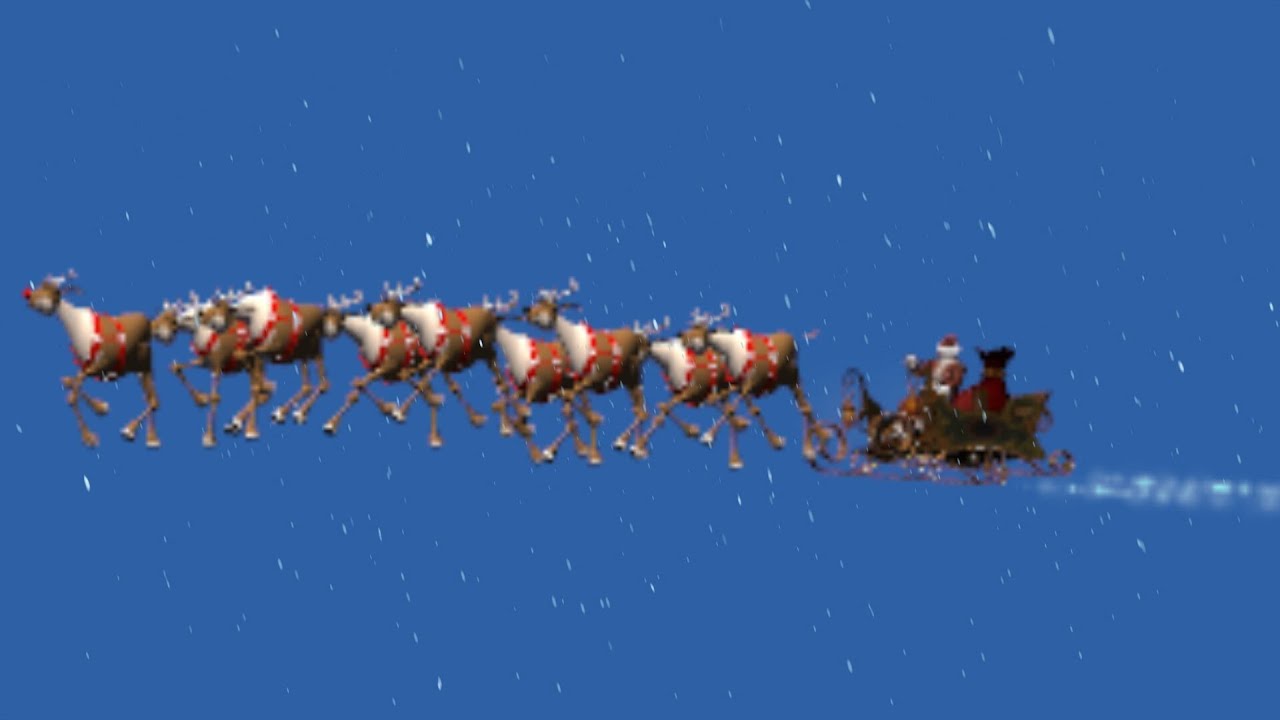
Santa's Magic Sleighride

Ho! Ho! Ho! And let me wish you all a very Merry Christmas!

Father Christmas, Saint Nicklaus, Santa Claus. The image is the same: a rotund bearded and jolly fellow from the far north dressed in scarlet. We learn of his mythos as soon as we are born; as children we write him letters assuring him of our good behaviour and how we deserve the gifts we have asked from him. At Christmas we celebrate the birth of Jesus, but the imagery of winter and of Santa calls upon something else, something ancient and decidedly pagan. The reason is that Father Christmas and Christian Saint Nicklaus are two separate entities.


Christianity became a politically expedient creed for European kingdoms to adopt. To become popular with people it had to acquire the mantles of the old beliefs. What better way than to take possession of the pre-Christian festivals? The winter festival was probably the most important to agrarian societies; it is the bleakest time of short days and long, ice cold nights. What better festival to use that this, the one promising hope that the Winter Solstice has been reached and that longer days of sun are approaching? Hence we celebrate Christmas on 25th December but that doesn't explain this Father Christmas character.

In Old English mythology Father Christmas, the bearded figure, is almost akin to the father of the gods, Woden. Dickens recalled him as the Ghost of Christmas Present in A Christmas Carol.  Father Christmas was the symbol of good cheer. Shortly after Christmas was reinstated as a holy day in restoration England, he featured in Josiah King’s The Examination and Tryal of Father Christmas in 1689. Joyless post-Civil War government had labelled Christmas as “Catholic superstition and godless self-indulgence.” Obviously some things never change!

But hang on, "Godless self-indulgence," Santa Claus is a saint, isn't he?


Saint Nicholas was a 4th Century Turkish saint who was the patron saint of children, and renowned for giving gifts. He had his feast day on 6th December. So Father Christmas is Santa Claus? Yes and no, because Santa Claus has enabled the church to Christianize an ancient mythical figure. You see the clue is in Father Christmas' appearance. If he was truly Saint Nicklaus, then why is he not draped in religious symbolism?

One thought has it that Coca Cola commissioned his present form in 1931 for a Christmas ad campaign. Santa Claus had of course come to America via the Sinterklaas known by Dutch settlers, among others. He had been portrayed in numerous guises, including that of the jolly grandfatherly figure which Coca Cola wanted. But this theory is wrong; he was often portrayed as wearing red, long before Coca Cola hijacked him for their corporate imagery.

So we are still left with the questions: why does he look the way he does, why the reindeer and why does he live in the far north and not on a mountain in modern Turkey?

Well there is another, perhaps more plausible theory --one that links all his attached symbolism of reindeer and sleigh rides across the skies -- and it's something much older and darker. It’s probably best if I guide you there, so pull on those warm boots and gloves and wrap that scarf around you…


Take yourself back, back in time, back to dark winter nights; the snow is thick and suffocating. Food is perhaps threatening to become scarce. You wonder if perhaps the winter will ever end; what does the future hold? As the wind and wolves howl you gather with your friends and family in the longhouse.  Outside the eaves are decorated with icicles, but inside it is warm. This is a sacred time; an astronomical milestone has been reached.

By the fire’s light songs are sung and tales are told and the priestly shaman steps forward. His eyes are wild and his beard is long. The gods speak to him and he urges all to listen, too. The shortest day is now upon us, so we must eat and drink to armour ourselves for the next months of hardship, but rejoice, for the warmth and sunlight will now return. He dispenses a wicked smelling brew of Soma to those who would indulge, to join him in receiving gifts of wisdom and visions from the gods, flying over the tree tops under its narcotic influence, on a magical sleigh ride across the sky. What was that? You want to try some? Of course you may; don’t worry, I’ll look after you and guide you back. Yes, it does smell and taste disgusting. I’ll speak to you later, when your senses return…


Ah, you're back. Do you see it now? No? I will explain. You see the reason why you momentarily lost yourself was because you imbibed a hallucinogen. That brew was made from fly agaric mushrooms. Yes, that’s correct, the bright red and white ones – amanita muscaria- a familiar and reminiscent colour scheme, wouldn’t you agree? They grow at the feet of fir trees, like brightly packaged presents under the Christmas tree in fact…

“But,” you say, “fly agarics are poisonous toadstools; what have you let me drink?”


Well, yes they are but don’t fret. You see the shaman is crafty and wise. He knows that reindeer actively seek out these fungi to eat. He observes them and uses their bodies to filter the toxins, but retain the intoxicants. It does mean you've just drunk reindeer urine but what doesn't kill you makes you stronger, right?


 Merry Christmas!