Saturday, 23 May 2015

Rob Reviews Book of the Month: Sorrow Hill: Sword of Woden

The Review's May 2015 Book of the Month Award
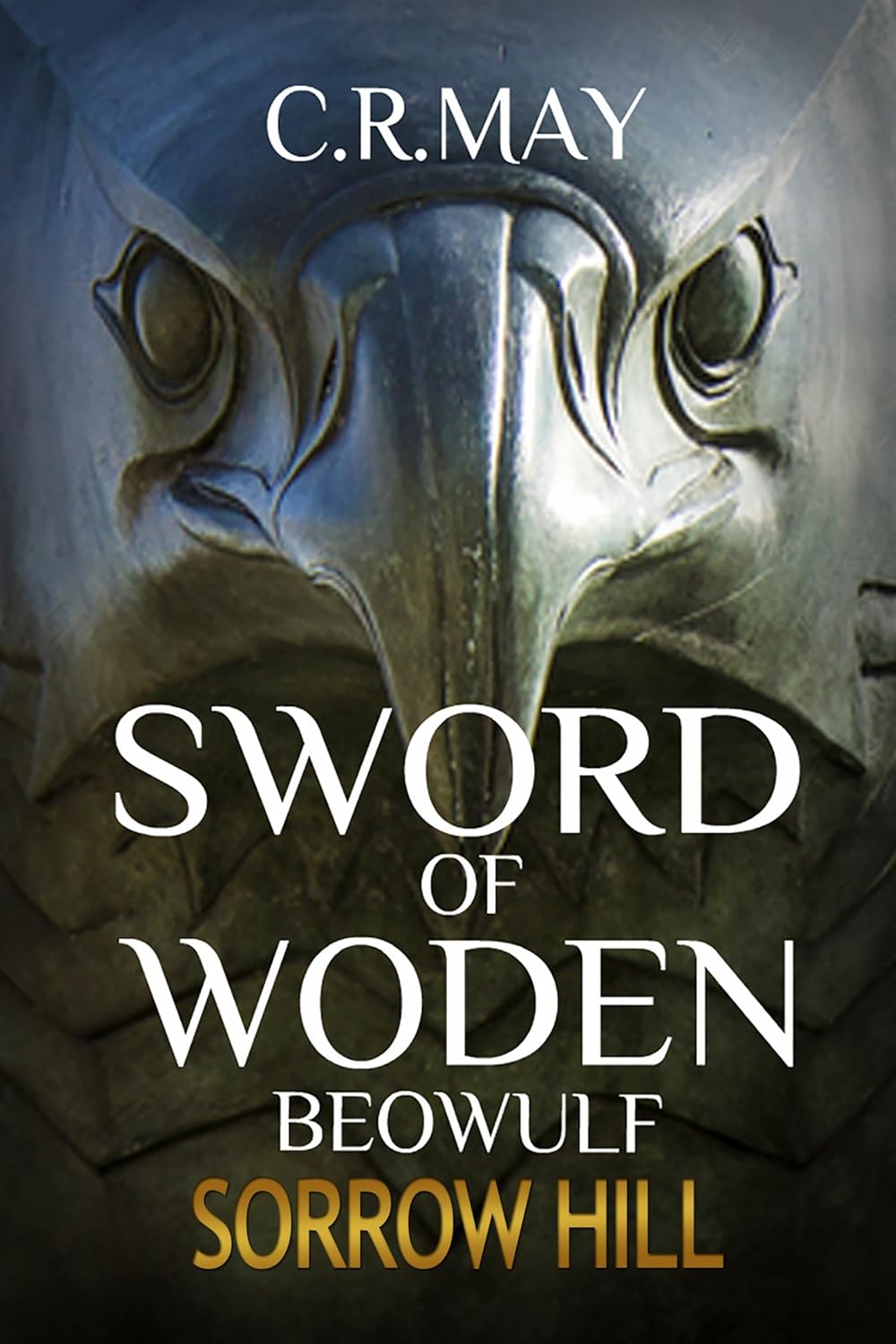
Sorrow Hill - Sword of Woden Volume 1 by C.R. May
Review by Rob Bayliss

See below to learn how to claim your chance to win a 
FREE COPY of Sorrow Hill 
Drawing May 30, 2015


“Trolls!” Hrothgar cried with a laugh. “What are trolls going to do to me? Tear down the doors of Heorot and murder all my warriors?”

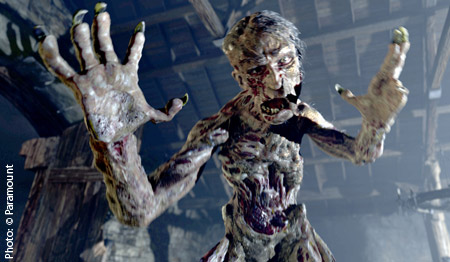
For longer than I care to remember I’ve been a fan of the legend of Beowulf from the epic poem. I enjoyed it even before I came to realise the cultural significance of it to my English sense of self. It gave me a love of the so-called “Dark Age” period of history and the realisation that history is contained in the very words that we use… and a love of fantasy of course, for Beowulf has perhaps one of the darkest and most fearsome monsters to ever be spawned from the human subconscious: Grendel, the Grinder!


We’ve had cinematic versions since of course: the computer-generated Beowulf, which is a feast for the eyes, yet personally I found it strangely disappointing, and the enjoyable 13th Warrior which borrows heavily from the legend. But the poem places Beowulf in the real world. His people are the Geats, with Swedes and Danes as neighbours. Anglo Saxon the poem may be but the protagonist is placed in the Scandinavian world as this tale predates the formation of England. Looking back to some mythic golden age seems to be a human trait!

In Sorrow Hill C.R. May takes us back to this golden age and places us in a distinct timeline. It’s the early 6th century and the Geats find themselves in a turbulent world of change that will ultimately erase their kingdom from history.


The Western Roman Empire is on the brink of collapse; their province of Britannia has been lost and the Geats' cultural contemporaries, the Anglisc, are in the process of carving out New Anglia in those fertile, ice free lands. Beowulf himself is the son of an Earldorman and through his mother, a grandson of a king. He is being prepared to take his father’s place and join the noble warrior elite, but his wyrd- his fate - is to be different.

This is where the author skilfully walks a line between historical fiction and fantasy for while on a boyhood mission to capture eaglets for his father, Beowulf meets a wanderer and shares the man's fire as the night closes in. There is something different about this one-eyed travelling man called Hrarni, who seems to know all about Beowulf. The boy gives Hrarni an eaglet, much to the traveller’s delight. In return the one-eyed man gives the boy much sage advice and makes a gift of part of his staff, as a token of his favor.

We watch as Beowulf grows and develops from a child under the tutorage of his foster father, learning his craft as a warrior and a leader of men. His world is turned upside down when his family is torn apart in a scramble for power. In the ensuing chaos the old adversaries of the Geats, the Swedes, mount an attack. Only Beowulf is on hand to mount a defence and test both his wyrd and warrior craft.


C.R. May is certainly a skilled story teller. This is a page turner that is difficult to put down. It is a fast-moving action packed novel charting Beowulf’s journey through childhood and awkward adolescence. Crucially we see Beowulf, not as some mythic hero but as a real person, slightly insecure desperate to please his aloof father. The society in which he develops is described to perfection, as are the battle scenes. You’ll feel the tension and smell the fear as the shields smack together to form a wall and you clasp your spear, listening to your breath beneath your grimhelm. The author’s prose and power of description paints a wonderful picture of this “golden age” of the proto-English (for want of a better term), but I feel special praise should be made in that this book carries a profound spiritual element that brings the religion of the time to life, breaking down the barriers between historical fiction and fantasy and, most importantly, the reader's disbelief.

Swept away in this book, all too soon the reader turns the last page but fear not; Sorrow Hill is the first of a trilogy with Wraecca and Monsters following. There is more to learn of Beowulf, the Sword of Woden and it's not only men that walk the earth.

Awestruck and  terrified the Geat aetheling moved towards the dying flames and knelt in supplication.
"Forgive me, Lord. I would not have raised a weapon had I known it was you!"
The man motioned for Hygelac to join him and, throwing back his wolf skin hood regarded him with his one remaining eye.
"You have been entrusted with the care of one who is of interest to me," the one eyed man began. "I would like you to ensure that he grows to become the greatest warrior in the north. In return I can offer you reputation and riches." He paused and fixed the aetheling with his penetrating stare. "Do we have a deal?"
A smile played across Hygelac's features as he began to realise the opportunity which was presenting itself to him. A god needed his help and was willing to bargain. He decided to grasp the opportunity with both hands.
"I want to be king," he replied coldly.


Author C.R. May has so generously offered to gift a FREE COPY of Sorrow Hill to one lucky winner! To get your name in our drawing, simply comment below OR at this review's Facebook thread located here.
Drawing May 30, 2015


About the Author


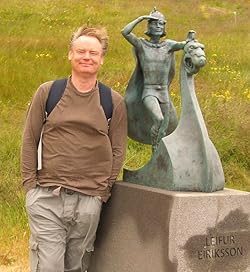
C.R. May was born in Bow, East London before his family moved to South Ockendon, Essex. After hearing that Ockendon translated as Wocca's Hill in Saxon, a lifelong passion in history was kindled, which has taken him from Berlin to the site of the Battle of Little Big Horn (via Erik the Red's Icelandic hall!). The influx of Germanic adventurers was recorded in the place names around him and, inspired one day, he decided to weave his own stories into this history. You can read and discover more information at his blog and the author may be found at Facebook.
                                                   
                                                              ***

Rob Bayliss is a reviewer at The Review and is currently writing his own fantasy series. Information on his writing projects can be found at Flint & Steel, Fire & Shadow.


Wednesday, 20 May 2015

Rob Reveals His Choice for Book of the Month

The Review's Book of the Month for May goes to...

When I was asked to pick my Book of the Month I have to admit I was somewhat stumped. True I’ve read lots of brilliant books, many meeting the indie criteria, since I’ve been a contributor to The Review. I had a few books in mind but I wanted to feature something different, something not yet on our blog-page’s bookshelves. The following points are what I look for when choosing a Book of the Month:

To be well written and have an interesting style
Good characterisation
Good plot development
A good degree of research and authenticity
Emotional empathy - to feel involved in the book

Funnily enough it was while going through the preview process that I found what I was looking for. I read the sample and approved it, secretly hoping that I could review it myself (which I later did!). I instantly liked the author’s style and prose and looked at other titles he had written. And it was there that I saw a title and read the blurb and wondered if I had stumbled upon the book that I wanted. I quickly purchased it and put it on my Kindle. Well I’m happy to say that yes it was.

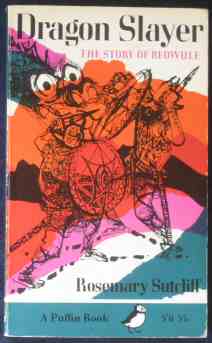
Let me first take you back 40 years to 1975. I was eight years old and at primary school. I used to read and collect Asterix books and absolutely loved them, although I was a little young to fully appreciate the witty puns of the English translation. I loved the art and the stories and it featured Romans and Gauls, so I always had an interest in the ancient. Then our school started a book club whereby you could order books to read. I remember buying a book on ghosts, a book of Maildun the Voyager and another that had a profound effect on me. That book was Dragon Slayer by none other than Rosemary Sutcliff, which still has pride of place on my bookshelf. I admit I was first drawn to the striking cover by Charles Keeping. But reading the book was like coming home because, you see,


it was the story of Beowulf. And so I learned about Geats, King Hrothgar, Heorot the Hart and of course Grendel.

I then learned that it was based upon an old poem, one of the few surviving pre-conquest tales of our forebears. I urge everyone to read some of the wonderful translations and have a go reading the original. You can see root words in the Old English, familiar yet strange, yet spoken aloud they stir your blood and touch your soul. Hear them and imagine being gathered in a hall, the winter wind howling outside, the fire casting monstrous shadows that writhe on the walls, while the skald tells his tale for his meal, each telling no doubt a little different to suit his audience. A tale of heroes, monsters and blood. Children cling to their parents while the adults smile reassuringly and yet look furtively at the door; was it strongly barred?

My reading later went on to avidly consume the books of Tolkien and other authors of fantasy, but that isn't surprising as the seam of Beowulf runs through it; Tolkien was of course a professor of Anglo-Saxon. And in Beowulf, with Grendel the troll, we have a template for future works of fantasy.


So it will therefore come as no surprise that my choice for Book of the Month would feature a certain Beowulf Ecgtheowson, the first of a trilogy in fact. 

Beowulf the poem was never meant to be read, it would have been performed by an animated story teller and this book reflects that vibrancy. The author's style effortlessly draws you in and we see the character of  Beowulf develop from childhood and through adolescence. We know where this tale will take us and yet we become privileged to see how he came to be a leader of men on his own right and join him on his journey. The world which he inhabits is skillfully brought to life, the peoples and landscapes eloquently described.

There is humour, treachery, honour, murder and war, yet these are heroic times and the old gods walk among their followers. And that is where this book takes the reader beyond what would be loosely described as historical fiction, for in this book, with Beowulf as your guide, you will actually meet Woden. But reader, I beseech you, have a care, the All Father's favour can easily be withdrawn; this you will understand.

It is my absolute pleasure to announce my Book of the Month is Sorrow Hill: Sword of Woden Volume I  by C.R. May.


Don’t wander too far from the hall: the-death-that-stalks-by-night lurks in the shadows and you wouldn't want to miss the review, would you?


*********

C.R. May was born in Bow, East London before his family moved to South Ockendon, Essex. After hearing that Ockendon translated as Wocca's Hill in Saxon, a lifelong passion in history was kindled, which has taken him from Berlin to the site of the battle of Little Big Horn (via Erik the Red's Icelandic hall!). The influx of Germanic adventurers was recorded in the place names around him and, inspired one day, he decided to weave his own stories into this history. You can read and discover more information at his blog and the author may be found at Facebook


*********


Rob Bayliss is a reviewer at The Review and is currently writing his own fantasy series. Information on his writing projects can be found at Flint & Steel, Fire & Shadow.


Friday, 15 May 2015

Emma Reviews: Green

Green by Kristin Anderson
Review by Emma Powell

See below to find how you can win a FREE copy of Green

This tale of boy meets girl most definitely adds a fresh and thoroughly modern stance on the romance genre. I always pondered if there would be any struggles to write a contemporary romance mainly due to having the ability to keep readers held, keep them turning the pages, despite using a genre that’s been around for aeons. I’m pleased to report this book does both.

The book starts with the female lead, Ellie, embarking on the rocky path of online dating - and failing.  It is written with my favourite take on life - humour. It is also laying the foundations of the kind of character Ellie is: genuine and honest but more than capable of looking after herself. Her character is set in a successful lifestyle but that of someone who has fought her way from a poor childhood so her tough but sensitive personality flows well within the story. It’s a good start for a fab read - fresh, funny and believable.

The male lead, Jake, is attractive due to his understanding of the environment and those around him.  He is someone whose beliefs are so strong, he is actually making a difference - working to make the world a better place. Any physical descriptions aren't til much later on and the author cleverly uses the man he is, as opposed to what he looks like, to make him likable and interesting.

It is pleasing to read that despite their initial meeting, Jake and Ellie do not fall into each other’s arms.  When they do, it is not plain sailing and at one point, the reader is actually wondering if they are going to end up as a couple. Ellie is happy to make some changes to her carbon footprint but is way too independent to completely change for another person. Clashes ensue but the reader can sympathise with Ellie because she is trying hard. Jake is understanding but stands by his principles which the reader cannot argue with: his need to make a difference, including helping underprivileged kids.  However, don’t think he’s a saint, far from it.

Whilst not a nasty character, Jake can be stubborn in his beliefs to the detriment of those around him. I got a whiff of ignorance on occasion, not in a deliberate way but sometimes he needs to exercise some empathy with Ellie! When he realises this, the reader can’t help but find him so likeable. This all makes him a very interesting character and adds depth to the story, including his realisation he has to make changes, too.

The author has cleverly taken two strong, independent characters, seemingly happy in their way of life.  Meeting each other makes them question their own ways of living, what they have, what they want.  It’s a story that takes the reader down a road of modern adventure and discovery with both characters needing to change. The story unfolds showing changes a person makes to be with another whilst maintaining their own identity - not easy to do and definitely not easy to write, no matter the genre.  Setting this story against the backdrop of very real environmental concerns is what appealed to me - as I’m sure it will others - and what makes the story genuine, thoughtful and empathic. The author obviously has first-hand knowledge of these concerns and this flows from the words on the page. Along with a good supportive cast of supporting characters that do not get in the way of Jake and Ellie, Green is a solid and enjoyable read.

It also makes you realise you can make changes for the better without losing sight of who you are. And sometimes we need to think of others, our environment and leaving a better place for future generations.

Green really is of the romantic genre but one that tells a real story, with real concerns, struggles and rewards. Appropriately paced, the twists and turns flow well and makes sure environmental concerns play a pivotal role; the whole book has a well-earned place in contemporary fiction.

The author has so kindly offered a FREE COPY of Green for one lucky winner. To enter our drawing, simply comment below OR at this review's Facebook thread, located here.

*********


Kristin Anderson has a professional background that makes her more than qualified to write on Green's subject matter. To find out more, see her website or connect with her on Facebook, Twitter and Goodreads.

Of her writing process with Green, Anderson says…

I picked up a manuscript I had started in 2010 and started breathing new life into it. After revising my first draft, I sent it off to a half-dozen friends in California, New York and the Netherlands. Two drafts and two years later, I have transformed my novel into an engaging reading experience I am proud to share with the world. Green, which was released in November of 2013, is available on Amazon and Amazon UK


*********


Emma Powell has been reviewing for us since The Review started. She has now joined the admins team and you can find more of Emma's scribblings on her blog here.


Thursday, 14 May 2015

Review by Karen Andreas: The White Rajah

The White Rajah by Tom Williams


Please note that the giveaway is no longer valid!

Journey into the Heart of Sarawak

A chance encounter with the well-born British adventurer James Brooke in an English tavern changes the life of John Williamson forever. Beginning in the 1830s, this lad from humble beginnings falls in with James and his friends and heads to the other side of the world to adventures unimagined.

John is the story teller here, and his is an authentic voice, reflecting the attitudes and values of his time.  He is well aware of the social gap between him and his hero, James, which makes James’ egalitarian views more profound. Through John’s eyes, James grows from an idealist to a pragmatic ruler as his ambitions for his new country evolve.  

After initial failure, James succeeds in his next attempt to establish a trading foothold in Borneo. He finds himself in the middle of an insurgent movement to overthrow the sultan. It is there that he shines, and James is instrumental in the sultan regaining his throne. As a result, James is appointed the rajah of Sarawak, a small country populated by its native tribes, Malays and the Chinese who have created a trading base.      

This book works on so many levels. It is first and foremost an intimate look on how a white man came to Borneo and painstakingly created a place for himself – and for his new people – in the world. It’s not blood and guts glory, overrunning a country and forcing the white man’s will. James must manage the diverse cultures in Sarawak, establish sound finances for the country and create a portal for the trade of Sarawak’s most valuable commodity, antimony, while protecting the people from exploitation. Interwoven with all these goals are strong personalities and peril. There is military genius at work, of course, but also patience and pride.  

Even more interesting is the piracy that is such a part of Sarawak’s culture. This piracy occurs mainly in the interior of the country – and an entire economy is dependent on destruction and theft. James must root out the pirate tribes to protect the growing trade and financial interests in Sarawak. Apparent success blinds him to the dangers lurking in the jungle, and in a sudden and shocking moment, James faces losing all he has built for his people, for himself and John.

Through it all, John watches with admiration and love as James succeeds and moves forward – and away. Small moments portend great changes – even victories have unintended consequences. A casual kiss leads to an eventual relationship between the hero worshiper and hero. James’ humanity and care for his subjects belies an ambition unleashed at the moment of an execution that opens the door to rule.  The aftermath of the shocking revolt throws up walls that separate more than the outside from the inside.

These are, of course, men of their times, and so lovers’ passion never rules in this story. Military, political and financial pragmatism are the tools James uses to build his country and a successful, beloved dynasty that lasts into the twentieth century. James’ ability to attract talented men is crucial – as is his ability to know when to cut loose these same men. The struggles faced by James and John to navigate life and death, success and failure which often march side by side, are compelling.  

What an odd and interesting story about a part of the world most do not know. An English adventurer brings Sarawak into the stream of civilization, and, in the end, becomes the beloved White Rajah.

For your chance to win a FREE COPY of The White Rajah, simply comment below OR at this review's Facebook thread, located here.

We will draw a random winner from comments. 


About the Author (in his own words…) 

I live in Richmond, which is nice and on the outskirts of London, which is a truly amazing city to live in. My wife is beautiful but, more importantly, she's a lawyer, which is handy because a household with a writer in it always needs someone who can earn decent money. 

I street skate and ski and can dance a mean Argentine tango. I've spent a lot of my life writing very boring things for money (unless you're in customer care, in which case 'Dealing With Customer Complaints' is really, really interesting). Now I'm writing for fun. OK, The White Rajah isn't exactly a bundle of laughs but it has pirates and battles and an evil villain and it's a lot more fun than a review of the impact of legal advice on debt management. 

Readers can learn more about Tom Williams and his books at his blog as well as his Amazon and Amazon UK author pages. He can also be found at Twitter and Facebook


                                                     *********

Karen Andreas lives in Florida with three cats, one horse, oh, and her husband Michael. She is the former editor and now contributing writer to the Florida Council of Bromeliad Societies; together Karen and Michael serve as webmasters


Monday, 11 May 2015

Richard Reviews: Burke and the Bedouin

Today we have a fabulous review from Richard's Reading Room, so
get yourself some coffee and cake and enjoy!


***Please not that the giveaway is no longer valid.***


As Tom Williams explains in his author's notes, James Burke is a real figure from the Napoleonic Wars. This episode from his life, however, is fictional. I like this kind of exploration of possibilities, proposing some hidden reasons behind a historical event. In this case, the event is Nelson's Battle of the Nile, and the unanswered background questions are why the French fleet remained at anchor for so long in Abu Qir Bay, and how Nelson managed to find them there.

Battle of the Nile

We follow Burke and his subordinate William Brown on a series of journeys in lower Egypt between Alexandria and Cairo, through the Nile Delta and the desert lands beside it. Burke's initial task is to spy out French intentions towards Egypt, but this simple mission is rapidly overtaken by the stark reality of an invasion. The military need then switches to the urgency of passing information back to Burke's superiors and the Royal Navy, at the same time seeking to delay and frustrate the French. The climax of the book is the naval battle in the bay, as witnessed from two quite different points of view. It also highlights another theme of the book: warfare is transitioning from the heroics of individuals to the dominance of organised firepower.


The vast majority of the book follows Burke himself, with a smaller section helping us appreciate Brown's travails on a detached mission. The story is told in a laconic style, broadly following the report that Burke might make to his superiors, but including rather more personal detail than they would care about. This style gives the impression of a personal diary, and also conveys something of Burke's personality. For example, we follow the personal struggles of an early 19th century soldier trying to overcome his sense of proper dress in order to blend in to the crowds.


“If the French are looking for a European, wouldn’t it make more sense for you to dress as an Arab?”
Burke had shed his tailcoat in preparation for his journey and was, once again, wearing the wrapping gown which had become his usual attire whilst riding in the desert.
"How much more ridiculous would you have me look?"
Bin Alim glanced pointedly at Burke's breeches and boots, clearly visible below the gown.
"How much more ridiculous could you look?"


As a possible explanation for the French commander's actions before the battle, the tale works well. Burke's relationships with the Bedouin - and to a lesser extent other groups inhabiting Egypt at the time - are credible and sympathetically presented. Perhaps the most compelling part is the battle, in which our protagonists are simply bystanders. The confusion and sheer dogged effort of the crews concerned comes over vividly.


William felt he could hardly breathe for the smoke that filled the gun deck...Around him, gunners were peering out of the ports, while the rest of the crew squinted to see over the gunners' shoulders or gathered where the broken planks of the hull allowed a view of the world outside.

Burke and Brown are the only two characters who are explored to any real depth, but there is a good supporting cast of minor players of several cultures for them to interact with. The focus is definitely on achieving the military goals, rather than exploring the country or its inhabitants for their own sake. Love interest is provided by a Spanish beauty, Bernadita, rescued from a life of slavery and abuse in Cairo. She is, apparently, only too eager to leap into Burke's bed, but does also provide local information and advice at key moments. She is conveniently dumped in Gibraltar in the closing chapter to make her own way home to her family in Grenada.

This is an entertaining light read, set in a corner of the Napoleonic Wars which is often neglected.


For a chance to win a copy of Burke and the Bedouin leave a comment below OR on our Facebook page, located here.


About the Author


Tom Williams used to write books for business, covering everything from the gambling industry to new developments in printing technology. Now he writes about love and adventure in the 19th century, which is not nearly as well paid, but much more fun. It also allows him to pretend that travelling in the Far East and South America is research. Tom lives in London. His main interest is avoiding doing any honest work and this leaves him with time to ski, skate and dance tango, all of which he does quite well.

Readers can learn more about Tom Williams and his books at his blog and his Amazon author page. He can also be found at TwitterFacebook and his Amazon UK author page.


====================

Richard Abbott is the author of In a Milk and Honeyed Land and Scenes From a Life. He can be found at his website or blog, on Google+Goodreads, Facebook and Twitter.


Note: This post has been updated to include additional author links.

Saturday, 9 May 2015

Anna Reviews: Back Behind Enemy Lines

Back Behind Enemy Lines by Chris Bridge
Review by Anna Belfrage

Please see below for information about the FREE COPY we are gifting!

A book about a female English spy during the last months of World War II promises nail-biting tension, of gritty action and moments of despair. Back Behind Enemy Lines delivers all that – but much, much more, being an excellent description of the consequences of all that action and the price of setting duty over your heart.

In 1944, a young woman named Anna is parachuted into Normandy, where she is to present herself as Marie-Claire, a French dairy maid. With Anna comes a radio, money for the Resistance, a large silk map which she is to complete with detailed information about the Germans, and a crate of weapons.

It is a lonely life. Marie-Claire is always on her guard, her French hosts keep their distance, and her human interaction is restricted to her network of informers and the people she delivers cheese and milk to.

The story is told both in the point of view of Marie-Claire in 1944, and the reminiscent point of view of Anna, looking back at the events of those months from a distance of 60 years. It is skilfully done, allowing the present-day Anna to add depth and introspection to the sequence of the events that eventually lead to Marie-Claire’s own chrysalis – a turning point in her life from which she emerges not like a shimmering butterfly, but like a badly singed moth.

There is a moment of absolute fear when Marie-Claire is hauled off to be interrogated by the local Gestapo. The grey-haired, distinguished German knows exactly who she is – but lets her go. This, if anything, increases Marie-Claire’s paranoia, convinced as she is that the Gestapo officer is merely biding his time, waiting to pluck her like a ripe plum when he so desires.


Well-known WW2 spy Odette Sansom
And then there is Pierre, her co-agent, the first man Marie-Claire has ever fallen in love with, the first man to touch her and hold her. There is an absolutely beautiful scene just after they’ve met – but before they’ve become lovers – where Marie-Claire returns home to her little hideout, and Pierre has already left, but her unmade bed holds the indent of his body, a promise of future embraces and intimacies.

Not everything in life is black and white, and as D-Day approaches Marie-Claire finds herself in a situation where she no longer knows who to trust. Her contacts in England bombard her with instructions, Pierre has gone missing, one of her informers has been arrested by the Germans, and it’s as if Marie-Claire is walking about with a noose round her neck, expecting the Gestapo to appear at any moment and drag her off to die.

The building stress and tension is excellently described, and together with Marie-Claire, the reader is forced to leap to a number of conclusions, hoping – just like Marie-Claire – that they are wrong. Meanwhile, there are attacks to plan, railways to blow up, information to be sent back to England, and Marie-Claire submerges herself in her tasks, anything to escape facing the truth as presented by her rational mind, no matter her protesting heart. The mission cannot be put at risk, so ultimately, she has no choice – and for the rest of her life she will wonder if she made the right one.

The climactic events of the summer of 1944 leave Marie-Claire permanently scarred. She is returned to England, debriefed, offered a medal which she refuses, and then, once again Anna, she is left to her own devices – alone with the ghosts of her recent past.

Gestapo in France
Unsentimentally, Chris Bridge describes a person falling apart. Anna sees dead people everywhere, she can’t talk, she can’t sleep – but she can scream. To the modern reader, the diagnosis is self-evident: post-traumatic stress disorder (PTSD). To the people of Anna’s generation, no such diagnosis existed. People were told they should be happy they were still alive and encouraged to “get on with it.” Anna sees others like her everywhere. And just like them, she builds a wall around her fragile self, facing the world with a façade that ensures she will never again expose herself to the pain of true emotions. Anna goes through the motion of living – but the woman she was died in 1944, a sprig of white flowers over her bleeding heart, and there is nothing to fill the void left behind.


She marries, has children she quickly discards as being her husband’s rather than hers, and lives on the edges of the family, a silent presence that cooks and cleans and gardens but never interacts at any depth with any of them. Does Anna fail her children? Monumentally. Can she help it? Not really. Now and then, things happen that for an instant penetrate her armour – like when the family goes for a jaunt into the countryside, and the children dare Anna to milk a cow, expecting her to fail. Anna, however, has milked numerous times as Marie-Claire, and as she settles herself on the stool, it all comes back to her.
In the second half of the book, we are with Anna in the present. She is old, she is tired – and she is fighting a battle of wits against her children, who want her out of the house so that they can sell it and take the money. Anna has no intention of dying anywhere else than in her beloved house, the only thing in her life that has inspired any emotions whatsoever since the traumatic events in 1944. And so, Anna is back behind the enemy lines – but this time the enemies are her own flesh and blood, and her allies are two young people whom she discovers by chance and ropes in to help her.

Nathan and Gemma are young, in need of cash and genuinely curious about this old woman who does not hesitate to shoot a man in his shoulder when he threatens them. And when she starts talking about wanting to visit Normandy, they agree to come along to help her, both of them astounded at her fluent French, at her familiarity with the region. Anna is in search of closure. Nathan and Gemma are in search of the future, and yet, despite the sixty-year age gap they connect, and Anna tells them the story she has never told anyone before – not even her children.

The author must have expended endless hours on his research, recreating the Normandy of 1944 in full technicolour, all the way from Marie-Claire’s scratchy French knickers, to the relaxed jargon of the village whores. The casual reference to the rennet added to set the cheese, the odd detail about Marie-Claire’s clothes, of the pinholes in the French money  – it all comes together to create a whole, complete with young German soldiers, stubborn resistance fighters and one very lonely young woman, determined to do her duty no matter the cost. 


Back Behind Enemy Lines is not an easy book to read. It addresses issues that are complex and sensitive, such as Anna’s lack of affection for her children – after all, shouldn’t mothers always love their children? It describes a stunted life, the result of being emotionally crippled by events in the past. It addresses guilt and absolution, the need we all have, deep within, to somehow forgive ourselves. It is also a beautifully written book, with a prose that heaves with carefully contained emotion. This is an author who excels at subtexts, at hinting at the unsaid and allowing the reader to fill in the blanks. What could have been an orgy in heart-wrenching imagery is instead a contained and precise description, all the more powerful for being so sparse. Chris Bridge paints with carefully selected words. A measured prose marches across the pages, now and then flowering into exquisite metaphors, at times bursting apart to reveal the oceans of unhealed pain that lies deep within Anna.

Ultimately, Anna comes face to face with her past and makes the choices she has to make to retain her dignity in the face of her children’s pestering. A flawed and complex character, Anna is first of all a damaged human being, a woman for whom a few brief weeks in 1944 would define the rest of her life. I close the book and can’t but hope that somewhere, somehow, a man stands waiting for her, holding that sprig of white flowers that has haunted her throughout her life.


*********
Chris Bridge has so generously offered a FREE COPY of Back Behind Enemy Lines to one lucky winner. We will be randomly selecting a name, so to get yours in the hat simply comment below OR at our Facebook link, located here.

*********

About the author: 

Chris Bridge was born in Hull in 1947 and sent to boarding school aged nine. He studied English and philosophy at Nottingham University, choosing to go there because it had a superb mountaineering club. On graduating in 1969 he became an English teacher, thinking teaching would give him time to write novels. He was wrong about that but his love of the classroom quickly took over. 

In his professional life he never entirely abandoned writing. Until he became a head teacher he used to write the school shows, occasionally starting the process with asking who wanted to be in the cast and tailor-making a script to suit all those students. 

His poetry has been published in Tribune, Scrip, Poetry Nottingham, New Poetry, Pennine Platform and Other Poetry. He has also published articles about education in The Guardian, English in Education and The Independent

Back Behind Enemy Lines is his first novel. He is married and lives in North Yorkshire.

Chris Bridge can be found at Twitter and on his Amazon author page. Back Behind Enemy Lines may also be purchased at Amazon and Amazon UK.

*********

Anna Belfrage is the author of eight published books, all part of The Graham Saga. Set in the 17th century, the books tell the story of Matthew Graham and his time-travelling wife, Alex Lind. Anna can be found on AmazonTwitterFacebook and on her website


Tuesday, 5 May 2015

Linda's Reading Lounge: Crimson Shore

Welcome to Linda's Reading Lounge, pull up a cushion and make yourself comfortable and listen, but before we go any further, I just want to tell you that the author is giving away an ebook to one lucky winner - please see details after the review


When I first examined the cover of Crimson Shore by Gill Hamer, the visual imagery suggested butchered bodies washed upon a distant beach. The novel which enfolds is less bloody but every bit as haunting.

Ms. Hamer’s first novel in her Gold Detectives series involves the unhappy topic of exploitation of children by those in a position of trust. However, she treats the topic without sensationalizing it, no mean accomplishment. Tragically, the plot is based upon a disturbingly well-grounded premise. The author has taken a topic which arguably has been overworked in the past several decades and honed it to a plausible, gritty mystery told on two tiers, dealing with not one set of homicides, but two, separated by time, motive and modus operandi.

The scene of the earlier mystery is principally set out in flashbacks and by means of a series of unanswered letters written by a child in a foundling home to a mother the child believes to be recovering from an illness. In the beginning they are newsy and guardedly  hopeful, but plaintive:

Today we went to the little church. The vicar has a wonky eye and Sammy (the author’s brother) made faces all through the carols so I got in trouble for giggling. But some of the music made me sad and made me think of you singing me to sleep. I miss you Mummy. …. You will come won’t you? …

Later the letters grow more desperate:

I’m keeping my promise to write every few weeks, but I am reelly worried that you never write back. I keep asking Mrs. Gwynne to dubble and dubble dubble check the post. I really can’t believe you’ve haven’t got my letters. Why don’t you write back?

While the letters seem a one dimensional means to advance the plot of a complex mystery, in this case, they not only alleviate the need for pages of back story, but serve as a repository for myriad clues, leaving a reader finishing the last pages and saying, ‘I should have known.’

The second tier of the mystery enfolds in the present, when fresh bodies begin to turn up in unusual places.  At the center of the mystery is a once-elegant beachfront estate on Anglesey Island off the northwest coast of Wales, a sparsely populated area separated from the Welsh mainland by a narrow strait, an isolated setting where people traditionally mind their business. Random bodies are a rare experience. During a portion of its history the mansion was the site of a foundling home known as Sandy Beach, but for years it has been unoccupied.

As one would expect of an insular community, the idea of a serial killer at work is unpopular with the residents of Anglesey. However the head of the assigned homicide team, Detective Sergeant Dara Brennan, is convinced there is a link between the murder victims, which goes beyond the usual dynamic of a serial killer.
The means of disposal of the corpses, the weapons used, and the degree of violence are all very different. Cryptic messages sometimes left with the bodies are little more than pieces, each seeming to come from a different puzzle. These are not signature killings, and the protagonist Dara is convinced they are not random. His interpretation of the crimes puts him at odds with his colleagues and superiors as the body count mounts.

Constructing a mystery along parallel paths is a difficult literary device to employ without one story line overwhelming the other, but Ms. Hammer meets the challenge by allowing the two threads to intertwine just enough keep the reader curious as to how the puzzle fits together. The contemporary investigation is told principally from Dara’s point of view while he wrestles with demons of his own. His life is crumbling around him. A successful resolution of the murders promises more than a boost to a floundering career, but a step forward in his quest to restore his self esteem. Yet his interpretation of the evidence is at odds with his colleagues and the public interest. Even his partner and new lover  D. I. Kelly Jones is losing patience with him. As his personal life goes into a tailspin, the investigation seems to be the only stable factor in his daily existence, and that, too, is threatened by his inability to seize control of his alcoholism and libido. He is not the stereotypical hero.

Crimson Shore is a well-crafted mystery with a large and diverse cast of characters who in spite of their number retain individual idiosyncrasies which keep the reader from mixing them up. The power struggle within the investigative team is well done. The plot is straightforward once the separate story threads unravel. Some of the facts have been stretched a tad too taught but fortunately not enough to ruin the story. In spite of a few convoluted twists of plot, Crimson Shore is less far-fetched than many cases I prosecuted. The author has constructed an authentic rendering of a complex homicide investigation, one hampered by interoffice rivalries, the protagonist’s sexual exploits and the personal problems of its other principals. None of these are beyond the norm for law enforcement professionals working under stress. I was especially impressed with the overall accuracy of the forensic aspects of the case.

I recommend Crimson Shore to those who enjoy British police procedurals reminiscent of Ian Rankin and anyone who likes a well-written mystery with a subject appropriate amount of violence but little gore.  Sensitive readers will be relieved to know this is not a novel dealing with child sexual assault, and neither the violence nor the sex is gratuitous or overly graphic. Nevertheless, it is a dark and disturbing story. The isolated setting of the crimes adds to the credibility of the plot and the Welsh flavor of the narrative is a plus.

While I do not read with a red pencil stuck behind my ear, I stay alert for errors and found none. Changes in point of view were formatted so as to be easily perceived. My only criticism involves the presentation of a rather unlikely antagonist. However, before the first body is discovered, the killer in Ms. Hamer’s novel has had ten years to plan the killing spree and a clear vision of how the story is going to end. The conclusion leaves the reader pondering whether D.S. Dara Brennan or the serial killer solves the crimes but leaves the reader sensing justice has been served.

I will be looking for further works from author Gillian E. Hamer.

About the Author


Born in the industrial Midlands, Gillian's heart has always yearned for the wilds of North Wales and the pull of the ocean.

A company director for twenty years, she has written obsessively for over a decade, predominantly in the crime genre. She has completed six full length novels and numerous short stories.

After completing a creative writing course, she decided to take her writing to the next level and sought representation. She is a columnist for Words with Jam literary magazine, a regular theatre goer and avid reader across genres.

She splits her time between Birmingham and a remote cottage on Anglesey where she finds her inspiration and takes long walks on deserted beaches with her Jack Russell, Maysie.
She can also be found at these sites


The author is graciously offering a giveaway of Crimson Shore for one lucky winner. Just leave a comment and that winner could be you!
Facebook users click here to leave a comment on our blog page. 

Linda Root is the author of the three books in the Legacy of the Queen of Scots series; next in the series launches April 2015. Root also writes historical fantasy fiction: The Green Woman with a sequel set to be released in summer 2015.