Friday, 23 October 2015

Commemorating Agincourt: The History of the Bow, contributed by Richard Abbott

The historical period I know most about is the ancient world, so the Battle of Agincourt is rather over two thousand years in my characters' future. Nevertheless, there are some interesting parallels. The main thing I knew about Agincourt - other than that it took place 600 years ago in 1415 - was that longbows had won the day. Sure enough, a poster I saw on the London Underground last week confirmed this by showing a rather dogged, defiant man, bow at full stretch, to symbolise the whole battle.
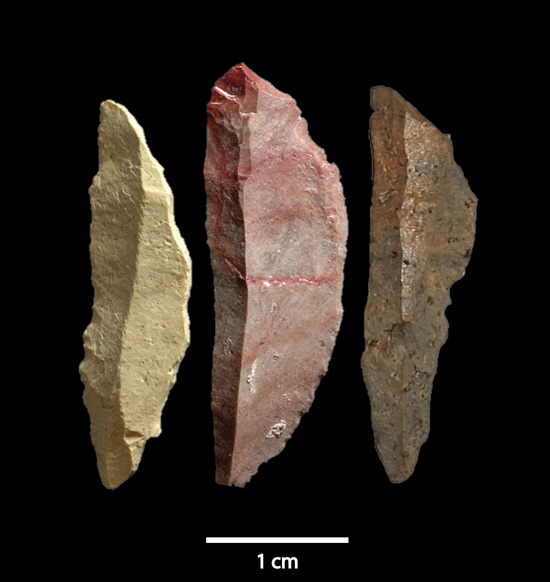
Smithsonian image -
possible early arrow heads

The bow is at least 10,000 years old - some evidence suggests over 70,000 - and through all that time has served as both hunting tool and weapon of war. Early arrow heads are found quite often, but bows are less long lived, and the earliest European bow discovered so far dates from around 6000BC. The technological challenge in all that time has been how to gain more power. More power equals more range, or more destructive effect at the same range. But the basic design has remained the same.

Now, bowmakers have achieved more power either by careful choice of wood, skilled use of the grain, physical size, or careful splicing of the wood with other materials such as horn to give a composite bow. All of the above have to be combined with training, so that the user develops the physical strength and steady aim to make effective use of the weapon. Back in Medieval times, such training was compulsory, and the many streets called The Butts up and down the country recall that training.

In the Late Bronze Age, a typical composite bow might have a range of over 300 metres, with effective range against protected troops of about half that. Many cultures, from Egypt across to North India, used lightly built chariots as missile platforms, manoeuvring rapidly ahead of enemy formations to disorganise and weaken them. Other groups, chiefly those living on the steppe or the plains, used mounted archers for a similar purpose. Oddly, the Romans seemed not to rate bows highly, preferring to recruit auxiliaries for this purpose, but every other ancient culture I know of regarded them highly - numerous deities were closely linked to archery, so the skill had divine sanction.

Wikipedia image, English longbow 6'6" in length
Back at Agincourt and other battles of the age, a longbow in the hands of a skilled man had a maximum range of up to 400m, and was reputed to penetrate armour at half that. Moreover, the firing rate was immense - it is said that at Crecy, 6000 archers launched 42,000 arrows per minute. Against a slow moving or closely packed group of enemies, the effect was murderous. Keeping up such a rapid rate of fire was exhausting, however, and should be likened to a sprint rather than a distance run.

The interesting parallel to the Late Bronze Age is that in both cases, changes in military technology are linked to social transformation. In both cases, the dominance of a settled elite group - the mounted knight or the charioteer - was broken by the innovative use of simple weapons. Noble birth and heritage was no guarantee of survival, and a process of social levelling took place.

So what led to the decline of the bow? Quite simply, the gun. Early guns were certainly inaccurate and risky to use, but they had a longer range than a bow, needed no particular strength to use as weapon, and could be put in the hands of comparatively unskilled soldiers. By around 1600, bows had essentially disappeared from the battlefield except for isolated unusual cases. 

They emerged again, and have survived until now, as a sporting piece. Regency and early Victorian writings tell us that archery was considered an entirely suitable sport for a woman, and archery clubs had members of both sexes. A far cry from the battlefields of the Hundred Years' War perhaps, but probably a whole lot more fun as well!

From Agincourt600 web site
Richard Abbott lives in London, England. He writes about the ancient Middle East - Egypt, Canaan and Israel - and when not writing words or computer code, he enjoys spending time with family, walking, and wildlife, ideally combining all three pursuits in the English Lake District. He is the author of In a Milk and Honeyed Land, Scenes From a Life and The Flame Before Us. He can be found at his website or blog, on Google+, Goodreads, Facebook and Twitter.

Sunday, 18 October 2015

Anna Reviews: A Decent Woman by Eleanor Parker Sapia


The author has very kindly offered a copy for a giveaway which will be drawn on 
Monday the 26th October. See below for details


In 1898, the former Spanish Colony of Puerto Rico became American, this as part of the treaty ending the Spanish American War. The population of Puerto Rico may have had their own concerns about this sudden transfer of their citizenship, but such concerns were swept away in 1899, when the little island suffered one of the worst hurricanes in history, leaving behind a traumatized population and an infrastructure in tatters.


   None of the above really play a part in A Decent Woman – except as background. The recent hurricane is the reason why young Serafina is so terrified when yet another storm hits the island just as she’s giving birth. The new American regime, bringing with it modernities such as electricity and educated doctors, threatens the existence of Doña Ana, until recently a much respected midwife. And as Doña Ana has a tendency to hedge her bets by praying not only to the Virgin and the saints, but also to an assortment of African deities, she is also under close scrutiny by the Church. Not a good place to be in, putting it mildly.

Ponce

   I enjoy reading books set in unusual places. In this case, Ms Parker Sapia presents us with the humid, tropical setting of Playa de Ponce, a small town just on the outskirts of Ponce – and of Ponce itself, already sliding into genteel oblivion now that the Americans have made San Juan the capital. It rains, it is unbearably hot, it rains some more, storms pass by at regular intervals, causing flooding and damage to the sad collection of sheds that house most of Playa’s inhabitants. Puerto Rico at the time is also a pot-luck of beliefs. People may flock to church on Sunday, but only a fool would ignore those other gods, such as Oyé, Changú and Yemayá. Here and there, rags in various colours decorate the doors, a silent offering to whatever God the colour belongs to. In a world where man is so exposed to the elements, it makes sense to keep all potential deities happy – just in case. The Holy Virgin figures prominently – in a book dedicated to the world of women, it is apt that she does.


   A Decent Woman is the story of Serafina and Ana – mostly of Ana – who meet when Ana delivers Serafina’s first child during a storm. Ana is old enough to be Serafina’s mother, Serafina has no mother, Ana has no daughter, and in each other they find something of what they’re lacking. Serafina is a Puertoriqueña but Ana is from Cuba, and her past casts long shadows. Ana was born a slave, lived her first few decades as a slave,  and was forced to flee Cuba head over heels. Why is not revealed – not initially – and as the story progresses Ana has other battles to fight, primarily that with an intolerant priest and a humiliated doctor.

Ana as a child slave with her mistress

   Where Ana is wary of others and generally disillusioned with life – she has lost too many people to risk developing new relationships – Serafina is a child-woman of sixteen, several years younger than her husband. A whirlwind romance ended in marriage, and before she knew it, Serafina was pregnant – one of the good, decent women in this world, those that see their role as wife and mother. But it isn’t easy, coping with a new baby when you’re not much older than a child yourself, and Ana sees no option but to help. Opposites attracts, one could say, with Ana acting the mainstay to Serafina’s initially so exuberant and hopeful take on life.
   Spanning the first few decades of the 20th century, this is a story about women – from the pampered wives of high society to the syphilis-infected whores. In a time where women had no rights, a single woman was viewed with suspicion, the assumption being that the only way such a woman could survive was on her back. Doña Ana experiences first-hand just how vulnerable a single woman can be – even more so if she is black, lacks a formal education and can't read. Although Serafina is a married woman, she is not much better off. A wife is at the mercy of her husband’s whims, whether they be to drink too much and abuse her, or keep a stable of mistresses on the side. Sometimes, however, the downtrodden fight back – sometimes, they have to, to survive.


   Life for Serafina and Ana takes a number of surprising turns. At times for the good, just as often for the bad, but neither Ana nor Serafina have the luxury to give up. They do, however, have each other, despite the differences in age and status. In a setting heaving with tropical heat, with hurricanes and earthquakes, with corrupt policemen and abusive pimps, unfortunate demise and premeditated murder, such a friendship can be the difference between life and death.


   Ms Parker Sapia does a great job of depicting early 20th century Puerto Rico – all the way from the opulence of the mansions of the rich to the various natural catastrophes that regularly sweep across this little island. Both Ana and Serafina are well-developed characters, women it is easy to care for.
I do believe the novel would have benefited from a thorough edit – specifically as concerns the time line. There are various occasions when I am jolted out of the story by strange time leaps, such as where one chapter is dated 1915, the next 1917 – but it starts off the morning after the events in the preceding chapter. As a reader, I spend considerable time sorting out these timing issues… Likewise, in some cases the leaps are too long: one moment Serafina is living in marital bliss, the next chapter her husband has a mistress set up in a separate home, behavior which is difficult to reconcile with the amorous and tender husband of just some pages back.
   All in all, A Decent Woman offers interesting insight in the life and fate of women – not that long ago. I loved the setting, the various descriptions of customs and rites, and having been fortunate enough to experience first-hand the rich Latino culture of Hispanic America, I was delighted to find myself yet again submerged in festivities and traditions that still, to this day, contribute to the fabric of everyday life.

About The Author


Historical novelist, Eleanor Parker Sapia was born in Puerto Rico and raised as an Army brat in the United States, Puerto Rico, and several European cities. As a child, she could be found drawing, writing short stories, and reading Nancy Drew books sitting on a tree branch. Eleanor’s life experiences as a painter, counselor, alternative health practitioner, a Spanish language social worker, and a refugee case worker, continue to inspire her writing. Eleanor loves introducing readers to strong, courageous Caribbean and Latin American women who lead humble yet extraordinary lives in extraordinary times. Her debut historical novel, A Decent Woman, set in turn of the century Puerto Rico, has garnered praise and international acclaim. She is a proud member of PENAmerica and the Historical Novel Society. A Decent Woman is July 2015 Book of the Month for Las Comadres and Friends National Latino Book Club.
Eleanor is currently writing her second historical novel titled, The Island of Goats, set in Puerto Rico, Spain, and Southern France. When Eleanor is not writing, she loves facilitating creativity groups, and tells herself she is making plans to walk El Camino de Santiago a second time. Eleanor has two loving grown children, and currently lives in wild and wonderful West Virginia

Find our more about Ms Parker Sapia on her Blog!
A Decent Woman is available on Amazon.uk
And Amazon.com

If you would like to win a copy of A Decent Woman then leave a comment here or on our Facebook page

***************************************************
Anna Belfrage is the author of eight published books, all part of the acclaimed The Graham Saga. Set in the 17th century, the books tell the story of Matthew Graham and his time-travelling wife, Alex Lind. The first book in her next series, The King’s Greatest Enemy, will be published on November 1, and is set in the England of the 1320s. Anna can be found on amazon, twitter, facebook and on her 

Tuesday, 13 October 2015

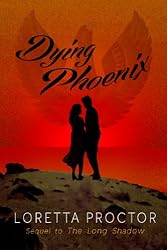
Richard reviews: Dying Phoenix by Loretta Proctor

The author, has kindly agreed to gift a signed paperback copy of her book to each of two lucky winners. If you would like the chance to win a copy, please leave a comment below. The Winner will be drawn on 20th October!


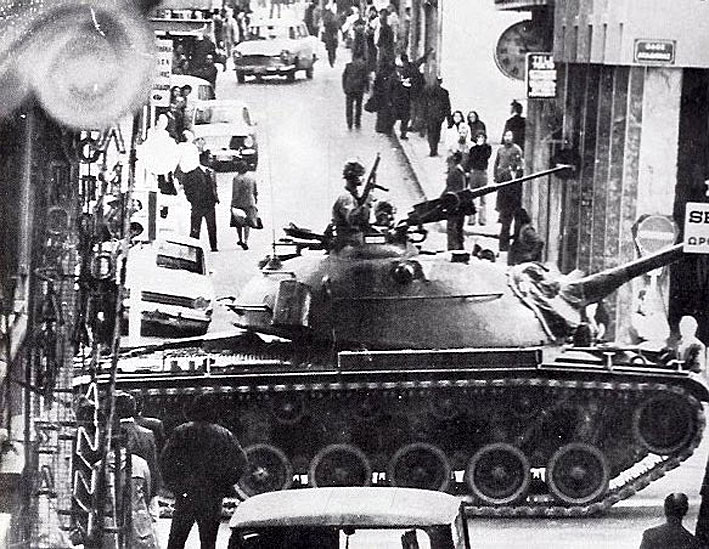
Dying Phoenix, by Loretta Proctor, opened a window for me on a slice of modern history I knew almost nothing about - Greece, in the months surrounding the generals' coup of 1967. In recent months, Greece has once again been forefront in international news, and although the main issues today are economic rather than political, I came to understand something of the passion that fuels debate there.


A Greek army tank on the streets of Athens following the Junta coup; 21 April, 1967

There's a lot of background that needs to be conveyed to the reader, and this is done largely through dialogue. Many different points of view are portrayed here. Indeed, there is a whole spectrum from those who supported the right wing army position, right through to those who were implacably hostile to it. Although the opinions of the central characters are clear, the author presents the diverse range of opinions credibly and sympathetically.

I discovered before long that Dying Phoenix follows on from a previous book, The Long Shadow. Broadly speaking, this second story follows the fortunes of the generation living in the legacy of the first. I am sure that familiarity with that earlier book would give extra depth to some of the characters, especially the older ones. However, the two works are self-contained, and this one can be thoroughly enjoyed in its own right.

A Junta poster depicting their emblem and the date of the coup: 21 April, 1967

Dying Phoenix - appropriately enough given the mythological reference - holds out the possibility of future hope against the background of disappointment in the present. Indeed, a main theme of the book is how people face failure, both their own and that of others. Idealism is a powerful force, particularly amongst the young, and seeing one's ideals being crushed remorselessly by superior strength is a terrible thing. In among the violence and intolerance, however, there are signs of rebirth, as the fires of destruction exhaust themselves. Also, those with longer memories can see that this struggle is only the latest in a very long series of similar ones. There is a continual hope that this time it might be consummation rather than recapitulation - a worthy dream, but one that is not yet fulfilled.

Geography plays a key role in the story, ranging from English locations such as Brompton Cemetery and Kensington in London, via urban Greek settings in Athens and Thessaloniki, through to rural havens in the Macedonian mountains. Each place has its own character, and its own inhabitants, who blend self-interest and self-sacrifice in different measures.

Dying Phoenix presents these key events in the life of modern Greece through the eyes of quite ordinary people. You will not find here a historical analysis of the generals' actions or motives, but rather the personal perspectives of those caught up in the turbulence. Some are eager for direct involvement, while others are anxious to avoid it, fearful of the consequences for their family. It all makes you wonder how you would react if you had been there.

In short, I found this a fascinating account of a turbulent time for many individual Greeks as well as for Greece as a nation. The difficulties and pains of those days are not avoided, and this struggle brings the characters to life. If you like to immerse yourself in the details of a situation, as seen through the eyes of ordinary people, Dying Phoenix may well be for you.

To be in with a chance of winning two signed paperbacks just leave a comment below or on our Facebook page

********


Loretta Proctor is an Anglo-Greek now living in Malvern, UK.   She published articles, short stories and won an award in the late 1960's for a one act play, The Ikon of Mileos.  Greece has always provided inspiration and on retirement to this lovely part of England she returned to writing novels. Her first, The Long Shadow, is set in WW1 during the Salonika Campaign and has since been translated and published in Greece as O Iskios tou Polemou. Dying Phoenix, which is set in the 1960's, is the sequel.
To read more about her books, you can go to her website.


Richard Abbott is the author of In a Milk and Honeyed Land, Scenes From a Life and The Flame Before Us. He can be found at his website or blog, on Google+, Goodreads, Facebook and Twitter.

Thursday, 1 October 2015

Anna Reviews: Absinthe and Chocolate by Dale Amidei


The author has kindly agreed to gift 2 ebooks and a signed paperback to three lucky winners, if you would like to win a copy, please leave a comment below. The Winner will be drawn on the 9th October!


One would think, with the above title, that this is a novel set in Paris in the Belle Epoque, a time in which far too many young men developed a permanent addiction for the ”green fairy” that lives in the Absinthe liqueur. Nothing could be further from the setting of this particular novel. Instead, the absinthe and chocolate are part of a ritual the main protagonist performs prior to perpetrating yet another act of violence – for the greater good.
   Mr Amidei takes his time setting the scene. Various characters are introduced, while piece by piece Mr Amidei lays the foundation for his story. I must admit to finding the initial chapters of the novel somewhat slow – too much detail combined with an elaborate prose weighs down the narrative. Our main character, the attractive if deadly, Boone, spends more time sipping absinthe and writing poems than actually doing anything. Yet.
   I would, however, urge readers to persevere. Mr Amidei has constructed a complex story, and the lengthy descriptions in the initial third of the novel are more than motivated by the rather explosive second half.
   In Absinthe and Chocolate, the world of Intelligence has gone private. A former US agent has come up with a business model which, in principle, has turned that ancient art of spying upside down. Mr McAllen pays for intelligence – any intelligence – and his huge servers groan and moan under the weight of all the information stored in them. Individual little nuggets of, seemingly, irrelevant information, form patterns when set side by side, and Mr McAllen’s company quickly becomes an indispensable provider to all Intelligence Agencies worldwide. Not something these agencies appreciate. In fact, they’re all more or less upset by this new world order – all but the Americans, who can rely on McAllen never doing anything that could harm US interests.
   Obviously, such a situation cannot go unchallenged. If nothing else, there are others who want a share of the profit generated by intelligence brokering – greed is one of those capital sins that really bring out the lesser person within. One young man in particular decides it is time to teach McAllen a lesson – and pad his own bank account – and when this young Saudi liaises with a Russian former GRU director, Absinthe and Chocolate truly takes off.


   The storyline leaps from Virginia to Paris, from Paris to Bratislava to Geneva, to Moscow and Girona and New York. Sufficient detail is presented at each location to bring the reader along on the journey, and as the action increases, so does my pulse, especially as the author has built in a couple of double bluffs. Other than the enigmatic Boone, Absinthe and Chocolate presents a number of interesting characters, chief among them Sean Ritter and Thibaud Marseille. One is American, married to an Iraqi woman. The other is French and definitely unwed. Excellent operatives, these men are adept at taking lives – and have done so frequently throughout their careers. Both these men somehow reconcile what they do with a strong belief in God, a somewhat contradictory approach which results in interesting and complex characters.
   Interestingly enough, one of the characters I found most fascinating was a certain Mikhail Ivanovitch Smolin, formerly GRU, these days expansive Russian business tycoon, who does not hesitate to start his day with vodka. Dangerous, intelligent and amusingly sardonic in what he says and thinks, Smolin regards the world with certain caution – but jumps at the chance of laying his anything but lily-white hands on McAllen’s digital empire. Smolin is a man with no illusions – not even about himself – which is why I found his internal dialogue one of the highpoints of this novel.
Smolin’s partners with the young Saudi Yameen al-Khobar. Just why al-Khobar carries a grudge the size of an elephant when it comes to McAllen is never adequately explained, but whatever his motivations, this young man is as lethal as a rattlesnake – except that he’s much quieter.
   And as to Boone herself, this lean, mean fighting machine is your classic kick-ass heroine, as capable of drinking her male company under the table as executing a combination of kicks and punches that will leave them equally out of commission. It took this reader some time to warm to Boone – she is too aloof, too efficient, too untouchable. Fortunately, as the story progresses, Mr Amidei also allows us to see her vulnerability, her loneliness, and as the body count rises and danger threatens people she cares about Boone reveals herself as being as human as the rest of us – albeit with somewhat better control over her nerves and substantially better at deploying firearms.
   In general, Mr Amidei has done a good job of creating distinctive voices for his various characters. Initially, I feel there are too many POV characters, which may be one of the reasons why the first few chapters are somewhat challenging – as a reader I don’t get the opportunity to truly bond with anyone before I am in someone else’s head. Once again, as the story gets going, this sensation of split personalities diminishes markedly – instead, the various POVs add to the intricate layers in Mr Amidei’s story.


   There is a strong Christian undercurrent in this book – the author firmly believes that all of us are what we are and where we are in accordance to divine design. At times, this grates with me – at others, I find it refreshing that the author does not apologise for what he believes in. Other readers may be of a different opinion – depending on their respective values and beliefs.
Things end with a bang – as they should, in books of this genre. When the smoke clears, it seems good has vanquished the bad – but this reader fears this may not be the case. I am sure Mr Amidei will sort such issues in future instalments starring Becky Boone Hildegard. But unless you want to make close acquaintance with this formidable lady’s wicked blade, I suggest you call her Boone – only Boone.

To win a copy of Absinthe and Chocolate just leave a comment here on the blog or on our Facebook page if you prefer

About the author 


Mr Dale Amidei lives and writes on the wind- and snow-swept Northern Plains of South Dakota. Novels about people and the perspectives guiding their decisions are the result. His fiction features faith-based themes set in the real world, which is occasionally profane or violent. For more information about Mr Amidei and his books, why not visit his blogsite

Absinthe and Chocolate can be found on Amazon.com and Amazon.co.uk

***
                       
Anna Belfrage is the author of eight published books, all part of the acclaimed The Graham Saga. Set in the 17th century, the books tell the story of Matthew Graham and his time-travelling wife, Alex Lind. 
Anna can be found on Amazon, Twitter, Facebook and on her Website


Sunday, 27 September 2015

Anna Reviews: GodBomb! by Kit Power


***The author, Kit Power, has kindly offered a copy to gift to one lucky winner! Please see below for details about the giveaway to be drawn on the 5th October!***


Some people know how to write disturbing texts…Like a pebble in your shoe, Mr Power’s prose gnaws and gnaws, until it is quite unbearable, but at the same time so addictive there is no way in hell one can put the book down. Hell is actually quite a good word to use when thinking about this book. But then, so is God and love. Strange? Bear with me.
  It is 1995, and a group of people have assembled in the community centre of a small town somewhere in the English backwater. All of the people present are there because of God. Well, that is not quite true. Some, like Deborah, have been carted there by her parents who hope their daughter can be miraculously cured if she finds her faith. Others, like Alex, are there to protest homophobic tendencies in the upcoming sermon. Some are just bored, had nothing else to do, really. Emma and Peter are there because their baby is due any day and they love God, believe in Him, need Him. Mike is there to play the sax – but also because this is where he wants to be, close to God who speaks regularly to him. The preacher is there to convert, bring one more sinner to the light. And Isaac…No, let’s leave Isaac alone.
  Seventy odd people assembled and the preacher begins to speak. A young man in the audience shifts restlessly on his seat, is clearly anxious, and the preacher, well-acquainted with the signs, zeroes in on him. This young man may be the one closest to redemption, the one most desperate for grace. Just what the preacher needs, a person with that hungry look in his eyes, all of him begging to be saved. The preacher smiles encouragingly, coaxing the lad to speak. He knows what the question will be – it is always the same question, more or less. At long last, the lad whispers an anguished “do you believe God is real?” People around him titter, are quelled by the preacher’s look – this is a potential convert, for Christ’s sake!
  The preacher assures the boy he believes God to be real – no, he goes one step further and says he knows God exists. When he asks the lad’s opinion, he gets an “I don’t know” in reply. “I came here to find out,” the young man adds. The preacher almost cartwheels – this is going to be easy, like taking candy from a kid. He invites the young man to join him on the stage, saying God will give him the answers he needs.
  “You promise?” The kid is bolt upright now, almost rigid, face rippling with emotions. “I can talk to God? He’ll come talk to me?”
  And that, dear people, is when the preacher makes his second mistake. The first was to zero in on the young man. Now he nods, assuring the young man God is already here, and yes, of course this young seeker will hear his voice.
  “I hope you’re right, preacher, I surely do.” As he talks, his hands pop up from his pockets. The left is just a closed fist, but the right contains a lump of black plastic, with a wire running up his sleeve.
And so begins a nightmare for the people who came to hear the word of God, and instead stand face to face with Armageddon, as represented by a young man with a bomb vest and enough explosives to blow them all sky-high.  Unless God speaks directly to him, the young man says, he will release the switch and condemn them all to death. So, he adds, it is up to the congregation before him to pray to God and ask Him to contact the bomber directly.
  All of this happens within the first few pages of the book. What follows next is an excruciating drama, told through various POVs as the people trapped with the bomber try to work out what to do. Pray and hope for the best? Turns out very few have that kind of faith – in fact, with the exception of Emma and Peter, very few seem to believe in God. Well, Deborah does, she discovers, but she hates God. It’s His fault she ended up in a wheelchair seven years ago, when she was only thirteen. And Mike does, of course. Oh yes, Mike believes in God, puts his life in God’s hands, and whether that helps him or not is something I leave for the readers to discover for themselves.
  The bomber is genuine in his need to find out. Mr Power has avoided the pitfall of making the bomber a caricatured evil maniac. No, this bomber desperately wants to hear God’s voice, hopes that God will speak to him so as to save all these innocent lives. He vacillates between compassion and anger, one moment he is leaning over a man suffering a major fit, the next he casually eviscerates someone who annoys him. Yup. Eviscerates – more or less.

  He taunts Deborah, stuck in her wheelchair, wondering what good it’s done her to pray to God, to hope for healing. Nothing, Deborah replies – which is when she realises just how much she hates God, so much in fact, that the anger coursing through her causes her toes to twitch for the first time in seven years – a miracle?
  Emma goes into labour, and the bomber doesn’t want things to be like this, apologises for doing this to her, but what can he do? He needs answers, and he needs them now. Mr Power does a masterful job of depicting the bomber’s anguish: on the one hand, he is determined to blow them all up with him, but on the other, he is fully aware that these people have done him no wrong, and now there’s going to be a baby as well?
  Six hours in hell. Six hours of sitting in a claustrophobic room, some trying to pray, others just waiting.  Of course, someone in the congregation decides to act. Death is staring them straight in the face, and unless someone does something they’ll all go up in a bang. Alex doesn’t want to go up in a bang – but she has no faith in God, so she isn’t exactly expecting Him to come to their rescue. As a reader, I can’t but smile crookedly, remembering that old adage “God helps those who help themselves.”
  I will not reveal what happens. I will just share with you that rarely have I been so engrossed in a book. I read and read and read, I hoped and prayed, I sighed and cursed. The various characters are brought to vivid life by Mr Power, their distinctive voices blending into something that very quickly begins to sound as a Requiem. Whether it is or not, is not for me to tell. I urge you instead to pick up GodBomb! and read it for yourself, and while you’re at it you may have to confront your own beliefs, your own fears.


  Does God exist? Well some events in this book definitely point to the answer being yes. Others indicate the reverse. And if God does exist, is he benign? The bomber wants to know – by the end of the book, you will also want to know, while mulling over the unexpected ending.
  I have read Mr Power before, have been swept away by his mastery of language, his way of wiggling into the brain of his characters until you’re quite sure you’re sitting in their head, privy to their every thought. In this book, his obvious writing skills come together with a magnificently constructed plot. The result is dark and explosive. I can but congratulate Mr Power on this little masterpiece, an emotional rollercoaster that left me quite incapable of even drinking my tea – I just couldn’t tear my eyes away from the text.


About the author

Kit Power lives in Milton Keynes, England, and insists he’s fine with that. His short fiction has been widely submitted, and occasionally published, including in Splatterpunk magazine, The 'At Hells Gate' anthology series, and most recently by The Sinister Horror Company as part of 'The Black Room Manuscripts' anthology. His short story collection 'A Warning About Your Future Enslavement That You Will Dismiss As A Collection Of Short Ficton: Not A Novel: A Novel' will be released by Double Life Press in October 2015. Those of you who enjoy near-professional levels of prevarication are invited to check out his blog at:
http://www.kitpowerwriter.blogspot.co.uk/

He is also the lead singer and chief lyricist for legendary rock band The Disciples Of Gonzo, who have thus far managed to avoid world-conquering fame and fortune, though it’s clearly only a matter of time. They lurk online at:
http://www.disciplesofgonzo.com/
GodBomb! is available on Amazon UK and Amazon.com

To win a copy of this gripping tale, please leave a comment or if you prefer , leave a comment on our Facebook page
***************************************************
Anna Belfrage is the author of eight published books, all part of the acclaimed The Graham Saga. Set in the 17th century, the books tell the story of Matthew Graham and his time-travelling wife, Alex Lind. Anna can be found on amazon, twitter, facebook and on her website. 

LINKS

 Twitter:  

Thursday, 24 September 2015

PAULA'S PEOPLE: GUEST POST FROM SUZANNE BURDON


For a chance to win a copy of  Almost Invincible leave a comment at the bottom of the page


There are many biographies of Mary Shelley. There is always fascination with her as the teenage author of the iconic Gothic novel, Frankenstein, and the eventual wife of the poet, atheist and reformer, Shelley. What I found fascinating, though, was an aspect of her story that seemed to be pivotal, and was always in the background. This was her relationship with her stepsister, Claire. When Mary eloped with Shelley she was only sixteen, and he was already married with a child and one on the way. Unaccountably, they took Claire with them, and she was part of their household, their ménage, as the scandal went, until Shelley’s death. During the nine turbulent years Mary and Shelley were together, Claire was the ever-present third, whose manipulative behaviour often drove Mary to despair, especially as Claire also loved Shelley.

I deliberately used the novel form to explore the emotional truth of this relationship and it’s effect on Mary’s life. It seemed to pervade every aspect of the scandals, deaths, tortured relationships, loves and losses that pursued her and Shelley. I also found enormous depth to Mary’s character as a teenage rebel, grieving mother, determined author, and long suffering lover of a man well ahead of his time.

One of the many difficulties created by Claire was her seduction of Lord Byron, and her pregnancy by him. This excerpt is from the moment when Claire reveals her pregnancy to Mary and Shelley, when they are staying next to Byron on the shores of Lake Geneva – which is where Frankenstein was also conceived….

It was two a.m. before Shelley, Mary and Claire wound their way down the rocky path to Maison Chapuis, their little cottage on the lakeside, wrapped in blankets against the night chill. Byron’s Villa Diodati stood high above the lake, its three stories commanding a magnificent view but vulnerable to the icy winds of the past weeks. Maison Chapuis, because it was lower down on the lakeshore and surrounded by trees, was more sheltered, and they reached their porch with relief. Claire had not tried to hang back to be alone with Byron as she so often did, and he had made no attempt to detain her The rain had made the short descent to the cottage treacherous and they arrived cold and dishevelled. Claire took off her shoes by the door, the thin white leather and velvet trim clogged with mud. ‘Ugh. These are ruined. I hate this weather.’ She pulled on some slippers and tried to brush the dirt off the hem of her skirt. Mary went to check on William, who had been brought back earlier and put to bed by the nurse, Elise. Claire drew Shelley into his study. ‘I need to talk to you. I’m pregnant,’ she said, unceremoniously. Shelley staggered slightly, then managed a weak smile.
‘That’s wonderful, Claire. And Byron ... is the father?’ He tried to keep the question out of his voice, but failed enough for Claire to step up close and poke him disgustedly in the chest. ‘You, of all people, should know that it could only be his.' ‘We must tell him. Have you told Mary?’ As he said this, Mary came in, looking between the two, suspicious. ‘What is it?’ Shelley told her, while Claire went to face out of the window, looking for light in the darkness, keeping her back to them. Mary pulled Shelley to the far corner of the room and exploded, hissing into his ear. ‘Oh yes, now she has it all. She has achieved her ambition to be just like me. She has the poet, and now the poet’s child.’ Her voice got louder, so that it became audible to Claire. ‘Except that it won’t be that poet,‘ — pointing back up towards the Villa Diodati — ‘who takes responsibility for it, I’m sure of that,’ she rasped. ‘It will be this poet.’ His already dishevelled shirt suffered another poke. ‘The drain on our limited resources will not just be for my stepsister, as it is now, but for my stepsister’s child as well, who everyone will say is yours, and our lives will be even more complicated and hateful.’From the window came the sob of someone who was not prepared to allow herself to sob. Or someone who knows that a restrained sob can be more wrenching than an overt one. ‘She is right in one thing,’ said Claire, turning to face them. ‘Albe won’t want anything to do with the child, because he no longer wants anything to do with me. I will go away. I’ll go to ... I don’t know, Russia, and earn my living as a governess, and leave the baby with a nursemaid. I don’t want to be any more of a drain on you, Shelley, and I don’t want to face Mama back in London. It was bad enough me refusing to go back home after running away with you both. This would kill her, and yes, she and everyone else will assume it’s yours. What a mess! Ten minutes of happy passion, and it discomposes the rest of your life.’ Shelley looked at Mary, worry and appeal distorting his features. He was choosing to ignore her bitter and vindictive explosion. In a situation like this, she was resigned to knowing that compassion would be his strongest emotion. This man who could not comfortably walk past a beggar without tossing a coin, who sought out orphans to subsidise, this man could only see distress, not justice. Yet again I must maintain the image of Mary that he has constructed, she thought tiredly, the calm and in control Mary who can soothe her distraught stepsister, hiding the angry and insecure Mary who more often finds her stepsister selfish and manipulative.So she went to Claire and enfolded her, while Claire stared piteously at Shelley over her shoulder. ‘I’m sorry, Claire, it was a shock. We will look after you, of course, and Shelley will talk to Albe for you.’ Mary was conciliatory and Shelley nodded, vigorously.‘We will demand that he acknowledges the child and takes responsibility for it,’ he said firmly. ‘But he will not acknowledge me, so how is that to be managed? He has already said he wants me to leave.’ Mary was also wondering just how Byron was to be made to take responsibility for Claire’s child. He would feel no compassion for Claire and would need to be assured that the child was his. Perhaps he could be appealed to as a potential father, since Lady Byron never allowed him to see his legitimate child. Perhaps he would do it out of friendship for Shelley. Shelley would be prepared to support Claire and her baby as much as he could, but, as things stood, his father barely gave him a decent allowance, and if he were thought to be responsible for a child by yet another woman he would be completely disowned. ‘Not, of course that I would ever want to be married. Hateful institution,’ Claire went on, defiantly. Mary felt the surging hatred of Claire that ebbed and flowed, but whose peaks had become continually higher since they had allowed her to come with them when they eloped, two years ago. Shelley had adopted responsibility for her, since he and Mary were supposedly at fault in Claire’s tumble from the rickety heights of respectability, but Mary constantly worried that it was not only duty that drove him. She saw that Shelley was drawn to Claire’s freethinking attitudes, which were more extremely liberal and careless of what society thought than her own. It unsettled Mary that Claire knew her secret, that her true nature was essentially modest and conservative. And Claire knew just how to use that knowledge. Since Mary had first met Shelley in the St. Pancras churchyard, in North London, she had learnt to share many of his passions and admired him for those she could not quite endorse. The problem was that he expected her, the daughter of two radical thinkers, to lead him in liberality, while in reality she felt she was desperately trying to keep pace. With Claire always on her heels, threatening to overtake and overcome.
Note From the Author
Suzanne Burdon


   I have an honours degree in Sociology with a major in Literature and a Trinity College London Licentiate in Effective Communication. My day job is as a social and market researcher. My projects involve understanding the behaviour and motivation of a wide range of people in many different contexts often conducting interviews and focus groups where dialogue is a major contributor to understanding. I've tried to make good use of that insight in my writing. I have previously only published short stories, poetry and academic papers on research. This is my first novel.
An underlying thread of Almost Invincible is Mary’s damaging relationship with her stepsister, Claire and this sparked my curiosity and snowballed into an obsessive four years research.
Amongst the volumes of extant information and many biographies, I glimpsed a Mary who was a teenage rebel, a grieving mother, a determined author and a long suffering lover of a man well ahead of his time. It made me want to tell her story.
   The research has been extensive and the book is factually based, but tries to fill in the emotions, conversations, and some of the mysteries surrounding her life. Finding Mary has taken me to many of the places which were important to her life, and to libraries around the world.

"This book is a terrific read. I have bought numerous copies as gifts for family and friends." - Wendy Cox

If you would like to win a copy of this book, just leave a comment here!
Facebook users go to our Review Blog Page


Almost Invincible can be found at Amazon.uk and Amazon.com

Monday, 14 September 2015

Sharon Reviews: Duval and the Empress's Crown by Michele McGrath

Please see below for details regarding an ebook giveaway of this 
enjoyable read, kindly donated by the author
The Prize draw was made on Tuesday 22nd September. Thank you to everyone for entering and for your kind comments. And the winner is....Lauren Pullen! Congratulations Lauren.


"Police Agent Alain Duval is tasked with finding the crown but time is very short and his suspects many. Present when the crown disappeared are Napoleon's sisters, Princess Elisa, Princess Pauline and Princess Caroline. Are they involved or merely witnesses? Aided by his wife Eugenie and his friends Lefebvre and Fournier, Duval sets out to unravel the mystery." 

   Ever since I was a teenager I've had a soft spot for the Napoleonic Period.  Napoleon's story has always fascinated me; the rise of an obscure Corsican to become the most powerful man  in France (a novelist just couldn't make it up!). So when the chance came to review a novel of the period I jumped at it.Duval and the Empress's Crown is not the longest book you'll ever read. At just shy of 100 pages, it's short and sweet. But it is a little gem. From the first words you are drawn into the world of Imperial Paris, still recovering from the petrifying post-Revolutionary Terror, but looking forward to the pomp and pageantry that accompanies an Empire.
   And into this world are thrown 3 friends: Duval the former soldier, Fournier the career policeman and Lefebvre the reformed thief. They work for Napoleon's feared Chief of Police, Fouquet. With just days until the coronation of Napoleon and Josephine, the Empress's crown is stolen from the jeweler tasked with creating it. Duval and his friends are given the unenviable task of finding it - in time for the coronation.
   It's a race against time...
  To make matters worse, it soon becomes evident that the prime suspects are the Emperor's own sisters; the Princesses Elisa, Pauline and Caroline. Duval has to be both determined and diplomatic in order to recover the crown in time for the coronation, just days away. With the Terror still only a recent memory, Duval has to tread very carefully, or he could end up not only with a ruined career, but facing the guillotine! 
   Duval and the Empress's Crown is a great detective novel, full of adventure, intrigue and royal scandal. The story takes you through the investigative process in great detail, while giving you the human side of the lead characters. The three policemen enjoy a wonderful relationship, and the book is at its best during the scenes when they are together. Their banter seems natural and easy and makes the reader smile:
 [Duval] "What about my lame leg?"
[Lefebvre] "What about it? You ran at such a high speed when Monsieur Duclos was firing his pistols at you, I couldn't catch you up, lame leg and all"
[Duval] "Just as well he was such a bad shot...."
   You are also treated to glimpses of the glamour and power of the French Empire by visiting the salons of the Emperor's sisters, as Duval tries to unravel the mystery of the crown's disappearance. He has to tread carefully with the wily Elisa and pregnant Caroline. And then there is the Emperor's over-familiar sister, Pauline:

"Let us be comfortable while you tell me what my brother wants of me"

Although this is the fifth book in a series, it really doesn't matter. It is eminently readable as a standalone, with only vague references to the previous novels in the series - ensuring you don't feel like you are missing anything. The author has done a wonderful job of taking the reader on a journey through post-Revolutionary Paris. You can still feel the long shadow of the guillotine, while being treated to a glimpse of the splendour and elitism of the emerging Imperial court, where careers are made and ruined by the whim of one man...
   Duval and the Empress's Crown is a wonderful, easy, light read. The plot is not over-complicated but flows smoothly and swiftly to its conclusion. Whilst it could benefit from deeper descriptions of locations and events the characters are well-developed, amusing and capable of eliciting a range of emotions from the reader.

   It's a wonderful novel for a lazy day in the sun. A highly enjoyable read.

If you would like to get your name in the draw for this fabulous book, please leave a
comment below or on our Facebook page

About the Author:


 Award winning author, Michele McGrath, was born on the beautiful Isle of Man in the middle of the Irish Sea. She has lived in California, Liverpool, France and Lancashire before returning home. Living in Paris and Grenoble taught her to make a mean ratatouille and she learned the hula in Hawaii. Michele is a qualified swimming teacher and manager, writing self help books on these subjects. Although she writes in many genres, her real loves are historical romance and fantasy. She has won numerous writing competitions, had second places and been short-listed many times. She has had tens of thousands of sales and downloads.

LINKS


Sharon Bennett Connolly has been fascinated by history for over 30 years. She has studied history academically and just for fun – even working as a tour guide at historical sites. She is now having great fun passing on that love of the past to her 10-year-old son. Having received a blog,  History...The Interesting Bits as a present for Christmas 2014 she now enjoys sharing that love of history with her readers.