Showing posts with label Conquest. Show all posts

Friday, 14 October 2016

Hastings 950 - The Battle by Rob Bayliss

On Monday 25th September, just five days after their victory  at the Battle of Fulford Gate, King Harald III of Norway and his English ally Tostig Godwinsson were relaxed, camped eight miles east of York at Stamford Bridge. A cloud of dust was seen approaching on the road from the city. Harald and Tostig took it to be a delegation from the defeated Earls Edwin and Morcar bearing tribute and hostages. But the keen eyed among the host saw the tell-tale glint of mail and spear points.  King Harold II, brother of Tostig had arrived with the royal army from his watch over the English Channel.

A forced march of 180 miles in four days by Harold and his standing army of huscarls, collecting fyrd (militiamen) on the way, had caught Harald, the famed ex-commander of the Varangian Guard completely by surprise. Harald’s army would fight bravely, but the English victory over the Norse invader was utterly decisive. Harold had said that would only yield Harald “six feet of English earth or seven as he is so tall”. From a fleet of 300 ships only 24 were needed to ferry the defeated survivors home. Both Tostig and Harald lay slain.

The blood of the slaughter had barely soaked into the ground when word arrived to Harold’s ears that the much feared invasion from Normandy had taken place. Duke William had landed at Pevensey on the 28th while Harold and his forces had been in the north. It is thought that Harold was informed of this event during his march back south, which would account for the lack of Edwin and Morcar’s forces at the subsequent battle. Harold hurried back south to London and made his preparations for the most crucial and decisive of battles; the Battle of Hastings that took place on Saturday 14th October 1066.

The Normans land and establish their bridgehead - Bayeux Tapestry

The two armies that faced each other that momentous day would look similar but fought using different tactics.
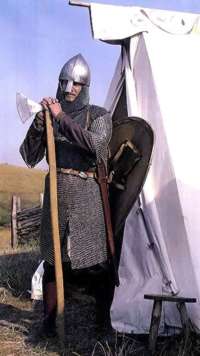
Huscarl - Regia Anglorum
Although still a heroic society the English army had evolved from the days of warlords having retinues of hearth troops, although it retained an aspect of this tradition. The great lords of the day such as King Harold and the earls had their huscarls; the heavy infantry of the day, perhaps on a par with the famed Varangian guard in Byzantium. The huscarls had been introduced some 50 years earlier during Cnut’s reign. These were experienced professional warriors, possibly some of the best soldiers to be found in Europe at the time. They had taken the ancient tactics of the shieldwall and
developed them. Each huscarl would have a long hauberks of mail with a coif and conical helm with a nasal guard. They carried long kite shields and, as well as being armed with swords and throwing spears, they also were adept with the dreaded Danish axe. This was a fearsome weapon, it was able to break shields, lop off limbs and even decapitate a horse in a single blow.


Around this core were the fyrd. The fyrd system dated from King Alfred’s time. These were territorials who were bound to give two months service a year. They were raised on the basis on one man for every 5 hides of land. This raised around twenty shillings which would pay for the warrior’s weapons, armour and food. These warriors would probably have the more traditional round shields. In theory a king could call upon up to 20,000 fyrd, but such a number could never be raised at once due to the practicalities of communication and logistics at this time. As well as these semi-professionals Harold could also call on all freemen to his banners in a time of national emergency. Such men would have grabbed any weapon to hand, whether spear or scythe.


There are further factors effecting numbers available to Harold; the Southern Fyrd had been on duty all summer in expectation of the Norman invasion and had been disbanded due to the approach of harvest time. The pitched battle of Stamford Bridge would have caused great loss both to the huscarls and the fyrd who answered the call. Normally Harold would have had around 3000 huscarls, perhaps Stamford Bridge would have reduced this to 2000. Harold’s brothers Earls Gyrth and Leofwin would have approx. 1000 huscarls each. Perhaps the recalled fyrd that gathered at Hastings would be around 5000. So Harold would field around 9000 men, similar to the numbers William commanded.

The Norman army, despite their Scandinavian heritage had a more continental way of war. Norman society was feudal and at the core of their army were knights. The knights were granted lands with which to support themselves, and were required to serve their lord.  Like the Huscarls they would have long hauberks of mail, conical helmets with nasal guards and kite shields. However these were mounted heavy cavalry; the shock troops of the time, armed with lances, it is thought that William had around 2500 of these mounted warriors in total. As well as the knights the Normans fielded infantry, professional men-at-arms that weren’t landed knights and would probably be armed in similar fashion to the English Fyrd, these would be the bulk of the army, numbering perhaps 4500.  The Normans also had around 1500 dedicated archers using short bows to soften up an enemy prior to sword play.
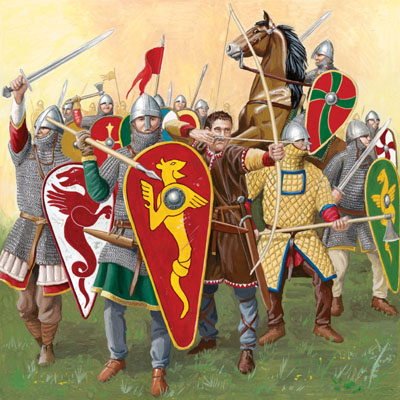
Norman soldiers - Image from model- making.eu


The army was divided into three; William’s Normans in the centre supported either side by his subject allies, Eustace of Bologne and his Flemish forces on the eastern wing and Count Alain and his Bretons on the western.

The invasion itself was a marvel of medieval logistics. William had to gather around 500-700 ships to carry men, horses, equipment , and even a wooden castle in kit form, over the Channel. Encouraging his underlings and allies to help finance this operation speaks volumes for William’s reputation and powers of persuasion. He had to remind them of the terms of their tenure, but also convince then that such an operation was even feasible. True there was the promise of lands and plunder but due to the efforts of his advisor Bishop Lanfranc, William had managed to get a Gonfanon – a papal banner –  so the enterprise now had the blessing of Rome. This was no mere invasion, this was a crusade.
The invasion fleet had to wait almost a month until the tides and winds were favourable, it’s recorded that William only lost 2 ships during the crossing. Ironically one of these carried the Duke’s soothsayer; never underestimate the fickle finger of fate, or its sense of humour!

The papal Banner - Bayeux Tapestry


Moving hesitantly inland from the landing site at Pevensey, William built a fortification at Hastings. From here his forces raided the surrounding countryside both for supplies, with an eye to his extended supply lines, and also knowing full well the area were part of the Godwinsson lands. William needed a decisive victory as soon as possible. Likewise, Harold, no doubt buoyed by his victory in the north, and angered by the Norman pillaging, wished to grab destiny with both hands.

 Arriving in London on the 6th October Harold gave himself a week to gather his forces. True Duke William had been campaigning most of his life, but Harold was also a seasoned warrior and very able commander, and he gathered intelligence of the Norman position. On the 11th October, yet with only half his available forces he advanced across the Weald toward William. On Friday 13th the English gathered at the edge of the forest between the villages Whatlington and Crowhurst . The Anglo-Saxon Chronicle  lists the assembly point as the “hoary apple tree” . It has been suggested that Harold initially planned a swift forced march at night to launch a surprise attack against the Norman camp the next day, but his scouts would have reported that William knew of his presence and was advancing towards him. Even with the advantage of surprise lost, Harold had chosen an excellent defensive position, below Caldbec Hill. At  9am on 14th October the battle began at Senlac Ridge, as the Normans organised in the valley Harold’s shield wall took shape across the ridge, their ranks 700 yards long. In the centre Harold unfurled his standards , the wyvern of Wessex and his personal banner of the fighting man.

Map of the battle from historyofengland.typepad.com/


Under William’s papal banner the Normans advanced. The archers got within range and emptied their quivers at the English line. But this volley had little effect. They were shooting uphill so most arrows either were impaled on shields or passed over the English lines. Following this the Norman infantry struggled up the slope. The rise was some 50 feet from the brook in the valley bottom and they were met with a hail of missiles from the English, including spears, throwing axes and even rocks. William threw his knights forward, alarmed at the lack of progress achieved by the first wave.

The Norman first wave attacks the English  shieldwall - weaponsandwarfare.com


It was on the shallow western end of the ridge that the Bretons arrived at the English lines before the Normans and Flemish. It was an uncoordinated effort that met an intact English line. They were met with missiles and were unable to get close to the English without risking their mounts. The Breton wing fell back leaving the Norman left flank exposed to missiles. The Norman and Flemish wings met the same dreadful site of intact English lines after struggling up the slope through hurled spears and rocks. The whole Norman line now waivered, on the verge of a general retreat. William's half brother Bishop Odo desperately tried to rally the fleeing Bretons.

On the western edge of the Ridge the English fyrdmen saw the Bretons in full retreat, from their perspective the whole Norman line looked on the verge of defeat; breaking ranks, they set off down the hill in pursuit. In the centre William saw the unfolding events, he had to act fast to stem the rout. He took his Norman cavalry and attacked the advancing English. How quickly in the fog of battle are the tables turned. The English fyrdmen now found themselves stranded in the open, unable to get back up the hill, and made a last desperate stand on a small hillock near the valley floor. The event is shown in the Bayeaux Tapestry. That they aren’t huscarls is shown by the lack of hauberks. The Bretons rallied and the stranded warriors in the hillock were slaughtered to a man. In the space of an hour and a half, with a momentary lack of discipline, Harold’s advantage and seemingly early victory had been snatched away from him. Harold’s previously impregnable line had to stretch thinner to compensate for his losses. Both sides paused to regroup.
The fyrd trapped on the hillock - Bayeux tapestry


Duke William shows his men he's alive - Bayeux tapestry
With the archers restocked with arrows the Norman second wave began. Learning from the previous failure William urged a slower advance so the infantry and cavalry could support each other. This second attack went on for 2 blood-soaked hours as the attack against the shield wall became a series of smaller battles along its length.  By 1pm the dead would be piled on both sides yet the shield wall held true. Both the Flemish and Bretons were sent back reeling in disarray. Again English Fyrdmen foolishly gave chase to be caught in the open. Norman chroniclers say these were feigned retreats but with the discipline (or lack of) at the time this is highly unlikely. With the low morale of these troops a feigned retreat could easily become a rout. It is said that William himself fought in this second phase and had 3 horses killed under him. he had to show his face when a rumour began among his men that he had been slain.


Again the Normans withdrew and took stock. William must have been becoming increasingly desperate; the English shield wall held and his men would be exhausted. The slopes would be churned up by hooves and slick with blood. He knew his men had one more attack in them. Defeat and retreat would almost certainly cost William his life. The next attack had to succeed. A different tack was required. He had to combine his archers and his knights and foot soldiers more effectively with his whole force attacking the ridge at the same time.
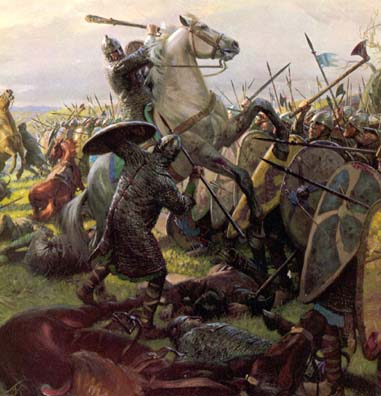
Bishop Odo in action against the shield wall - notice his weapon is a club so as not to sinfully draw blood - from www.robertsewell.ca/


At 3 o’clock The Normans advanced slowly with horse and foot solders together, the archers in the rear.  The Norman advance drew out the usual English volley, but it was impatient and launched at a longer, less effective distance. As the Normans closed with the English the archers fired upwards, high into the air so the arrows would fall on the English line and draw their  shields up. With the shower of arrows causing a distraction the hand to hand combat began. An hour into the third wave and the turning point was being achieved. Gaps began to appear in the English line and the Normans forced themselves in, breaking the shield wall into sections.  With both English flanks now weakened and the whole ridge no longer defensible, William ordered the Flemish and Bretons to attack from both sides. They broke through, shattering the English position that had held solid across the ridge all day.


For Harold now the battle was lost, it was all about now life, death and honour. There was fighting
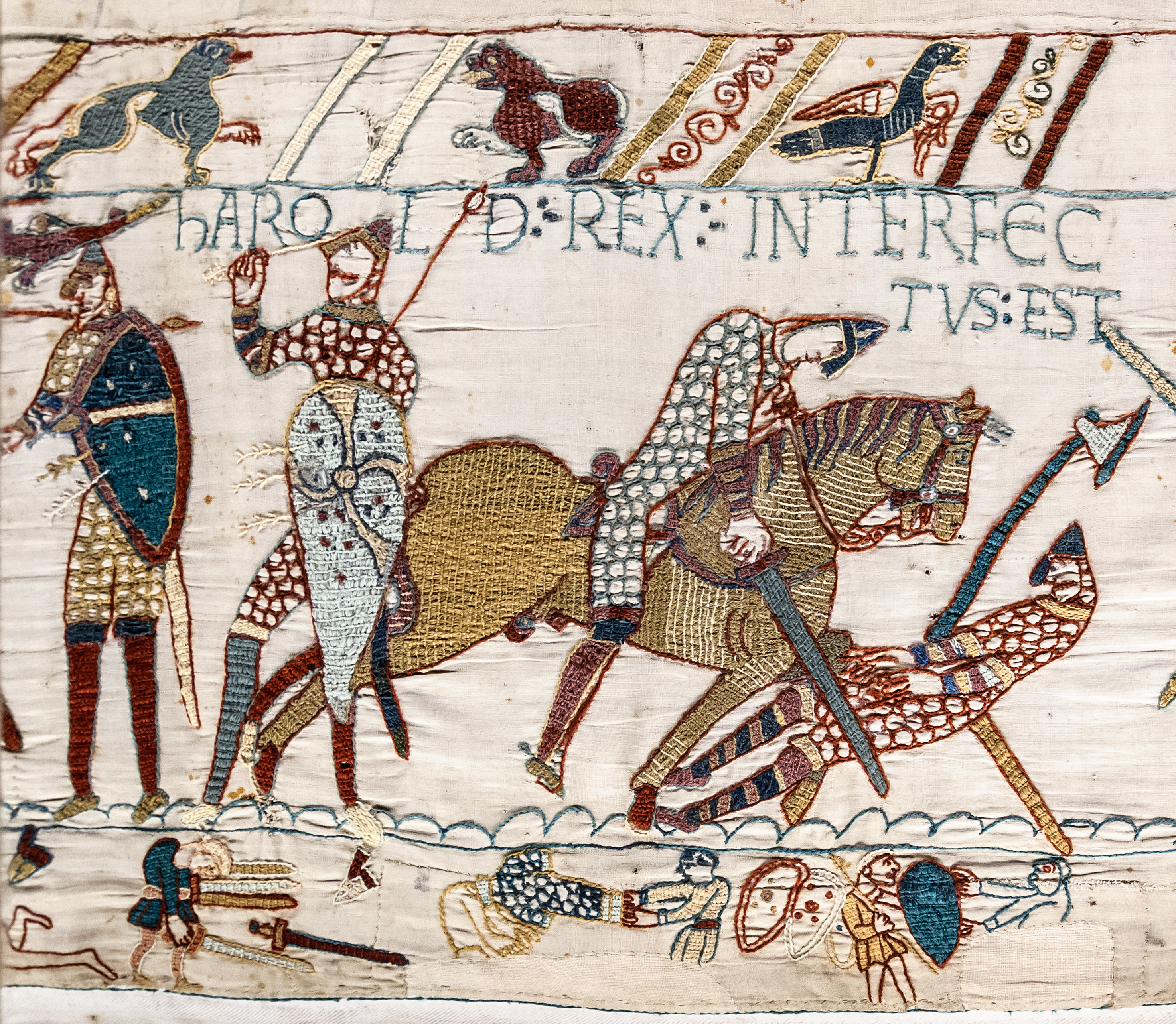
Harold is slain - Bayeux Tapestry
along the whole ridge. It was at this point that Harold’s brothers Leofwine and Gyrth fell, defending their king and brother judging by their proximity to Harold. The fyrd attempted to escape and melt into the forest but the huscarls, true to their oaths, remained fighting around Harold and his standards. As the light faded around 5.30pm Harold fell, probably not by an arrow to the eye, as interrupted in error from the tapestry, but from a sword blow and then “covered in deadly wounds”, according to William of Jumieges. Fired by the events of the day and their sense of religious righteousness Flemish knights hacked at the fallen king, grievously mutilating him. It was said only Harold's handfast wife, Edith Swanneck, could recognise her lover's body, so terrible were the wounds inflicted on the slain Harold.
The last stand -  from bitaboutbritain.blogspot.co.uk/


With the King and his brothers slain there was nothing more to fight for, a few remaining huscarls fought doggedly to the last while others fled to the forest  pursued by the vengeful Norman cavalry to prevent any regrouping. It might well have been the case that there were still late arrivals of fyrdmen appearing on the battle’s periphery. That some English still had the spirit to fight was shown when a band of Norman knights were ambushed and slaughtered at a place called Malfosse (evil ditch), named as such after the event. Yet despite the valour of the defenders at Malfosse the battle was over, and decisively so; England would never be the same again, of the three contenders for the throne only the Norman Duke William remained.

Harold's bones are lost to history, there would be no shrine to the fallen king. It was said that he was either buried without ceremony on unconsecrated ground (as he was ex communicated), or was perhaps thrown into the sea. Another tale reports him as being buried under a cairn on a headland, as if ironically watching for invaders. William refused the pleading of Harold's mother, Gytha Thorkilsdottir, to yield to her the slain kings remains, even in exchange for Harold's weight in gold. Even in death perhaps, he revealed the precariousness of William's position, that of an invader, a foreign usurper. Yet a new regime would now held sway, and history would be written by them, as victors are wont to do.

Sources;

The Battle of Hastings - Peter Poyntz Wright - (1986)
The Bayeux Tapestry
Anglo-Saxon Chronicle
William of Jumieges - Deeds of the Dukes of the Normans
Frank Barlow - The Feudal Kingdom of England 1042-1216 (1988)

Rob Bayliss is a reviewer at The Review and fantasy author. Information on his writing projects can be found at Flint & Steel, Fire & Shadow.

Sunday, 27 July 2014

Sunday Wrap Up: Week ending July 27, 2014

Be sure to see below for details on this week's giveaway!

Above the Fray by Kris Jackson. A Review by Rob Bayliss

Part One – The Ascent  


Battle lines are being drawn as the Union and Confederacy square up to one another. A young Virginian telegrapher, called Nathaniel Curry, leaves his native Richmond to view a balloon flight in Washington. Without realising the implications, and with a youthful sense of adventure, he joins Professor Thaddeus Lowe aboard a balloon that rises to greet the dawn. As an experiment he transmits instructions and coordinates, inadvertently directing artillery fire on a Confederacy position. in his own country. When word leaks out that he was implicated in this attack he is denounced as a traitor and disowned by his own brother. Forced to leave his home, family and sweetheart he seeks employment with Professor Lowe who is putting together a Balloon Corps to assist the Union cause.

Part Two – The Descent


As the war drags on the Confederacy becomes more and more desperate. It becomes clear that they cannot win; the Union has more men, greater industry and better equipment but perhaps lesser generals.


Losses and shortages caused by the Union's blockade stiffens the resolve of the Confederacy.  Nathaniel Curry finds himself being drawn more into espionage, while the Balloon Corps struggles to retain its funding, looked upon by the military as an unnecessary financial drain. In the end it is forced to cease operations.


Above the Fray is really an extraordinary book. It is meticulously well researched from the science of ballooning to the topographic description of the Civil War battlefields. I found myself totally absorbed in the life of Nathaniel Curry. There is humour here and there, but it is the humour of the gallows, as the war brutalises everyone and everything it touches.

It is a wonderfully written story; the language so fully evokes the lost world of the Confederate States of America, that even I, an Englishman, could hear the different accents in the dialogue. I learnt much about the American Civil War that I never knew before. It almost reminded me of the film Forrest Gump (albeit a very much darker tale), the way young Curry lives through major battles, crucial events and the individuals he meets (even a young Count Ferdinand von Zeppelin). Being in the Balloon Corps surrounded by scientists he is even exposed to the science of the age, able to discuss Darwin's Origin of Species and its implications for religion. Through Curry's eyes we can see the old order being swept away as the modern USA evolves.


The story of Above the Fray will stay with me for some time. I can't reccommend it highly enough and I would urge that you should read it, too.

Like this excerpt? Like to get your name in the hat for a free copy? See the rest of the review!

*********

Louise E. Rule Interviews D. W. Wilkin for The Review's Author Interview

Welcome, David, I would like to thank you for taking the time to speak with me today.


For those who haven't yet read your book, Beggars Can't Be Choosier, would you like to give an outline of the story David?

Sure. Beggars is the story of the Earl of Aftlake who is born with a title, but with very little in the way of money. He has about 100 pounds a year which is near poverty for a titled lord. And it is the story of Miss Katherine Chandler who finds that society snubs her for the low birth of her father and his far too rapid rise to wealth and riches. She needs a husband with stature and Lord Brian needs an heiress. An arrangement is made, though not with a typical stipulation, and they are united. He can use the wealth to build a career for himself in politics and reacquire possession to all the properties of his family that have been mortgaged. She can find a place in society that will allow her to have stature and find perhaps some revenge against those who have snubbed her. As a Regency, though, when such a thing is arranged, the road that the two take to fall in love will twist and turn, but it is inevitable that they will fall in love.

Did you already have a title in place for your book, or is it something that evolved as you wrote the story?

Actually no. I considered it another of my Regency projects, but the title did suggest itself to me as more of the story developed. I started the first draft in April of 2010, so not sure when I actually titled it. I do like that I could play upon the words and take a common cliché, twist it a bit, and see that it worked.

Research is, of course, imperative for an historical fiction novel. How much research did you have to do, and did you travel to the UK to visit the places that feature in your book?

I've been to the UK several times. My grandfather was an Englishman, and had started the old Millet chain of what was first Army surplus and became better known as camping goods. the depression and marrying my American grandmother, had them do what I find many couples do, move close to the wife's family, and so we live over the pond. but with many English relatives, I have travelled often to the isles.

I do less research now on a Regency novel I am working on, than my earlier works. I have it in my veins now, but I still add to my research daily. I have a degree in history from UCLA, and add to my extensive collection of history on the era all the time. I also post every day a biography of a Regency era person at my blog: http://thethingsthatcatchmyeye.wordpress.com 

There's loads more to Louise's interview, so come check it out!

*********

Feature Post by Paula Lofting: An Investigation into the Parentage of Hereward (the Wake) 


As an author writing in the 11thc, at some point I knew that the heroic character of Hereward, wrongly known as "The Wake", would have to make his entrance upon the stage. So I wanted to sift through the information there is about him and separate the myth from the fact. Whist doing a book search about him, I came upon a recent work by Peter Rex that features Hereward and other English rebels who fought to retain their lands from the grasping Normans who had invaded in 1066. The first was The English Resistance: The Underground War Against the Normans by Peter RexThis book was a great starting point in learning the facts around the events that were the rebellion years. The Conquest only began in 1066; it took roughly more than six years before England was well and truly subjugated.This book included Hereward and his men along with many others such as Eadric the Wild, Earls Waltheof, Morcar and Edwin, as well as Edgar the Atheling. Then I got my hands on Rex's book about Hereward in which he seeks to discover who this man was and what the facts are that are known about him, plucking him out of the mists of legend and giving us the man that belongs to what is known about the history of the time.  Like the French resistance in the Second World War, the English fought back to rid their land of the invaders, unfortunately they hadn't bargained on the Conqueror's determination, or the ruthlessness of their overlords.  Still, the bravery of such men as Hereward and Eadric the Wild would go down in history and mythology. But just who was this man whose  'a brief life in history and a long one in romance' (Charles Plummer, Oxford Scholar)? Let's take a look at what the evidence actually turns up.

Have a look indeed~~let's go see what else Paula finds for us

*********

Louise E. Rule Reviews The Audible Version of Wolf's Head: The Forest Lord by Steven A. McKay


Audible Cover

In April of this year, Steven asked me if I would review his book, Wolf's Head, on the Audible format. I was very keen to do this as I had already enjoyed reading Steven's book very much. I try to get all my favourite books in paper/hardback as well as Kindle and Audible, if they are available. This is so that I can read/listen to my books wherever I am.


A narrator has to possess skills of reading a story without the listener being aware of the narrator him/herself. Some narrators, I have found, sound as though they are just reading out loud rather than telling a story, while others transport the listener within the very realms of the story, where it is possible to be submerged within it without being aware of its telling.

When one reads one gives each character a voice of their own, and the more the story progresses, the more permanent those voice characterisations become. This is why I think that it is important, no, imperative, that the narrator of an audio book should be well attuned to the story being read. For example, once a certain voice has been given to a character it must be maintained throughout the reading. It is only in this way that the listener can truly become engrossed in the story.


With this in mind, I was really looking forward to listening to the audio version of Steven's book.


With all my expectations, I had great hopes, but at first I felt a wee bit disappointed. I restarted the book several times because it took me a little while to get used to the narrator's performance. I felt that he needed to put more feeling, more humanity into it. As the story went on, however, the narrator settled into his stride, and then I enjoyed the performance more. He conveyed the female voice quite well, which must be difficult for a male narrator. Overdoing the female register can sound like the ubiquitous Pantomime Dame. There is an element of skill in getting this right so as not to reduce the authenticity of the story being read, and by so doing, carry the story forward without the listener being aware of the narrator.


Find out if Louse's experience with an audio book compares to your own by clicking right here.


Last week's Wrap Up.

Thursday, 17 April 2014

The Best of The Review: Favorite Posts From the First Half Year (Volume VIII)

Sons of the Wolf~~Paula Lofting

It was truly so difficult to choose two--just two!!--entries for our favorite blog posts; there really were so many I loved--from books I liked the sound of and wanted to read, to reviews of works I might not otherwise have given a second look, but was drawn in by the reviewers' ability to get me to see new possibilities. In the end I decided to go with the ones that came to mind most fluidly and frequently when trying to decide on which constituted my favorites.

To that end I went first for Linda's review of Sons of the Wolf. I already had a close bond with this book, oddly enough one that before I read feared I would not enjoy. This pre-Conquest era is not one I remember much of from school and I was, I admit, a bit intimidated. In the end I not only loved the novel but grew to care about the characters and, as Linda writes, "Thankfully there is a sequel coming." I also loved Linda's descriptive review which also succinctly guides readers through the "how it came to be," and she does a fantastic job of it.


There is a village in pre-Norman Sussex called  Horstede which  has been invaded by a time traveler, or so it seems. I am tempted to speculate that not  even a member of Regia Anglorum like author Paula Lofting could create a story like Sons of the Wolf unless she had lived among them.  I suspect that in spirit, indeed she has.  Her novel  is the product of a writer who not only loves her subject and knows it well, but also knows her craft.  As I read the opening pages, I can smell the woodsmoke and feel the warmth of the greetings of the villagers as protagonist Wulfhere and his right hand man Esegar return from a bloodly battle as the opening curtain rises.  I remain a captive of the story until its final page, and best of all, beyond. Thankfully there is a sequel coming.

Any meticulously researched and authentically presented historical  novel set in a well known milieu faces the risk that devotion to historical truth  may become its own spoiler. Such is not the case with Sons of the Wolf. To avoid the common pitfall,  Lofting has masterfully selected two characters from the pages of Doomsday Book about whom little is known. The only references is to their names –Wulfhere and Helghi—and the amount of land they owned. Their respective societal ranks can be guessed from a notation as to the size of their respective estates. The balance is  Lofting’s creation.

Wulfhere is the thegn of Horstede and Helghi’s superior in rank. Helghi also  is a landowner but a tier below his rival. Their families have been fueding for years, and the conflict brings out the worst of each. Their  abiding hatred forges their destiny and contaminates others. Wulfhere is a  good man who seeks to do the right thing, but he does not always like it. Helghi is the consummate villain,  obsessed with bringing Wulfhere to his knees, and willingly sacrifices the future and the well-being of his family to do so.

When the historical character Harold Godwinson, Earl of Wessex and brother-in-law of King Edward seeks to reconcile Wulfhere and Helghi, he sets events in motion that make matters worse.
After I read the initial four chapters of the book I put it down, not because I did not like it, but because I was utterly unfamiliar with its historical context.  My intense study of British history is framed by the  Plantegenets on one end and the Marlboros on the other. What I knew of the Norman invasion could be  summarized in a  line  from the 1953 movie Young Bess.  Says adolescent  Elizabeth, "England has never been invaded, except by the Normans, who do not count because they were us."  What I knew of Anglo Saxon Britain would have scarcely filled a journal page. I  profited from  spending  a few minutes on Wikipedea,  and once I had a better understanding of what transpired in Britain in the years immediately prior to 1066, I was ready for a breathtaking, violent, fast and furious and often heart-rending ride through the years before the Normans came.

Click to continue reading

*********

The Witch Finder~~Blythe Gifford

Here Louise also snares me with her ability to capture the intrigue of a book, and I was interested in the topic as well. She takes us to a dangerous time and points to the author's skillful use of privileged position and dramatic words to draw us into the events and follow the players as they make their way through their own world. This book is the very next on my to-be-read list and I plan to reward myself with it at the end of the month when I make several deadlines. Books make fantastic rewards!!

“It’s October 1661, Scotland, the Borders – Hoofbeats woke her, sending her heart tripping fast as the horse, even without knowing who rode. Nothing good rode at night.”

These are the opening lines to a story that will take you into the realms of the witch finder.

The horrors of not being able to make someone believe that you are innocent, when those around you see you as guilty. Blythe Gifford cleverly draws the reader into the story, pitting the searcher against the searched.

The opening lines of a book, for me, are very important. They have to set the scene, hook me in, and make me want to turn the page. Blythe Gifford’s The Witch Finder does that for me. It is not a book that I would instinctively choose, but the cover intrigued me. First of all it has a teaser – “He’s a haunted man. She’s a hunted woman.” The title of the book overlays the picture in a bright yellow font that catches the eye; encouraging the reader to view the picture that sits behind it; a woman cloaked in black. So, being naturally curious, I had to read it. 

Margaret is our protagonist, hiding her mother who has been sent mad through interrogation in Edinburgh by the witch finder called Scobie.  They are living in a small, remote, barely furnished cottage out along the road from the village of Kirktoun. Here she could keep her mother safe and away from prying eyes and questions. Blythe has the reader feeling sympathetic towards both Margaret and her mother from the outset. We feel her panic as the witch pricker comes riding past her home. Will Margaret’s mother be found? Will Margaret be accused of being a witch? Nail-biting moments carry the reader page by page. We are taken into the realms of interrogation, and the bitter futility of declaring innocence.

Click to continue reading...

Tuesday, 15 April 2014

The Best of The Review: Favorite Posts From the First Half Year (Volume VI)

Sworn Sword~~by James Aitcheson

Marsha writes, "I picked Paula's review of Sworn Sword because the review inspired me to purchase the book which I enjoyed immensely. I love the Conquest time frame and was happy to have a new author to explore. I am looking forward to purchasing the rest of the series."


Sworn Sword sweeps us into the 11thc just as the English are on the rise after their devastating defeat at Hastings just over two years before. From the outset we are thrust into a world of where life depends on who wins the battles.  Bloodshed and loss is now a way of life for most people since William of Normandy clawed the English crown from the head of the  usurper’, Harold Godwinson.  

With the opening focusing on an English uprising in the streets of Dunholm, strong hold of Robert de Commines, Lord of the North, we meet our protagonist, Tancred, a Breton, commanding his own conroi. Tancred and his comrades have been trying to fight off the attack when Tancred hears that his beloved Oswynn Is murdered by the marauders; but there is no time to grieve, for he must save his lord, Robert, set upon with his men in the mead hall. Tancred leads his conroi to the rescue but they are too late and Lord Robert is burned alive with his comrades inside the blazing  hall. The Normans are slaughtered almost to a man, but Tancred, who has been badly injured, is carried by his surviving friends Eudo and Wace to the relative safety of York. There the trio find refuge in the house of Robert’s vicomte, Guillaume (William) Malet.

Tancred spends some time under the care of Malet’s priest, Aelfwold who tends his patient’s wounds and saves him from developing a life threatening infection. When he is well, Malet gives the now lordless knight an ultimatum: owe him a debt for the succour and hospitality he had provided him with, or carry out a mission  that would set him free of any obligation owed. Reluctantly, he accepts, for he would rather stay behind in York to exact revenge upon the English who killed his lord and his woman Oswynn. But little did he realise when he gave his oath to Malet, that he would become embroiled in a secret that holds the fate of the kingdom in the balance...

I approached this novel with caution, a) because I am a die-hard Anglo-Saxon supporter and b) because the Normans did terrible things to the English during the invasion, so when I realised this was going to be a story told from the point of view of one of the invaders, I was unsure as to whether or not I was going to enjoy it.  It’s not that I am so narrow minded I can’t enjoy a book from any other viewpoint other than the English one, it is that I didn’t want to read something that promoted the Norman invasion as a good thing and that William was a good guy fighting for his rights, and by the shedding of much English blood, winds up on the English throne. Although Tancred fought on the Conqueror’s side at the Battle of Hastings, he views the English with suspicion and believes that the rightful King now sits on the throne, this is a book that tells the story of one man’s journey to find a new purpose to his life, now that his beloved lord is no longer in the world.

What I liked about James Aitcheson’s portrayal of an England in the aftermath of Hastings, is that it shows the reader how the scene would have looked to just such a man, especially as it is written in the first person, without making it heavily pro-Norman or pro- English. Although the latter are seen as pretty much the bad guys in a way, and the former as the righteous, it’s understandable, because we are seeing it from Tancred’s point of view and as far as he is concerned, he and his comrades are vindicated, for they represent loyal supporters of the rightful King, assisting him in keeping the peace in his new kingdom that was bequeathed to him, quite honourably by his cousin Edward, and stolen from him by the usurper Harold Godwinson. Presented as thus, I found it easy to glide into the story from the start.


Click to continue reading


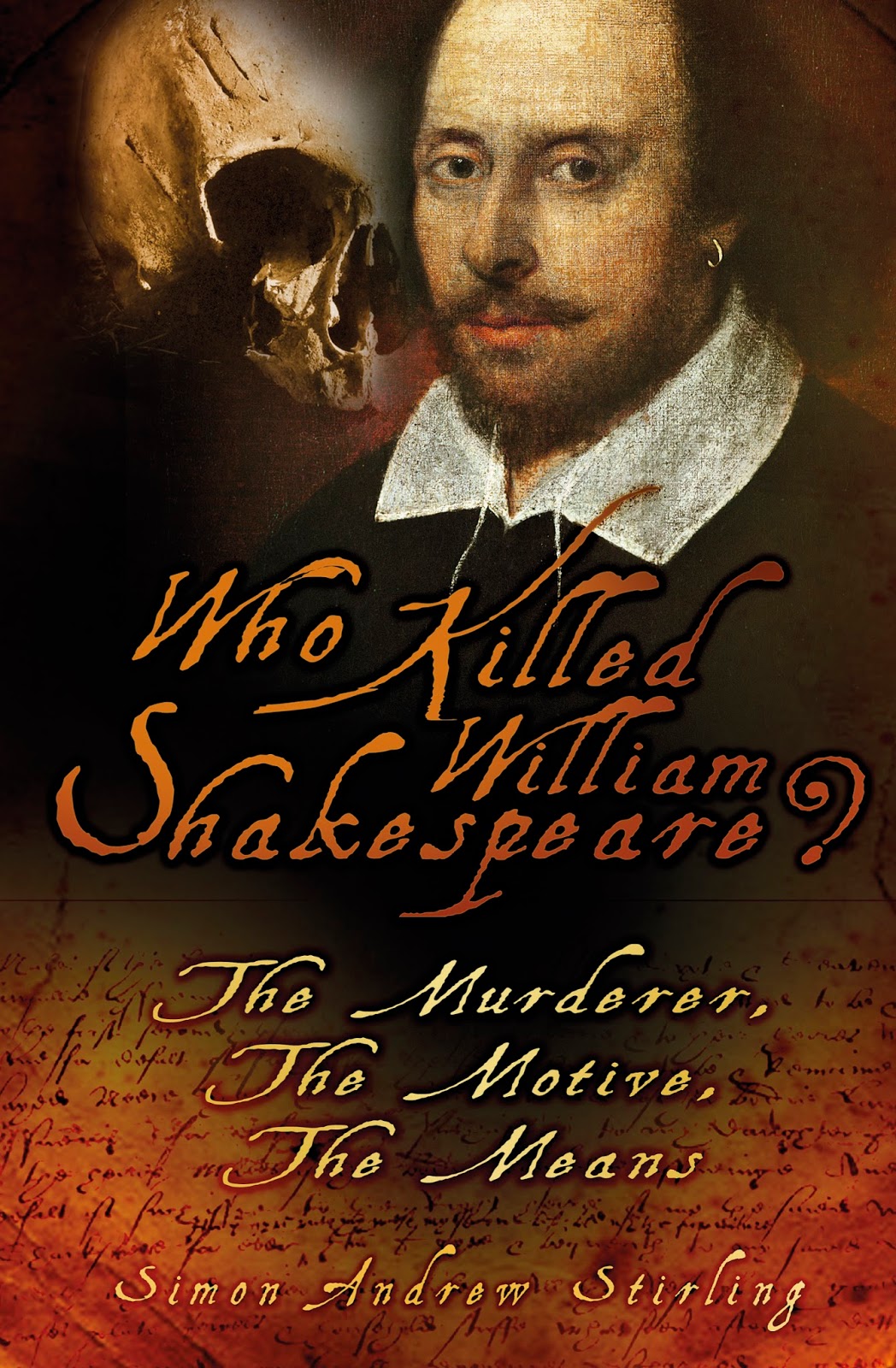
Paula's People with Simon Stirling

"I picked Paula's piece with Simon about Shakespeare because it was so interesting and I am fascinated by Simon's ideas. I would really like to delve more into Shakespeare's life and plan on purchasing Simon's book."


*********                                                               

Thanks to Simon for coming along and being a guest on Paula's People. Simon discusses the ideas that spawned his latest novel Who Killed William Shakespeare?  


I was chatting to (chatting up?) a Canadian student at my drama school in London, one day.
“So – got anything planned for this weekend?”              
“Yeah, we’re all going up to Stratford-upon-Avon.  We’re seeing a show at the Royal Shakespeare Theatre, and we get the Shakespeare tour.”
It was part of the one-year course for overseas students: the Stratford Weekend.  And that’s when it struck me.  To lovers of theatre, and literature, all over the world, Stratford is a kind of Mecca.
And there was me thinking it was a place you went to on a Sunday afternoon.
I’ve spent a great deal of my life in and around Shakespeare’s hometown.  It’s given me a different perspective on the ‘Sweet swan of Avon’.  Time after time, reading biographies of William Shakespeare, I was struck by how little interest the biographer had in Shakespeare’s native region, his family connections, the knotty network of friends and co-religionists which made Warwickshire such a tribal county.
London has changed since Shakespeare’s day.  But much of his home county hasn’t altered that much.  You can get closer to Shakespeare in the lanes around Baddesley Clinton or Earls Common than you ever can on the banks of the Thames.
When I started studying Shakespeare in the late-1980s, hoping to understand how a lad from the Midlands became the world’s greatest poet-playwright, I found it all a frustrating experience.  “We know so little about him!” seemed to be the cry on every Shakespeare scholar’s lips.  Twenty-five years on, I’ve come to believe that this mantra is anything but true.  By refusing to concentrate on his London days, I was able to uncover several new facts about Shakespeare’s life.  A whole new picture emerged – more ‘real’, if you will, and certainly more intriguing.  Downright scary, at times.

But the mythology of Shakespeare forms most of what we know, or think we know, or are told to think we know, about this brilliant man.  To engage properly with Shakespeare is to enter the terrifying world of Tudor and Jacobean politics, something unnervingly close to a police state, and the sheer brutality of the repression of those who adhered to the Catholic faith, as their forefathers had done for a thousand years.  It is to enter a period of great upheaval, a massive redistribution of wealth, the remorseless rise of a new political class and a casual recourse to murderous violence.  It was a time of fear and favour, of propaganda and prejudice.

Click to continue reading...