Showing posts with label fantasy. Show all posts

Saturday, 29 July 2017

Diana talks to Prue Batten, author of fantasy books


Author’s interview – 2017. Diana talks to...

Prue Batten


Hello Prue. How lovely to talk to you.
I am sure that you are tired of being asked the usual questions that would-be interviewers ask authors, so hopefully this interview is an interview with a difference and I have come up with some unusual questions!

First things first, I am sure there is a question that you have always longed to be asked. Now is the chance. Ask your own question and answer it!

How would life be easier as a 65 year old if you weren’t a writer?

Heavens! Where do I start? I could spend more time gardening, stitching, boating, kayaking, being with family, with my dog, meeting friends…

Writing is such a solitary thing and one has to withdraw from life to accomplish it. It’s a contradiction in terms because being a part of life with its roller-coaster emotions can provide a foundation from which any writer can work.

What I do find is that I now use up every hour of every day to give me the kind of life I want. If I didn’t write, I doubt I would be so energetic in making sure I use my time actively and wisely.

If your latest book was adapted into a TV show or a film, who would you like to play the lead role?

As we are talking about fantasy novels in this instance, I will name The Shifu Cloth as my ‘latest’ novel. It’s the final novel in the quartet, The Chronicles of Eirie. It’s leading me gently by the hand into my next fantasy novel called The Cabinet of Curiosities and which contains many of the characters from the quartet.

I always thought Jessica Brown Findlay might be the female protagonist, Isabella. Ioan Gruffud would play a suitably moody Nicholas. Chow Yun Fat (with spectacles) would be perfect as Ming Xao and Gung Li as the Lady Chi NĂ¼.


What made you choose this genre?

I love writing fantasy. I love world-building. I love reading myth and legend and adapting folkloric characters to fit my novels. I would say that fantasy (hist.fantasy perhaps) picked me, rather than the other way round; perhaps my imagination is over-active. But whatever the case, I am transported and challenged, all in one.

How do you get ideas for plots and characters?

Each novel in the quartet has been inspired by an inanimate object which becomes a vehicle for the plot. Books One and Two were inspired by raised silk embroidery, Book Three by a millefiore paperweight and Book Four, The Shifu Cloth, by cloth(shifu) that is woven from paper. Shifu was used in Japan as a method of delivering secret messages in the time of the samurai.

In fact, if there is a common denominator between the four novels, it is the word ‘secret’, or as one of the characters calls it – ‘segreta’.

The characters are inspired by the stories and as they develop into actual personages, I find it handy to have a visual image, so I trawl the net for likely candidates. For example, for obvious reasons, my Gisborne was inspired by Richard Armitage. Tobias was inspired by Peter Dinklage, Guillaume was inspired by Eion Macken’s face. And so on.

If, as a one off, (and you could guarantee publication!)  you could write anything you wanted, is there another genre you would love to work with and do you already have a budding plot line in mind?

I would love to write another illustrated childrens’ story. I’ve written one, Nugget, the Black Wombat, in collaboration with brilliant UK illustrator, Dave Slaney, and it was such fun and Nugget sooooo cute, that I’m sure he has another adventure to relate.

Was becoming a writer a conscious decision or something that you drifted into (or even something so compelling that it could not be denied?) How old were you when you first started to write seriously.

I was in Grade 3 when I felt that writing a ‘composition’ was indeed compelling. It gave me a sense of completeness, even at that age. The feeling increased as I grew older and I was known to spend two hours of a three hour English exam completing the creative writing component. I won awards for creative writing through high school and in matriculation, but then all creative work was put on hold through university and well into motherhood. Whilst ‘enceinte’, and restricted with a bad back, I did take time to pen bits and pieces and the feeling began to grow again. When the kids were almost teenage, I wrote a fantasy trilogy and that was to become my rite of passage – the story one writes that begins one’s journey, the one that will never ever see the light of day.

After that, The Stumpwork Robe was written and the rest as they say…

Marmite? Love it or hate it?

Marmite? It’s okay but I much prefer Vegemite…

Do you have any rituals and routines when writing? Your favourite cup for example or ‘that’ piece of music...??

None. I write when I can squeeze it into a pretty frantic life, so a ritual would be pointless. That said, my dog, a Jack Russell terrier with a large personality and little patience, is always with me. He’s my muse.

I promise I won’t tell them the answer to this, but when you are writing, who is more important, your family or your characters?

When I’m writing, I’m completely lost in my world – so my characters are indeed more important. Those are the days when the house is quiet and I’m solitary. However… if my adult family need me, I’ll listen with all my attention. I suspect most mums, dads and partners have perfected that art.

Other than writing full time, what would be your dream job?

Gosh, I haven’t thought about that for ages. In the past, I’ve always thought it would be the bees’ knees to work for Pixar as an animator. But as I fall more in love with my gardens, I suspect it’s actually to be a gardener and have the time and someone else’s extensive budget to create with plants.

Coffee or tea? Red or white?

Tea – camomile and the occasional green tea with a chocolate and berry brownie. White wine – a crisp, cool Tasmanian chardonnay with a wafer, vintage cheddar and slices of pickled walnut.

How much of your work is planned before you start? Do you have a full draft or let it find its way?

I have a very basic plan – an A4 page. But it is totally open to change and alteration. I am putty in my plot’s hands…

If you had free choice over the font your book is printed in, what font/fonts would you choose?

Times New Roman. It’s the one font my mother could read as she lost her sight through macular degeneration.

Have any of your characters ever shocked you and gone off on their own adventure leaving you scratching your head??? If so how did you cope with that!?

Goodness yes! It’s the thing I absolutely love the most about writing. It’s a wild ride! I always feel that those writers who stick to their carefully delineated plan are missing something truly spontaneous, and the thing about spontaneity is freshness. It’s worth remembering…

Are you prepared to go away from the known facts for the sake of the story and if so how do you get around this?

This is an interesting thought in respect of the kind of fantasy that I write. Because I like using myth, folklore and legend – the known facts are those that come from an oral tradition and are very open to mutation as time passes. I think readers of myth-based fantasy accept this and in fact quite enjoy reading the various interpretations.

Have you ever totally hated or fallen in love with one of your characters?

Oh yes! But I’ve especially loved my supporting characters in the fantasies. I have a deep relationship with an Other called Gallivant – he is what’s known as a Goodfellow or a hob. He is fastidious, devoted and funny and I adore him.

In The Gisborne Saga (a hist.fict trilogy), Tobias became my best friend and ultimately had his own book in a further trilogy.

But there have plenty of antagonists of course and honestly, how can one like them? They are despicable…

And then there are the characters one loves but is not sure one can trust. There has been one especially.

But that might just be another story…

What do you enjoy reading for pleasure?

Myth-based fantasy , historical fiction that is character driven and preferably about the ordinary man. Contemporary womens’ fiction, especially by Jan Ruth. Biographies of people that interest me. Gardening books of all sorts and books about words – like Robert Macfarlane’s Landmarks.

What drink would you recommend whilst reading your latest book?

Oh gosh – have a hot chocolate with marshmallows and maybe a bit of Toblerone in the bottom. Why not go all out? Or if you want to really live dangerously, have a glass of chardonnay, no matter the time of day!

Last but not least... favourite author?

Dorothy Dunnett. Without doubt my Number One most iconic author.


About the Shifu Cloth:
 
In a world where Others play with mortal lives, in a hidden province that survives on the backs of abducted slaves, Isabella, one of those stolen folk, sends a message woven into rare cloth made of paper and silk, in the vain hope that her cousin will find it, decipher it and rescue her.
For cousin Nicholas, with whose life the Fates have been playing, only time will tell if he will find her and whether what makes a curse does indeed break a curse.

'Consistently ranked in the Amazon Best Seller Lists for Asian mythology, this is Book Four and the conclusion to the highly regarded and unique historical fantasy series, THE CHRONICLES OF EIRIE.
A replete and satisfying conclusion to a series that has unrolled like a bolt of silk.'

"Prue Batten weaves her story in such a way that I could not stop turning the pages. It is perhaps the way the story slowly unfolds that makes this book very interesting...The pictures that Prue Batten paints are as vivid as the brush stroke in a canvas. With an eye for detail, she gives us a glimpse of the magnificent imperial house of Han as well as of the rest of her world and its colorful characters. Above all, this is a tale of enduring love that balances on the fine line that separates reality and fantasy." Maria Beltran, Readers Favorite USA.


A wonderful picture of Prue


© Diana Milne January 2017 Prue Batten May 2017 ©


Wednesday, 12 April 2017

Where are they now... Margaret Cavendish - contributed by Richard Abbott

If I asked you to name some early science fiction writers, I'm guessing you'd think of Jules Verne or HG Wells, who established in the 19th and early 20th centuries so many of the conventions and themes of the genre.

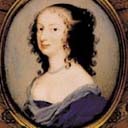
Portrait of Margaret Cavendish (Wiki)
You probably wouldn't think of going back to 1666, and Margaret Cavendish, Duchess of Newcastle. But in fact, in the same year that the Plague was raging, and London experienced the Great Fire - only some 50 years after the King James Bible was translated, and Shakespeare was writing plays - Margaret Cavendish published her novel The Description of a New World, Called The Blazing-World. It has been called "the only known work of utopian fiction by a woman in the 17th century, as well as one of the earliest examples of what we now call 'science fiction' — although it is also a romance, an adventure story, and even autobiography".

Margaret Lucas was born in 1623, the youngest of eight children, and had a lively childhood, partly spent with Queen Henrietta Maria in exile in France. In 1645 she married William Cavendish, 1st Duke of Newcastle-upon-Tyne, who was a staunch royalist and reasonably successful military commander (so had had a difficult few years until the Restoration of Charles II). He was an enthusiastic patron of the arts and sciences, which is perhaps why he and Margaret formed a happy couple - her lively and wide-ranging intellect would undoubtedly have attracted his attention. He was devastated by her death in 1673, and died just three years later.

Cover - The Blazing World (Wiki)
She was not only an author of fiction, but also wrote over a dozen original works in diverse fields - poetry and plays, as well as a number of early scientific and philosophical treatises. The Blazing World was routinely distributed with her non-fiction Observations upon Experimental Philosophy, thus combining imaginative and scientific discourse. She was the first woman to attend meetings of the Royal Society, and engaged in debate with leading figures of the time such as Descartes, Hobbes, and Boyle. She was not shy about disagreeing with the thinking of the age when she felt it was in error, a habit which brought her criticism and conflict.

The Blazing World is, by modern standards, a slightly odd book. The protagonist, a lady whose name we never learn, is abducted by an impatient suitor, but her virtue is preserved by divine intervention which diverts the ship towards the north pole where the wickedly motivated men all perish. The lady herself is rescued by creatures which are man-like but with animal qualities - once in the Blazing World proper, she will meet Bear-men, Fox-men, Fly-men, Bird-men, Fish-men and so on. Her rescuers take her through a narrow passageway which connects our world with The Blazing World. Since there is only one such passage, and the celestial view in her new home is entirely different, a modern author might well describe this as a wormhole connection rather like in Stargate.

The Emperor of this world is smitten with her, and after a very short interval the two marry. There is then a long passage in which the new Empress quizzes the various theoretical and experimental factions in her new home - clearly satirising the state of affairs in the Royal Society, though many of the barbs evade recognition by today's reader. Part of this section describes the creation of a array of miniature universes, each intending to explore some particular theme, and most of which are unstable and collapse again because of their own inconsistencies. It sounds very like an early exploration of what we now call the Anthropic Principle - the laws of the universe are constrained by the fact that intelligent life has arisen in it.

Margaret Cavendish (née Lucas),
Duchess of Newcastle upon Tyne,
by Pieter Louis van Schuppen,
after Abraham Diepenbeeck,
line engraving,
late 17th century,
NPG D30185,
© National Portrait Gallery, London
In a way that would now be considered rather shockingly indulgent, she then as author brings herself in as a character - a sort of muse and scribe to the Empress. The two become exceedingly close friends. We are assured that the relationship is entirely platonic, but the degree of closeness far exceeds anything else in the book except that of Margaret to her husband.

The second half of the book describes a kind of interplanetary war - the Empress learns that her original native country is under attack by a large alliance, and decides her duty is to help. So she devises a kind of blitzkrieg strategy including air power (the Bird-men) and submarine warfare (the Fish-men) to overwhelm the assembled enemies. The combination is unstoppable, and it is clear that if she wanted, she could assume control of our world as well. Being of a restrained disposition she does not do this, but withdraws again once victory is assured.

The book closes with William and Margaret gaining inspiration for certain changes to their own estates on the basis of what they have seen in the alternative world, and a commitment to ongoing friendship and communion between the two worlds.

Margaret Cavendish and her writing went off everybody's radar for many years, with the rise of the true novel. However, after a considerable time of obscurity, she has started to resurface. In 1997 the Margaret Cavendish Society was formed to encourage academic study of her work. The blend of feminism, science, philosophy, fantasy and interpersonal relationships has found a resonance in our own age.

Margaret is quite open about her purpose in writing the book, and her pride in being its creator: "...you may perceive, that my ambition is not onely to be Empress, but Authoress of a whole World... in the formation of those worlds, I take more delight and glory, than ever Alexander or Cesar did in conquering this terrestrial world... concerning the Philosophical-world, I am Empress of it my self; and as for the Blazing-World, it having an Empress already, who rules it with great Wisdom and Conduct, which Empress is my dear Platonick Friend; I shall never prove so unjust, treacherous, and unworthy to her, as to disturb her Government, much less to depose her from her Imperial Throne, for the sake of any other, but rather chuse to create another World for another Friend."

Stirring words, indeed, and ones which many an author would identify with!

About the author:
Richard Abbott is one of the reviewers at The Review, and lives in London, England. He writes science fiction about our solar system in the fairly near future, and also historical fiction set in the ancient Middle East - Egypt, Syria, Canaan and Israel. His latest book is an excursion into historical fantasy,

When not writing words or computer code, he enjoys spending time with family, walking, and wildlife, ideally combining all three pursuits in the English Lake District. He is the author of In a Milk and Honeyed LandScenes From a LifeThe Flame Before Us - Far from the Spaceports. and Timing - and most recently Half Sick of Shadows. He can be found at his website or blog, on Google+GoodreadsFacebook and Twitter.

Friday, 22 January 2016

Sharon reviews "The Dead Gods" by Robert Bayliss

The author kindly has kindly donated 2 e-books as a giveaway. Just leave a comment at the bottom of the blog or on our Facebook page.
The winner will be drawn on Friday 29th January 2016


After encountering the dark god of Acaross, the Taleeli Commander Kaziviere finds himself transported into the heart of that shadowy realm. Perplexed by the Commander’s disappearance the Sun Shard wielder Tuan, his comrade Bronic, Klesh the Flinter and Kaziviere’s lover Tamzine, embark on a quest to find him.
As war between Acaross and Taleel draws ever nearer Kaziviere discovers the horrific nature of the Messiah of Shadows and his monstrous children, The Dead Gods.


The Dead Gods: Flint & Steel, Fire & Shadow 2 is a beautiful tale of the fantasy genre, with an atmosphere straight out of the medieval world. I am very much a fan of historical fiction, or modern-day archaeological thrillers. Fantasy is a whole new genre for me, so I had no idea what to expect when I opened the cover of The Dead Gods. It was a complete surprise to me - and a very pleasant one. It took me way out of my reading comfort zone and yet had me enthralled from the first page.

The Dead Gods is the second book in the Flint & Steel, Fire & Shadow book series,but you wouldn't know it. From the beginning the book works well as a standalone, with the events of the first book revealed as memories in the thoughts of the main protagonists in a way that is subtle and not overwhelming. Ingeniously, the author makes the past all a part of the present. The back story is introduced as I go along, when it is needed to explain a person or event, rather than in huge lumps that take you away from the actual story.

Fortress of Tiers


Robert Bayliss cleverly draws on aspects of various eras to create a fantasy world of magic, myth and adventure. Every detail is intricately woven in an amalgamation of the medieval, early modern, and the supernatural. Packed full of action, suspense and mystery - and some suitably demonic bad guys; the story moves rapidly, leaving you few moments to take a breath - or even let out the breath you weren't aware you'd been holding for at least the last two pages!


The narrative is wonderfully descriptive, the language evocative:

There was a hammering at the door and a voice demanded from the other side, "Dogel! We heard a noise, is anything ill?"
"Wait," Kaziviere said. "We will need supplies and clothes."
The girl grinned. "you don't like what you see?" she said, facing the gladiator in her nakedness. "there is no time, savage!" she hissed. "If you want to live, jump!" She launched herself from the window and was gone.
Behind him he heard the door being tentatively opened. On the floor the dogel gasped, his eyes looking wildly around from his battered face.
"Tamzine!" Kaziviere said, casting his spell of hope into the world.   

The lead character are wonderful creations, with their own powers to enthrall the reader. Braebec, Kaziviere, Tuan and Tamzine are heroes of the highest caliber. Each has his, or her, own strengths and weaknesses; confronting enemies head-on, while maintaining their humanity at some considerable cost. They fight to the bitter end and prove themselves worthy of the time you've invested in getting to know them. 

The villains are superbly nasty and supernatural, to the point of making you subconsciously cringe as you read about them (although only occasionally). They attract the worst of humanity to their cause.
Princess Karla


The contrast between the human heroes and the other-worldly villains provides a brilliant contrast for the reader, making it easy to root for the heroes. We are also introduced to characters our heroes meet along the way, who act as foils and distraction to the bad guys - and the heroes. People such as the alluring Princess Karla and her father, the Khan, have their own agendas that could divert our heroes from their purpose.

To be honest, my review can't ever do this book justice. It fascinates and enthralls as it entertains. In short, you will have to read it to believe it. But beware, once it has you in its grip, you will be absorbed into this strange world until the very last page. And it will leave you desperate to read the next installment ....


Robert Bayliss lives in Somerset and has long loved reading an eclectic mix of history, fantasy and Sci-Fi. Growing up in the countryside the worlds of Tolkien came alive whilst trying to lose himself in the woods, a hobby he enjoys still. After having a vivid dream (and eager to know what happened next) he felt the need to write it down and so the world of Flint and Steel, Fire and Shadow was born…
Amazon 
Facebook
Blog


Sharon Bennett Connolly has been fascinated by history for over 30 years. She has studied history academically and just for the joy of it – even working as a tour guide at historical sites. She is now having great fun passing on that love of the past to her 10-year-old son. Having received a blog, History...The Interesting Bits as a present for Christmas 2014 she is also enjoying sharing her obsession of history with her readers.
 

Thursday, 26 November 2015

Dawn Reviews: The Children of Ankh Book 1: Sweet Sleep by Kim Cormack

 The author has kindly donated 4 Kindle copies as prizes. To be in with the  chance of winning a copy, simply leave a comment on this page or our Facebook page. The draw will be held on Thursday 3rd December.

 There is tragedy, murder, love, lust, magic and people raised from the dead. Though this may seem like a lot to fit into one book, it works well and if you can keep up with the fast-pace, you’re in a for a treat.


This book was a surprise on so many ways and kept me guessing all the way through. I loved the way the scene was set so well, getting to know Kayn, her best friend Kevin and her twin sister Chloe. Straight away, I could tell I was going to love the book. I identified immediately with Kayn, as I’m sure a lot of people will be able to. She’s a tom-boy, who lives in the shadow of her sister’s beauty, despite the fact they are identical twins. There’s the usual teen-angst of the boy she loves who doesn’t see her that way, but it does not read as only for teens, as some YA novels do. As a 37 year old woman, I found it just as exciting, interesting and relevant as my 15 year old daughter would. This is a perfect book for anyone who loves to dive head-first into another world and get lost there.
   The untimely demise of some characters early on (no spoilers about who) took me completely by surprise, but really drew me into this new world that Kayn was so suddenly a part of. The concept of this new race of beings, as well as Kayn and Kevin’s part in it was fascinating. The use of mystic objects such as rose quartz tombs that raised people from the dead, psychic powers etc kept the fantasy geek in me entranced from the get-go. However, I would recommend this to readers of all genres as the characters and story are so well crafted, I feel as though the lines of what genre this book belonged to blurred; as it does in all the books I like best.
   I’m a sucker for some humour spattered amongst tragedy and Sweet Sleep was humorous throughout. Kayns sarcastic interactions with Kevin had me laughing to myself and getting some very strange looks as I did so. Kim Cormack seems to have the gift most writers pray for, which is to write something so easy to read, with endless plot possibilities and characters that fans will fall in love with.
   The plot is well-crafted and Kim Cormack expertly weaves her tale to perfection as she brings more characters to life which quickly became favourites: from the bad-boy you love to hate to the sassy Lexy. Though Kevin and Kayn are favourites, I think it won’t be long before we find fans of Kim Cormack’s wearing Team Frost t-shirts; what’s a story without a mystical, bad-boy?
   The thing I enjoyed most overall was the friendship between Kevin and Kayn and their later budding romance. I really found myself rooting for them, after all she’d been through I wanted a little happiness for Kayn. There is a hint of one of the weirdest love— triangles ever.


Bring on book 2 and more
About the Author
Kim Cormack is the always comedic author of the darkly twisted epic paranormal romance series. "The Children of Ankh". She worked for over 16 years as am Early Childhood educator in preschool, daycare, and as an aid. She's lived most of her life on Vancouver Island in beautiful British Columbia, Canada. She currently lives in the gorgeous little town of Port Aberni. She's a single mom with two awesome kids.

About the Reviewer

Dawn Singh always found comfort in books as a child and from a young age and could be found reading or writing. Her first attempt at fiction was at 10 years old, Dawn wrote and illustrated a book entitled Hippo In The House. This was a turning point as Dawn decided that from that moment on the only thing she wanted to do was write. Fast forward a few years after school and Dawn married, had three children and completed a degree in counselling and psychology. She returned to writing in 2005 when she had an overwhelming flood of ideas for several stories and began writing immediately at every opportunity.

   Dawn’s first book Regina: The Monster Inside was published June 2014, with the second out November 2015, it is the first in a trilogy. Dawn is heavily influenced by YA novels, Sci-fi and fantasy, being a huge fan of the genres.

  Dawn lives in Bradford in the North of England, with her husband, two daughters, her son and Mario her Bombay cat. Dawn is currently CEO and author liaison at Follow This Publishing.