Wednesday, 1 November 2017

A guest post by broadcaster and author Dellani Oakes


I've been asked, a time or two, why I became a Blog Talk Radio host. I fell into it completely by accident. A one of my Facebook author friends, JD Holiday, thought doing a podcast would be a good way to promote ourselves as authors. She pitched the idea to April Robbins, and Red River Radio Network was born. I started as an assistant to April, where I reached my level of incompetence. The tech end wasn't my strong suit. When the chance to be a show host came up, I jumped at it and Dellani's Tea Time was born. It airs the second Monday every month, at 4:00 PM Eastern time.
Tea Time was originally set up to interview authors who wrote for children and young adults. Since it was much more difficult to find these authors, I branched out and now interview all authors on both my shows. My other show is What's Write for me, which airs the fourth Wednesday of the month, also at 4:00 PM. My wonderful assistant, Christina Giguere, joined me shortly after I took on the second show, and we've been doing this now for about eight years. We've met so many amazing and talented authors, and have hardly missed a show in all those years.
From time to time, Christina and I take the opportunity to talk to one another about our work. We're so busy promoting other authors, we don't always promote ourselves. She is also an author, and writes under the name Rachel Rueben. She has one published YA novel, Hag, available at Amazon and other fine retailers. I have to make her talk about herself, which is never a problem for me. I tend to forget how many books I have published (12), and have to have a list to keep track. I recently reissued my historical romance, and have another romance coming out November 1 from Tirgearr Publishing.
So Much It Hurts was my 2016 NaNoWriMo novel. Even as I wrote it, the story touched my heart. The characters leaped off the page and became so real to me, I felt as if I knew them. I could hear their voices in my head, see their faces and found myself completely immersed in their struggle. Though it has a somewhat serious title, So Much It Hurts is lighthearted and warm. Unlike some of my books, there's no evil genius trying to kill them. It's everyday people with common problems. Through it all, they find love and work to keep it.
I thought the readers, might enjoy a short excerpt. This scene takes place early in the story. Pia has the opportunity to live in an old, grand hotel. On her way inside, she trips and is rescued by Flynn Chancellor. He asks her to dinner, and his roommate, Yancy, tags along. The young men live just down the hall from Pia, and come by her apartment to pick her up, before boarding the ancient elevator.

“We decided Thai?” Yancy asked as they rode downstairs.
“If that appeals,” Flynn replied. “There’s also Italian, Mexican, or a Mongolian grill.”
“That’s a fun place,” Yancy replied. “The guy has a big steel drum on his food truck and goes all over the city. He’s not there tonight, dude. That’s Thursday.”
“You are correct. Pia, what sounds good?”
“I’m actually in the mood for Thai,” she said with a grin. “I’m real picky about Mexican. I’m half.”
“Do you cook?” Yancy asked.
“I do. Why?” Her eyes narrowed with suspicion.
“Because we get tired of eating out. If we pitch in on ingredients and assist in the kitchen, will you cook?”
“I’d love to.”
“Sweet. You don’t mind cooking for a crowd, do you? Because when word gets out…”
“Not at all. Dad runs a restaurant back home. I’ve worked there since I was ten. I can make a vat of chili that will put hair on your chest.”
“As long as it doesn’t put hair on my ass,” Flynn said, shoving the elevator open. “I don’t like waxing.”
Pia snorted. Yancy leaned over, speaking in a stage whisper. “Flynn hasn’t reached puberty yet. His ass is hairless as a baby’s butt.”
Flynn reached around and rapped him on top of the head. “At least I don’t have back hair.”
“I don’t have back hair.”
“Seriously, you should see him at the full moon,” Flynn remarked as they walked out the front door. “Werewolves howl and try to hump his leg.”
Pia looped her arms through theirs, laughing loudly as they crossed the yard. “I’m going to love it here. You guys remind me of my brothers.”
The men smirked, sharing a glance over her head.
“Thai Garden, here we come!” Flynn yelled, waving his cap in the air....

© 2017 Dellani Oakes


So Much It Hurts is available for pre-orders at the introductory price of only .99 cents/ .99 p in both the US and UK. It's best to go through the Tirgearr Publishing site, which has links to your favorite book sellers. http://tirgearrpublishing.com/authors/Oakes_Dellani/so-much-it-hurts.htm While you're there, check out my other books. I have four other books published with Tirgearr. (Yes, I had to go count.) So Much It Hurts will be available for sale as of November 1, 2017, but the sale price won't last! Get yours now and take advantage of the low, introductory price.

Richard reviews Queen of a Distant Hive, by Theresa Tomlinson

The author of this book has kindly offered one copy of ‘Queen of a Distant Hive’. To be in with a chance to win, just leave a comment below or on our Facebook page (https://www.facebook.com/thereviewgroup/posts/1958703070825704).

The draw will be announced a little while after this post.


Cover - Queen of a Distant Hive
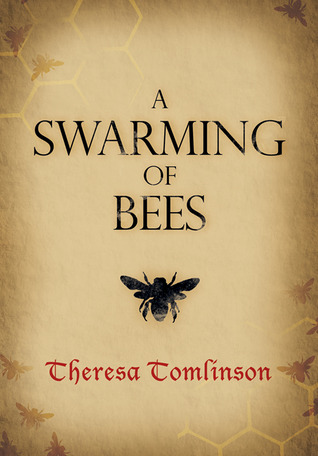
Queen of a Distant Hive, by Theresa Tomlinson, is a sequel to her earlier book, A Swarming of Bees. Both are set in and around the monastery of Whitby - called here by its old name Streonshalh - in the latter half of the seventh century. Both deal with the life and relationships of both the monastery (a double establishment with both men and women) and the community outside the sacred space, which in various ways depend on each other. As books, however, they are independent, and you don't have to have read the first in order to enjoy the second.

The great and fearful events of the age are background material to the stories, rather than their focus. So, the 664AD Synod of Whitby, with all the changes that meant for Christianity in the British Isles, formed the stage for A Swarming of Bees. Royal marriages, alliances and betrayals, and the ever-present possibilities of war and revenge, haunt Queen of a Distant Hive. But the individuals who we most closely live with and walk alongside in these books are not royalty, but the skilled workers of the community. Most notably, we join Fridgyth in her daily work as herbalist for town and monastery. But also we meet the reeve Ketel, together with tanners and spinners, cooks and craftsmen monks and nuns: in short, the men, women and children of the area. Abbess Hild is an approachable figure, not a remote one.

Looking south at Whitby from Kettle Ness
Fridgyth's mind strayed back to Brigsbeck Woods. She wondered again what could possibly link a dangerous political act like the attempted poisoning of Prince Aethelred, with a quiet young craftsman like Godric? Could the young tanner have accidentally gained knowledge that might be feared to be dangerous? Or had he, as Cynewise had suggested, been killed simply to demonstrate that whoever was behind these threats meant business?

But like any community, Streonshalh is not immune to crimes, either of quick passion or of long-nursed envy. Fridgyth, with her medical knowledge, shrewd assessment of character, and keen eye for detail, takes on the role of investigator in both books. Unravelling the culprit is no easy task - motives abound in this second book, in an age when families keep long memories of ruthless royal judgements and executions. Fridgyth herself, among others, has to acknowledge and set aside her own prejudices and preconceptions, as she threads her way through to the truth of the matter.

Queen of a Distant Hive is full of the details of everyday life, from the gathering and preparation of Fridgyth's medicines, to the occupations of the villagers outside the monastery walls, to the activities of the women attending the ageing widowed queen of Mercia. The seventh century comes alive with all this.

Cover - A Swarming of Bees
Fridgyth shook herself awake and got up hurriedly, yawning and smoothing her hair. "I must prepare a seaweed poultice for our royal visitor," she said and then, with a quiet laugh, she added, "the smell will challenge her senses, I think."
"But you must eat too," Della told her firmly, and the girl placed fresh flatbread and a hunk of goats' cheese down in front of her.
Fridgyth smiled and ate obediently, then got to work. Having pounded dried kelp into a grainy powder, she was just about to ladle it into a wooden bucket, when Della gave a small gasp...
But as well as these external trappings, we are led into something of the thinking and spirituality of the age. Christianity had become a majority religion, at least in this part of the land, and with the direct patronage of the king. However, older religious habits still exert considerable influence. For many people, both faiths coexist without too much contradiction, and appeals from the same person to both Christ and Freya might follow in rapid succession. Christianity was indeed displacing other beliefs, but had not yet reached a stage of development where it was systematically suppressing them. All this makes for a highly credible and immersive story.
Saxon princess pendant, Kirkleatham museum, Redcar
Irminburgh... reached up with shaking hands to unfasten from around her neck a small, but exquisite gold and garnet pendant shaped like a shell... together they laid the precious jewel on Cynewise's breast...
It was then that the Christians stepped back, so that the holly-bearing women could come forward. A slow, steady drumbeat began, and old though most of them were, Cynewise's women danced around the burial as the sun went down.
Fridgyth's eyes filled with tears. As a young girl she'd danced like this, and after a moment or two of hesitation she went to join them. Hild looked on approvingly, and lifted up her gnarled hands to clap in time to the rhythm of the drum; following her example many others joined in.
The drumming built to a crescendo and holly boughs were tossed into the burial pit, as the sun vanished.
Fridgyth returned breathless to Ketel's side. "Cynewise would have liked that," she said.
The book provides a very different view on this period of history, and one which I thoroughly enjoyed. Readers looking for blow-by-blow accounts of the furious battles of the age will not find them here. But if you relish the opportunity to live alongside the occupants of Streonshalh for a while, and to vicariously join in their daily lives, Queen of a Distant Hive could be for you. As and when Theresa writes another book set in seventh century Streonshalh, I will be sure to read it.

Whitby Abbey today
Whitby Abbey today


About the author:
Theresa Tomlinson spent most of her childhood in Cleveland and North Yorkshire, where her father was a vicar. On leaving school she spent two years at Hull College of Art and then went on to train as a teacher. After working as a primary school teacher in Hull, Sheffield and Manchester, she began to write stories to entertain her own children, and at the same time discovered a passion for history. After more years of hard work and research, she eventually began to get her work published and has twice been short listed for the Carnegie Medal. She now lives in Whitby, within sight of the famous abbey, which has inspired her with a fascination for the rich and exciting history of the ancient kingdom of Northumbria.

In a Young Adult novel, entitled WOLF GIRL, Theresa introduced the character of Fridgyth, a half pagan herb-wife, taken on by Abbess Hild to serve the growing community on the cliff-tops. Wishing to try her hand at writing for adults, Theresa looked again at this observant, gossip-loving character. ‘A herb-wife on a mule may go where warriors cannot – she may see what warriors cannot see and hear what warriors cannot hear.’ This resulted in the publication of A SWARMING OF BEES – a murder/mystery set in Hild’s monastery at the time of the Whitby Synod.  Readers kindly begged for another Fridgyth story and QUEEN OF A DISTANT HIVE takes the herb-wife on a further adventure. Ideas for a third book are in the very early stages of development.

About the reviewer:
Richard Abbott lives in London, England. He writes historical fantasy set in the British Isles, science fiction about our solar system in the fairly near future, and also historical fiction set in the ancient Middle East - Egypt, Syria, Canaan and Israel.

When not writing words or computer code, he enjoys spending time with family, walking, and wildlife, ideally combining all three pursuits in the English Lake District. He is the author of In a Milk and Honeyed Land, Scenes From a Life, The Flame Before Us, Far from the Spaceports, Timing - and most recently Half Sick of Shadows. He can be found at his website or blog, on Google+, Goodreads, Facebook and Twitter.

Monday, 30 October 2017

Diana talks about Anne Nevill, daughter of a Kingmaker, wife of a King.


During the short reign of Richard III and his queen Anne Nevill*, John Rous compiled a sensational genealogy for the couple, weaving fact and fiction to create an enviable family history, involving King Guthelyn, his son Locryn, the division of land under their rule and even telling how Anne's Warwick family badge of the ragged staff and bear came into being.

Whilst this was an obvious ploy to counter Dowager Queen Elizabeth's alleged ancestry which stated that she was descended from Melusine - a female spirit of fresh water in a sacred spring or river - the truth of Anne's ancestry, as expected, was far more normal. With Richard Nevill, 16th Earl of Warwick (known to history as "Kingmaker") as her father and with Anne de Beauchamp as her mother, she certainly did not need the embellishments of Rous to enhance her pedigree.

Anne was born at Warwick castle on 11 June 1456. She was the youngest of the couple's two children, her sister Isabel, born on 5th September 1451, being almost five years older. Anne was born into the wealthiest and most politically powerful family in the kingdom. Like all girls of wealthy or titled families in that era, Anne, together with her sister, were considered pawns in the political game of matrimonial diplomacy. A marriage for love was never an option. A marriage for political gain would be usually brokered at a very early age for a girl. One reason for this early 'pairing off' was to head off any opposition from the girl, her marriage being a fait accompli almost for as long as she could remember.

Anne's father married Isabel off to George, Duke of Clarence, Edward IV's younger brother, and later, when politically expedient, selected a husband for Anne. He had been at odds with the king he had 'made', Edward IV, for some time, resenting the political rise of the new queen's fairly obscure family, the Wydevilles.

In 1469, the Earl tried to put his son-in-law George on the throne, but met resistance from Parliament. After a second rebellion against King Edward failed in early 1470, he was forced to flee to France, where he allied himself with the banished House of Lancaster in 1470. With King Henry VI imprisoned in the Tower of London, in effect the Lancastrian leader was his consort, Margaret of Anjou, who was suspicious of Warwick's motives. To quell these suspicions, Anne Nevill was formally betrothed to the son of Henry VI and Margaret of Anjou, Edward of Westminster, at the Château d'Amboise in France.

They were married in Angers Cathedral, probably on 13 December 1470, making Anne Nevill the Princess of Wales. It is not known whether the marriage was ever consummated. In 1471 the young couple arrived at the South coast of England to claim Edward of Westminster's inheritance but catastrophic news greeted Anne. Just that day Edward IV's army had killed the Duke of Warwick at Barnett, effectively losing the couple their cause. Anne's mother fled to sanctuary at a nearby abbey, leaving young Anne to depend on her 17 year old husband and her Mother in Law, Margaret of Anjou, whose husband, the deposed king Henry VI was imprisoned in the tower.

Margaret headed North, raising troops in a desperate attempt to gain support and to see her husband back on the throne. Edward dashed to intercept them at Tewkesbury and there followed one of the bloodiest and least chivalric wars of the period. When Margaret's Lancastrian army broke and fled back to the abbey, Edward broke sanctuary and beheaded the refugees.. The Prince of Wales was among the dead that day and was buried beneath the Choir of the Abbey.

Anne and Margaret of Anjou were taken into custody the following day. Transported to London, Margaret was confined to the Tower and Anne given in to the custody of the Duke of Clarence and her sister, the Duchess.

What happened next is rather unclear, but Croyland Chronicle states that, "Clarence caused the damsel (Anne) to be concealed in order that it might not be known by his Brother where she was; as he was afraid of a division of the Earl's property, which he wished to come to himself alone in right of his wife, and not be obliged to share it with any other person." In 
Paul Murray Kendall's, Richard III, 1955, Richard, "discovered the Young lady in the city of London disguised in the habit of a cookmaid; upon which he had her removed to the sanctuary of St. Martin's".  It is probable that she escaped and ran away to sanctuary at St Martin's

As stated before, Anne has traditionally been painted as a pawn in the political game, one of the victims of history, and certainly it seems that her first marriage to Edward of Westminster was a politically motivated move on behalf of her father, but her second marriage to Richard of Gloucester, youngest brother to Edward IV and brother to her sister's husband George of Clarence, may have been a calculated move on her part. The marriage was certainly advantageous to them both, Richard being rewarded with enormous land holdings in the North including her late father's castle and land at Middleham. 

Whilst some of Anne's childhood was spent at, Middleham Castle, despite Richard of Gloucester attending his knighthood training at the castle, there is no record of them having met and fallen in love as some romance writers would like us to believe. Anne's life as a privileged daughter and Richard's as a knight in training would tread very different paths within the same vicinity. Far from being in love, or being a pawn, Anne made a hard headed and pragmatic decision to marry Richard. 

Anne provided Richard with an heir, Edward of Middleham being born sometime between 1473 and 1476. He was described in the The Croyland Chronicle as ‘this only son, on whom, through so many solemn oaths, the hopes of the royal succession rested.’

After the death of Edward IV, having not achieved the status of queen through her marriage to her first husband, it not be a huge leap of imagination to consider her persuading Richard to grasp the throne. Pressure from Anne would help explain the great mystery of Richard of Gloucester's seeming U-turn, from being his brother Edward's most loyal supporter to someone who moved against his brother's allies with almost indecent speed, executing any that got in his way.

Anne's actions at this point are telling. She did not prepare to travel south for the coronation of Edward IV's son and did not commission sumptuous clothes for the occasion, suggesting that she knew the coronation would not take place. History often has Anne being passive or disapproving of Richard's crown heist, but there is no evidence of this and it is far more likely that having already brokered a favourable marriage for herself, she would not only be in favour, but would be the driving force behind the take over and put her in a position to avenge her father.

On July 6th 1483 at Westminster Abbey Richard was crowned as King and Anne as Queen.

It is not known whether their son, Edward of Middleham was present.  We know that he spent his life at Middleham castle and his governess was Anne Idley but little else can be said for sure about him except the tragic news that in April 1484, whilst Anne and Richard were at Nottingham, Edward of Middleham died. The parents went almost mad with grief.

Before too long, with Anne's health declining, Richard's thoughts turned to the future. His Queen would be unlikely to provide another heir and the following winter he was advised not to sleep with her.

On March 6th 1485, coincidentally following an eclipse of the sun, Anne died aged just 28, slipping from history as if she was not visible and being buried in an unmarked grave in Westminster Abbey; a quiet end to a dramatic life.

Anne was married to one prince, widowed and then married to a Duke who became a king; she changed sides in the cousins war not just once, but twice; she escaped from house arrest; forged her own future and claimed her inheritance, fulfilling the dreams of her father the Kingmaker, by becoming Queen of England. Her downfall was something she could not control - having poor health and only one child.


Sources:

Croyland Chronical
P M Kendall
K L Clark
Professor A Pollard
A Licence
L Hilton
D Grummit
M Hicks

Further reading: 

The Nevills Of Middleham, K L Clark

Anne Neville: Richard III's Tragic Queen, A Licence


* Throughout the blog I have adopted the spelling of Nevill used by leading Nevill historian and author, K L Clark

© Diana Milne October 2017

Lisl Reviews The Popish Midwife by Annelisa Christensen

The Popish Midwife:
A Tale of High Treason, Prejudice and Betrayal

by Annelisa Christensen

Recipient of the Readers' Favorite and Bronze Award in the Christian Historical Fiction category of Readers' Favorite International Book Awards 2017

Please see below for information about how to win a FREE Kindle copy of 
The Popish Midwife 


There is a reality to my co-existence with seventeenth-century London: I’m not all that well versed in it. The little information stuffed into my head is probably what most people already know, affairs such as Charles I’s execution; rise of the Commonwealth and Protectorate; and return of Charles II, previously driven into exile following his father’s death in 1649.

Annelisa Christensen’s The Popish Midwife is set against the backdrop of this era’s heir: nearly twenty years into the Restoration and twelve following the Great Fire of 1666. Cromwell is long dead, but his vehement and divisive anti-Catholic bias endures, a lesson our popish protagonist learns after she is beaten in the streets by an entire thuggish family, solely for her religious beliefs.

Inspired by papers the author purchased merely for the thrill of holding 300-year-old documents, and which turned out to be from the historical trial of Elizabeth Cellier, Christensen pieces together true events of this era, when Catholicism was suspect and one Titus Oates speaks of a plot perpetrated by Catholics to remove the Protestant king and replace him with his younger—and Catholic—brother. Power had been shifting back and forth between the two religions since before Elizabeth I, though anti-Catholic sentiment prevailed with the Gunpowder Plot in 1605. This must have weighed heavily on Cellier’s mind upon her arrest as party to the conspiracy.

Before her 1680 trial, Elizabeth Cellier, a midwife devoted to the health and safety of others, fervently follows news and the welfare of those unjustly incarcerated—often her co-religionionists. As a frequent visitor to Newgate Prison, Cellier dispenses assistance in the form of sustenance as well as emotional and monetary support. Here she comes into contact with Captain Willoughby, a debtor inmate who provides her information in aid of her petition to the king regarding abuse of prisoners. Her involvement in what we know today as the Popish Plot endangers her family as she battles injustice on top of religious bigotry.

The novel opens with a strong and succinct preface providing background on the preceding years, then moves into Cellier’s first-person account, where Christensen succeeds marvelously with Cellier’s sketch of her individual and family history, and where that places her in society. The author’s point of view choice allows readers to more intensely relate to the protagonist and her work, indeed why she does it. This increases the overall narrative’s strength, providing a foundation for the midwife's reasoning as to why she ignores her beloved husband’s pleas about the peril she places them all in.

Christensen also has a way with dialogue as well as her prose, as her management of it surrounds readers with a real sense of the time. More modern than much of the historical fiction we tend to read, it nevertheless retains an aura of formality with its hierarchal speech patterns and conduct.

Lady Powys was undertaking to arrange a marital alliance between her nephew and the daughter of her close acquaintance, Lord Peterborough. She designed to appeal to him to agree a meeting with me that I could introduce him to the Captain, with the further hope that Lord Peterborough would then in turn introduce us to the Duke of York. The beauty of this meeting was that, not only had Lord Peterborough served beneath the Duke with the war in the Netherlands, but he had also set up, and defeated objections to, the marriage between the Duke and his chosen wife, Mary of Modena. The Duke was accordingly indebted to him and was, as hoped, prepared to make allowances for our using him to reach his brother.

In other instances, such as during and after the afore-mentioned assault, the author’s atmospheric language immerses us within the ways of the time, not unlike the manner in which a word such as cobblestone might, even when characters engage in similar acts we still ordinarily perform or encounter, albeit with modified character. Falling into the grimy water (reminiscent of waste disposal discussed in her preface), the “comforting crackle of the fire,” coins jangling into men’s palms as payment for a kind service provided, and the “clunking of the door latch” into place all reach into Elizabeth’s sensory experience of her time in a moment when she, like us, is removed from full participation of it.

Perhaps more than any other characteristic is Christensen’s ability to really touch an audience with this story of Elizabeth Cellier, fighting inequity as she endeavors to keep her family safe and intact. Her descriptions are vivid and jolting, and Cellier’s honest self-reflections are portrayed in such a way that we feel her keen embarrassment paired with upright defense of self against mob rule. The novel’s pacing—not quite as fast as some—not only places us in the moments, but also enables our ongoing feel of them as the characters might experience. Cellier isn’t a braggart, not by a long shot, yet we see her through her own eyes and recognize her courageous stand against brutality, as well as her reminder that freedom to opine never existed to protect popular positions. This is also acted out in dramatic scenes in which Cellier—Catholic, woman, married to a foreigner—speaks up, bold and daring. She is not what today’s feminists would envision, nor should she be, and Christensen stays true to the era.

It bears repeating that The Popish Midwife immerses us in the time, an especially impressive feat for those of us who tend to wander through other eras or, as in my own case, aren’t really as familiar with Charles II’s London as we might be. As I traversed the pages, I felt myself wandering the rainy streets, the shadows pulling around me as I avoid waste and mud in the streets, feel the still re-awakening of the people from a succession of horrific events, this newness tainted by fear and suspicion that the torture of Protestants in Mediterranean countries might reach their own shores.

The forbidding darkness of mood is periodically pierced by references to color, such as the bright red of Cellier’s distinctive and identifying midwife’s cape. Shown on the novel’s cover, it stands in stark contrast to the dark shade of the floor, kitchen implements, even Cellier’s clothes beneath it. There is a golden hue in the background, reminiscent of a light in darkness, though still in opposition to the vivid material of the cloak, which at one point Cellier loses, signaling both her fight against discrimination and the choices she must make as to how she will proceed: remain in the shadows or embrace her identity utilizing the internal as opposed to material?

From the lead up to “’Tis a plot, Madam, of the direst sort[,]” all the way through Cellier’s battles and acceptance of what she has done and plans for her future, Christensen’s lovely style of storytelling, as if Cellier is talking directly to us, captures the imagination and leads us through a tale of brutality and betrayal, individual and collective upheaval, treason and courage. To be able to reach deep into history and find one of the more obscure figures from it, as the author did on that auction day, and animate her in literary style, particularly for readers unfamiliar with the era, is no mean feat, and readers should hope Christensen never tires of the scrape, chaos and shuffle of the auction houses any time soon. 


To get in on the contest and your chance to win a FREE Kindle copy of The Popish Midwife, simply comment below OR at our Facebook page here. 

Drawing will be held November 13


About the author ...


Annelisa Christensen is a debut novelist, bringing history to life.

One day, several years ago, Annelisa won some pages of a seventeenth-century trial in an auction, merely to hold a piece of a 300-year-old book. That purchase changed her life. The defendant in the trial captivated her. The defendant's story demanded to be told. Annelisa's debut novel, The Popish Midwife, is based closely on the true story of Elizabeth Cellier, an extraordinary seventeenth-century midwife.

Annelisa's research revealed Cellier to be known in three areas of interest - for writing books, being caught in the Popish Plot and as a forward-thinking midwife - but her story was all in pieces and scattered. The author found the story inspirational and wanted to link it all together and share it with people of today. The result is a fantastic and exciting true story, which will keep you wanting to know how it ends.

Annelisa Christensen is also the author of A-Z Monsters (Not) for Bed, The Navigator, Pink River and Eve. You can follow her website, Script Alchemy, sign up for her newsletter, and keep up with news and views at Twitter and Facebook. 

*********

Author image courtesy Annelisa Christensen

Sunday, 29 October 2017

Shakespeare, Riots, Refugees and Sir Thomas More

Shakespeare's handwriting in the Book of Sir Thomas Moore


Nothing changes. Immigration and refugees were as unwelcome in the time of Shakespeare as they are today. 


The above is part of the only surviving script to contain Shakespeare's writing. Three pages of the manuscript, ff. 8r, 8v and 9r, have been positively identified as Shakespeare’s, based on handwriting, spelling, vocabulary and the ideas and imagery expressed.

The play is about the life of Sir Thomas More, the Tudor polymath and lawyer who was put to death for refusing to acknowledge Henry VIII as Supreme Head of the Church in England. The work was initially written by Anthony Munday between 1596 and 1601, but The Master of the Revels, Edmund Tilney, whose role included stage censorship, refused to allow Sir Thomas More to be performed, most probably because he was worried that the play’s depiction of riots would provoke civil unrest on the streets of London.

After the Queen’s death in 1603, Shakespeare was brought in to revise the script, along with three other playwrights. Shakespeare’s additions include 147 lines in the middle of the action, in which More is called on to address an anti-immigration riot on the streets of London. 


He delivers a gripping speech to the aggressive mob, who are baying for so-called ‘strangers’ to be banished:

"You’ll put down strangers,
Kill them, cut their throats, possess their houses,
And lead the majesty of law in lyam
To slip him like a hound; alas, alas, say now the King,
As he is clement if th’offender mourn,
Should so much come too short of your great trespass
As but to banish you: whither would you go?
What country, by the nature of your error,
Should give you harbour? Go you to France or Flanders,
To any German province, Spain or Portugal,
Nay, anywhere that not adheres to England,
Why, you must needs be strangers, would you be pleas’d
To find a nation of such barbarous temper
That breaking out in hideous violence
Would not afford you an abode on earth.
Whet their detested knives against your throats,
Spurn you like dogs, and like as if that God
Owed not nor made not you, not that the elements
Were not all appropriate to your comforts,
But charter’d unto them? What would you think
To be us’d thus? This is the strangers’ case
And this your mountainish inhumanity."


It is no major stretch of imagination to see these words being addressed at the riots in Charlottesville, in Virginia USA in August 2017; the Dover riots in England in February 2016; the Pretoria riots in South Africa in February 2017; in Stockholm; in Calais ... I could go on... and on...

More relies on human empathy to make his point: if the rioters were suddenly banished to a foreign land, they would become ‘wretched strangers’ too, and equally vulnerable to attack. In an article under the name of the British Library, critic Jonathan Bate is cited as saying: ‘More asks the on-stage crowd, and by extension the theatre audience, to imagine what it would be like to be an asylum-seeker undergoing forced repatriation.’ 


Though proving that ''More’s'' words were indeed written by Shakespeare is no sinecure, in their empathy for the plight of the alienated and dispossessed they seem to show a similarity to the insights of great dramas of race such as The Merchant of Venice and Othello. Whoever wrote them had a fine understanding for the way rhetoric can sway a crowd and also a sharp eye for the troubled relationship between ethnic minorities and majorities.

From various sources including: 

© Diana Milne 22/10/17