Saturday, 15 April 2017

Diana talks to C W Lovatt

Today I welcome C. W. Lovatt to *Diana Talks... *

C. W. (Chuck) Lovatt, is the author of the

Charlie Smithers Collection;

And then it Rained and currently the first two parts in the on going Josiah Stubb series, the second one of which, the excellent

Josiah Stubb: Interim,


was released to great excitement on 14th April, by Wild Wolf Publishing.


The Hi Chuck. It is a real pleasure to talk to you here. Not only do I consider you a friend, I consider you an exceptionally talented writer. I am delighted to have the opportunity to see  a little of what goes on inside that formidably intelligent brain of yours ...

Are you sitting comfortably.

No??

Well, never mind... (sigh) ... let's just get on with the talk ...

First things first I am sure there is a question that you have always longed to be asked. Now is the chance. Ask your own question and answer it!

My own question, eh? Hmm, that is different! Let’s see, I’m going to go with ‘what’s it like being a writer?’

Well, it’s not as glamorous as I thought it would be, but remember I’ve dreamed of becoming a writer almost as soon as I learned how to read. As a consequence, there’s been plenty of time for that dream to grow to surpass all reason. For instance, I was going to own a tropical island and live in a house that opened up like a clam shell – you know, glamorous stuff like that. It’s laughable now, even risible, but that dream stood me in good stead over the years, through some really bleak times. When others (ie sane people) had nothing at all, I would always have that dream to sustain me. So when that long awaited first royalty cheque arrived and that dream vanished with an almost audible ‘pop,’ I couldn’t really begrudge its leaving, because it had already served me so well.

If your latest book, “Interim,” the second book of the Josiah Stubb trilogy, was adapted into a TV show or a film, who would you like to play the lead role?

I had to get some help with this one as I’m not as up on film actors as I used to be. A friend suggested Tom Hardy, so let’s go with him to play Josiah Stubb.

What made you choose this genre?

Historical Fiction appeals to me, so I figured that, if I’m going to sit down and write something as lengthy as a novel – to dedicate so much of myself, pouring my heart and guts out onto the page - it had better be about something that I’m interested in.

How do you get ideas for plots and characters?

Plots and characters are what make writing such a joy. Plots are usually the product of a ‘eureka’ moment I often have when something triggers the kernel of an idea. As far as characters go, I’ve never written any with a preconceived idea in mind, just as I’ve never had a preconceived idea about meeting a person. We introduce ourselves as would anyone else, and get to know one another over the course of time.

If, as a one off, (and you could guarantee publication!)  you could write anything you wanted, is there another genre you would love to work with and do you already have a budding plot line in mind?

I began my career writing short stories, with some success, winning awards and so on. During that time there can’t have been too many genres that I didn’t explore. In that light, I’m not afraid of other genres, in fact we’re old friends, and many examples can be found in in an eclectic anthology I’m very proud of entitled “And Then It Rained.”  (Note from Diana: If "And Then It Rained" is not my favourite book of all time, it certainly is there in the top three. Heck! What am I saying?? Thinking of the title story again and others that I love with a passion bordering on insanity for a story, yep, it has just been promoted to definitely my favourite book of all time!)

Was becoming a writer a conscious decision or something that you drifted into (or even something so compelling that it could not be denied?) How old were you when you first started to write seriously.

I would have to say that it was compelling. Why, I’ve no idea, it’s just something that I’ve come to accept over time. I wrote my first novel, longhand, back in my mid to late twenties, and you have to be serious to tackle a project like that.

Marmite? Love it or hate it?
Erm...it's an acquired taste...

Do you have any rituals and routines when writing? Your favourite cup for example or ‘that’ piece of music...??

I suppose my greatest ritual is to try to clear my desk before starting a new project. I need to keep distractions to a minimum, so that finding that ‘centre’ is more achievable. After that, it’s pretty much whatever works. I’ve written with the music on and with it off, in my office, in front of the television, out on my deck at night, or in the morning (summer and winter,) and out under the giant cottonwoods in my yard. Each novel has had its own routine, and I’m rather curious what it will be for my next one. Really, I’m a bit like a cat before taking a nap, turning and turning, before finally finding the place where I’m most comfortable.
(Note from Diana: Hmm. Clear? Desk? Clear desk?  Nope. I don't understand those words put together in that format!)

I promise I won’t tell them the answer to this, but when you are writing, who is more important, your family or your characters?

That’s a very good question and I’m glad you asked it! Next question, please…
((Laughing. Loudly!!))

Other than writing full time, what would be your dream job?

I always wanted to be the next Neal Young.
(Note from Diana: Well, you can't. End of.)

Coffee or tea? Red or white?

Ooo, herbal tea, please (don’t judge,) and red.

How much of your work is planned before you start? Do you have a full draft or let it find its way?

I don’t have a plan, and that includes not having a plan to not having a plan. Sometimes I’ll write at least a partial outline, and sometimes I won’t write one at all. It depends on the project and (I’m coming to suspect) the phase of the moon.  😂

If you had free choice over the font your book is printed in, what font/fonts would you choose?

Trust YOU to ask this one! Okay then, let’s see: so far Times New Roman is working for me, but you never know what the future holds. What I can tell you is that I’m not a fan of Helvetica.
(Everyone hates Helvetica! Printers hated Helvetica. It was the 'new big thing and everyone wanted it', but it was expensive and hard to get hold of.)

Imagine that you could get hold of any original source document. What would it be?

The note that Lord Raglan scribbled to Lord Lucan, that caused the The Charge of the Light Brigade.

Have any of your characters ever shocked you and gone off on their own adventure leaving you scratching your head??? If so how did you cope with that!?

Oh those characters! When haven’t they shocked me? But the thing to remember about writing is that it’s not about you, it’s about the story – always the story – and the thing to remember about the story is that it’s the characters who are telling it, the writer is merely the chronicler. So in answer to your question I pretty much give them their head, and try to keep up.

How much research do you do and do you ever go on research trips?

Writing Historical Fiction requires extensive research…that is if you don’t want to look like an absolute fool. Nothing drives me around the bend more than to read such a work and find that it is riddled with inaccuracies. Further, I feel strongly that a work of Historical Fiction should be seen as an alternate reference book – something that takes those dry old textbooks, that we’ve all had to endure in school, and makes them interesting by weaving a tale through the facts.

As for research trips, I often travel to where the story is taking place, but not always. For the first book of the Josiah Stubb trilogy I went to see the fortress of Louisbourg for myself, and then on to St. John’s Newfoundland. For the second and third books, I travelled to Quebec City, and then drove the length of the Gaspé Peninsula. In 2015 I flew down to Australia and drove across the Nullarbor Plain while researching for “Adventures Downunder” – the latest in the Charlie Smithers Collection.

Fiction authors have to contend with real characters invading our stories. Are there any ‘real’ characters you have been tempted to prematurely kill off or ignore because you just don’t like them or they spoil the plot?

Good lord no! If they spoil the plot, then it’s the plot that’s at fault. Create another one, by all means, but if you value your credibility, don’t alter the facts by one iota.

Are you prepared to go away from the known facts for the sake of the story and if so how do you get around this?

See above. Blasphemy!

Do you find that the lines between fact and fiction sometimes become blurred?

I certainly hope so; it’s my business to do just that.

Have you ever totally hated or fallen in love with one of your characters?
Loiyan, my first leading lady, I loved her desperately.

(Note from Diana: We, the readers, could tell the depth of feeling with which this wonderful woman was written. It shone throughout the pages of not just the first book, but the second and third. I will never forget her plaintive cry of Charleeeee.)


What do you enjoy reading for pleasure?
Anything, as long as it’s well written.

What drink would you recommend drinking whilst reading your latest book?

A good stiff tot of something distilled. The action gets a bit intense at times.

Last but not least... favourite author?

My idol, George MacDonald Fraser, the author of the Flashman books.

Thank you, Chuck. That was a wonderful talk. On Wednesday 19th April, Rob Bayliss is reviewing Interim, here on the blog.
 
You can read C W Lovatt's blog and find out more about him at Story River
He lives in Canada, where it is cold, and is the self-appointed Writer-In-Residence of Carroll, Manitoba, (population +/- 20).

This tree was upright before being leaned on by our author! Vandal!!


© Diana Milne January 2017 © C W Lovatt April 2017


Friday, 14 April 2017

Josiah Stubb: Interim by CW Lovatt - Reviewed by Rob Bayliss

The author is kindly offering an e-format copy of this brilliant book for the draw. Be sure to comment below or on the Facebook page to be in a chance of winning. To be certain of a pleasurable read you can download from Amazon .


A glance at Ezra’s papers showed that he was well thought of by his commander, experienced in woodcraft, and tracking besides. All in all, a very valuable man.

“These must be presented to Captain Hume,” I told him, “but in the meantime, allow me to take the opportunity to welcome you into our fold.”

Ezra gestured with his chin. “Is that your captain - the one trying to find the shore through the wrong end of that telescope?” I nodded and his shoulders slumped dramatically. “Ain’t this just gonna be a bundle o’ laughs?”


When we first met Josiah Stubb his attempts to escape his abusive upbringing in the gutter of St Johns and enter into polite society has been thwarted; not to mention being denied any future with Elizabeth, the love of his life. Small wonder then, that with the encouragement of the perverse Sergeant Stockingsdale, he would take the King’s Shilling and seek solace in the comradeship of the 51st Grenadiers.

The French and Indian Wars are burning apace as France and Britain vie for dominance. Eager to end the threat to their American colonies once and for all, Britain elects to destroy Acadia – French Canada. So it is that General Wolfe takes the French fortress of Louisburg that guards the mouth of the St Lawrence River, the seaway to French Canada. The 51st serve under Wolfe in this undertaking and Private Stubb proves himself as a capable soldier even thwarting an attempt on the general’s life by a desperate Frenchman. Not everything goes to plan however as Josiah’s best friend, Daniel Hawthorn, deserts after killing a bullying officer.


British Grenadiers at the time of the Siege of Louisburg.


With Louisburg now taken we catch up with the newly promoted Lieutenant Stubb in Interim.

After a successful campaign the bulk of the forces return to St Johns for some much needed rest and recuperation prior to advancing into Canada proper. But not so all the Grenadiers, for General Wolfe has need of them. With French resistance now centred on Quebec, the British to strangle any economic benefit that they may gain from Acadia and secure the entrance to the continental French America by mopping up any resistance from the various fishing villages along the coast.

But it is a more emotive mission that a company of the 51st is ordered to embark upon. Word reaches the British high command that French commander of irregulars, Lieutenant Francois Lalande, has not only managed to escape Louisburg prior to its fall , but also been seen in the vicinity. Lalande is implicated in the massacre of men, women and children by Indians allied to the French after the surrender of Fort William Henry.

Interim moves us along though different points of view; most notably the main protagonist of course but also that of the deserter Daniel Hawthorn. We are also introduced to the native peoples of Canada– the Micmac Indians, through Madame Allard, a native Canadian who was married to a French Canadian. The Micmac are an Indian nation that has long been allied with France and their warriors are all too eager to win scalps.

The North American forests are a fascinating and particularly savage theatre of the Seven Years War. The forests are claustrophobic and suffocating, each tree may conceal an ambush and Mr Lovatt puts the reader on edge. As the redcoats advance, at any moment a war whoop may signal a savage attack, with the crack of muskets and the swinging of tomahawks. It’s one of those books you daren’t put down, just in case something terrible happens.

Brave warriors the Micmac are, but through the eyes of Madame Allard, also known as Rainbow, we see a people trying to adjust to a new reality and the beginnings of the Canada we now know.


Micmacs and French traders


The author, with his unique brand of both humour, creates some astounding characters, each with their own motivation and hidden depths. There is Sergeant Stockingsdale, as warped as ever but still brave and loyal. Lalande is obsessed with saving the Canada he loves but is willing to forget his sense of  honour to achieve it. There is Stubb’s immediate superior Captain Hume; a thoroughly unpleasant opponent to the capable Stubb; the lives of his men mere stepping stones on his path to glory, his hatred for the down-at-heel (but popular officer) Stubb is palpable.

Interim this book may be but you wouldn’t know it, as it’s full of action; bloody battles are fought, love is found in a savage land and in the background, a character from Stubb’s past seeks him out. From Louisburg through savage forests the ultimate goal of Quebec beckons and a debt of blood remains to be paid.

Bravo Mr Lovatt, Josiah Stubb is fast becoming one of my favourite literary characters.


About the author

CW Lovatt is the award winning author of the best-selling Charlie Smithers collection, the short story anthology "And Then It Rained," and the critically acclaimed "Josiah Stubb; The Siege of Louisburg." "Interim" is the second book in the Josiah Stubb trilogy.


Rob Bayliss is a reviewer at The Review and is currently writing his own fantasy series. Information on his writing projects can be found at Flint & Steel, Fire & Shadow.


Wednesday, 12 April 2017

Where are they now... Margaret Cavendish - contributed by Richard Abbott

If I asked you to name some early science fiction writers, I'm guessing you'd think of Jules Verne or HG Wells, who established in the 19th and early 20th centuries so many of the conventions and themes of the genre.

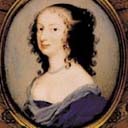
Portrait of Margaret Cavendish (Wiki)
You probably wouldn't think of going back to 1666, and Margaret Cavendish, Duchess of Newcastle. But in fact, in the same year that the Plague was raging, and London experienced the Great Fire - only some 50 years after the King James Bible was translated, and Shakespeare was writing plays - Margaret Cavendish published her novel The Description of a New World, Called The Blazing-World. It has been called "the only known work of utopian fiction by a woman in the 17th century, as well as one of the earliest examples of what we now call 'science fiction' — although it is also a romance, an adventure story, and even autobiography".

Margaret Lucas was born in 1623, the youngest of eight children, and had a lively childhood, partly spent with Queen Henrietta Maria in exile in France. In 1645 she married William Cavendish, 1st Duke of Newcastle-upon-Tyne, who was a staunch royalist and reasonably successful military commander (so had had a difficult few years until the Restoration of Charles II). He was an enthusiastic patron of the arts and sciences, which is perhaps why he and Margaret formed a happy couple - her lively and wide-ranging intellect would undoubtedly have attracted his attention. He was devastated by her death in 1673, and died just three years later.

Cover - The Blazing World (Wiki)
She was not only an author of fiction, but also wrote over a dozen original works in diverse fields - poetry and plays, as well as a number of early scientific and philosophical treatises. The Blazing World was routinely distributed with her non-fiction Observations upon Experimental Philosophy, thus combining imaginative and scientific discourse. She was the first woman to attend meetings of the Royal Society, and engaged in debate with leading figures of the time such as Descartes, Hobbes, and Boyle. She was not shy about disagreeing with the thinking of the age when she felt it was in error, a habit which brought her criticism and conflict.

The Blazing World is, by modern standards, a slightly odd book. The protagonist, a lady whose name we never learn, is abducted by an impatient suitor, but her virtue is preserved by divine intervention which diverts the ship towards the north pole where the wickedly motivated men all perish. The lady herself is rescued by creatures which are man-like but with animal qualities - once in the Blazing World proper, she will meet Bear-men, Fox-men, Fly-men, Bird-men, Fish-men and so on. Her rescuers take her through a narrow passageway which connects our world with The Blazing World. Since there is only one such passage, and the celestial view in her new home is entirely different, a modern author might well describe this as a wormhole connection rather like in Stargate.

The Emperor of this world is smitten with her, and after a very short interval the two marry. There is then a long passage in which the new Empress quizzes the various theoretical and experimental factions in her new home - clearly satirising the state of affairs in the Royal Society, though many of the barbs evade recognition by today's reader. Part of this section describes the creation of a array of miniature universes, each intending to explore some particular theme, and most of which are unstable and collapse again because of their own inconsistencies. It sounds very like an early exploration of what we now call the Anthropic Principle - the laws of the universe are constrained by the fact that intelligent life has arisen in it.

Margaret Cavendish (née Lucas),
Duchess of Newcastle upon Tyne,
by Pieter Louis van Schuppen,
after Abraham Diepenbeeck,
line engraving,
late 17th century,
NPG D30185,
© National Portrait Gallery, London
In a way that would now be considered rather shockingly indulgent, she then as author brings herself in as a character - a sort of muse and scribe to the Empress. The two become exceedingly close friends. We are assured that the relationship is entirely platonic, but the degree of closeness far exceeds anything else in the book except that of Margaret to her husband.

The second half of the book describes a kind of interplanetary war - the Empress learns that her original native country is under attack by a large alliance, and decides her duty is to help. So she devises a kind of blitzkrieg strategy including air power (the Bird-men) and submarine warfare (the Fish-men) to overwhelm the assembled enemies. The combination is unstoppable, and it is clear that if she wanted, she could assume control of our world as well. Being of a restrained disposition she does not do this, but withdraws again once victory is assured.

The book closes with William and Margaret gaining inspiration for certain changes to their own estates on the basis of what they have seen in the alternative world, and a commitment to ongoing friendship and communion between the two worlds.

Margaret Cavendish and her writing went off everybody's radar for many years, with the rise of the true novel. However, after a considerable time of obscurity, she has started to resurface. In 1997 the Margaret Cavendish Society was formed to encourage academic study of her work. The blend of feminism, science, philosophy, fantasy and interpersonal relationships has found a resonance in our own age.

Margaret is quite open about her purpose in writing the book, and her pride in being its creator: "...you may perceive, that my ambition is not onely to be Empress, but Authoress of a whole World... in the formation of those worlds, I take more delight and glory, than ever Alexander or Cesar did in conquering this terrestrial world... concerning the Philosophical-world, I am Empress of it my self; and as for the Blazing-World, it having an Empress already, who rules it with great Wisdom and Conduct, which Empress is my dear Platonick Friend; I shall never prove so unjust, treacherous, and unworthy to her, as to disturb her Government, much less to depose her from her Imperial Throne, for the sake of any other, but rather chuse to create another World for another Friend."

Stirring words, indeed, and ones which many an author would identify with!

About the author:
Richard Abbott is one of the reviewers at The Review, and lives in London, England. He writes science fiction about our solar system in the fairly near future, and also historical fiction set in the ancient Middle East - Egypt, Syria, Canaan and Israel. His latest book is an excursion into historical fantasy,

When not writing words or computer code, he enjoys spending time with family, walking, and wildlife, ideally combining all three pursuits in the English Lake District. He is the author of In a Milk and Honeyed Land, Scenes From a Life, The Flame Before Us - Far from the Spaceports. and Timing - and most recently Half Sick of Shadows. He can be found at his website or blog, on Google+, Goodreads, Facebook and Twitter.

Monday, 10 April 2017

Josiah Stubb: The Siege of Louisbouurg, by CW Lovatt; reviewed by Rob Bayliss

On April 14th the second in this outstanding trilogy is released. This review of the first book is to introduce you to the story and concept, and let you get a chance to get to know Josiah Stubb.

You can preorder the book here at Amazon.

Trust me. It is worth it!


That solid mass of men appeard unstoppable, and indeed, there was many a nervous glance between us, as we knew that our numbers would be insufficent for the task; still we proceeded with all possible haste through the thick undergrowth when the order for double-time was given, for the enemy's goal could not be more clear.

We are introduced to Josiah Stubb and his comrades of the 51st regiment of Grenadiers as they prepare to make a hazardous amphibious landing. It is 1758 and we are in the midst of the Seven Years' War, a global conflict, now that the major powers have colonial interests, lasting from 1754 until 1763. In Anglophone North America the struggle is known as the French and Indian War and had started two years previously.


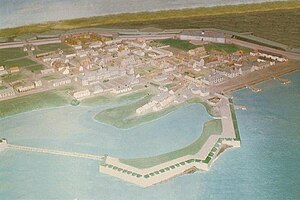
The French fortress of Louisbourg was, up to 1758, the most expensive stronghold in North America. With its harbour, it dominated the approaches to the Gulf of St. Lawrence and the heartland of Arcadia and New France while its naval squadron was a constant threat to British maritime supply lines.


Thus Josiah Stubb finds himself in boat striving for shore with his best friend Daniel Hawthorne on one side and the perverse and mannerless Ben Stokingdale on the other.  Before them the muskets and cannon of the French open fire. Their fire is so intense that the attack is almost called off until a sheltered, undefended, cove is discovered.


Josiah and his comrades find themselves in the first wave, stealth fully creating a perimeter while the rest of the attacking units land. Josiah is ordered to watch the unsuspecting enemy who think they have repelled the British. Josiah’s mind drifts off recalling the events that have brought him to this juncture: his humble origins as a son of a whore, his abused upbringing in St. Johns and the love of his life, Elizabeth. Daydreaming, he allows the enemy to gain knowledge of the tenuous British defences; his punishable laxness is noted by his superior, the popular Captain Beaumont.  Soon Monsieur is launching a ferocious counterattack on the British position. In the ensuing struggle young Stubb and his comrades give a good account of themselves and, with British reinforcements arriving, the French are forced back, yielding their outer defences.  The night after the battle Josiah is summoned to the Captain to face judgement for his misdemeanour; his history comes back to haunt him in a most terrible and humiliating way.


It is during lulls in the fighting that Josiah is able to reminisce and we learn of his abusive upbringing, by his mother and her plans for him. She does however ensure that he is literate and Josiah is determined on bettering his future and uses his skills to this end. It is then that he falls in love with Elizabeth. They are forced apart by circumstance and the machinations of others, but can he win her back?

These reminisce scenes are cleverly woven into the novel's progression by the author, so in effect we have two timelines to the story running parallel. It could almost be said the book ends at the beginning! The dialogue has C18th century accents running through it; the down at heel Stockingdale sounds exactly as the reader would expect!


Mr. Lovatt has certainly done some meticulous research into this siege, which proved to be one of the most decisive engagements of the war. The military engagements are well described and as a reader I was there as well, desperately trying to load my musket as the French advanced. I enjoyed the little details, such as having to clean the musket of powder residue, and the description of the siege lines and the effort taken in digging them.
 
The author's prose is brilliantly descriptive; we are learning of this crucial siege, but at the same time the character of Josiah is fleshed out, complete with his dreams and his demons. Josiah Stubb is a believable character; the reader feels for his attempt to come to terms with his abusive past and tortured present. He is a true child of his time, as the Age of Reason begins to change the world around him and he grasps the opportunity to better himself, driven by his love of his soul mate, Elizabeth, although he feels his romance is doomed from the onset. In the background we are viewing the birthing pains of modern Canada and see the shooting star of General Wolfe beginning to burn bright.


Only at the close  of the novel do we really learn how he first met his comrades and even who his father may be. Josiah Stubb could easily be a stand-alone book; however all is set up quite nicely for a sequel. I sincerely hope that is the case as I thoroughly enjoyed this book, which I found to be a
real page turner.


C.W. Lovatt lives in Manitoba, Canada. Josiah Stubb: The Siege of Louisbourg is his third novel. It is available at Amazon.


This review was written by Rob Bayliss. Rob is currently working on his Flint and Steel, Fire and Shadow fantasy series. Part one, The Sun Shard is available at Amazon. You can find out more about him here

Saturday, 8 April 2017

Diana talks to E. J. Bancesco


Author’s interview – 2017. Diana talks to...E. J. Bancesco, author of Adrift and The Scarf


Hello, it is lovely to have this chance to chat with you. Let's begin ...

First things first I am sure there is a question that you have always longed to be asked. Now is the chance. Ask your own question and answer it!

Q: Why do we write? Haven’t we learned how hard and unrewarding an undertaking this is?

A: I don’t know why. Perhaps, we don’t care about the pain and the ensuing disillusions, and all we’re after is the elation of having created an universe of our own.

If your latest book The Scarf was adapted into a TV show or a film, who would you like to play the lead role?

Maybe someone like Logan Lerman—but younger—who is both cocky and vulnerable, brave and fragile, and has a physiognomy that betrays his emotions easily.

What made you choose this genre?

I’m not sure I chose literary fiction. That I write within this genre is because this is what I’ve always gravitated toward, as a reader.

How do you get ideas for plots and characters?

From people who impressed, intrigued, scared or inspired me; from people whom I fell in love with, or hated with a passion. Every character I use in my stories must have at least one trait, either physical or personality-wise that stands out, that is memorable. And honestly, since I expect I know myself best, I am only in my stories  under one guise or another,

If, as a one off, (and you could guarantee publication!)  you could write anything you wanted, is there another genre you would love to work with and do you already have a budding plot line in mind?

Historical fiction, without any hesitation. In fact I started one but lost it in a computer crash, and have felt so inconsolable after that, that haven’t been able to tackle it again.    (I feel your pain )

Was becoming a writer a conscious decision or something that you drifted into (or even something so compelling that it could not be denied?) How old were you when you first started to write seriously.

I was eighteen, but never saw myself as  a writer. I wrote because I yearned for my childhood years, and wanted to read about it as if it weren’t mine. The notion of being a published author only crossed my mind very recently—some four decades later.

Marmite? Love it or hate it?

I don’t hate it; truth is, I couldn’t care less.

Do you have any rituals and routines when writing? Your favourite cup for example or ‘that’ piece of music...??

My schedule makes it hard to develop a routine. I write mostly late at night, knowing full well it’s the wrong thing to do, for when I used to write in the morning—some years ago—the inspiration and productivity were there, humming and buzzing through my whole being. Now I rely on weekends to ponder on plot and character development and sometimes I will come up with something that serves as material to be developed during the following week nights. As for music, yes, it’s the baroque—opera and orchestral alike.    

I promise I won’t tell them the answer to this, but when you are writing, who is more important, your family or your characters?

The least necessary strictness is to keep family at a distant bay while writing. The ideal is, family is absent.

Other than writing full time, what would be your dream job?

I’d like to travel for a living. I do like my day job—I am an architect with projects all over the world, and I do get on the plane once in awhile—but traveling without business partners and pre-scheduled meetings would be ideal; a professional traveller that, is, like Burt Wolf, Rudy Maxa, Rick Steves …

Coffee or tea? Red or white?

Coffee when writing – like Balzac. Wine comes after.

How much of your work is planned before you start? Do you have a full draft or let it find its way?

I think a great deal about the back story, because I want my novels to have one. At this point in time I approach plots from the standpoint of an innocent who is gradually sinking into the depths of the past. So yes, I start writing following a plan—trying to define that past and its main characters. But nothing is definitive; it’s all open-ended. This is a problem for me because it invites the nefarious writer’s block. 

If you had free choice over the font your book is printed in, what font/fonts would you choose?

Times New Roman is fine.

Imagine that you could get hold of any original source document. What would it be?

Gesta Hungarorum – telling of the Hungarian conquest of the Carpathian Basin at the turn of the 9th and 10th centuries; revealing historical facts (or interpreted facts) concerning the history of Transylvania—and the Romanian people

Have any of your characters ever shocked you and gone off on their own adventure leaving you scratching your head??? If so how did you cope with that!?

What a timely question! Here is what I just wrote to accompany a Facebook post, just minutes ago:  Do you ever find your plot rebelling against your quill, claiming to know the path of the narrative better than you, the mastermind behind it all? Humour the unruly plot and tag along for a bit and you may find yourself facing a piece of writing that scares you. As a dear friend says “by Jove” this is good. I daresay, the best writing is raw with intense emotions. The best writing is scary.

How much research do you do and do you ever go on research trips?

I do research and yes, I travel with that purpose though it is shared with visiting my homeland. Other research takes me to books. I buy a lot of books.

Fiction authors have to contend with real characters invading our stories. Are there any ‘real’ characters you have been tempted to prematurely kill off or ignore because you just don’t like them or they spoil the plot?

Plenty. Each character has an alter ego in reality. The ones that qualify for a prominent place in my stories have gone through a prep session. From the least significant detail of their appearance to their principal defining feature, every trait will undergo and intervention, mostly an exaggeration, and enhancement. Sometimes the physiognomy of one will be given to someone else, etc. Alas, too often, much of that meticulous work proves a waste of time (save for its ‘lesson learned’ merit), because you’re right—I mean your question is  a very good one—some of them, once plugged into the story feel like interlopers, and either their welcome is short-lived, or indeed curbed on arrival.

Are you prepared to go away from the known facts for the sake of the story and if so how do you get around this?

I must be prepared for such situations, for next to style, the story is what makes a book readable—and admired. The way I deal with this, is, I place the action inside a fictitious realm and am suddenly free to chose the extraordinary, the poignant and the frightening, dimensions which sometimes reality does not provide; I am free to experiment with lying. After all, isn’t fiction the lie through which we tell the truth?

Do you find that the lines between fact and fiction sometimes become blurred?

Yes. Often. When I am deep inside my story (after my family has been sent to a far shore) fiction is the reality within which I exist, and just as reality is in turns hurting us, delighting us, scaring us, demolishing us, etc., so does the fiction I am creating, to a point where I feel myself a product of that fiction. Once this has happened, I get hurt, delighted, scared or demolished by it, just as happens in real life.  
(What a moving and poignant observation. Thank you for sharing that.)

Have you ever totally hated or fallen in love with one of your characters?

Yes. In fact, if I don’t fall in love with them—with her (let’s not beat around the bush), I simply cannot write. It’s like hating a character. How am I going to provide the passions and the hatred and all those others primordial emotions to my readers if myself do not feel them toward my characters? 

What do you enjoy reading for pleasure?

British Edwardian and Victorian dramas, medieval history and fiction set in medieval Europe, contemporary fiction such as the work of Anita Brookner and John Fowles, and works by the titans of Russian literature.

What drink would you recommend drinking whilst reading your latest book?

Cornas by Auguste  Clape (a shiraz from the Cotes du Rhone)

Last but not least... favourite author?

John Fowles
 
About the author
 
 
E.J. Bancesco is a practising architect, an accomplished fine artist, and a passionate writer. Born in Bucharest, Romania, he and his wife immigrated to the United States in 1983 and now reside in Chicago, Illinois.
Adrift is his first novel, published by All Things That Matter Press   in July, 2016.
His second novel, The Scarf, was released in August, 2016, by Hyperborea Publishing
© Diana Milne January 2017 © E. J. Bancesco, 23 March, 2017


Wednesday, 5 April 2017

Sharon Reviews The King's Jew. Book Two: In the shadow of the king. The middle years. 1265 to 1274 by Darius Stransky

Today Sharon reviews In the shadow of the king. The middle years. 1265 to 1274 book 2 of The King's Jew series by Darius Stransky. The author has very generously offered one paperback giveaway to a UK winner and 3 e-book prizes to the rest of the world. To be in with the chance of being 1 of the 4 lucky winners, simply leave a comment below, or on our Facebook page. The draw will be made on Wednesday 12th April. Good luck!!!


 As Cristian Gilleson keeps vigil for his dead king (Edward the First) in Westminster Abbey on Friday, October 27th 1307, his enemies, Edward Secundus and Piers Gaveston, still plot his downfall.

In the aftermath of The Baron’s War and the Battle of Evesham in 1265, Lord Cristian Gilleson and his companion Lord Edward (the future king, Edward the First) have some pockets of resistance to clear up.

Cristian’s lady, Dulcea, wonders if they will ever marry but can a Jew marry a Christian?

The unfaithful Earl of Gloucester (Gilbert de Clare) occupies London and must be ousted.

Earl Gilbert seeks Cristian’s death and their long running feud continues.

Lord Edward takes the cross and leaves for Outremer to wage war on the Sultan Baybars. Will this Ninth Crusade be successful?

All the while the agents of Gilbert de Clare plot the perfect murder in a foreign land.

A few years ago I read and devoured The King's Jew by Darius Stransky, so when I got the opportunity to read and review its sequel, The King's Jew Book 2: In the shadow of the king. The middle years. 1265 to 1274, I jumped at the chance. It follows the story of Cristian Gilleson, a knight in the service of Henry III's son and heir, the Lord Edward. Book 1 told the story of Cristian's early life and his friendship with Edward, ending with the Battle of Evesham and the destruction of the rebel army under Simon de Montfort. Book 2 picks up immediately where the first left off.

Edward I


The King's Jew Book 2: In the shadow of the king. The middle years. 1265 to 1274 takes us on a journey that incorporates the aftermath of Evesham, the Crusades and Edward's accession to the throne itself. Told in flashback, from Westminster Abbey, where Cristian is holding vigil at Edward I's bier on the night before his funeral, the story unfolds with the sense of danger ever present, both in 1307 and in the preceding years. Cristian's enemies are determined to see him destroyed, as much for the secrets of his birth as for his actions in support of Edward since they first became friends. Being a friend of Edward I set him against the king's successor, Edward II and favourite, Piers Gaveston.

There are so many aspects of this novel that make it both interesting and enjoyable.  Although the story centres on the relationship between Cristian and Lord Edward, there are other issues which claim Cristian's attention.

His long-running feud with Gilbert de Clare, the vengeful Earl of Gloucester, not only puts Cristian Gilleson in danger, but threatens those he loves. However, de Clare is a powerful noble and Cristian has to curb his lust for revenge as de Clare is protected by Edward, who sees de Clare as a powerful ally. The animosity between the two lords lingers in the air, the atmosphere in the book permeating into the reader's mind.


"You wish to read this, Lord Edward?" asked Burnell proffering the missive.
"That, my dear Robert is why you sserve me. You are my eyes at such times as this. Return it to Cristian's chosen man. Sir Juste?"
Juste moved with a low bow.
"There is no case to answer. You may leave us."
Suppressing any further comment Juste turned on his heal to leave but not before casting an angry glance at Cristian who immediately laid a hand on his shoulder saying, "There is something deeper behind your part in this affair. I feel the soft breath of enmity here. You serve de Clare and bear witness against me. Falseness and vengeance are the traits of your master, Earl Gilbert, who would do anything to bring me down. When next you see him be sure to let him know that I am wise to his guile. The truth of a man will be seen by his actions and like not the machinations of de Clare or those who serve him."
"Let him go, Cristian," ordered Edward. "I would have peace between you and Earl Gilbert."
"Peace?" fumed Cristian. "The man makes war on the defenceless. Caused you to be imprisoned and made a vow to kill me. There can be no peace between us. Look how he slaughtered the Jews in Canterbury. Gilbert de Clare is as untrustworthy as a wild dog and ..."
"Yet he is my dog," interrupted Edward, "and I am the leopard who controls him. I can ill-afford this feud between you two. Let it rest; now!"

The characters are wonderfully colourful, credible and believable, forming a collision of the worlds in which Cristian lives; those of the court, the battlefield and the Jewish community to which he half belongs, through birth and marriage. The author demonstrates a deep understanding of the fine line which the  Jews had to walk in those times, suffering discrimination and suspicion.

And then there is Cristian's household itself, his loving wife and loyal retainers; and a traitor in their midst. All the characters in the book play their roles to perfection. This novel is full of excitement, intrigue and betrayal, leaving the reader on the edge of their seats from the first page to the last.

From English castles, to the busy thoroughfares and underworlds of London and Dover and the sweeping deserts of the Holy Land, the author never fails to set the scene, the landscapes becoming an integral part of the story. The evokes a tense atmosphere with a wonderful narrative which doesn't slow down from the first page to the last.


Although I would recommend reading Book 1, simply because it is fabulous, it is certainly not necessary simply to enjoy Book 2. Many books that form part of a series claim to be able to stand alone, but this is one of the few that I have read that lives up to that claim. As it is told in a series of flashbacks, so too, is the background story, leaving the reader with the impression that they have missed nothing, even if they have not read The King's Jew Book 1.

Darius Stransky is an expert storyteller; with the frenetic action intermingled with suspense, betrayal and ... tender moments The King's Jew Book 2: In the shadow of the king. The middle years. 1265 to 1274 is impossible to put down.


About the Author:
Darius Stransky wrote weekly columns and articles for UK top media groups for many years. One day he realised that he’d had enough words published (and paid for) to fill five or six full-length novels.

Darius had nurtured an interest in medieval history for quite some time and eventually his literary eye fell on the events of thirteenth-century England with a special reference to the life and times of King Edward the First (1239 to 1307).
A year later he began work on the first book in “The King’s Jew” quartet (It had originally started off as a single novel but how can you do justice to a ‘Great and Terrible King’ in just 400 pages?)
The King’s Jew book one was published in 2015. Book two in 2016 and the other two are well under construction.
Darius still undertakes freelance work for various newspapers and magazines but his main emphasis is completing the quartet. He lives in Northern England (a gloomy rain-swept place) with his cat, two computers, many notebooks and lots of reference works. 


About the The Reviewer: Sharon Bennett Connolly has been fascinated by history for over 30 years. She has studied it at university and worked as a tour guide at several historic sites.
Sharon has been writing a blog entitled 'History...the Interesting Bits' for a little over 2 years and has just finished her first non-fiction work, 'Heroines of the Medieval World', which looks into the lives of some of the most fascinating women from medieval history and will be published by Amberley in September 2017. It is now available for pre-order from Amazon.