Tuesday, 15 April 2014

The Best of The Review: Favorite Posts From the First Half Year (Volume VI)

Sworn Sword~~by James Aitcheson

Marsha writes, "I picked Paula's review of Sworn Sword because the review inspired me to purchase the book which I enjoyed immensely. I love the Conquest time frame and was happy to have a new author to explore. I am looking forward to purchasing the rest of the series."


Sworn Sword sweeps us into the 11thc just as the English are on the rise after their devastating defeat at Hastings just over two years before. From the outset we are thrust into a world of where life depends on who wins the battles.  Bloodshed and loss is now a way of life for most people since William of Normandy clawed the English crown from the head of the  usurper’, Harold Godwinson.  

With the opening focusing on an English uprising in the streets of Dunholm, strong hold of Robert de Commines, Lord of the North, we meet our protagonist, Tancred, a Breton, commanding his own conroi. Tancred and his comrades have been trying to fight off the attack when Tancred hears that his beloved Oswynn Is murdered by the marauders; but there is no time to grieve, for he must save his lord, Robert, set upon with his men in the mead hall. Tancred leads his conroi to the rescue but they are too late and Lord Robert is burned alive with his comrades inside the blazing  hall. The Normans are slaughtered almost to a man, but Tancred, who has been badly injured, is carried by his surviving friends Eudo and Wace to the relative safety of York. There the trio find refuge in the house of Robert’s vicomte, Guillaume (William) Malet.

Tancred spends some time under the care of Malet’s priest, Aelfwold who tends his patient’s wounds and saves him from developing a life threatening infection. When he is well, Malet gives the now lordless knight an ultimatum: owe him a debt for the succour and hospitality he had provided him with, or carry out a mission  that would set him free of any obligation owed. Reluctantly, he accepts, for he would rather stay behind in York to exact revenge upon the English who killed his lord and his woman Oswynn. But little did he realise when he gave his oath to Malet, that he would become embroiled in a secret that holds the fate of the kingdom in the balance...

I approached this novel with caution, a) because I am a die-hard Anglo-Saxon supporter and b) because the Normans did terrible things to the English during the invasion, so when I realised this was going to be a story told from the point of view of one of the invaders, I was unsure as to whether or not I was going to enjoy it.  It’s not that I am so narrow minded I can’t enjoy a book from any other viewpoint other than the English one, it is that I didn’t want to read something that promoted the Norman invasion as a good thing and that William was a good guy fighting for his rights, and by the shedding of much English blood, winds up on the English throne. Although Tancred fought on the Conqueror’s side at the Battle of Hastings, he views the English with suspicion and believes that the rightful King now sits on the throne, this is a book that tells the story of one man’s journey to find a new purpose to his life, now that his beloved lord is no longer in the world.

What I liked about James Aitcheson’s portrayal of an England in the aftermath of Hastings, is that it shows the reader how the scene would have looked to just such a man, especially as it is written in the first person, without making it heavily pro-Norman or pro- English. Although the latter are seen as pretty much the bad guys in a way, and the former as the righteous, it’s understandable, because we are seeing it from Tancred’s point of view and as far as he is concerned, he and his comrades are vindicated, for they represent loyal supporters of the rightful King, assisting him in keeping the peace in his new kingdom that was bequeathed to him, quite honourably by his cousin Edward, and stolen from him by the usurper Harold Godwinson. Presented as thus, I found it easy to glide into the story from the start.


Click to continue reading…


Paula's People with Simon Stirling

"I picked Paula's piece with Simon about Shakespeare because it was so interesting and I am fascinated by Simon's ideas. I would really like to delve more into Shakespeare's life and plan on purchasing Simon's book."


*********                                                               

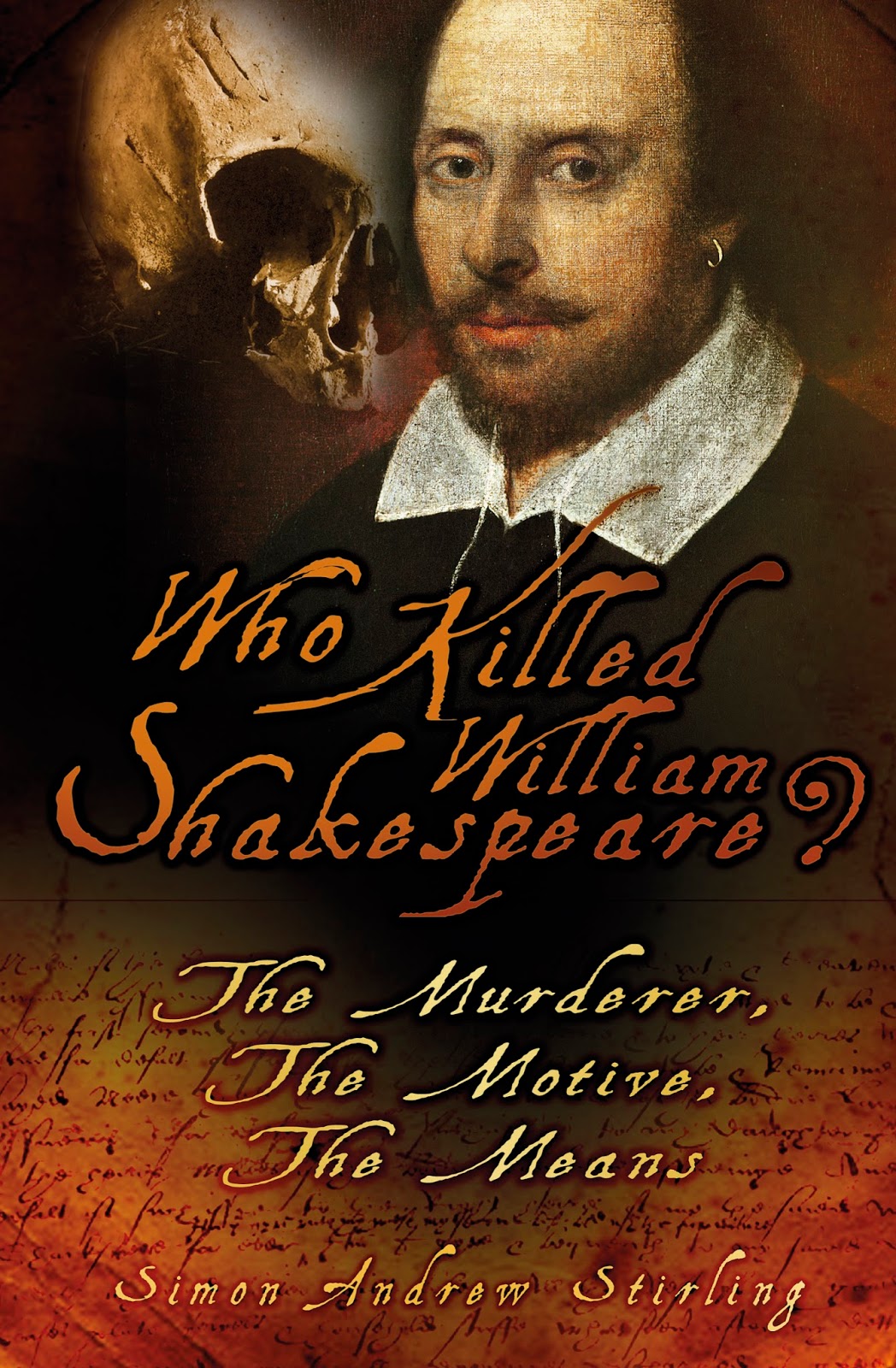
Thanks to Simon for coming along and being a guest on Paula's People. Simon discusses the ideas that spawned his latest novel Who Killed William Shakespeare?  


I was chatting to (chatting up?) a Canadian student at my drama school in London, one day.
“So – got anything planned for this weekend?”              
“Yeah, we’re all going up to Stratford-upon-Avon.  We’re seeing a show at the Royal Shakespeare Theatre, and we get the Shakespeare tour.”
It was part of the one-year course for overseas students: the Stratford Weekend.  And that’s when it struck me.  To lovers of theatre, and literature, all over the world, Stratford is a kind of Mecca.
And there was me thinking it was a place you went to on a Sunday afternoon.
I’ve spent a great deal of my life in and around Shakespeare’s hometown.  It’s given me a different perspective on the ‘Sweet swan of Avon’.  Time after time, reading biographies of William Shakespeare, I was struck by how little interest the biographer had in Shakespeare’s native region, his family connections, the knotty network of friends and co-religionists which made Warwickshire such a tribal county.
London has changed since Shakespeare’s day.  But much of his home county hasn’t altered that much.  You can get closer to Shakespeare in the lanes around Baddesley Clinton or Earls Common than you ever can on the banks of the Thames.
When I started studying Shakespeare in the late-1980s, hoping to understand how a lad from the Midlands became the world’s greatest poet-playwright, I found it all a frustrating experience.  “We know so little about him!” seemed to be the cry on every Shakespeare scholar’s lips.  Twenty-five years on, I’ve come to believe that this mantra is anything but true.  By refusing to concentrate on his London days, I was able to uncover several new facts about Shakespeare’s life.  A whole new picture emerged – more ‘real’, if you will, and certainly more intriguing.  Downright scary, at times.

But the mythology of Shakespeare forms most of what we know, or think we know, or are told to think we know, about this brilliant man.  To engage properly with Shakespeare is to enter the terrifying world of Tudor and Jacobean politics, something unnervingly close to a police state, and the sheer brutality of the repression of those who adhered to the Catholic faith, as their forefathers had done for a thousand years.  It is to enter a period of great upheaval, a massive redistribution of wealth, the remorseless rise of a new political class and a casual recourse to murderous violence.  It was a time of fear and favour, of propaganda and prejudice.

Click to continue reading...

Monday, 14 April 2014

The Best of The Review: Favorite Posts From the First Half Year (Volume V)

"Paul's Case: A Study in Temperament"~~from The Troll Garden by Willa Cather


Lisl’s style of remembering a much admired text is so full of feeling that I almost felt overcome with her acuity of ‘Paul’s Case: A Study in Temperament’. Lisl’s review made such an impression on me I had to buy the book (The Troll Garden) because I needed to be able to read the whole story for myself. Lisl and I often have long discussions about different books, and our discussions are always absorbing. Our memories bounce from text to text, but her memories of ‘Paul’s Case: A Study in Temperament’ have left me wanting more of Willa Cather.

“Paul had his secret temple. . . his bit of blue-and-white Mediterranean shore bathed in perpetual sunshine.”

            It perhaps would be easy to sympathize with a boy such as Paul, who is moved by “starry apple orchards” and who feels a zest come into his life at first sight of the instruments that set free his inner spirit. However, those intoxicants with which Paul is able to forget his dreadful English teacher are the same that enable him to dismiss the inconsistencies, the contradictions of both his resentments and desires.
     
       Upon first encountering Paul, we recognize the duality of his nature: rebellious, yet sensitive to the criticisms of others. He is somehow able, at least to a certain degree, to hold the teachers under his sway; his behavior unsettles them. One instructor feels that he senses a boy who is haunted, not strong. Perhaps the teacher—significantly, the drawing-master—sees him as somewhat of an adolescent Keats, burdened with an image of “feminine” sensitivity and weakness. Another likens him to a helpless cat, tormented by a group as vindictive as their own gathering.
            The flip side is, of course, that of a Paul who seemingly bounces back without exerting much effort. He runs, after all, with a light-heartedness he hopes will enrage his teachers. So self-sure is he that it takes being sat upon to calm him of his glee. The boy seems to possess a glee that might take him to the fine places he desires to be in if he applies himself. He by no means is lacking in some artistic gift, for he only needs a spark, a thrill “that ma[kes] his imagination master of his own senses, and he could make plots and pictures enough of his own.” Perhaps he misapplies himself; he denies the drive toward acting and music, yet nothing is made of writing, to which his natural abilities seem to point.
            Unfortunately, Paul fails to progress beyond this stage of rebelliousness, as he is far too undisciplined and lacks the drive with which to challenge himself. Although his teachers believe him to be perverted by racy books, Paul’s sensitivity is not a result of absorbing fanciful stories, for he rarely reads at all. He is dissatisfied with his life, but his preferred alternative is to exist in a world of “glistening surfaces and basking ease.” He has the desire to partake of such a fine existence, but has “no mind for the cash-boy stage.” He would like the status of “Saint” Andrew but, as we see, desires not the martyrdom of the twelve-hour toilers.
            Paul therefore escapes into the romantic world of the symphony—at least as he views this world to be. For him it is not a world that includes indolent husbands and the necessity for skillfully stretching a Mark or a dollar. Nor is it a world where limited season subscriptions or an ordinary sore throat might send one spiraling downward. Indeed, this universe is one of endless champagne bottles and mysterious dishes (brought to him, naturally) in warm, lighted buildings. This is Paul’s temple, the wishing-carpet in which will lead him to all these grandly decorated concert halls peopled only by individuals of superior taste—no English teachers—and succulent dishes to soothe his palate.

Click here to continue reading…


Plague Seed~~by Wade Allen Steele

Rob demonstrated to me how important reviews really are, not only as feedback for the author, but also for the readers. I know all reviews are subjective, but I have to admit that Plague Seed would not have been my first choice for reading. Rob, however, made the book sound exhilarating. His review reminded me of my sons, now in their 40s, who were avid Dungeons and Dragons players to the distraction of most other things. To this end I may just have to succumb to Plague Seed. Beware though, readers, if you don’t see me for some time then search for me, for I could well be lost in the book.

The Plague Seed is a high fantasy novel for both young adults and the not so young. Put it this way: if you spent your formative years immersed in fantasy role playing games, killing orcs and trolls, (hands up, I admit that I’m guilty!) then you will thoroughly enjoy this rollercoaster of pure escapism.

Welcome to Western Talandria: a world shared by men, some civilised and some savage cannibals,

drunken dwarves and aloof elves. The book is written as a letter written by an elf to his infant son. The epistle chronicles the history of he Plague War from the perspective of one of its heroes, an exiled elf of many names. We are introduced to him as Seligre, the Firebrand, posing as a merchant, attempting to mingle with the patrons in a high-end den of ill repute, in the mountain town of Colton’s End. It becomes clear in a brawl that Seligre is no mere merchant; he is a member of the Sword of Silence, a criminal guild centred in the nearby town of Dentim. In a local establishment he becomes enamoured by a beautiful human dancer called Katelyn. Katelyn is no mere dancer however; she is the wife of Raymuz, the headman of Colton’s End.

Raymuz mistakes Seligre for Dockra, Katelyn’s one-time elf lover, and orders his arrest. Katelyn and Seligre escape Raymuz's men and team up with Tahlkin the dwarf, an ale-brewing priest of the drunken deity, Rold. 


As the companions desperately evade capture, or worse, all hell is breaking loose at Colton’s End. Gathering in the Faylin Mountains, a great northern army is composed of disaffected humans, goblins and lumbering troll like creatures, the Grumach. Raymuz is in league with the army bent on conquering Talandria. Carrying a message from Dokra to the High Council of Elves, Katelyn hires Seligre to take her to the Blessed Forest of Oldenhome to the south. Oldenhome is the impregnable homeland of the elves, where they live in splendid isolation from the troubles of those they view as lesser folk. Tahlkin joins them in their journey south, as Colton’s End is no longer the place to open a temple of Rold and sell beer, and the roads are now dangerous to travel alone.

Click here to continue reading…

Friday, 11 April 2014

The Best of The Review: Favorite Posts From the First Half Year (Volume IV)

Wolf's Head by Steven A. McKay~~

We all know of Robin Hood; the archetypal swashbuckler in Lincoln green, from the Hollywood sanitised Errol Flynn to the family friendly recent BBC TV series; although personally, being a bit of an aging hippy, I’ll always have a love of the 1980’s Michael Praed series… besides, do you remember Maid Marion back then? Wow! But I digress… Robin Hood was a Wolfshead, an outlaw, living in brutal times on the periphery of feudal society. Chivalry, the concept to curb the blood lusty excesses of the nobility, would not apply to the outlaw. Outlaws would be desperate men, forced into theft and murder in order to survive. Therefore for, gutsy realism, my first choice will be Stuart’s excellent review of Wolfs Head, from the talented pen of Steven A McKay. Perhaps this intro is a bit long but it's true about Lady Marion…*sigh* ~~Rob


When you take such a well known and well loved tale as Robin Hood and his Merry Men it would be only too easy to go down that well trodden path so familiar to all who know the legend. "Hail fellow and well met!" greetings between rosy cheeked outlaws who dress in green tights and short tunics like medieval tranvestites while swinging through Sherwood Forest laughing like giddy schoolboys. It was therefore a delight to read this book and find that Steven A. McKay has taken the legend, given it a good shake and let this thoroughly enjoyable version fall out.

From the very first page you find yourself in Yorkshire rather than Nottinghamshire, in the village of Wakefield rather than Loxley. Here Robin is a common man who through a moment of anger is forced into fleeing his home, his family and his love Mathilda. These changes add a genuine fresh twist to the tale which adds so much to the book. 

His travails in the wild woods as he is forced into seeking the company of a band of outlaws in order to survive allows the author to introduce some well known names while fleshing out their characters and giving them a background history which makes them feel like real people. What all these outlaws have in common is by and large they have been forced into a life of theft and murder through forces beyond their control. Rich landlords, royal officials and sheriffs are the villains of the piece here and there are plenty of stand-out scenes which allows you to cheer on Robin and his friends as they battle the forces of oppression.


Click to continue reading…


Lorri Covers It: Steampunk Cover Review~~

You can’t judge a book by the cover, but you can get an inkling of what it’s about. For lovers of Steampunk, that subgenre of Sci-Fi set in a Victorian world, the imagery is important. Lorri’s analysis is superb and the covers featured are stunningly beautiful.~~Rob


The Affinity Bridge by George Mann,
Tor Books
For the uninitiated, Steampunk is a subgenre of Sci Fi, and one that has many explanations. My take on this quirky and slightly wonderful “thing” is to imagine the console of the Tardis, add the League of Extraordinary Gentlemen and plonk it all into a late Industrial Revolution setting (London or the Wild West). I think the best summing up of it comes from The Ministry of Peculiar Occurrences, who state “if Jules Verne or H.G. Wells were writing their science fiction today, it would be considered “steampunk”.

When I first looked at this genre, I had trouble getting it – much like the first time I picked up a Terry Pratchett book, but I have since become a convert, and I am now considering an entire wardrobe change as a result. Reviewing Steampunk book covers has also proved more difficult than the other genres; mainly because there is no right or wrong. Steampunk continues to evolve, and so therefore does reader taste and the art associated with it. To that end, I have decided that there are no bad Steampunk covers – just lots of different ones. Here are some to whet your appetite.


Click to continue reading...

Thursday, 10 April 2014

The Best of The Review: Favorite Posts From the First Half Year (Volume III)

A Riotous Affair~

I love this post by author Stuart S Laing because it reminds me of one of my favourite highwaymen films, Plunkett and McClaine. This is a story of an 18thc gang of merry men, whose criminal activities helped the less well of classes and their outrage at them being brought to the gallows and subsequent fight for justice against the wicked Porteous and the Toll Booth prison. I could imagine this being made into a film. Any film producers out there reading this, take note! ~Paula Lofting, author of Sons of the Wolf

*********

Edinburgh has over the centuries seen many a grim affair darken its famous old streets and had reason to be thankful for the forces of Law and Order being on hand to protect the innocent, and to punish the guilty. Just occasionally however the roles were reversed and it was the defenders of the innocent who were the guilty. One such man, who was to earn the abiding hatred of Edinburgh, was Captain John Porteous of the Town Guard. When it seemed his crimes against the people of the city were to go unpunished, it was the people who delivered justice. The story begins on a dark night, not in Edinburgh, but on the other side of the Firth of Forth in the Kingdom of Fife...
The Porteous Rioters descends the West Bow (now Victoria Street)
THE ORIGINAL CRIME
On the night of 9th January, 1736, Collector of Excise James Stark rested at an inn in the fishing village of Pittenweem, Fife but no sooner had he settled down for the night than he was shaken from his slumber by loud banging on his room door. The noise was caused by a smuggler, Andrew Wilson, and a compatriot attempting to force entry, intent on robbing him. Wilson's other partner in crime, a fellow smuggler named George Robertson waited downstairs acting as lookout.

Realising what was happening, Stark managed to grab one bag of excise money before he jumped from a window and hid in a nearby stable where he spent the cold winter night buried under a heap of straw.

Wilson and his fellow thieves, having finally broken the door down, made off with £200 Stark had left behind along with some personal items such as his Bible. Wilson, Roberston and the third man, Hall, then made their way east but were quickly apprehended in the nearby village of Anstruther only a few miles along the coast, where Stark's £200 and other belongings were recovered. The three men were speedily shipped over to Edinburgh, where they were thrown into the city's notorious Tolbooth Prison to await trial. The Tolbooth Prison stood on the Royal Mile, in front of St Giles Cathedral. Hated, and feared by the people of the city, the Tolbooth was well known for the terrible conditions and cruelty which happened within its grim walls.

When the trial came, the men claimed that the robbery had been a spur-of-the-moment affair. The magistrates, however, were not fooled by this and Hall quickly pointed the finger of blame at his comrades and admitted their crimes. Wilson, Robertson and Hall were all found guilty and sentenced to death by hanging. Hall later had his sentence revoked in return for turning King's Evidence against Wilson and Robertson. Sentence was set for Wednesday, 14th April 1736.

On Friday, 9th April 1736, Wilson and Robertson attempted to escape the Tolbooth. The two smugglers had been provided with saws by visiting friends, which they used to cut through the window bars. Friends of Wilson and Robertson dressed up as women and sang psalms loudly in the Royal Mile to cover the noise of the thieves escape. Wilson insisted on going first but got stuck in the window and was still lodged firmly halfway in, halfway out when the guards arrived.

Click to continue reading…


The Adventures of Merlin~

I chose this piece because of its sheer awesomeness. Who on earth else but Lisl could turn a TV show into a magical review such as this. I stopped watching Merlin after the second episode because it just wasn't happening for me anymore. I had initially enjoyed it. This review made me go out and obtain the whole series! Which I haven't got round to watching yet! But it's high on my list. ~Paula Lofting, author of Sons of the Wolf


*********


I actually don't watch a lot of television---not because I am a TV snob, I just don't have a great deal of time--and as a result never bothered to invest in cable. Amusing consequences involved my then-six-year-old son asking me, "What is a commercial?"I was slightly happy he had to ask me this, but later I thought about the vilification of television and settled on the conclusion I'd always done: That television isn't so bad, and in fact can be a worthy tool, but it matters how you use it. Even if for entertainment, I have found it can be used in concert with sneaky little educational insertions, and my now-ten-year-old turtle is the one who actually led us to this particular case. His success in persuading me to sign up for a TV/movie streaming subscription found me one evening, bone tired and flipping through the choices until I saw the word "Merlin," at which point I hastily clicked. For I am fan of Merlin since childhood and still recall dragging my mother to all the libraries in the region to collect books I'd looked up that had anything and everything to do with Merlin and King Arthur. Life having gotten a bit in the way of these pursuits, I nevertheless remembered my mother's voice, "And yet here we are again..."


“He cannot glimpse his part in the great story that is about to unfold. Like everyone else, he must live and learn.”

So we are told as we watch the young Merlin—known to us from Arthurian legend—climb a pathway on the journey’s last leg from his home in Ealdor to Camelot, where he takes up residence with his guardian and the court physician, Gaius.  Merlin’s introduction to Camelot comes in two main parts: one by witnessing an execution and next by tangling with a boisterous and perhaps bored Prince Arthur, who has him thrown into the stocks. By the first episode’s end, Arthur and his father Uther Pendragon’s opinion of the young boy—unbeknownst to them, a powerful sorcerer—settles to deep admiration and he is awarded with a position in the palace.

Watching this and subsequent episodes required me to settle into the idea of Merlin’s story being told rather differently to the way I’d always been taught. For starters, Merlin is unacquainted with Uther until this day, twenty years into the king’s reign, when he meets an Arthur already grown into his role as heir—there is to be no sword in the stone moment, at least not in the accidental discovery sort of way we know best. Moreover, Arthur’s opinion of the newcomer is rivaled only by Merlin’s view of the prince: “There must be another Arthur because this one’s an idiot.” As we later learn, Camelot itself also existed long before the prince and his father: recorded events trace back at least 300 years. 

I enjoyed the show enough to be fairly delighted by it—and amazed at the accidental events that led me to it—though I did wonder how Uther, so zealously fixated on his war against magic, could at times be so gullible. He eagerly laps up stories told by strangers yet refuses to believe his own son, or Gaius, his trusted physician of twenty years. Nevertheless, Uther does argue some powerful points, such as when he consults Geoffrey of Monmouth re: a knight’s nobility papers, or the need to show strength in the brutal world in which they live.

Click to continue reading...

Wednesday, 9 April 2014

The Best of The Review: Favorite Posts From the First Half Year (Volume II)

Paula's People: Interview with Mr. Bernard Cornwell~

Bernard Cornwell, who hardly needs introduction, has written a fabulous collection of books and established himself quite firmly as a favorite of many. Here our Paula interviews the author, and what a smashing job she has done!


*********

First question: I see that you are now settled and living in the US. Do you ever miss the UK and do you come back often?
I do miss it!  I normally visit a couple of times a year, so I get my ‘fix’. I married into America and have now spent half my life here, and I’m sure I’ll spend the rest of it here, but Judy, my wife, loves Britain, so we do visit as often as we can.  What I miss most is cricket!  That and rugby!
Second Question: What was it like growing up in England and what or who were your early inspirations in writing?
Growing up in England was horrible, but that wasn’t England’s fault. I was adopted into a ghastly family of Christian fundamentalists who tried to beat me into a state of salvation, an effort that failed totally. But that was all a long time ago, and despite them I discovered a passionate love of history. I suppose the biggest influence on my writing was C.S. Forester’s Hornblower series which I discovered as a teenager, and Sharpe is really just Hornblower on land, though of course he’s a very different character!  

Third Question: Have you always written historical fiction, or have you ever, or will you ever dabble with another genre?
I dabbled in thrillers some years ago and wrote, I think, five. I enjoyed them, but not as much as I enjoy writing historical fiction, and it seemed sensible to stick to what I enjoyed most. I doubt I’ll dabble again, though who knows? 
Fourth Question: Where do the ideas for your books come from?
I wish I knew! I suppose they come from reading . . . endless reading of history. I suspect it’s an unconscious process. I read a lot of history and some eras appeal, and some events trigger an idea.  Right now I’m in the middle of writing the stories of Uhtred. The ‘big’ story in that series is the making of England . .  a process about which the English are extraordinarily ignorant!  There wasn’t always an England, and it had to be made by warfare, and that was a story I long wanted to tell, but to tell it I needed a smaller story – the tale of, say, one family. So I had a basic idea – the making of England – but the spark for writing the series didn’t occur till I met my real father much later in life and discovered he (and me) was descended from Uhtred of Bebbanburg. And that provoked the stories. So it’s a complex process, and not entirely rational!


Click to continue reading…


Major Weir--The Wizard of the West Bow~

A love of history, especially where witchcraft and devilment are concerned, is cited as the inspiration behind this fabulous choice. Wizardry in all its historical forms has long captured the imagination, and Stuart here seals the deal with his thrilling account of the major.


*********

Edinburgh has had many notorious criminals through the centuries; some achieve a sort of immortality by having pubs named after them such as Maggie Dickson or Deacon Brodie. Other become the focus for the silver screen such as the serial killers Burke and Hare where their deeds are retold in a dozen different ways. Others however seem to have largely slipped from the public mind despite being almost too notorious for words in their own day. One such figure who seems to fit that category is Major Thomas Weir – The Wizard of the West Bow.

Born in Lanarkshire at the end of the sixteenth century little is known of his early life other than he served as a lieutenant in the regular army suppressing rebellions in Ireland before returning to Scotland in the 1630's. He was one of the signatories to the Solemn League and Covenant which called for the protection, by any means, of Scottish Presbyterianism from any outside influence, chiefly Charles I and his attempt to introduce an Anglican style of worship in the Church of Scotland. 

To protect their vision of the true faith the Scots formed the Covenanting Army which Thomas Weir enlisted in and rose to the rank of major earning a reputation as a reliable and able commander of men on the field of battle.

At the age of 50 he retired from active service in the field and took up position as commander of Edinburgh's fledgling Town Guard. However it was his time in the Army of the Covenant which seems to have shaped the remainder of his life. He was imbued with the fiery zeal of the evangelist and would preach long and loud to anyone who would listen about the snares set by Rome and Satan for the unwary Protestant to fall into. From his home on the West Bow which ran from the Lawnmarket down a steep doglegged slope to the Grassmarket and where he lived with his sister Grizel, he would hold powerful prayer meeting with like minded Calvinists earning the group the sobriquet The Bowhead Saints. Such was Weir’s prominence in the Presbyterian community that it was said “if four met together, be sure Major Weir was one.” 


Click to continue reading...


Tuesday, 8 April 2014

The Best of The Review: Favorite Posts From the First Half Year (Volume I)

The Women of the Lost  Colony~Jenny Barden

Chosen for the enduring mystery of the lost Roanoke settlement, this blog indeed calls up the tragedy and ongoing interest in what became of these people. With its photos of reconstructed elements and scattered clues, it is almost as if we are wading through the scene of the women's disappearance ourselves. Haunting, it captivates us.


*********
Amongst the ‘Lost Colonists’ who attempted to found the first permanent English settlement in America were at least seventeen women. What would life have been like for these women, some of them pregnant, at least one of them with a baby at the breast, who left everything familiar in England to begin life afresh in a strange raw land? They would have faced the threat of native hostility, witnessed the aftermath of a horrific murder soon after arrival, and untold hardship at a time of famine. We’ll never know for certain what happened to them. The Colony’s Governor left to summon help barely six weeks after the Colonists were set down on Roanoke Island in the ‘new found land’ of Virginia in the summer of 1587. When he returned, three years later, all the Colonists had disappeared leaving only a few enigmatic clues as to where they might have gone.  


The reconstruction ‘Elizabeth’ at Roanoke. The ship that brought the Lost Colonists from England would have looked much the same

We know the names of the women from a list drawn up by the Governor, John White, which was given to Richard Hakluyt and later included in his account of the enterprise. From the evidence of surnames shared with some of the male Colonists, we can deduce that eleven of the women were married and two travelled with children. Two of the very bravest women embarked on the voyage in an advanced state of pregnancy to be later delivered of their babies in the New World. One of these was the Governor’s daughter, Eleanor (recorded as ‘Elyoner’), who gave birth to a girl, Virginia Dare, the first child of English parents to be born on American soil. At a time when childbirth was likely to be difficult, dangerous and painful for any woman, this must have taken courage indeed. Eleanor Dare chanced everything to accompany her husband and father in their quest to establish the City of Raleigh in the New World and make a home there. She probably marvelled at first at the land’s wild beauty, but she must have been terrified by the brutal death of one of the Governor’s Assistants, George Howe, only a few days after reaching Roanoke. His end came as he was out wading, looking for crabs, no doubt enjoying the feel of mud and sand between his toes, alone, defenceless and unsuspecting. Howe’s body was found shot through with arrows and his head smashed to a pulp. He left a young orphaned son. What must that boy have felt? The women surely would have comforted him with rising fear in their hearts.
                        This is how Roanoke would have appeared to the Lost Colonists on first arrival

Click to continue reading...
A Newfound Land by Anna Belfrage~

This intriguing review indeed prods readers to discover The Graham Saga for themselves. Like many others who have told us they read the novel as a stand alone but were so drawn to the story they had to read all the others in the series, we are pretty confident you, too, will want to catch up with the Grahams. 

*********
A Newfound Land is Anna’s fourth book in the time-slip series of The Graham Saga. The story continues, and although is complete in itself, Anna weaves the salient points from the other three books seamlessly into this one so that the reader is kept fully up to date of past events. Having said this, I was so involved with the story that when I had finished I just had to buy the other three books just to flesh out those episodes alluded to in the fourth book.


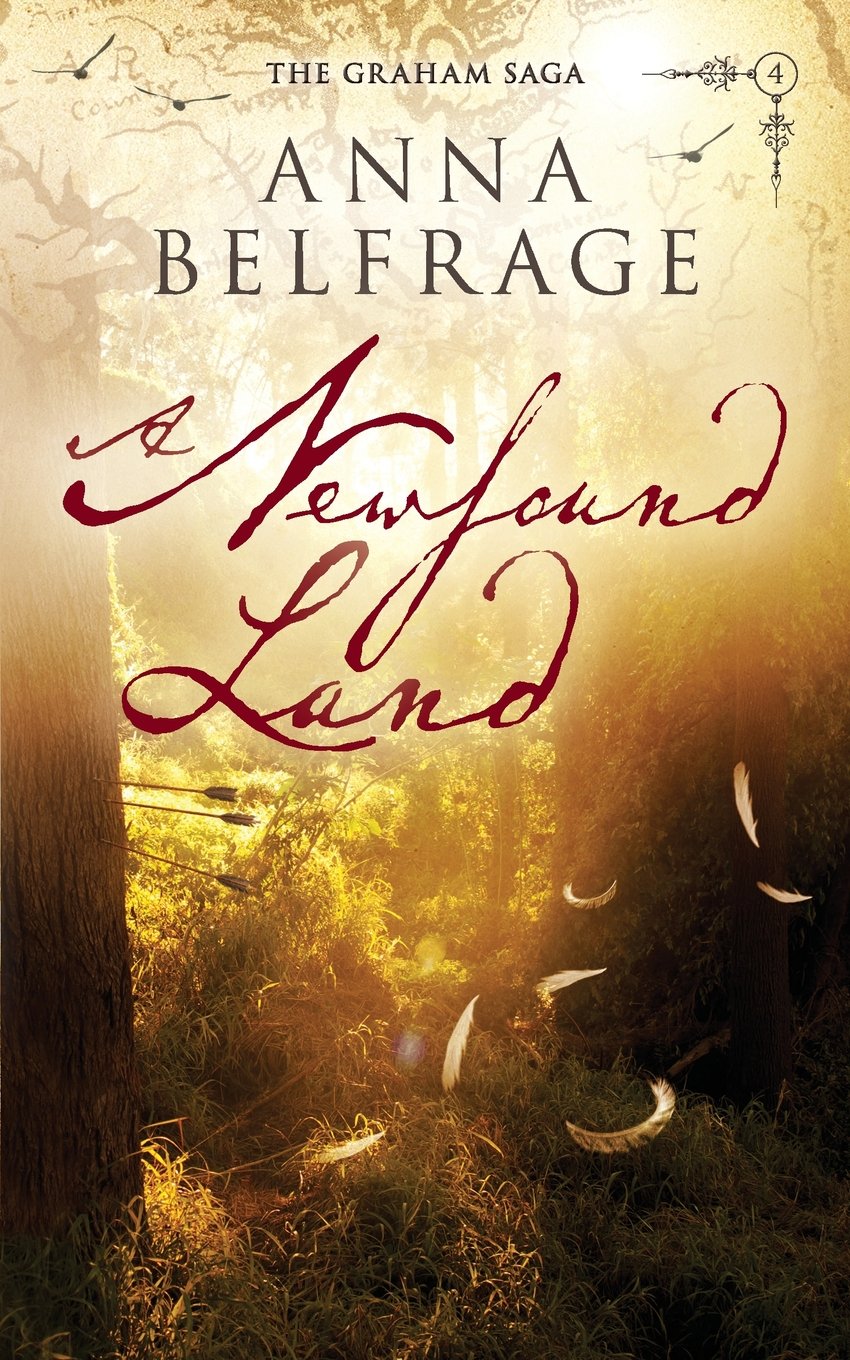
First of all I would like to say that I like the cover to A Newfound Land. The font looks as though it has been written with a quill pen or a dip-pen, and the background picture shows arrows, feathers, and to the top a shadow of a map of what I suspect to be of ‘the new country’ all in sepia tones as if aged. Book covers matter and should be relevant to the book, and this one is perfect, as with all Anna’s covers.

The story starts with the Grahams in the ‘new country,’ having left Scotland because of religious persecution. Matthew is devastated at having to leave Hillview in Ayrshire, the family homestead for generations. Their new home, after nearly four years, is still incomplete, a work in progress. Their nearest neighbour is ‘well over an hour’s ride away.’ The Grahams have been here since 1668 cutting down virgin forest to build a home and make ‘several sizeable fields and pastures, a respectable kitchen garden…’ Anna has a special way of describing the surroundings for the Grahams so that the reader can be placed right beside them. So much so that you feel almost like you are eavesdropping on their private lives in the telling of the story. 

I like the way that Anna has Alex using her 21st century language with Matthew; for example from the very beginning there is the use of the word ‘okay’ which eventually the family uses as common parlance. At one point in the story Alex says, ‘I feel like a teenager…’ and it is only then that you realise that it is an alien expression for that era. When I realised this I had to look it up and found that the word was not really in existence or use until the early 1940s as sited in The Popular Science Monthly in the United States. 

1941 Pop. Sci. Monthly Apr. 223/2, I never knew teen-agers could be so serious. (Taken from the Internet). 


It’s this kind of detail that makes Anna Belfrage’s novels work so well. Time-slip is a fanciful thing, but her book challenges your thinking on this and makes it totally believable. She makes the reader aware of the uncertainties, the traumas, the loneliness that comes with populating a ‘New World’. For all that, you find yourself admiring the tenacity of the Grahams to carve out a home and a life for themselves and their children. I also like the way that Alex’s free modern day thinking is challenged by Matthew, as it is only he who can name each child that they have. It is he who is in charge of their spiritual life. 


Matthew has a clergyman temporarily staying in their home to teach their children the Bible and general education. Alex is put out by this, especially when the clergyman, Richard Campbell, belittles her in front of her husband and children after she tells Campbell that he is wrong. He then tells the children, ‘Your mother has no idea what she’s talking about; she’s a woman.’ And, ‘Man is set to rule over woman on account of his intellect and spiritual strength. Women are more prone to be taken over by the devil, seeing as they’re weaker souls.’ This causes a rift between Alex and Matthew as he doesn’t defend her. We feel her betrayal as Matthew refuses to back her up in front of their children. Will they ever heal their rift?

Click  to continue reading...