Showing posts with label slavery. Show all posts

Sunday, 18 October 2015

Anna Reviews: A Decent Woman by Eleanor Parker Sapia


The author has very kindly offered a copy for a giveaway which will be drawn on 
Monday the 26th October. See below for details


In 1898, the former Spanish Colony of Puerto Rico became American, this as part of the treaty ending the Spanish American War. The population of Puerto Rico may have had their own concerns about this sudden transfer of their citizenship, but such concerns were swept away in 1899, when the little island suffered one of the worst hurricanes in history, leaving behind a traumatized population and an infrastructure in tatters.


   None of the above really play a part in A Decent Woman – except as background. The recent hurricane is the reason why young Serafina is so terrified when yet another storm hits the island just as she’s giving birth. The new American regime, bringing with it modernities such as electricity and educated doctors, threatens the existence of Doña Ana, until recently a much respected midwife. And as Doña Ana has a tendency to hedge her bets by praying not only to the Virgin and the saints, but also to an assortment of African deities, she is also under close scrutiny by the Church. Not a good place to be in, putting it mildly.

Ponce

   I enjoy reading books set in unusual places. In this case, Ms Parker Sapia presents us with the humid, tropical setting of Playa de Ponce, a small town just on the outskirts of Ponce – and of Ponce itself, already sliding into genteel oblivion now that the Americans have made San Juan the capital. It rains, it is unbearably hot, it rains some more, storms pass by at regular intervals, causing flooding and damage to the sad collection of sheds that house most of Playa’s inhabitants. Puerto Rico at the time is also a pot-luck of beliefs. People may flock to church on Sunday, but only a fool would ignore those other gods, such as Oyé, Changú and Yemayá. Here and there, rags in various colours decorate the doors, a silent offering to whatever God the colour belongs to. In a world where man is so exposed to the elements, it makes sense to keep all potential deities happy – just in case. The Holy Virgin figures prominently – in a book dedicated to the world of women, it is apt that she does.


   A Decent Woman is the story of Serafina and Ana – mostly of Ana – who meet when Ana delivers Serafina’s first child during a storm. Ana is old enough to be Serafina’s mother, Serafina has no mother, Ana has no daughter, and in each other they find something of what they’re lacking. Serafina is a Puertoriqueña but Ana is from Cuba, and her past casts long shadows. Ana was born a slave, lived her first few decades as a slave,  and was forced to flee Cuba head over heels. Why is not revealed – not initially – and as the story progresses Ana has other battles to fight, primarily that with an intolerant priest and a humiliated doctor.

Ana as a child slave with her mistress

   Where Ana is wary of others and generally disillusioned with life – she has lost too many people to risk developing new relationships – Serafina is a child-woman of sixteen, several years younger than her husband. A whirlwind romance ended in marriage, and before she knew it, Serafina was pregnant – one of the good, decent women in this world, those that see their role as wife and mother. But it isn’t easy, coping with a new baby when you’re not much older than a child yourself, and Ana sees no option but to help. Opposites attracts, one could say, with Ana acting the mainstay to Serafina’s initially so exuberant and hopeful take on life.
   Spanning the first few decades of the 20th century, this is a story about women – from the pampered wives of high society to the syphilis-infected whores. In a time where women had no rights, a single woman was viewed with suspicion, the assumption being that the only way such a woman could survive was on her back. Doña Ana experiences first-hand just how vulnerable a single woman can be – even more so if she is black, lacks a formal education and can't read. Although Serafina is a married woman, she is not much better off. A wife is at the mercy of her husband’s whims, whether they be to drink too much and abuse her, or keep a stable of mistresses on the side. Sometimes, however, the downtrodden fight back – sometimes, they have to, to survive.


   Life for Serafina and Ana takes a number of surprising turns. At times for the good, just as often for the bad, but neither Ana nor Serafina have the luxury to give up. They do, however, have each other, despite the differences in age and status. In a setting heaving with tropical heat, with hurricanes and earthquakes, with corrupt policemen and abusive pimps, unfortunate demise and premeditated murder, such a friendship can be the difference between life and death.


   Ms Parker Sapia does a great job of depicting early 20th century Puerto Rico – all the way from the opulence of the mansions of the rich to the various natural catastrophes that regularly sweep across this little island. Both Ana and Serafina are well-developed characters, women it is easy to care for.
I do believe the novel would have benefited from a thorough edit – specifically as concerns the time line. There are various occasions when I am jolted out of the story by strange time leaps, such as where one chapter is dated 1915, the next 1917 – but it starts off the morning after the events in the preceding chapter. As a reader, I spend considerable time sorting out these timing issues… Likewise, in some cases the leaps are too long: one moment Serafina is living in marital bliss, the next chapter her husband has a mistress set up in a separate home, behavior which is difficult to reconcile with the amorous and tender husband of just some pages back.
   All in all, A Decent Woman offers interesting insight in the life and fate of women – not that long ago. I loved the setting, the various descriptions of customs and rites, and having been fortunate enough to experience first-hand the rich Latino culture of Hispanic America, I was delighted to find myself yet again submerged in festivities and traditions that still, to this day, contribute to the fabric of everyday life.

About The Author


Historical novelist, Eleanor Parker Sapia was born in Puerto Rico and raised as an Army brat in the United States, Puerto Rico, and several European cities. As a child, she could be found drawing, writing short stories, and reading Nancy Drew books sitting on a tree branch. Eleanor’s life experiences as a painter, counselor, alternative health practitioner, a Spanish language social worker, and a refugee case worker, continue to inspire her writing. Eleanor loves introducing readers to strong, courageous Caribbean and Latin American women who lead humble yet extraordinary lives in extraordinary times. Her debut historical novel, A Decent Woman, set in turn of the century Puerto Rico, has garnered praise and international acclaim. She is a proud member of PENAmerica and the Historical Novel Society. A Decent Woman is July 2015 Book of the Month for Las Comadres and Friends National Latino Book Club.
Eleanor is currently writing her second historical novel titled, The Island of Goats, set in Puerto Rico, Spain, and Southern France. When Eleanor is not writing, she loves facilitating creativity groups, and tells herself she is making plans to walk El Camino de Santiago a second time. Eleanor has two loving grown children, and currently lives in wild and wonderful West Virginia

Find our more about Ms Parker Sapia on her Blog!
A Decent Woman is available on Amazon.uk
And Amazon.com

If you would like to win a copy of A Decent Woman then leave a comment here or on our Facebook page

***************************************************
Anna Belfrage is the author of eight published books, all part of the acclaimed The Graham Saga. Set in the 17th century, the books tell the story of Matthew Graham and his time-travelling wife, Alex Lind. The first book in her next series, The King’s Greatest Enemy, will be published on November 1, and is set in the England of the 1320s. Anna can be found on amazon, twitter, facebook and on her 

Thursday, 24 July 2014

Above the Fray by Kris Jackson. A Review by Rob Bayliss

Please see below for giveaway information!

Part One – The Ascent  


Battle lines are being drawn as the Union and Confederacy square up to one another. A young Virginian telegrapher, called Nathaniel Curry, leaves his native Richmond to view a balloon flight in Washington. Without realising the implications, and with a youthful sense of adventure, he joins Professor Thaddeus Lowe aboard a balloon that rises to greet the dawn. As an experiment he transmits instructions and coordinates, inadvertently directing artillery fire on a Confederacy position. in his own country. When word leaks out that he was implicated in this attack he is denounced as a traitor and disowned by his own brother. Forced to leave his home, family and sweetheart he seeks employment with Professor Lowe who is putting together a Balloon Corps to assist the Union cause.


The Balloon Corps are a civilian organisation, a motley collection of scientists and aeronautical enthusiasts, supplying valuable information to the army and revolutionising warfare. Yet despite this they are never being truly accepted by those commanding in the field and their contributions go unappreciated.


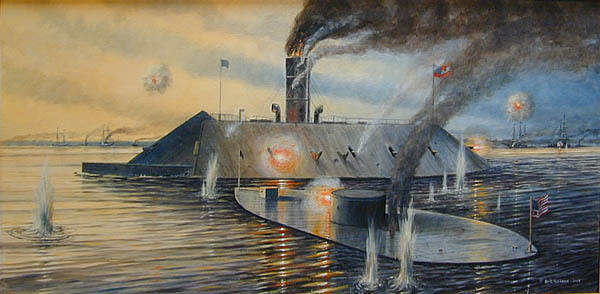
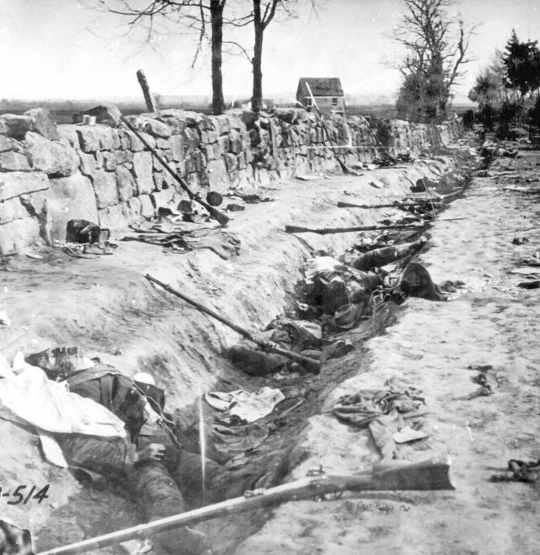
Following the campaigns and soaring above the battlefields we have an overview of the great events of the American Civil War. It is a war that foretells the horrors that Europe will endure some 50 years later, as technology and industrialisation conspire to create a brutal and bloody conflict of attrition. Musketry gives way to repeater rifles and Gatling guns, cavalry charges yield to trench warfare, while at sea Ironclads clash such as between the CSS Virginia and the USS Monitor at Hampton Roads in 1862.


Named as a traitor at home and suspected as a spy by both sides, Nathaniel finds himself caught behind enemy lines and has to don the uniform and persona of a Confederate soldier, as he attempts to escape back to the Union side. This doesn’t go unnoticed by the Union spy network and he finds himself being drawn into their web.


Part Two – The Descent


As the war drags on the Confederacy becomes more and more desperate. It becomes clear that they cannot win; the Union has more men, greater industry and better equipment but perhaps lesser generals.


Losses and shortages caused by the Union's blockade stiffens the resolve of the Confederacy.  Nathaniel Curry finds himself being drawn more into espionage, while the Balloon Corps struggles to retain its funding, looked upon by the military as an unnecessary financial drain. In the end it is forced to cease operations.


Nathaniel is caught between conflicting loyalties: slavery disgusts him yet he hates the damage being wrought on his country and family. He hates the immoral world of espionage and yet enjoys the thrill of it. In the madness of war killing loses its moral sting. Along the line he rubs shoulders with numerous Union generals, the Confederate General Robert E. Lee and even Abraham Lincoln, who encourages him to become a full time spy to hasten the end of the war.

An aptly named sequel, The Descent is altogether darker than the optimistic The Ascent. It maps the disbanding of the Balloon Corps, the fall of the Confederacy and the loss of Nathaniel’s morality and his near collapse into shell shocked madness.


Above the Fray is really an extraordinary book. It is meticulously well researched from the science of ballooning to the topographic description of the Civil War battlefields. I found myself totally absorbed in the life of Nathaniel Curry. There is humour here and there, but it is the humour of the gallows, as the war brutalises everyone and everything it touches.

It is a wonderfully written story; the language so fully evokes the lost world of the Confederate States of America, that even I, an Englishman, could hear the different accents in the dialogue. I learnt much about the American Civil War that I never knew before. It almost reminded me of the film Forrest Gump (albeit a very much darker tale), the way young Curry lives through major battles, crucial events and the individuals he meets (even a young Count Ferdinand von Zeppelin). Being in the Balloon Corps surrounded by scientists he is even exposed to the science of the age, able to discuss Darwin's Origin of Species and its implications for religion. Through Curry's eyes we can see the old order being swept away as the modern USA evolves.


The author doesn’t spare our 21st century sensibilities, the ever present evil, and the dehumanizing language of slavery is always in the background. Within these pages we learn the full implications of what “being sold down the river” means: this was when ruthless owners would sell aged slaves cheaply to be worked until death. A just war then, but a terrible one all the same. If only the great powers in Europe had studied the American Civil War in detail prior to 1914, they would have seen the full implications of modern industrial warfare and known it would never all be over by Christmas.


The story of Above the Fray will stay with me for some time. I can't reccommend it highly enough and I would urge that you should read it, too.

Above the Fray -  Part One The Ascent can be found here and Part Two - The Descent can be found here.


The author has generously agreed to offer a free ecopy of both parts. To enter please comment below or comment on this review's associated Facebook thread.

Kris Jackson is an artist and author based in Massachusetts. His website can be viewed at www.krisjacksondesign.com

This review was written by Rob Bayliss. Rob is currently working on his Flint and Steel, Fire and Shadow fantasy series. Part one, The Sun Shard is available at Amazon.

Friday, 9 May 2014

Anna Interviews: Author Pauline Montagna

Hi, Pauline, how nice to have you visiting us here at The Review! Before we start things off, let’s get nice and comfy in The Review’s generous leather sofa. So, do you want tea or coffee? Do you have hot chocolate? If not I’ll have a herbal tea.    
                                            

Some chocolate cake? Or I do have a very nice apple crumble instead. I’m supposed to be losing weight, but a slice of virtual chocolate cake won’t do me any harm.

There, all settled then, so let’s start by you telling us a bit about yourself. I am especially interested in hearing how a French major ended up working as an accountant…

I’m not a professional accountant. I’m actually a bookkeeper, a skill I learnt on the job. But it is a sad and funny story. Back when I was in university in the 1970s there was very little offered in the way of career counselling. The so-called Careers Counsellors seemed to have only one function – to hand out application forms for the state and Commonwealth public services. (So different to today, but in a lot of ways I come from a different era.) Consequently, anyone doing a Bachelor of Arts was given two choices – teaching or the public service.

Having decided against teaching, I found myself accepted into the Commonwealth public service. I was given an eight page questionnaire about which department I wanted to serve in. Hoping to use my languages I asked for Foreign Affairs or Immigration. At the interview I was asked what I had been doing for the last few years. I answered, ‘Studying French’ and I was told I had a job in the Finance Section of the Department of Social Security. (I guess there is some similarity between the words France and Finance.) To demonstrate how good the public service was in fitting round pegs into square holes, I started work with an English Honours graduate. They were fortunate that I happened to have a good head for figures. (I’m one of those rare people who can do both maths and languages.) As you can imagine, I didn’t last long in the Department of Social Security, and only stayed long enough to save up for my first trip to Europe. However, when I got back I couldn’t settle back into a permanent position and soon began a career as an office temp, building on my accounting knowledge as I went. It has made me that strange hybrid, a practically-minded writer.

Most writers are also voracious readers. What is your favourite genre, and is there a book or an author that has a special place in your heart?

I can’t say I’m a voracious reader now. Between writing and old age, I tend to drop off to sleep if I try reading for pleasure these days. But I used to be one. I like all genres, but I tend to gravitate to writers rather than genres. I have set myself the task of reading all the British classics and my favourites so far are Jane Austen (of course), George Eliot and Anthony Trollope. I also like the writers of the mid-twentieth century like Robert Graves and Christopher Isherwood. However, my idols are Mary Renault and Ursula le Guin. If I could write like them I’d die happy.

I have recently finished reading The Slave, and I was quite intrigued by your choice of main characters. If we start with Batu, how did you come up with the idea of having a young Asian man as the male protagonist in a story set in 14th century Italy?

Well, that’s another story that goes back to my uni days in the 1970s. In second year French we attended lectures on French Literature in French. (My university was very progressive that way. By third year all of our lessons were in French as were our essays.) They were also being attended by a rather handsome Asian boy. Not actually enrolled in the course, he sat in regal isolation at the back of the lecture theatre. I was much too shy to approach him, but in my romantic imagination I saw him as a Laotian prince, driven out of his country by the communists, attending French lectures just to be able to listen to a familiar language. At the same time my history subject was Medieval and Renaissance Italy. As I indulged my fantasies the Asian boy found himself stranded in medieval Italy.

In contrast to Batu, all sharp angles and a prickly defensiveness, you’ve created little Aurelia Rubbini, a dutiful young girl who has been raised from an early life to do as her father bids her. I was very impressed by your description of Aurelia and am rather curious as to where you’ve found the inspiration for this woman, so very different from young women today.  So where did you find Aurelia?

As I mentioned earlier, I myself feel like I come from a different era. Aurelia comes from within me. I was raised as a dutiful little Italian girl. Unlike Aurelia, however, I was able to rebel, get an education and make my own life. Aurelia is the girl I would have been had I not had those opportunities.

Rather unusually for a historical romance, The Slave features a homosexual man, trapped into doing his filial duty with a woman he feels nothing for. How did you approach the development of Lorenzo?

Oh dear. Your questions are bringing out how much this book owes to my experiences at university. One critic did say The Slave was rather old-fashioned. I actually take pride in that because I’m no aficionado of what today is called historical romance and which I call erotica in long skirts, but back to our sheep as one of my French professors used to say.

As you can imagine, I was a naïve young girl, straight out of a Catholic convent school when I arrived at university. (I can remember my first thought when I got there was, ‘I don’t belong here. I’m just a little girl!’) University is where I learnt about adult sexuality. It was also the early days of gay liberation. As an arts student, by the time I got into third year, most of my friends were openly gay. It’s also the time of your life when you have the most fraught relationships. One is always falling in love with the wrong sort of person.  Lorenzo grew out of those experiences.

Of course, it isn’t politically correct to make the gay man the antagonist, but I tried to make Lorenzo sympathetic, despite the role he plays. As I was writing The Slave, I happened to hear an interview with the author, Nicholas Shakespeare, who said that a writer should love all their characters, even the bad ones. I took that to heart with Lorenzo and by the time I was finished, I think I did care about him the most.

Why set a book in 14th century Italy to begin with? What drew you to the period and the location?

Back to university! As I mentioned earlier, my university was very progressive, but the only units it offered in Italian history were Medieval Italian City States and Renaissance Florence. With my Italian background, you can imagine how eagerly I leapt at this opportunity and made sure I got in early on enrolment day to secure a place. I loved these courses, firstly because they gave me pride in my Italian heritage, but also because, although I was one of the youngest in the class, I had the superior background knowledge! I ended up setting the book specifically in the 14th century because I needed the Black Death to sort out my plot.

The Slave lives and breathes 14th century Italy. You have, however, been somewhat ambiguous as to where exactly in Italy we are. Is there a special region that has inspired you?

I didn’t set The Slave in any specific city because the story was entirely made up and I didn’t want to be held down by the circumstances in any one particular place. It’s a generic city state and could be anywhere in northern Italy where the city states flourished - Tuscany, Umbria and Lombardy. I had considered calling The Slave an historical fantasy, but I thought that would lead readers to expect my characters to have magical powers!

The historical setting in The Slave is beautifully described. Clothes, interiors, traditions and foods – they all come to life. Please tell us a bit about your research – how does one go about recreating an era from so long ago?

I’m so glad to hear you say so, Anna. I think that is because so much of what I describe comes out of my own experience, my own upbringing and my travels in Italy. As for the historical context, it was mostly based on what I learnt back in university, so when it came to writing the book, I just had to brush it up. For the more specific points, I tended to do the research as the need arose. The internet was a good place to start, but I also did a lot of reading in our state library.

In The Slave, the annual feast of the local Madonna plays an important role in that it allows Aurelia to escape the constraints of her normal life to breathe somewhat more freely out in the country. What is the background to the feast of the Madonna? Have you ever participated in a similar celebration?

The culture of the village Aurelia visits is based on that of my mother’s native village in southern Italy where every village has its own Madonna festival. These festivals are so important that the emigrants from those villages continue to celebrate them in their new countries, so I grew up knowing the importance of the Madonna. When I was in Italy last year, I happened to be in my mother’s village in time to participate in two such celebrations. One Madonna is purely Christian, celebrating a miracle attributed to her centuries ago. The other, though, the Madonna of the Grain, is much older and has its true origins back in pre-Christian times when it was the festival of Ceres, the goddess of the grain. There are two precessions for this Madonna. In the spring, her statue is carried to a mountain-top chapel. At the end of summer it is carried back down to the village church. This symbolises the grain being buried in spring and sprouting in summer.

I happen to know that not only do you write about 14th century Italy, you also have a large on-going project set in 16th century England, and more specifically about William Shakespeare. What similarities do you see when writing about these two historical periods? What challenges do they have in common, and what are the fundamental differences?

For me the difference is not as much in the period as in the type of book I’m writing, or, to be more exact, the type of people I’m writing about. As the people and story in The Slave are entirely invented, I could do what I liked with my characters, as long as I kept it true to the period. With this new project, I’m writing about people who actually existed so I have to keep to the known facts about their lives. Fortunately, so little is actually known about Shakespeare and Christopher Marlowe that I do have a lot of scope for invention.

Both here and in The Slave, I’m a stickler for accuracy and authenticity. Although The Slave began as an adolescent fantasy, I did not tackle it as a novel until I discovered that a slave trade did exist in the period, thus making it plausible for Batu and Aurelia to meet. For my new project, I have to be even more sure of my facts. I’ve often been held up for weeks because I have to find out exactly what was happening on what day so that whatever I might invent still fits into what we know actually happened. Fortunately, although we know very little about Shakespeare himself, so much research has been done around him that such information is actually available.

Finally, have you considered writing a follow-up to The Slave, or do you feel that you’re done with Aurelia and Batu?

I had originally planned a very different ending for The Slave which would have given me scope for a trilogy, but I was persuaded to change my mind. The new ending closed off those possibilities. But I think it’s probably for the best. I have lots of other projects I want to tackle.

Thank you so much for sharing all of this with us, Pauline. It has been a privilege to have you with us today. Best of luck with The Slave and your future writing endeavours!

Thanks, Anna. It’s been a pleasure. You wouldn’t have another slice of that chocolate cake, would you?

*********See this post for info about a giveaway!*********