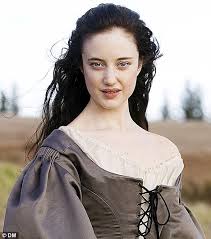
Please see details of giveaway at the bottom of the page! The draw will be held
on Tuesday the 25th August 2015
__________________________________
The Pirate Captain set in the mid 18th century when pirates and their exploits sent shivers down the back of many a Governor. Blackbeard, Kidd, and Morgan earned their blood soaked place in history, and inspired many a historical novelist to put pen to paper. The rebellious spirit shown by these men and women stood the test of time as books gave way to other media, generations have whooped with joy as Fairbanks, and Flynn swung between sail and rigging. So it is easy to see why an audience would crave further stories, the challenge to the author is however, to bring something new to the reader. The blurb sets the scene,
During the year of our lord 1753, I was sailing the West Indies, minding the oars in me own boat, pursuing me sole purpose in life: to disrupt the unholy alliance of two corrupt men, to destroy their lives as they destroyed mine. I mistakenly kidnap Catherine Mackenzie—wrong person, easy mistake, you understand—and me life went arsey-turvey. Having lost hearth and heart to the Jacobite War, and wanted for war crimes, Cate has the grit and savvy to have survived years destitute and alone in the cesspool known as London. When arrest seems imminent, Cate, through whose eyes this story is told, buys passage on the first ship away. Now, Cate desires but one thing: a place to belong.
The novel centres on two main characters, Captain Nathaniel Blackthorne, the skilled and feared pirate Captain of the Sarah Morgan plying his trade in the Caribbean Seas, and Cate, a woman more than able to match his guile and grit. I could not help wonder whether the author took her inspiration for Cate’s character from a female pirate such as, Anne Bonny, because they share an inner strength enabling them to survive in a traditionally male, and an extremely violent environment. It is the interaction between these two characters, which holds the reader’s attention for much of the novel. Although the first meeting is a case of mistaken identity, and hardly filled with unbridled passion.
“What do you plan to do with me?” she ventured to ask again, a bit more steadily this time. In lieu of her own plan, knowing this might help. He closed one eye as he strolled around her, shrewdly evaluating her as one would when purchasing a horse. “Scrawny and a bit old aside, a thing such as you could bring a good price at several markets."
The novel could so easily have fallen into the mills and boon trap. However, it rides the swell of the Caribbean Seas into a far more interesting tale. The characters throughout are generally well developed with a lot of time obviously spent on getting the two main protagonists just about perfect. Life aboard the ship is described wonderfully, often from the viewpoint of Cate, which adds a new dimension to the book. Action scenes are delivered with skill and realism. I reviewed the digital copy of over 600 pages, and so I imagine that the physical copy would be of a substantial size, and offer the reader many hours enjoyment.
To Summarise, the writing is not too technical as to blind the audience with nautical terms. The type of language used makes for an interesting debate. The initial few pages are, for want of a better phrase,‘pirate lingo’, and to some readers this could prove a distraction. However, as the book goes on it softens and I believe the book benefits from that change. The Pirate Captain is an interesting read, which blends a number of genres together. There is enough within its covers to keep Adventure, Romance and Historical enthusiasts more than happy.
The author Kerry Lynne is kindly offering two ebooks to giveaway. All you have to do is leave a comment here on the blog or on our Facebook Page
About the Author
Kerry Lynne was a history major in college and went into teaching for a few years. Then she wound up in the decorative painting world, where she traveled, taught and published for some 30 years. And then her hand wouldn't work. So she went back to what she knew: writing, history and sailing. Lynne's fictional writing achievements include The Pirate Captain: Chronicles of a Legend (Nor Silver) 2014 Next Generation Indie Book Finalist Award for Historical Fiction (first novel) and a short story publication in LocoThology #3-The Price of Victory (deleted scene from The Pirate Captain, Nor Silver). In 2014 the second book in The Pirate Captain series "Nor Gold" has been released continuing the legend of Captain Blackthorne.
You can find out more about Kerry Lynne on her Website
by copies of Kerry Lynne's books on Amazon.UK Amazon.com
Robert Southworth is an author of his Spartacus novels. This is the second novel that Robert has reviewed for us and is now a valued member of The Review readers team. Robert can be found on
See below for how you can win a FREE COPY of Her Rebel Heart!
Winner will be drawn on the 20th August
There’s a knack to writing historical
romances. Somehow, the author must balance the historical context with the
romantic content, this so as to please both those readers who first and
foremost want a love story as well as those whose focus is on the historical aspects
of the story.
This reader happens to be something of a
sucker for a good love story – but not at the expense of historical accuracy. Fortunately,
Her Rebel Heart is set against a
well-presented historical background, in this case that of the English Civil
War, a conflict that not only pitted king and parliament against each other,
but also saw families torn apart as some held with the king, others with
parliament.
Deliverance Felton is the daughter of a man
with Parliamentarian ideas, and so when war breaks out, Sir John sides with
Parliament against his king. When the book opens, Sir John is trapped in
Gloucester, and left leading the defence of Sir John’s own castle, Kinton Lacy,
is his eldest daughter, Deliverance. So far, Deliverance has mostly been a
disappointment to Sir John. Unfashionably dark in looks, uninterested in her
appearance, his eldest daughter lacks in decorum and the polish required to
attract a husband. Not so pretty Penitence, Deliverance’s younger sister, who
presently is heartbroken due to a broken engagement – the man she loves is the
son of Sir John’s former neighbour Richard Farrington, now a most vociferous
defendant of the king’s rights and prerogatives.
Courtesy of National Trust
Sir John is too much a man of his time to be
comfortable leaving his daughter in charge, and so he dispatches Captain Luke
Collyer to take over the defence of his home – something that does not exactly
please Deliverance, who had hoped that with her staunch defence of Kinton Lacy
she would at last receive some recognition from a father who mostly ignores her
– or finds her a nuisance.
One could argue that Deliverance, excellent
shot, adept at swordplay, is somewhat anachronistic.
Usually, we perceive women
of the 17th century to be meek and biddable, but there were
real-life exceptions – quite a few, actually – and besides, civil war brings
out sides in people one didn’t know they had. Deliverance is competent and
intelligent, she knows her castle inside out, and her people love her,
recognising in this small petite woman a force of nature that will not back
down in the face of adversity. Ever.
Not only has Ms. Stuart invested in giving
us a well-developed female protagonist, she has taken equal care with Luke
Collyer, a man with the reputation of being a drinker and seducer of women, and
who at the age of twenty-nine has been a soldier for close to ten years, first
in the endless conflicts on the Continent, now here, in England. Our Luke comes
with baggage of his own, secret hurts he rarely shares, and when he is
confronted with this scrap of a woman who refuses to back down, he can’t quite
put a name to the emotions she inspires – beyond annoyance and grudging
admiration.
Luke and Deliverance find common cause in
the defence of Kinton Lacy. Where Deliverance is fighting for her home, Luke is
fighting for his principles, and the resulting combination is quite impressive.
But Kinton Lacy is small, it holds less than two hundred men, and how can it in
the long run, hold out against Farrington’s troops and, more importantly, Farrington’s
guns?
In between forays and skirmishes,
undercover scouting operations and bickering as to the best way to defend the
castle, Deliverance and Luke find time to be drawn to each other, a mutual
attraction that now and then explodes into fiery heat. Not, Luke believes, the
distraction he needs at present, and so he rebuffs and wounds, regrets it,
succumbs, rebuffs – well, a classic scenario of a man torn between duty and
love. And for Luke Collyer, even admitting that what he feels might be love, is
in itself frightening.
Ms. Stuart has done her research. Her
well-developed characters are complemented with accurate descriptions of the
times, both when it comes to such things as clothes and weaponry, but also when
it comes to the disturbing background offered by the on-going conflict. As
Deliverance is to find out, war is a messy business, and as tensions rise,
atrocities are committed, honour is forgotten, traitors spring into life, and
ultimately it seems Deliverance will lose everything she holds dear.
In order to be in with a chance to win a copy of this fabulous historical romance, all you have to do is leave a comment her on the blog or on our
As stated already at the beginning, writing
historical romance requires quite the knack. Ms. Stuart most definitely knows
just how to deliver that perfect blend of history and love, combining a taut
storyline with obvious writing skills. Strong descriptive prose is coupled with
good dialogue, moments of intense action are followed by passages of
introspection, and all in all Ms. Stuart delivers an entertaining read, all the
way from when Deliverance accidentally shoots Luke’s hat off, to the scene
where…Nope, not going there – future readers should find that out for
themselves!
About
the author
Alison Stuart is an award-winning
Australian writer of cross genre historicals with heart. Whether duelling with
dashing cavaliers or wayward ghosts, her books provide a reader with a meaty
plot and characters who have to strive against adversity, always with the
promise of happiness together. Alison is a lapsed lawyer who has worked in the
military and fire service, which may explain a predisposition to soldier heroes.
She lives with her own personal hero and two needy cats and likes nothing more
than a stiff gin and tonic and a walk along the sea front of her home town.
More information about Alison and her books can be found on her website.
Anna
Belfrage is the author of eight published books, all part of the acclaimed The
Graham Saga. Set in the 17th century, the books tell the story of Matthew
Graham and his time-travelling wife, Alex Lind. Anna can be found on Amazon, Twitter, Facebook and on herwebsite.
See below to learn how you can win a FREE HARDBOUND COPY of
The World of Richard III
Drawing August 7, 2015
This drawing has been held and a winner announced at Facebook.
Please see new reviews for more chances!
We have a giveaway with every review!
Link to Kristie Dean's prior guest post at The Review for an excerpt from The World of Richard III
With the recent re-internment and increased interest in Richard III, it is not surprising there would be a flurry of new publications related to the last Plantagenet king. While we all read at least a smattering of the Wars of the Roses (WoR), for many these studies belonged to bygone days, but the attention generated by these new books has brought the monarch to a wider audience. With The World of Richard III author Kristie Dean takes a new approach by bringing us to Richard. As closely as it is possible to do, she escorts us to and around the world he inhabited via the places he had visited, seeing or imagining what he observed and how he may have perceived it.
St. Mary's Church, Barnard Castle~ A carving of Richard's emblem, the boar
The work is a combination of travel information and history focused on places lived in or visited by Richard Plantagenet, from birth to his time as Gloucester, through his two years of kingship and finally, his death. Organized in seven major parts that span these courses of Richard’s life and in a loose chronological order, subsections then turn their attention to specific places associated with him on various occasions. As the author takes us from point to point there is some overlap, given that Richard visited certain locations several times, and Dean handles this seamlessly and without repetition. An extensive collection of beautiful photographs enables readers to follow along visually as they move forward.
Gatehouse at Middleham Castle~ This is the entrance Richard would have used to reach the inner courtyard
The book is set up in a very practical manner, and the convenience will appeal to armchair traveler as well as visitors to these amazing monuments. The table of contents lists the locations—including geographical—within each section in the event one wanted to access information about a specific site. While readers come in close contact throughout the book with the medieval practice of “recycling” names (first as well as surnames), Dean also provides a York family tree that sensibly and easily maps out the “who’s who,” helping to alleviate common confusions, for instance between Richard III (Gloucester) and his father, also called Richard (York). Years also are provided for clarification of events, such as the Duke of York and Salsbury’s flight to Ireland and Calais (1459), and their deaths in 1460, the latter of which is necessarily presented first.
A “how to” also briefly introduces the setup and points out helpful details such as contact information (phone as well as website), opening times, prices and postcode, which struck me not only as practical but also a blessing in disguise because many travelers—myself included—might get bogged down in their movements. In such instances it has happened that it doesn’t occur (to me and others) to check ahead about such additional details as cash machine availability, non-regular closures or waiting periods. Dean covers these and other crucial details and tips to contribute to a fascinating and rewarding journey.
The World of Richard III is presented in language that is a combination between necessarily practical and beautifully rhythmic, and one of Dean’s strengths is being able to fuse the two in passages that complement each other. Ordinary words have the power to transfix, and the sense of peering through a veil is never far off. “But pause for a moment,” she advises at one point. “You are standing where he would have stood, with only the thin veil of time between you. It is a heady feeling.”
Church of St. Mary the Virgin and All Saints, Fotheringhay
Dean speaks of Fotheringhay, Richard’s birthplace, in conjunction with how the “River Nene winds around the mound and disappears in the distance”; of the spires of St. Mary the Virgin and All Saints and a “sleepy river,” adding that “[d]uring Richard’s time, the river would have been humming with activity. On Richard and Edward’s visit in 1469 the view would have been one of constant commotion as people scurried about to meet the king.” As readers we are privileged to catch this glimpse of Richard re-visiting his roots and taking care of and pride in who he is.
Nottingham Castle~This was one of Richard's most visited castles, and where he and Anne learned the dreadful news of their son Edward's death.
The ideal of knowing who you are based on where you are is deeply embedded in the travelogue and the author awards sense of place its rightful due by “illuminat[ing] his character through the places and events that shaped him into the man he became.” Indeed, many occasions prior to Richard contribute to place and shared history, and to this end the author also unpacks some of these moments to give readers a greater sense of what it may have meant to Richard himself. She often invites readers to imagine Richard at a certain place, or to see something lovely or meaningful through his eyes, and it is not difficult to contemplate Richard as an individual rather than a noble, duke, monarch or distant historical figure. Speaking of the Painted Chamber, once the scene of a momentous occasion, Dean elaborates how
…the sun would cast a rosy glow through the four windows in the chamber, illuminating the decorative paintings that graced its interior. Even the arches over the windows were covered with paintings, mostly heraldic images. It is easy to imagine Richard pausing from his duties as king and admiring these magnificent works of art with their deep hues of vermillion, ochre, and verdigris.
Penrith Castle, Cumbria~Dean writes of the "sandstone glowing in the sun" and tells readers that "English Heritage credits him with adding large windows." It is easy to imagine how breathtaking the scenery would have been, from inside and out. Photo Wikimedia Commons, user Northernheng
The author does not, however, romanticize Richard as someone he was not, and to that end she retains an extensive and admirable neutrality regarding his controversial life and opposing views as to what kind of person he was. Indeed more than once she references Lancastrians and Tudors within their humanity and expresses compassion regarding their losses. She does not seek to disparage and the questions raised about Richard pertaining to his nephews et al. are not addressed here.
The World of Richard III is likely to appeal to admirers of any era, WoR, prior or subsequent to, as well as those unfamiliar with even key players or events of Richard’s time. Those mildly or deeply interested in the Middle Ages, castles, cathedrals, architecture, travel, monarchy, and where we come from all will find rewards within the pages of this book. It is a history and reads not unlike a story, accessible and fascinating, bringing to life not only details of past lives, but also portraits of individual people who lived and loved, and sometimes lost in a time they recorded, deliberately and not, in the places they lived. We are brought to these magnificent locations and shown their splendor within the framework of one life influenced by countless others. We follow the trail of Richard, whose memories might include much of what is presented here, and in so doing learn a great deal more about who we ourselves are.
Warwick Castle was an historic structure even in Richard's day. Despite frequenting magnificent buildings, Dean writes, "Richard may still have been awed by the castle's grandeur."
*********
For your chance to win a FREE HARDBOUND COPY of The World of Richard III, simply comment below OR at this review's Facebook thread, located here.
About the Author: Kristie Dean has an MA in History and now enjoys teaching the subject, following a successful career in public relations. She has been published in several online magazines and local newspapers, and presented a paper at the International Congress on Medieval Studies. She lives in Tennessee, where she is currently working on her upcoming book, The World of the Yorks, which features locations associated with the York family. You can find more about Dean and her work at her website, her Facebook pageandthat of The World of Richard III. The World of Richard III by Kristie Dean is published by Amberley Publishing, 2015. It is available to buy at all good bookstores, as well as online at the Amberley website, Amazon, Amazon UK and the Book Depository.
Added Notation: This review has been updated to include photograph credits
Perfiditas by Alison Morton
Review by Anna Belfrage
Author Alison Morton has kindly offered a signed paperback novel of Perfiditas
See bottom of page for details on how to win Drawing on August Tuesday 4th
This drawing has been held and a winner announced at Facebook.
Please see new reviews for more chances!
We have a giveaway with every review!
To write alternative history carries some likeness to writing fantasy, in that the world creation is a fundamental part of the writing endeavour. In difference to fantasy, writers of alternative history have to tread a very fine line between the invented and the impossible, i.e. expectations are that the writer creates a society we, as readers firmly rooted in our reality, can conceive as being an alternative outcome had things been somewhat different.
Authors like Robert Harris do this with panache. Writers like Stephen Fry do it with ironic humour. And writers like Alison Morton just do it, a few deft brushstrokes, no more, and Roma Nova is a feasible little European country in a world where Adolf Hitler never happened and where the northern parts of the American continent remain divided between former English, French and Spanish dominions.
Roma Nova lies snuggled into the folds of the Alps. A last refuge for a group of Romans fleeing the devastation of the Germanic invasions, this is where Roman Senator Apulius and his family and followers settled, ready to make a last stand if needed. Our staunch Roman was married to a spirited Celtic woman who gave him four equally spirited daughters but no son. And so, through a combination of chance and expediency, Roma Nova developed into a matriarchial society, a country where the family heads always are female, but where traditions and concepts of duty towards the state remain rooted in Roman values.
So well does Ms. Morton paint this little country of hers that I find myself considering just how to travel there – by car? By train? Until I remember that I can’t go to Roma Nova – not outside the pages of Ms. Morton’s novels. Fortunately, she has so far written four and is intent on writing a couple more.
Now, as we all know, a setting does not a novel make. However intriguing Roma Nova is, however fascinating Ms. Morton’s descriptions are of Saturnalia celebrations, of funerals as per ancient Roman rites, it would be a thin soup indeed had Ms. Morton not also gifted us with Carina Mitela and her husband Conrad Mitelus.
Carina Mitela became a friend of mine in Inceptio, the first of the series. Tough when so required, careful with whom she allows to penetrate the shield of reserve with which she manages her life and her emotions, she is a woman who believes in herself, believes even more in right and wrong, and who is dedicated enough to doing her duty that she will risk her own life if so required.
Carina was not always Carina. Born in the E.U.S. (Eastern United States), she used to be Karen, a rather downtrodden and insecure Karen, until one day she was appraised of her family in Roma Nova and whisked back to her ancestral country by Conrad, her husband-to-be. When Perfiditas opens, Carina has lived in Roma Nova for seven years or so, successful in her military career, proud mother of three and happily married to Conrad.
Her husband is as dedicated, as tough, as she is. He is also somewhat damaged due to a harsh childhood, and his reluctance to talk about his experiences leave him far more vulnerable than he realises – or at least wants to accept. Instead of a touchy-feely approach to these sensitive memories, Conrad has recreated himself from a hurting, wounded boy to an efficient and self-sufficient military leader, capable of much warmth and affection towards those he loves – as long as there is no conflict between his private life and what he perceives as his duty to Roma Nova.
At times, these two people tear each other apart – and things are not exactly simplified by the fact that Conrad is Carina’s commanding officer. Sometimes, when Conrad makes a call he considers correct in his role as Praetorian Legate, he is at the same time figuratively back-handing his wife over the face – or so she feels. Are there consequences? Of course.
Ms. Morton does a great job of describing the tension caused by Conrad repeatedly setting duty before Carina. Yes, sometimes Carina breaks every rule in the book – for all the right reasons – so maybe he’s entitled to some irritation, but there are times when this reader wants to take the stupid man by the shoulders and shake him until his teeth rattle, so stiff and insensitive does he seem. Besides, Conrad has problems handling the fact that at times it’s Carina saving him from dire death rather than the other way around. Especially when she uses her underworld network to do so…especially when it is rather apparent Carina is not entirely unaffected by the leader of this network.
Which, just by chance, brings us to Apollodorus, the enigmatic man who has previously helped Carina out of a tight spot or two in a rather unorthodox manner. Apollodorus is a man of night and shadow, instinctively disliked by Conrad, discreetly admired by Carina – after all, she more or less owes the man her life. Cultivated, smooth and possessed of eyes as dark as pools of pitch, Apollodorus has only ever loved one woman - Carina. No wonder Conrad raises his hackles whenever Apollodorus is around.
It irritates Carina that Conrad will not extend the benefit of the doubt to Apollodorus. It makes Conrad see that his wife does not steer clear of this dangerous, amoral man, a man as subtle as a stalking leopard, ruthless and efficient, unfailingly polite and always in control. Apollodorus is a puppet-master, and just how intricately he weaves his various threads is revealed in bits and pieces, causing Perfiditas to twist and turn like a trapped snake.
Other than the three protagonists, Ms. Morton has gifted us with a broad cast of characters it is easy to relate to, all the way from Carina’s impressive grandmother, the mater familias Aurelia, to former gladiatrix Mossia. With an economy of words, a few lines of description, no more, she brings her extensive cast to life, making each and every one of them distinctive.
The plot is skillfully constructed: in this case Roma Nova is threatened by a band of determined coup-makers who want nothing more than to return Roma Nova to its true Roman roots, i.e. relegate women back to a position of invisibility, reduced to being wives and mothers, subservient to men. As a modern woman, I find the matriarchal society portrayed by Ms. Morton quite fascinating – even more so because fundamentally Roma Nova is an egalitarian society – men and women are true equals in all aspects of life. The wannabe coup-makers don’t agree: they are sick of the rule of women and set out to throw off this terrible yoke of oppression.
Nothing is ever as simple as it seems, and as Carina digs deeper into a plot that not only threatens her country but also her loved ones, she uncovers one layer after the other of rot. In defence of her own, Carina is formidable, holding herself together even during those periods when Conrad leaves her to do battle alone. But it costs her, and her vulnerability, her sensation of abandonment when Conrad retreats into professionalism rather than supporting her, his wife, is excellently depicted.
To an exciting plot and well-developed characters, must be added the casual if precise descriptions, bringing to life everything from the holding cells of the Praetorian Guard Special Forces, to the streets and buildings of Roma Nova. In expressions, in off-hand depictions of traditions and rituals, Ms. Morton’s passion for things truly Roman shines through. Ms. Morton has done her research, and so heavy togas are discarded casually, studded sandals clip over tiled floors, young girls are proud of their new pallas, the atriums are adorned by the statues of the ancestors – all of this without ever becoming contrived.
Ms. Morton takes her readers for quite the ride in this book, and passages of introspection vie for space with fast-paced action scenes that have this reader holding her breath – or chewing her nails. While Ms. Morton writes strong and fluid prose, it is her dialogue that blows me away. Pitch-perfect, distinctive and vivid, it brings Carina and all the rest to vibrant life, offering insight into the various character’s thoughts without ever sacrificing rhythm and pace.
In conclusion, Perfiditas is a great read, a book that has you saying, “Hmm?” without raising your eyes from the page should anyone attempt to talk to you while immersed. Here and there, I spot a missing quotation mark, but such minor beauty spots are, in this case, more like freckles – distracting, but also cute.
Unfortunately for me, I have already read all Ms. Morton’s books. I crave another – soon! So, Ms. Morton, to paraphrase a famous Latin quote: Scribere necesse est, vivere non est necesse or in other words, please get on with it and write the next one!
To enter our drawing for a FREE signed paperback copy of Perfiditas, simply comment below OR at this review's Facebook thread, located here.
About the Author:
Alison Morton lives since some years back in France, after an exciting life in which she had both served in the military and run her own business. She has a Masters in history, has been fascinated by the Roman era since she first saw the impressive Roman mosaics at Ampurias, Spain as a little girl, and blames her feminist mother and ex-military father for part of the inspiration for Roma Nova. She can be found on her website where she also maintains a blog. Perfiditas is available both on Amazon and Amazon UK.
*********
Anna Belfrage is the author of eight published books, all part of The Graham Saga. Set in the 17th century, the books tell the story of Matthew Graham and his time-travelling wife, Alex Lind. Anna can be found on Amazon, Twitter, Facebook and on her website.