
Can you imagine the world when it was truly an Eden? A world
that is young and fresh, full of wonder and mystery? You are an explorer; you
have left your city state and taken ship out into the world to find new sources
of trade. You are educated to a certain level with a rudimentary notion of empirical
fact finding. Who knows what you will find and what peoples you will meet? But
first let’s name you; you are Lysandros of Athens. You don’t know it yet but
your people will help shape the base culture of a whole hemisphere. With a cargo of olive oil and wine you and
your uncle set sail seeking new markets.
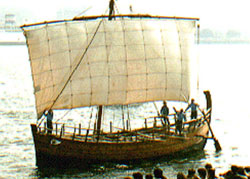
You make your first landing at Crete. Crete has long
standing links to Athens and you know full well the legend of the Minotaur –
the monster with a bull’s head that haunted a labyrinth in Knossos and required
a regular sacrifice human flesh and blood from Athens. That was until the
Athenian Theseus slew the beast.
 |
| Henry Herz files |
You leave your uncle
to strike deals with the locals and wander the streets and land of Crete. This
is an ancient place, here and there are old walls with brilliant painted
frescos, showing men vaulting bulls which sport evil looking horns. These people seem obsessed with bulls. Maybe in
these hills a Minotaur still lives? You
hurry back to your uncle and his ship.

Setting sail west across the Mediterranean you land at
Malta. Again you watch as your uncle negotiates his trade. He has to compete
with another wily merchant, Amilcare of Phoenicia who seems able to undercut
him every time. You are angered by the attitude of Amilcare but your uncle
sends you away lest you and your friends come to blows with the Phoenician’s heavies.
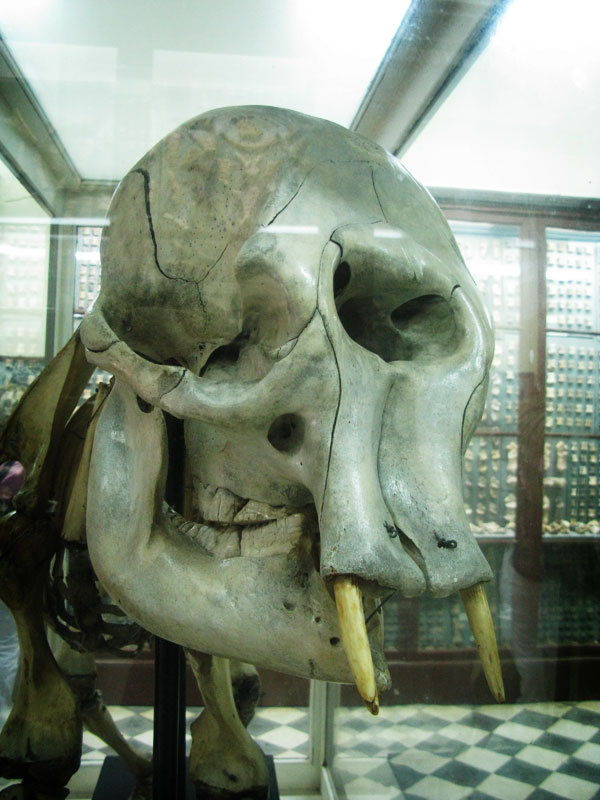
Away from the tense negotiations you view a wonder. One of the locals has the
skull of a cyclops on display. What a fearsome monster it must have been; twice
the size of a human skull with a single eye socket set in the centre. It had
two fangs pointing down with thick molars to grind bones. The local says he found the skull in a nearby
cave and offers to take you and your friends there. With tales of cyclops running through your
imagination you respectfully decline.

Back on board ship and your uncle is in a fearsome mood. There was little profit to be had in Malta;
the Phoenicians seem to have wrapped up the market to their advantage. They
have a rapidly growing base just over the sea at Carthage. Your uncle advises
you that the Phoenicians, those people living on the coastal strip of the
Levant, are not to be trusted when it comes to financial dealings and they seem to have corned markets everywhere. With little
to show for the voyage you head back home. Over winter he will decide on next
year’s destination. You suggest carrying on west through the Pillars of
Hercules and then striking north for a rain sodden island that is famed for its
tin. But fearing Phoenician taxes your uncle has an alternative idea to head
east.
East! Spices and silk from there can make a man rich beyond
his wildest dreams! Was not the Golden Fleece from there too? There are tales
that the world stretches on and on, eastward. With the spring you sail east following the fabled course of
Jason and the Argonauts. Sailing the narrow straits between Europe and Asia, imaginations are wild that the hazardous clashing rocks of the Symplegades may lay
ahead. Your uncle is more wary of being accosted by ships sent from Persia. The
Persian king is as a god, it’s said, his empire vast and terrible yet full of
wonders. After the last year your uncle has had his fill of paying taxes to foreigners.
Across the Black Sea your uncle makes a lucrative trade of
wine and olive oil for spices, silk and tar. Of a fleece of gold hanging in a
tree as per the legend however there is no sign. However the seller of the silk
is full of fascinating stories. There are vast steppes, seas of grass as far as
the eye can see peopled by tribes of Centaurs and beyond the steppes the skies
are full of savage griffins which guard hoards of gold, the trader says he has seen the abandoned nests of
these fabled beasts…
 |
| Golden Voyage of Sinbad |
~ ~ ~ ~ ~ ~ ~
If we look at the world of Lysandros through modern eyes we
can begin to make sense of it and its strange inhabitants. The Minoan
civilisation was once predominant in the region and the figure of a bull
featured heavily in their religion and culture. Greek cities (Athens included)
paid tribute to the Minoans, quite possibly young men and women were sent as
sacrifice. It has been postulated that perhaps the priest performing the
sacrifice wore the head of a bull, hence we have the myth of the minotaur. Theseus
slaying the Minotaur may represent Athens breaking free of Minoan dominance.
What of the cyclops? On Malta and other Mediterranean
islands can be found fossils of prehistoric dwarf elephants. These elephants
were descendants of mammoths stranded on these islands as the ice sheets
retreated. Being large mammals trapped on islands with limited resources they
evolved into dwarf species, but stranded as they were in an ecological and
evolutionary cul-de-sac they became extinct soon after the last ice age. With
their large trunk cavity and small tusks it’s easy to see where the cyclops
myth originated.
What was the golden fleece? In Georgia, instead of panning
for gold from streams, the locals used to submerge fleeces stretched across
wooden frames to catch tiny particles of alluvial gold and then hang them in
trees to dry. The gold would then be combed out.To Greeks and others around the Mediterranean, whose
warriors preferred fighting on foot, the skill of eastern steppe horse warriors
must have seemed as if man and horse were one and the same, and so maybe this is how the legend
of centaurs came to be.
But what of griffins, these noble beasts with the body of a lion and the head and wings of an eagle, that guard hoards of gold? In 1922 in the Gobi desert in Inner Mongolia a remarkable discovery was found by an expedition searching for fossilised human remains. Instead of hominid fossils incredibly intact nests of Cretaceous dinosaurs were found under the desert sand. These were the remains of Protoceratops, an ancestor of the famous Triceratops. The dinosaur had a large beak, like a bird, yet thick ground dwelling leg bones and nests full of eggs. The area of Mongolia where these fossils can be found were long mined for gold. Every so often ,through digging or by exposure by weathering, these fossils would surface. Using what references they had you can see how the idea of a griffin came about in the minds of these ancient miners.
But what of griffins, these noble beasts with the body of a lion and the head and wings of an eagle, that guard hoards of gold? In 1922 in the Gobi desert in Inner Mongolia a remarkable discovery was found by an expedition searching for fossilised human remains. Instead of hominid fossils incredibly intact nests of Cretaceous dinosaurs were found under the desert sand. These were the remains of Protoceratops, an ancestor of the famous Triceratops. The dinosaur had a large beak, like a bird, yet thick ground dwelling leg bones and nests full of eggs. The area of Mongolia where these fossils can be found were long mined for gold. Every so often ,through digging or by exposure by weathering, these fossils would surface. Using what references they had you can see how the idea of a griffin came about in the minds of these ancient miners.

The Greeks of course are one of the great fountain heads of
western civilisation. From them we got the ideas of theatre, science, the arts
and democracy. All good but we may also have inadvertently picked up their
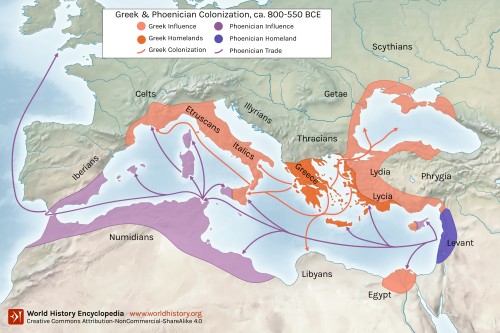
prejudices too. As the Greeks set up trading colonies around the Mediterranean
and Black Seas they found themselves in fierce competition with the Phoenicians. They always seemed to be a step ahead of the Greeks. The name Phoenician comes from the Greek word Phoinikes which is the famous purple dye extracted from the Murex sea snail, the trade in which the Phoenicians enjoyed a complete monopoly. A colony of Phoenicia would of course become Carthage and would be a rival to
the future Mediterranean superpower of Rome. However, a rival commercial power of Semitic people based
on the Levant? One wonders if the rotten seeds of Antisemitism were sown all
those centuries ago?
 |
| ancient.eu |
Sources:
Persian Fire by Tom Holland
Greece and Rome at War by Peter Connolly
The First Fossil Hunters by Adrienne Mayor
The First Fossil Hunters by Adrienne Mayor


