Showing posts with label D Michelle Gent. Show all posts

Tuesday, 24 June 2014

Louise E. Rule Interviews Michelle Gent for The Review's Author Interview


Michelle Gent was born in Wirksworth, Derbyshire in December 1964, the eldest of three children.

Michelle decided to take a year off work to produce her book Deadlier...Than the Male.


On amazon.co.uk the product description for Michelle's book says:


Deadlier…Than the Male is set in and around Mansfield in the heart of Sherwood Forest, England and takes the reader into a dark and dangerous world where werewolves not only exist, but exist alonside humans - undetectable until just before the human becomes the victim.


Werewolves do exist and they exist alongside our society; they have their own rules and hierarchy, they hide in plain sight and have done for millennia.


This is a werewolf tale with real BITE - Twilight for grown-ups!


Michelle Gent
Hello Michelle, welcome to The Review's Author Interview

May I ask you what was your inspiration for writing Deadlier…Than the Male, and why that title?


At the time I started writing Deadlier, I was working as a Door Supervisor (bouncer) at a nightclub in town. I do like to 'people watch' and that job was the perfect opportunity. The moon was travelling across the sky above the rooftops over the road from where I was working and I could imagine someone leaping from rooftop to rooftop, silhouetted by that moon and that's really where the story started.


I wanted a story that could encompass five hundred years or so and an immortal legendary beast was the perfect vehicle for my character.


The title comes from Rudyard Kipling's poem 'Female of the Species'. I wanted a strong female character, scared of nothing, kiss-ass and powerful in her own right. The silly, soppy dependent characters that need a male to lean on irritate me. Yes, it's great if you have someone you can lean on, but relationships that smack of desperation leave me cold so I wrote the book I wanted to read.


The cover for your book is very striking. Book covers are really important, so did you have any input in to how the cover of your book should look, and did you have a preconceived idea of what you wanted?


There are two covers for Deadlier - the first was done and donated by a friend of a friend in exchange for the credit to him in the book. That's a street scene of the town where the story is mostly set.


I did have a preconceived idea for the cover but the first artist I commissioned made an awful job of it to the extent that I cancelled the commission. Then Pixeldome came up with his picture.


The second cover was done for me by a film director friend. He suggested the cover, I loved it and we went with it.


Many authors have a special time of day when they like to write, and maybe a special place that they like to write also. Do you have a special place and time that you like to write?


When my husband worked shifts, I'd write late into the night. Now he works days, I grab the opportunities when I can. I can only seem to write when I have peace and quiet though, so if I'm amongst any kind of distraction, I just have to jot down the ideas and work on them later.


Some authors write straight onto their computers, and some write long hand first, and transcribe it onto the computer later. What is your preference, and why?


I do both. I like both. If I write late at night, I write in bed and so use a notebook and pen. Otherwise, I'm in my lovely attic office (where there are distractions of the internet, etc., unfortunately).


How many drafts do you expect to do for a novel like Deadlier…Than the Male?


Lots! Deadlier took around two years to write and a further nine before it was ready to go. In the meantime, I took it apart, edited it, expanded it, put it back together and all sorts of jiggery pokery.


I think I could still do something more with it - I may try taking it apart again this year.


When you started writing your novel did you set yourself a word count for each day, and how important do you think it is to set yourself a writing goal?


I don't recall a set word count as a target, but I was always pleased to hit the 3,000 word mark.


If by setting a word count target that's how you get yourself to stay in that chair, then I'm all for it but for goodness' sake, don't beat yourself up about it if you don't manage that target. Any amount of words is writing.


When I wrote my first Dusty the Demon Slayer story, I wrote 8,000 words in an evening. I've never repeated either the total or the quality in one sitting, but I hope to, some day.


Michelle, thank you so much for taking the time to speak with me and taking part in The Review's Author Interview, it's been most interesting and insightful.


Michelle Gent can be found at Gingernut Books Ltd

Michelle can be found on Facebook here

Louise Rule is author of Future Confronted
Louise can be found on Facebook here

Sunday, 2 March 2014

Sunday Wrap Up: Week ending March 2, 2014

There's no question that here at The Review we have some pretty fantastic books and reviews, to say the least. Periodically we also get to showcase a bit about ourselves, the admins, with series that focus on a common theme. This week we got a bit of both as well as a new weekly feature: the Sunday Wrap Up, a glimpse at the week just passed and opportunity for readers--whether coming back to familiar ground or those happening upon a great new blog--to review it all in one page that can be used as a base from which to visit or re-visit their favorite posts from the previous week.

So what happened this week?


Well, Simon wrapped up our series of favorite books, in which
each of us approached that idea from different angles. In this case Simon chose to focus on one book and the influence it had within his reading experiences. He writes: "I came across [Alan Garner's] short novel, Red Shift, when I was about twelve and on holiday. I was already familiar with his previous books--The Weirdstone of Brisingamen, The Moon of Gomrath, Elidor, The Owl Service--and so I thought I knew what I was letting myself in for.

Red Shift takes on Garner's fascination with place to a new level. The novel (and it's a very short one) follows three stories which all happen in the same places, but at different times. So we start with Tom and Jan, teenage lovers in the second half of the 20th century; then we're suddenly plunged into second-century Britain, with a detachment of soldiers on the run from the Roman army through tribal territory; and then we find ourselves in the 17th century, with a frightened village awaiting the arrival of hostile troops."

--Intrigued? Of course you are! To keep reading, click here.


"Th[is] story follows [author] Kelly's ancestor through the trials and tribulations of Belfast's poorer Protestant areas. William Henry Kelly, his wife Belle, and their small family are beset by tragedy and hardship--some of their own making--until one final tragedy changes William Henry's life forever." Michelle goes on to write about Kelly's ancestor and his prison experiences as well as history as it unfolded, opening towards the Great War and events on local, national and international levels.

A Wistful Eye: The Tragedy of a Titanic Shipwright takes readers behind the scenes: to get a glimpse of those who brought the ship to life as well as individual, personal events leading up to and following the 1912 tragedy. For the rest of Michelle's review of a poignant story you surely will want to read, continue...


Steampunk? What's that!? On another book cover review visit to us, Lorri does a great job introducing those unfamiliar to the genre: "For the uninitiated, steampunk is a sub genre of sci fi, and one that has many explanations. My take on this quirky and slightly wonderful 'thing' is to imagine the console of The Tardis, add The League of Extraordinary Gentlemen and plonk it all into a late Industrial Revolution setting (London or the Wild West). I think the best summing up of it comes from The Ministry of Peculiar Occurrences, who state: 'If Jules Verne or H.G. Wells were writing their science fiction today, it would be considered steampunk'."

One steampunk cover appears at right, but what's fascinating about it all is that the various images are so different! Come see others Lorri chooses to review and what she has to say about them!


Many of us have heard of the old belief that in order for a woman to carry twins she must have conceived with two different men--leading, of course, to accusations of adultery. Against the backdrop of 17th century England, a post-civil-war setting in which many were "edging towards the era of enlightenment, individualism and new scientific understanding," Twins follows the fortunes of Elizabeth Torbett and her twin babies, Emma and Edgar, as they all make their way in the world. Carol reviews the novel with a keen eye and writes:

"I particularly liked Pym’s characterisation. Her protagonists are very sympathetic and her rogues a nightmare. I would not like to run into any of them on a foggy night in a 1660s London alleyway. Pym’s technique is to be commended as she moves Emma’s story forward only to stop with a cliff-hanger. She gives Edgar’s story the same page-turning treatment. Pym also, sensibly, adheres to the point of view of the pair so that, considering the many events and characters within the novel’s pages, readers are never lost. Though there is a gallery of characters, they are all memorably and vividly portrayed, even the downtrodden mother who finds her voice as the story progresses." Follow on with Carol's review here.


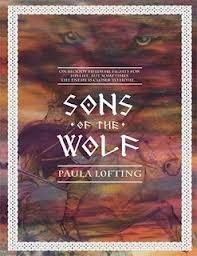
Linda wraps up the week this time with her review of our own Paula Lofting's Sons of the Wolf, which follows the life of protagonist "Wulfhere, a great bear of a man, who is a creature of principal, although he often wishes he were  not. He is a loyal servant of the king and of Harold Godwinson, earl of Wessex,  but he is also the guardian of  Horstede and the protector of his family, and his loyalties and responsibilities often come in conflict. And that is a dilemma for a man who attempts to be all things to everyone." Linda continues:

"Lofting [ . . . ] builds her storyline from there.  Then she  adds her own considerable knowledge of the sociology and politics of eleventh century Saxon England. Next  she adds to the mix all of the ingredients that  make a novel of any genre readable--love, sex, hate, jealousy, remorse, guilt, infidelity, vengeance,  death and profound tragedy. And to all of that, she  adds her  incredible talent for bringing blood and gore into her action scenes without overpowering the essence of her story, and writes her action scenes as if she were riding in the van." The incredible mix of history and individual experiences, woven together with Domesday book characters and then some, makes for a novel you not only will have to get your hands on, but will leave you yearning for more. If at all possible to be on the fence, reading the rest of Linda's review will take care of that. As for the longing once you finish the book: the sequel is nearly ready!

****Currently there is a FREE autographed copy of Sons of the Wolf up for grabs. Comment at the blog or Facebook thread to get your name in the hat!****

Wednesday, 19 February 2014

Inspiration in Reading

--by D Michelle Gent

I remember being inspired to read by my granddad. He would sit me on his knee in the back room of the house. There was a delightful book that I particularly loved. It was about an infant Pegasus and the adventures he got into. I can’t recall the title of the book but I do remember vividly the enjoyment and delight at Story Time.

My love for books must have been born there I think, and it developed and grew from then on. Stig of the Dump, Smith, Watership Down and Alice in Wonderland all stick in my mind as books I read, re-read and adored. The Chronicles of Narnia can be read over and over without becoming boring or jaded and I moved on in my tastes as I grew older.

I would never be without a book in my hand, even at the table. “Michelle, put that book down while you’re eating!” was a familiar instruction from my mother.

Little Women, What Katy Did and What Katy Did Next were all devoured, as were the horror anthologies and history encyclopaedias – it didn’t matter to me what genre a book was, as long as I could get my hands on it and read, read, READ!
In my teenage years, I remember reading James Herbert’s The Rats trilogy and my fascination for all things horror was given a foundation on which to build. Stephen King, Guy N. Smith, Dean Koontz were all my ‘friends’ in the books they wrote and I shunned movies in favour of the far superior film that played in my mind’s eye as I read their stories.

I stole my dad’s copies of Jaws, The Deep and, most unwisely: The Exorcist. I became adept at knowing which books I could ‘borrow’ without getting caught – the ones on the bottom of his ‘To Be Read’ pile were the obvious ones to read first; he’d not miss them, especially if he was still in the middle of a book. I had far more opportunity to read than he did, so I could be certain of returning it before he’d finished his – I also became adept at reading without damaging the paperback spine so there would be very little evidence of anyone having read it before he got to it. I was very grateful if the book was a borrowed one and had already been read.


********


I suppose I should be thankful that he liked to read horror rather than sport!


That was when my need for a book that satisfied my desire for perfection began, I think. No-one had written the book I really REALLY wanted to read and eventually, I set about writing my own.

Then on to my adult years where I could (and did) buy my own books to read. I had spates of phases where I’d buy absolutely everything I could lay my hands on in a particular theme – zombies, vampires, anthologies, ‘survivalist’ novels – and one bizarre phase on those books where you made the adventure up yourself by choosing the direction you went in, flipped to a specified page, skipping chunks of ‘unneeded’ story (what a waste!) and only reading that part which was relevant to your decision.
My penchant for reading everything and anything came to an abrupt end when I read novel after novel of books that disappointed me and left me wondering if this was the best they could do. Formulaic, easily predicted endings left me cold.

As for which book is my favourite, which inspires me most... well, that would be like asking which pet is my favourite – I don’t have just one, I can’t have just one, it’s impossible to choose. I can’t even choose which genre is my absolute favourite – historical fiction, historical fact, alternate history, horror... I can’t do it!


D Michelle Gent’s blog can be found here and book reviews here. Michelle's publisher can be found at Gingernut Books.


Friday, 24 January 2014

Linda Root reviews Blood on the Moon

Blood on the 
Moon

by D. Michelle Gent
A  review by Linda Root

This is the third book in the formidable and prolific Michelle Gent’s excursion into the Society of the Wolves and features once more the female Sentinel called Red. It differs from its precursor Deadlier than the Male, which while not technically a time slip adventure, features Red in two aspects. She first appears in medieval Europe when she is known as Hazel, then as the colorful, flamboyant contemporary Sentinel wolf named Red, who is not the kind of werewolf anyone with half a brain-- human or wolfen-- wishes to mess with. Red and her kind do not like to be called werewolves, and in respect for their wishes, I shall refer to them as the Wolf, a species separate from the Humes with whom they share the planet and sometimes interbreed.  The resultant of such encounters are anathema called Throwbacks. As Sentinel, Red’s job is to flush them out.

Unlike Deadlier, Blood on the Moon  is a contemporary story, but one that draws on myriad disciplines from mythology to systems science and the structure of groups. This is not a book that invites a simple visit on an e-reader during a high school or middle school student’s free period or lunch hour.

What makes both novels featuring the character Red stimulating but difficult to review is that Gent has created a complex parallel society in which to place her characters. The Wolf society has its own rules, hierarchy, enforcers and, unfortunately, its own violators, splinter groups, rebels, and factions that do not agree as to how the Wolf should deal with one another or interact with the Humes with whom they share the planet.  Those issues are not simple because in Gent’s universe, the Wolf presence is widespread and highly developed, but vastly outnumbered by humankind. Because of the disparity in numbers between the societies of Wolf and Hume, the former is always at risk. The great danger is that a subculture within the society of the Wolf will behave outrageously and thus draw attention to its presence, resulting in a widespread purge which will obliterate the species.  Understanding this is important to the story, because the mainstream  led by Lycoan is  neither humane nor less wolflike than those who follow the evil Darius.  They simply realize that their survivial as a species requires vigilance, obscurity and temperance.  Red and her friends are no less vicious than their less responsible counterparts.  Red wolfs down human organs with the best of them. She simply does not flaunt it in a manner that threatens the superior-in-number human forces.
The opposition, represented by Darius, aka Lord Grey, is not beyond exploiting his throwbacks and tricking his disciples in order to advance his cause, which in his case is domination of the Wolf and ultimately suzerainty over the planet.
In Blood on the Moon Red has many of the same allies and enemies readers met in Deadlier than the Male, and a few new characters to drive the plot. The first is a human female, the teenage Jessica “Rabbit” Warren. Orphaned Jessica has an ability she does not share with her  human friends—Jessica can detect the presence of a Wolf. She has observed them as they cavort and she has followed them as they hunt, and she aspires to become one of them. And that is where the story begins.
Jessica, like many adolescents who are discontented with their lot in life, falls in with the wrong crowd, the faction led by Lord Grey, who in reality is Red’s age-old enemy Darius. Red hopes that she has eliminated him in the final conflict of Deadlier than the Male, but she remains cautious. Unfortunately, Red’s skepticism is well placed. At the hands of a  Hume policeman who is in Darius’s control,  Red’s faction has been tricked into complacency. The death of Darius has been faked.  The resurrected Darius intends to replace Red with Jessica once she has become a Wolf, but he has not shared his agenda with his followers, who think he is a Wolf  of noble  intentions.  From this point the plot develops very much  like a contemporary political thriller in which well-intentioned followers do not realize that their leader has a different plan than the one promulgated  to the masses, and in which the line between good and evil are difficult to discern.
Gent has so artfully  comingled current societal  issues into her storyline  that we find ourselves forgetting that we are reading a horror-fantasy. There is more to the story than the usual blood and entrails expected in a story about werewolves, but there is plenty of that, too. And because our protagonist is herself a Wolf,  Red is true to her nature and capable of hunting at the head of the pack.


The story is populated with a complex cast of characters, and if there is a difficulty in reading Blood on the Moon, it is the challenge of managing the large supporting cast. Among my favorites are Selene, who is assigned  to be Jessica’s  mentor, and Falco, who is to be her sponsor in her quest to become a Wolf, but there are many others. Selene’s true role in the story is one of the novel’s best crafted surprises. I miss the degree of romance I found in Deadlier Than the Male, but Red has plenty of other matters with which she must deal. There are several subplots including one involving a Wolf who is outraged  when his role in Jessica’s development is minimalized and who behaves very much like an  employee who gets passed over for a coveted promotion or a jilted suitor. There is an incident when Red must kill a friend. The book is full of incidents of betrayal and loyalty, each  a subcurrent of the major conflict over the leadership of the Wolves. The issues faced by the characters are believable once the reader accepts the premise that the species in Gent’s stories are not the canis lupis of the motivational wall  posters or in the photographs of Jim  Brandenberg. These are sentient, superior and  vicious beings. 

D. Michelle Gent is a principal in Gingernut Books, and is an experienced  editor, which is apparent  in the quality products she has produced. Like Gent’s other novels, Blood on the Moon is an ambitious work of exceptional creativity which should make it incredibly seductive to any reader who likes fantasy- horror. But it will also attract many of us who rarely explore that genre. In  summary, this is an ideal read for fans of the genre, but also for anyone who is not afraid to explore something new, or who is ready for a sophisticated and thoroughly adult journey into the world of vampires and werewolves.  And best of all, the author and Gingernut Books, Ltd. assure us that there are more to come.

Blood on the Moon is available on Kindle and paperback.

Linda Root is the author of the historical novels in the Queen of Scots Suite, available on Kindle and paperback at Amazon. More from Linda can be found at her blog.

Michelle Gent is giving away a copy of Blood on the Moon to one lucky winner. To get your name in the hat simply post in the comments section or on our Facebook page here.


Tuesday, 29 October 2013

PAULA'S PEOPLE: HORROR WRITER D.MICHELLE GENT TALKS ABOUT WHY A GOOD SCARE ROCKS HER BOAT!

Welcome to our 4th day of our Great Creepfest! Today on Paula's People, I want you to meet again a lovely, but scary lady: Michelle Gent! I met Michelle a year or so ago when I was scouring the net for a new editor and she was recommended to me by a fellow author friend. Michelle, I soon found out. likes to have a finger in many pies and today she talks about the Horror Pie! When I knew we were having a Halloween Creepfest, I knew exactly who to invite on my spot. Being an author of horror/urban-thrillers, I asked Michelle to tell us all what got her into it and why scary things rock her boat! Over to you Michelle!


Why do I like horror? There’s a question to get creative juices flowing (well, mine, anyway).
Why do I like horror? I don’t know why, I just do.
I like the thrill of terror as something scares the living daylights out of me. I like the way my pulse races and adrenalin floods my system but I also like the satisfying and very real safety net of knowing it’s all fiction, made up for entertainment, and as soon as it becomes too much, I can put my hands over my eyes and stop watching or close the book and stop reading. I also like the idea that my stories can inspire the same feelings in other people, my readers. Yes, I like that very much.

As a kid we used to make up stories that scared us. When the nights drew in around this time of year, not too late and not too cold or wet but dark, it had to be dark. We’d sit on doorsteps and make up stories. There was a large field next to my friend’s house and that gave us a creepy setting for the storytelling. My main problem was that my house was the furthest away but because I was the tomboy, the bravest, most daring of us all and the most reckless, it didn’t seem to matter that as one by one the group went back to the safety of their homes and I was left to walk the last few yards on my own. Of course I had to maintain that fearless facade in front of everyone because that was all I had. I wasn’t one of the cool kids who everyone wanted to hang out with, I didn’t have the best toys or the most fashionable clothes – all I had was my ‘image’ and my bravado. So, I had to tell the scariest story and I had to be the bravest when getting the rest of the kids back to their houses, even if I was frightened to go in by the back door because there was a bigger, darker field at the back of our house.

I grew up in the 70s and I remember one horrible event from back then. The Black Panther was loose. He had kidnapped Lesley Whittle and her body was discovered in a drainage shaft. The summer that he was on the run, we were mostly playing in drainage systems that ran under the M1 motorway near to us. We’d scare each other silly with stories of discovering the Black Panther in our ‘playground’. I had a macabre imagination – I still do. The Black Panther was caught that December, a few miles from where we lived. Not that he’d have been interested in a handful of kids from a council estate. Our parents wouldn’t have been able to raise £50 let alone £50,000!

My mind is a fabulous place, a terrifying playground filled with dark and dreadful things that have yet to make their way into my books – but I’m sure they will at some point. I was ‘advised’ to calm my scary stories down when the younger kids were about because I scared them too much. Yeah, that was me, the weirdo with the over-active imagination, the dark side that could find the cruel and vicious nature in most things. Cats are cruel when they play with their prey but it’s their nature, it’s not deliberate. A cat hones its skill on the half-maimed mouse, bird or vole. It will bring a young mouse to its kittens – or its human – to help teach them how to hunt. That’s not cruelty, that’s nature, teaching the next generation how to survive.
One of my childhood pets came home limping. He allowed me to look at his leg. Someone had wrapped an elastic band around it and it was biting into his leg. It would have cut off the blood supply and he’d have lost the leg if I hadn’t spotted it. Another cat didn’t do that to him; that was the vile and deliberate act of a human. Cats aren’t cruel, humans are cruel.

Humans seek out ways to hurt other humans, by their deeds and their words. Kids in the playground: One kid wears glasses so she’s a ‘specky-four-eyes’. Another kid has a speech impediment so he’ll be labelled ‘st-st-st-stuttering-Stanley’ (remember, Sixth Sense?) Another kid has ginger hair and if she doesn’t have a means of answering back and making her tormentors look silly, she’s going to have a hellish time at school.
Then what happens if kids are left to their own devices? Lord of the Flies paints a pretty grim picture and that book fascinated me at school.
Spooky places fascinate me. Haunted houses, derelict buildings, castles, ancient manor houses, caves and forests; I’m drawn to those places but my imagination is such that I couldn’t stay in any of them alone. My mind betrays me, it ‘sees’ things, hears things and it makes up all kinds of terrible possibilities.
So I channel those horrors and terrors. I put them in situations where there’s danger and strife but I make the story someone else’s predicament.
I try to make the people and situations in my stories as real as I can. Obviously that’s not always possible but if there’s a little something real in there then it adds weight and credibility.
I put my friends in my stories (yes, they know) and I also put people I’ve met, worked with and had other ‘encounters’ with in my stories. Of course any resemblance to any person living or dead is purely coincidental.
I like to play with situations and ‘what if’ moments. Deadlier started out with such a ‘what if’ moment.
“What if there was someone leaping from rooftop to rooftop, silhouetted by that gorgeous full moon?” I asked Loretta, receptionist at The Late Lounge, the nightclub we were working at in Mansfield, North Notthinghamshire back in 1999.
“Oooh, you mean a vampire?” she said.
I looked back at her over my shoulder and grinned. “No, vampires have been done to death, I think werewolf.”
I went home early the next morning with my head filled with werewolves leaping across buildings in a small mining town in the midlands, England and I started writing the very next day.

So, why do I like horror? Because natural justice can be served in a way that satisfies the bloodthirsty, morbid and twisted mind by methods that convention, society and the law of the land frowns upon. I can wreak havoc upon the nasty, the sly and the cruel people I’ve met – yes, there are a number of those. The bullies, freaks and throwbacks get their come-uppance without me getting arrested. But I think most of all it satisfies something in me that nothing else I’ve tried comes close to. The voices in my head are quietened, they are calmed and they are sated by the way I portray them. My imagination has found a way out of the confines of my head and it seems at peace when my stories are read. It’s almost like they can go to other heads and other imaginations to play and that makes them happy.

So, if any of my stories play on your mind for longer than usual, I apologise. The dark thing that nags at me to write them all out and release them into the world is happy and I can’t do anything about that, at least they’re allowing me some peace for the moment but they’ll be back, they don’t leave me alone for long...


It Wasn’t...

The fleeting shadow that passed you on the darkened streets that you thought was a stray dog?
The person behind you that you thought was coincidentally going the same way that you were?
The feeling you got that there was something behind you that you thought was your imagination?
It wasn’t.

The glint you thought was the lights on a car passing the house?
The caller that hung up as soon as you answered the phone you thought was a wrong number?
The movement you saw from the corner of your eye you thought was your imagination?
It wasn’t...

The flicker of a shadow you thought was the wind blowing the branches of the tree?
That noise you thought was the central heating switching on?
The sound you thought was the cat bumping against something?
It wasn’t!

The shadow was someone checking you out.
The person was seeing where you live.
The feeling was instinct, you should have taken notice.

The glint was light reflecting off a knife.
The caller was making certain you were alone.
The movement was the knife being raised to cut the phone line.

The flicker was someone in the garden.
The noise was someone forcing the window.
The sound was someone on your stairs.

Are you scared yet?


Wow! Thanks Michelle! I don't know if that was my imagination or not but there is a noise on my stairs!!!
Michelle is giving away a set of 6 short stories of her YA book, Dusty the Demon Hunter, so if you'd like to win these for your kindle or e-book, please leave a comment on the blog and tell us why YOU like ghosties, ghoulies and things that go bump in the night!


Tuesday, 10 September 2013

PAULA'S PEOPLE: GUEST POST with AWESOME MICHELLE GENT

 D Michelle Gent, talks about her job as an editor, knowing me and being my editor and Awesome Magazine. 

Don't forget to pop over the Facebook event page for Day Four of our Blog Launch Party for a chance to win a copy of Paula Lofting's historical novel Sons of the Wolf 

I have the honour of being asked (threatened) by Paula Lofting to do a post on what I do in the world of writerly things. 

First and foremost I’m a writer who has learned over the years how to edit. I’m self-taught for the most part but because I have a capability of spotting anomalies, I decided to take a course on Editing to get an accreditation – yes, some would call it being ‘anal’ about errors or a Grammar Nazi but I actually can’t help seeing them, it’s a ‘gift’ – sometimes a dubious, annoying one, but a gift, nonetheless.
This career branch-out has brought friendships from unexpected places – who knew that picking fault with someone’s ‘baby’ would lead to writer and critic becoming friends? That’s not to say that everyone is pleased with the errors I point out – even if I've been asked to (I don’t often point them out if I haven’t been asked to) – but for the most part, I try to show a writer where they are going wrong in a manner that I would like to be told. Believe me, I send my own writing out to an Editor, it’s true, you really cannot see your own mistakes.
I do NOT subscribe to the practice of Author Bashing – I’ve had it done to me and it has to be the worst feeling ever. There is never a reason to be spiteful or unkind about a piece of work; constructive criticism is the only way. I include ‘keeping your gob shut about it’ too, that doesn't help the writer see the errors and improve their writing.


I’m also another kind of Editor in that I oversee AWESOME online magazine. The magazine has been running for over a year. We’ve had a bit of a break for the past few months but I’m putting a team together to get it back up to speed – watch this space. Well, this space www.awesomeonlinemagazine.com

Now on to my friendship with Paula Lofting - Author of the historic novels: ‘Sons of the Wolf’ and ‘Wolf Banner’. I have to admit (don’t tell her) that I’m thoroughly enjoying this series, she has researched the period well – I’m impressed by her knowledge of the time, the people she writes about and how she grabs the reader and puts them right in the middle of the story. It’s no mean feat to involve someone in your writing to the extent that they actually feel like they’re there but Paula not only manages it, she nails it.
There are still a few things to iron out in her manuscript but the story is the main thing. The details are down to the editor and author to hammer out between them I think.

If there are pieces of advice I’d give to a writer when working with an editor, they would be these:
The editor is supposed to work with you – not for you. Editing is a fluid process and if you get the right one, you’ll be loath to have to find a new one.
If the process involves you sending the manuscript off to be edited and it comes back ‘done and ready to go’ (or worse still, ‘sent to the printer already’) then you’re not doing your job and the editor isn't doing theirs.
Go over the changes – they should be marked clearly for you to see what they believe is wrong or should/could be changed.
If you don’t agree with something, speak with the editor, ask questions; find out why they believe you made a mistake and either learn from it or disagree with it but you have to ask.
Once you are satisfied with the changes, read the manuscript again. I see your eyes look to the ceiling and I hear your sigh of ‘do I have to?’ but believe me, if you can’t bear to read and re-read your work, then no-one else will. You’ll be surprised at how many things you find when you’re no longer reading in the first flush of excitement. Once the story is more than familiar to you that will be when most errors are spotted.
Ask if your editor looks for plot-holes, continuity, clichés, ‘show and tell’ and my favourite – ‘head hopping’. Some do, others don’t but if you expect them to be looking for these things and they aren’t, then you’re going to be disappointed – ask first.

I suppose the last thing to advise is the most important: Get recommendations from people you know and respect. The last thing you need is to find out that the editor you chose ‘made a hatchet job on my last novel’.

Yes I’m an editor but the advice I give is “Yes you need an editor. It doesn’t matter whether it’s me you choose or not but for the sake of your books – this one and the rest, get your work edited and give it the best start in ‘life’ that you can.”

D Michelle Gent


http://www.editing-services.info/

Links to Michelle's Amazon books


Monday, 9 September 2013

Review: Deadlier...Than The Male by D. Michelle Gent

Deadlier...Than The Male by D. Michelle Gent


I confess to not being the biggest fan of paranormal stories in general and stories featuring werewolves in particular normally leave me cold. It was therefore with a certain sense of trepidation that I approached this book but almost from the first page I found myself being drawn into the tale

The book focuses on the story of Hazel/Red, a young woman from mid 15th Century England, and follows her adventures between the time of the War of the Roses and her life in modern-day England.


Hazel, after being attacked by a werewolf and turned into one of their kind, rises through the ranks to become Sentinel Exemplar, tasked with dealing with rogue werewolves who break the rules of Wolf society. However, for me, it is hard to describe the characters in the book as being the 'Good' guys and the 'Bad' guys as the lines between right and wrong are so blurred. Red is just as happy to kill innocent victims without any hesitation or conscience as the werewolves she is tasked with hunting down. That is the problem I have with these type of stories. Werewolves kill without thought in a brutally casual and callous manner and that makes it hard for me to truly invest, as a reader, in feeling any empathy with the characters. Miss Gent has done well therefore to have me root for Red despite her bloody life and past as the story flits back and forth through the centuries and around Europe.


Personally, what raises this book above the standard bite and slash werewolf novel is the attention to detail given to the back story of the characters and sticking to the true nature of the werewolf in folk tales. These werewolves are bloody in tooth and claw and are not likely to be seen posing around a High School gym comparing hand-creams and hair care products. These wolves are the creatures of old nightmares, and the book is all the better for it, as Miss Gent delivers a fresh take on an old story. The society of wolves is laid out as a multi-layered tapestry of various classes and orders from the head of all Wolves, the Lycaeon, down to the hated Throwbacks which Red hunts and exterminates. Having the leader of Wolfkind called the Lycaeon is itself a nod to the Greek myth of Zeus transforming the king of Arcadia into a wolf for serving up a child as a meal to the god.


Ultimately for me what is important is how the story feels as a whole, and from the opening scene of a rogue werewolf stalking a lone woman through the dark streets of a town in the English Midlands through to the climatic finale, the story rattles along at a cracking pace with pithy and earthy dialogue. Add to the mixture a rogue werewolf who has started peddling drugs to other wolves and his intention of overthrowing the Lycaeon with the aid of his army of followers and the scene is set for a thrilling and enjoyable read. 


Purchase links -

UK: http://www.amazon.co.uk/Deadlier-than-the-male-ebook/dp/B004AE3K8Q/ref=sr_1_3?s=books&ie=UTF8&qid=1377961095&sr=1-3&keywords=d+michelle+gent

US: http://www.amazon.com/Deadlier-than-the-male-ebook/dp/B004AE3K8Q/ref=sr_1_6?ie=UTF8&qid=1377961149&sr=8-6&keywords=d+michelle+gent

Michelle will be giving away an e-book of Deadlier. Go here to enter the competition! 

Review by Stuart S. Laing author of the Kindle Edinburgh chart #1 The Robert Young of Newbiggin Mysteries

find out more at his website

http://stuartslaing.wordpress.com/